
Achalasia Treatment in Moradabad – Advanced Care at Jigyasa Hospital
Swallowing should feel effortless. For patients living with achalasia, however, every meal can become difficult because food may stick in the chest, liquids may come back up, and day-to-day comfort may gradually decline.
If you or someone in your family is dealing with persistent difficulty swallowing, unexplained chest pain, or regurgitation of undigested food, achalasia may be the underlying cause and should be evaluated by a specialist.
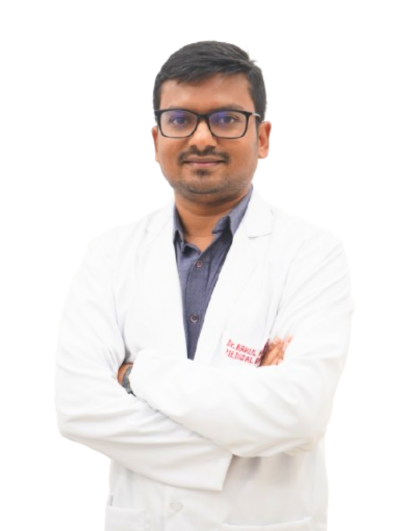
At Jigyasa Hospital, Moradabad, patients across the Rohilkhand region can access advanced achalasia treatment closer to home. Under the care of Dr. Rahul Kumar, Senior Consultant in Minimally Invasive and Gastrointestinal Surgery, patients receive evidence-based treatment including POEM and Laparoscopic Heller Myotomy based on individual clinical needs.
What Is Achalasia?
Achalasia is a rare but important motility disorder of the esophagus, the muscular tube that carries food from the mouth to the stomach. In normal swallowing, the esophagus pushes food downward in coordinated waves and the lower esophageal sphincter relaxes to let food pass into the stomach.
In achalasia, two key problems occur together. The lower esophageal sphincter does not relax properly during swallowing, and the normal muscle contractions of the esophagus are absent or severely impaired.
As a result, food and liquids collect inside the esophagus instead of moving into the stomach. Over time, the esophagus may become enlarged, and symptoms can worsen. The condition is linked to progressive loss of nerve cells in the esophageal wall, although the exact trigger is not always clear.
Who Gets Achalasia?
Achalasia can affect people of different age groups, but it is most often diagnosed between 25 and 60 years of age. It affects both men and women and is often confused with acid reflux or other causes of swallowing difficulty.
In Moradabad and the wider Rohilkhand region, many patients may initially consult general physicians or other specialists before reaching a gastrointestinal surgeon for proper diagnosis.
Common symptoms include progressive difficulty swallowing solids and liquids, regurgitation of undigested food, chest pain or pressure, weight loss, coughing or choking at night, a sensation of food sticking in the chest, and repeated respiratory infections caused by aspiration.
How Achalasia Is Diagnosed
Accurate diagnosis is essential before treatment is planned. At Jigyasa Hospital, patients are evaluated through a structured pathway designed to confirm the condition and understand its severity.
A barium swallow can show a dilated esophagus with narrowing near the lower end. High-resolution esophageal manometry is the gold standard test and helps classify the type of achalasia. Upper GI endoscopy is also important to rule out other causes of swallowing difficulty such as strictures, severe reflux disease, or cancer.
Based on these findings, Dr. Rahul Kumar prepares an individualized treatment plan suited to the patient’s symptoms, anatomy, and overall health condition.
Treatment Options at Jigyasa Hospital
Jigyasa Hospital offers multiple evidence-based treatment options for achalasia so that care can be matched to the type of disease, patient fitness, and long-term goals.
POEM, or Per-Oral Endoscopic Myotomy, is an advanced scarless procedure done through the mouth. It allows the tight lower esophageal muscle to be cut internally without external incisions and is especially effective in selected patients, including those with spastic forms of achalasia.
Laparoscopic Heller Myotomy is a keyhole surgical procedure in which the lower esophageal muscle fibers are divided through small abdominal incisions. It is often combined with partial fundoplication to reduce the risk of post-treatment acid reflux.
Pneumatic balloon dilation may be considered for patients who prefer a non-surgical approach or are not ideal surgical candidates. Botulinum toxin injection can provide temporary relief in elderly or medically high-risk patients who may not be suitable for definitive procedures.
The most suitable treatment depends on manometry findings, symptom burden, prior treatment history, and the patient’s overall medical condition.
Why Treatment Matters
Achalasia is not simply a minor swallowing issue. When left untreated, it can progressively interfere with nutrition, comfort, sleep, and quality of life.
Timely treatment helps relieve the obstruction at the lower end of the esophagus, improve swallowing, reduce regurgitation, and lower the chance of further esophageal enlargement. For many patients, effective treatment leads to a major improvement in daily function and confidence during meals.
Although the lost nerve function itself is not reversed, a properly performed myotomy can deliver long-lasting symptom relief and help prevent avoidable complications.
Treatment Features at Jigyasa Hospital
Advanced Achalasia Care
Specialized treatment for swallowing disorders using modern minimally invasive and endoscopic techniques.
Structured Diagnosis
Comprehensive evaluation with barium swallow, upper GI endoscopy, and manometry-based treatment planning.
POEM and Heller Myotomy
Access to both advanced scarless endoscopic myotomy and laparoscopic surgical treatment options.
Personalized Treatment
Procedure selection based on symptom severity, achalasia type, fitness, and prior treatment history.
Faster Recovery
Minimally invasive treatment helps many patients return to eating and daily activities sooner.
Accessible in Moradabad
Expert GI surgical care at Jigyasa Hospital for patients from Moradabad and nearby districts.
Recovery After Treatment
Most patients experience significant improvement in swallowing within days after treatment. Recovery guidance usually includes an initial soft or liquid diet followed by gradual progression toward regular food.
Patients are also advised about meal habits, posture, reflux prevention, and the importance of follow-up evaluation. Endoscopy or manometry may be recommended in selected cases to confirm long-term treatment success.
Recovery and diet progression are individualized according to the procedure performed and the patient’s response in the early post-treatment period.
Why Choose Dr. Rahul Kumar
Dr. Rahul Kumar is an experienced Minimally Invasive and Gastrointestinal Surgeon at Jigyasa Hospital with expertise in advanced laparoscopic and endoscopic procedures.
Patients from Moradabad, Rampur, Sambhal, Amroha, Bijnor, and nearby regions seek his care because treatment planning is based on accurate diagnosis, procedure suitability, symptom severity, and long-term outcomes rather than a one-size-fits-all approach.
His focus on minimally invasive treatment, transparent communication, and structured follow-up helps patients and families move through diagnosis, treatment, and recovery with greater clarity and confidence.
Book Your Consultation
If you have persistent difficulty swallowing, regurgitation of food, unexplained chest discomfort, choking episodes, or ongoing weight loss, do not ignore these symptoms. Early specialist evaluation can lead to timely diagnosis and effective treatment.
Address
Near Miglani Cinema, Rampur Road, Moradabad 244001
Phone
+91-7900903333Frequently Asked Questions
Is achalasia a serious condition?
Yes. If left untreated, achalasia can gradually cause severe enlargement of the esophagus, making treatment more complex. Longstanding untreated achalasia may also carry a small but important long-term risk of esophageal cancer.
Can achalasia be treated without surgery in Moradabad?
Yes. Pneumatic dilation and botulinum toxin injection are non-surgical options that may be considered in selected patients. However, surgical myotomy such as POEM or Laparoscopic Heller Myotomy generally offers more durable long-term relief.
How long does POEM surgery take?
POEM usually takes around 60 to 90 minutes under general anesthesia. Most patients are discharged within 2 to 3 days depending on recovery and post-procedure evaluation.
Will I need medicines after achalasia surgery?
Some patients may need a short course of proton pump inhibitors after treatment, especially if reflux symptoms develop. The exact medicine plan depends on the type of procedure performed and the patient’s recovery.
How soon can swallowing improve after treatment?
Many patients notice major improvement in swallowing within a few days after treatment. A soft or liquid diet is usually advised initially, followed by gradual return to a normal diet under specialist guidance.
Why choose Jigyasa Hospital for achalasia treatment in Moradabad?
Jigyasa Hospital offers advanced GI surgical care, minimally invasive treatment options, structured diagnosis, and specialist management under Dr. Rahul Kumar. Patients benefit from modern procedures, careful follow-up, and access to treatment closer to home.
Why Patients Choose Us
- 24/7 Emergency & Trauma Care
- Top Specialist Doctors
- Modern ICU & Operation Theatres
- Transparent & Affordable Pricing
- Ayushman Bharat Empanelled
- Cashless Insurance Support
- Multispeciality Under One Roof
Our Location
Near Miglani Cinema,
Rampur Road,
Moradabad 244001