
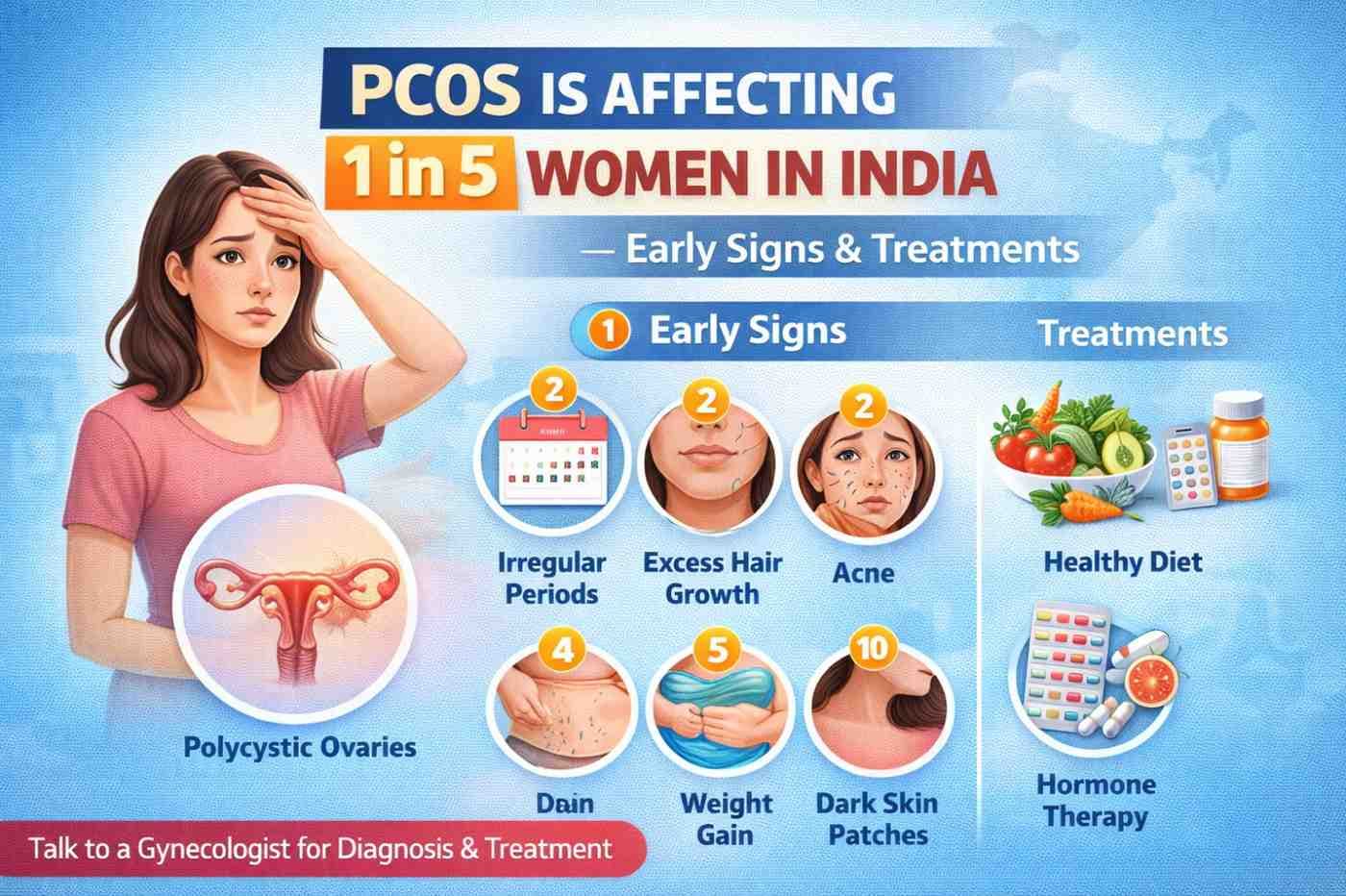
PCOS Is Affecting 1 in 5 Women in India — Early Signs & Treatment
1 in 5 Indian women has PCOS. Know the early signs, causes, hormonal impact & treatment options. Expert advice from Dr. Karishma Singh, Senior Gynaecologist at Jigyasa Hospital Moradabad. Call 7900903333.
One in five women in India has Polycystic Ovary Syndrome — commonly known as PCOS. That is over 42 million women in our country living with a hormonal disorder that disrupts their menstrual cycle, their metabolism, their fertility, their skin, their hair, and in many cases, their mental health. At Jigyasa Hospital, Moradabad, Dr. Karishma Singh — our Senior Gynaecologist with specialised expertise in PCOS, hormonal disorders, and ART — is on a mission to ensure that no woman in Moradabad or western UP suffers from undiagnosed or poorly managed PCOS.
What Is PCOS? — Understanding the Condition Fully
Polycystic Ovary Syndrome (PCOS) is a complex hormonal disorder affecting women of reproductive age — primarily between 15 and 44 years. Despite its name, not all women with PCOS have cysts on their ovaries, and the condition is about far more than the ovaries alone.
PCOS is fundamentally a disorder of hormonal imbalance, characterised by elevated androgens (male hormones) including testosterone, irregular or absent ovulation disrupting the menstrual cycle and reducing fertility, insulin resistance in 70% of PCOS patients causing weight gain and elevated diabetes risk, and polycystic ovaries that appear enlarged on ultrasound with multiple small follicles that fail to release mature eggs.
PCOS is diagnosed using the Rotterdam Criteria — a woman must have at least 2 of the following 3 features: irregular or absent periods (oligo/anovulation), clinical or biochemical signs of elevated androgens, and polycystic ovaries on ultrasound.
| Feature | PCOD | PCOS |
|---|---|---|
| Full Form | Polycystic Ovarian Disease | Polycystic Ovary Syndrome |
| Nature | Ovarian disorder | Endocrine / Metabolic syndrome |
| Severity | Milder, often reversible | More complex, systemic |
| Fertility Impact | Can still ovulate; less severe impact | Often involves anovulation; significant fertility impact |
| Prevalence | More common | Less common but more serious |
| Cause | Hormonal imbalance causing premature release of immature eggs | Complex interplay of insulin resistance, elevated androgens, and ovulatory dysfunction |
PCOD vs PCOS — What Is the Difference?
"In my OPD at Jigyasa Hospital, I see young women who have been told they 'just have PCOD' and told not to worry. PCOD, if not managed properly, progresses to PCOS. Early intervention changes everything — for their cycles, their weight, their skin, and crucially, their fertility when they are ready to start a family." — Dr. Karishma Singh, Senior Gynaecologist, Jigyasa Hospital Moradabad
Why Is PCOS So Common in India? — Root Causes
PCOS has no single identified cause, but research points to a convergence of genetic, lifestyle, and metabolic factors. In India specifically, the following factors are driving the epidemic:
1. Genetic Predisposition
PCOS runs in families. Women with a mother, sister, or aunt with PCOS, irregular periods, or Type 2 diabetes are at significantly higher risk. The genetic component means that environmental triggers can activate PCOS in women who are predisposed.
2. Insulin Resistance — The Central Driver
Up to 70% of Indian women with PCOS have insulin resistance — a condition where the body's cells do not respond properly to insulin. The pancreas compensates by producing excess insulin, which stimulates the ovaries to produce too much testosterone, disrupting ovulation and causing the androgen-related symptoms of PCOS. Indians are genetically predisposed to insulin resistance even at lower body weights — making PCOS more prevalent in thin Indian women than in their Western counterparts.
3. Lifestyle Factors
Sedentary lifestyle worsens insulin resistance. High glycaemic index diets — refined carbohydrates, white rice, maida, sugary drinks — spike insulin levels. Chronic stress elevates cortisol, which worsens hormonal imbalance. Disrupted sleep is linked to increased androgen levels and metabolic dysfunction. Obesity, particularly abdominal fat, amplifies insulin resistance and androgen production.
4. Environmental Factors
Exposure to endocrine-disrupting chemicals — found in plastics, pesticides, cosmetics, and certain foods — may interfere with hormonal regulation and contribute to PCOS in genetically susceptible women.
Early Signs of PCOS — Don't Ignore These Symptoms
PCOS is most effectively managed when caught early. Here are all the early warning signs — many of which women dismiss, normalise, or attribute to other causes:
Sign 1: Irregular or Missed Periods
The most common and classic symptom of PCOS. A normal menstrual cycle occurs every 21 to 35 days. In PCOS, cycles are often fewer than 8 periods per year, more than 35 days apart consistently, completely absent for months at a time, or unpredictably heavy or light when they do occur. Without regular ovulation, the uterine lining builds up without being shed normally — increasing the risk of endometrial hyperplasia and uterine cancer over time.
Sign 2: Excess Facial or Body Hair (Hirsutism)
Dark, coarse hair appearing on the upper lip, chin, jaw, chest, abdomen, or inner thighs — areas where men typically grow hair — is a hallmark sign of elevated androgens in PCOS. Affecting approximately 70% of PCOS patients, hirsutism can be deeply distressing and is a major contributor to the anxiety and low self-esteem associated with PCOS.
Sign 3: Acne — Persistent, Adult-Onset
Hormonal acne in PCOS is typically deeper, cystic, and concentrated along the jawline, chin, and lower face. It persists or worsens into the 20s and 30s and does not respond well to standard topical treatments because its root cause is hormonal.
Sign 4: Hair Thinning or Hair Loss (Androgenic Alopecia)
Elevated testosterone causes androgenic alopecia — a pattern of hair thinning primarily at the crown and along the parting, similar to male-pattern baldness. This is often the symptom that causes the most psychological distress in young women with PCOS.
Sign 5: Unexplained Weight Gain — Especially Around the Abdomen
Insulin resistance in PCOS makes it very easy to gain weight and extremely difficult to lose it — even with diet and exercise. This weight tends to accumulate around the abdomen and waist. Even women who are not obese by BMI standards can experience significant abdominal weight gain and metabolic dysfunction due to PCOS.
Sign 6: Darkening of Skin (Acanthosis Nigricans)
Dark, velvety patches of skin — typically appearing in the neck folds, armpits, groin, or under the breasts — are a classic sign of insulin resistance associated with PCOS. This condition is called acanthosis nigricans and is a visible external marker of the metabolic component of PCOS.
Sign 7: Difficulty Getting Pregnant (Infertility)
PCOS is the single most common cause of anovulatory infertility in women — accounting for approximately 80% of women who cannot conceive due to ovulation problems. For many women, difficulty conceiving is the first time PCOS is discovered — after years of undetected symptoms.
Sign 8: Mood Changes — Anxiety and Depression
The hormonal imbalance of PCOS, combined with the visible physical symptoms, creates a profound psychological burden. Research consistently shows that women with PCOS have significantly higher rates of anxiety, depression, and body image distress. These mood disturbances are partially driven by the hormonal dysregulation itself, including the effects of elevated androgens and insulin resistance on brain chemistry.
Sign 9: Pelvic Pain
Some women with PCOS experience chronic, dull pelvic pain — often worse before or during periods. This can be caused by the enlarged ovaries containing multiple follicles pressing on surrounding structures.
Sign 10: Oily Skin and Enlarged Pores
Elevated androgens stimulate the sebaceous (oil) glands in the skin, causing excess sebum production, enlarged pores, and persistent shine — often accompanying the hormonal acne described above.
PCOS Complications — Why Timely Treatment Is Critical
Left unmanaged, PCOS significantly increases the risk of serious long-term health conditions:
| Complication | Risk Increase with Untreated PCOS |
|---|---|
| Type 2 Diabetes | 5–10x higher risk |
| Gestational Diabetes | 3x higher risk during pregnancy |
| Cardiovascular Disease | 4–7x higher risk |
| Endometrial (Uterine) Cancer | 3x higher risk |
| Infertility | Leading cause of anovulatory infertility |
| Obstructive Sleep Apnoea | 5–10x higher risk |
| Depression & Anxiety | 3x higher prevalence |
| Metabolic Syndrome | 11x higher risk |
| Miscarriage | Higher risk in early pregnancy |
PCOS Long-Term Complication Risk
"PCOS is not just a 'period problem.' Every single patient I see with PCOS at Jigyasa Hospital receives a full metabolic assessment — not just a hormonal check. The cardiovascular and diabetes risk in long-term unmanaged PCOS is very real, and very preventable with timely intervention." — Dr. Karishma Singh, MBBS, MS (OBG), Fellowship in ART, Senior Gynaecologist, Jigyasa Hospital Moradabad
How Is PCOS Diagnosed at Jigyasa Hospital?
Dr. Karishma Singh uses a thorough, multi-step diagnostic process to confirm PCOS, determine its type, and assess its metabolic and reproductive impact:
- •Detailed Clinical History: Menstrual history, symptom history (acne, hair growth, hair loss, weight changes), family history of PCOS or diabetes, reproductive history, and lifestyle assessment.
- •Physical Examination: Body weight, BMI, waist-to-hip ratio, skin examination for acne and hirsutism (Ferriman-Gallwey score), and blood pressure assessment.
- •Hormonal Blood Tests: LH and FSH ratio, total and free testosterone, DHEA-S, prolactin, thyroid function tests, fasting insulin and glucose, HbA1c, lipid profile, and Anti-Müllerian Hormone (AMH).
- •Pelvic Ultrasound (TVS / TAS): Ovarian volume (>10 ml per ovary suggests PCOS), follicle count (≥12 follicles per ovary, 2–9 mm diameter — Rotterdam criteria), and endometrial thickness to assess risk of hyperplasia.
PCOS Treatment at Jigyasa Hospital — Complete Options
PCOS has no permanent cure, but it can be very effectively managed through a combination of lifestyle changes, medications, and specialist monitoring. Dr. Karishma Singh creates fully personalised treatment plans based on each patient's specific symptoms, metabolic profile, reproductive goals, and age.
Pillar 1: Lifestyle Modification — The Most Powerful PCOS Medicine
For most women with PCOS, lifestyle modification is the first-line treatment and produces the most dramatic and sustained results. Even a modest 5 to 10% reduction in body weight in overweight PCOS patients has been shown to restore regular menstrual cycles in up to 55% of patients, significantly reduce androgen levels, improve insulin sensitivity, and restore ovulation and improve fertility.
| Category | Recommendation |
|---|---|
| Diet — Recommended | Low glycaemic index foods — whole grains, legumes, vegetables, fruits with skin |
| Diet — Avoid | Refined carbohydrates — white rice, maida, white bread, packaged snacks |
| Anti-inflammatory Foods | Turmeric, ginger, omega-3 rich foods (flaxseeds, walnuts, fatty fish) |
| Exercise | 30–45 mins moderate exercise 5 days/week; aerobic + strength training combination |
| Yoga | Supta Baddha Konasana, Setu Bandhasana, Balasana — reduces stress hormones |
| Sleep | 7–8 hours consistent sleep — essential for hormonal balance |
| Stress Management | Mindfulness, meditation, pranayama |
Diet & Lifestyle Recommendations for PCOS
Pillar 2: Medical Management
For regulating the menstrual cycle: Combined Oral Contraceptive Pills (OCP) are most commonly prescribed for women not trying to conceive — regulating cycles, reducing androgens, clearing acne, and protecting the endometrium. Progesterone therapy is used for women with very infrequent periods to protect the uterine lining. For insulin resistance: Metformin is a cornerstone medication that reduces androgen production, restores ovulation in many women, aids weight loss, and significantly reduces diabetes risk. Inositol (Myo-inositol / D-chiro-inositol) is a nutraceutical shown to improve insulin sensitivity with minimal side effects. For androgen-related symptoms: Anti-androgen medications such as Spironolactone and Cyproterone acetate reduce the effect of excess testosterone on skin and hair.
Pillar 3: Fertility Treatment — Dr. Karishma Singh's Expertise
PCOS is the most common cause of infertility in Indian women — but it is also one of the most treatable. With Dr. Karishma Singh's expertise in ART and reproductive medicine, most PCOS patients who want to conceive can do so successfully.
| Treatment | Description | Best For |
|---|---|---|
| Letrozole (Femara) | Gold-standard ovulation induction agent for PCOS | First-line ovulation induction |
| Clomiphene Citrate | Oral ovulation induction | Selected cases |
| Metformin + Letrozole | Combined to improve ovulation response | Insulin-resistant PCOS |
| IUI (Intrauterine Insemination) | Combined with ovulation induction | Male or cervical factor also present |
| IVF (In Vitro Fertilisation) | Full ART pathway | Failed oral induction; complex cases |
| Laparoscopic Ovarian Drilling | Minimally invasive surgical option; restores ovulation in ~80% | PCOS not responding to oral induction |
Fertility Treatment Options for PCOS at Jigyasa Hospital
Pillar 4: Long-Term Monitoring and Metabolic Protection
- •Annual blood glucose and HbA1c — diabetes screening
- •Annual lipid profile — cardiovascular risk assessment
- •Periodic pelvic ultrasound — endometrial thickness monitoring
- •Blood pressure monitoring
- •Psychological assessment — depression and anxiety screening
- •Bone density — particularly for women on GnRH agonists
PCOS and Pregnancy — What You Must Know
Women with PCOS who do conceive face higher risks during pregnancy and require specialist monitoring:
- •Gestational diabetes — 3x more likely; managed with diet, exercise, and insulin if needed
- •Pregnancy-induced hypertension and pre-eclampsia — higher risk
- •Preterm birth — slightly elevated risk
- •Miscarriage — higher in first trimester, particularly in women with uncontrolled insulin resistance
- •Caesarean delivery — more likely due to complications
Dr. Karishma Singh provides comprehensive high-risk pregnancy care at Jigyasa Hospital for PCOS patients who conceive, ensuring close monitoring from early pregnancy through delivery.
When to See Dr. Karishma Singh at Jigyasa Hospital
See Dr. Karishma Singh immediately if you notice:
- •Periods that come fewer than 8 times a year
- •No period for more than 90 days (outside pregnancy)
- •Increasing facial or body hair in unusual areas
- •Persistent, cystic acne along the jawline not responding to topical treatment
- •Unexplained hair thinning at the crown or parting
- •Rapid, unexplained weight gain — particularly around the abdomen
- •Dark, velvety skin patches in the neck or underarms
- •Difficulty conceiving after 6–12 months of trying
- •Any of the above symptoms in a teenage daughter
📞 Book a consultation with Dr. Karishma Singh: 7900903333
📍 Address: Near Miglani Cinema, Rampur Road, Moradabad – 244001
About Jigyasa Hospital — Women's Health Centre of Excellence, Moradabad
Jigyasa Hospital is Moradabad's most trusted multi-specialty hospital, with 25+ years of experience and 1,20,000+ patients served across western Uttar Pradesh. Our Obstetrics, Gynaecology & Women's Health Department, led by Dr. Karishma Singh, offers PCOS evaluation and personalised management, hormonal disorder diagnosis and treatment, fertility workup and ovulation induction, IUI and ART coordination, high-risk pregnancy monitoring, normal delivery and C-section, laparoscopic gynaecological surgery (including ovarian drilling), menopause management, cervical cancer screening, and adolescent gynaecology.
| Detail | Information |
|---|---|
| Name | Jigyasa Hospital |
| Address | Near Miglani Cinema, Rampur Road, Moradabad – 244001 |
| Phone | 7900903333 |
| info@jigyasahospital.in | |
| Website | jigyasahospital.com |
| Experience | 25+ Years |
| Patients Served | 1,20,000+ |
| Specialist Doctors | 200+ |
| Emergency | 24/7 Available |
| Ayushman Bharat | ✅ Accepted |
Hospital Information
📞 Book a consultation with Dr. Karishma Singh: 7900903333
📍 Address: Near Miglani Cinema, Rampur Road, Moradabad – 244001
📧 Email: info@jigyasahospital.in
🌐 Website: jigyasahospital.com/contact
You Deserve Answers — See Dr. Karishma Singh at Jigyasa Hospital
PCOS affects 1 in 5 women in India. It is common — but it should never be dismissed, normalised, or left unmanaged. The irregular periods, the weight, the acne, the hair loss, the difficulty conceiving — none of it is something you simply 'have to live with.'
With the right specialist guidance, the right treatment plan, and the right lifestyle changes, PCOS can be controlled. Your periods can regularise. Your skin can clear. Your fertility can be restored. Your long-term health can be protected.
At Jigyasa Hospital, Moradabad, Dr. Karishma Singh is here to give you those answers — with clinical expertise, compassionate care, and a personalised plan built around your specific health goals.
📞 Call: 7900903333
📍 Address: Near Miglani Cinema, Rampur Road, Moradabad – 244001
📧 Email: info@jigyasahospital.in
✅ Ayushman Bharat PM-JAY Accepted | Women's OPD Available 6 Days a Week
Jigyasa Hospital — Healing with Care, Treating with Trust.
Frequently Asked Questions
Can PCOS be cured permanently?
PCOS cannot be permanently cured, but it can be very effectively managed with the right combination of lifestyle changes, medications, and specialist monitoring. Many women with PCOS — particularly those who adopt a healthy diet, exercise regularly, and maintain a healthy weight — achieve complete resolution of symptoms and regular periods. Dr. Karishma Singh at Jigyasa Hospital, Moradabad, creates personalised, long-term PCOS management plans for every patient.
Can a woman with PCOS get pregnant naturally?
Yes — many women with PCOS conceive naturally, particularly those with milder forms of the condition. For those who have difficulty, there are highly effective medical treatments available. Dr. Karishma Singh specialises in PCOS-related infertility and offers ovulation induction with Letrozole, IUI, and IVF at Jigyasa Hospital, Moradabad, with excellent success rates.
What is the difference between PCOD and PCOS?
PCOD (Polycystic Ovarian Disease) is a milder ovarian condition where the ovaries release immature eggs. PCOS (Polycystic Ovary Syndrome) is a more complex endocrine and metabolic disorder involving insulin resistance, elevated androgens, and irregular ovulation. PCOD can progress to PCOS without proper management. Both conditions should be evaluated and treated by a specialist gynaecologist like Dr. Karishma Singh.
At what age does PCOS start?
PCOS most commonly begins in the teenage years — often around the time of the first period — though it may not be diagnosed until a woman is in her 20s or 30s. Symptoms like irregular periods, acne, and facial hair in girls aged 13 to 19 should be evaluated, as early intervention significantly improves long-term outcomes.
Does PCOS cause weight gain even if I diet?
Yes. The insulin resistance associated with PCOS makes weight loss significantly harder than for women without the condition. Elevated insulin drives fat storage — particularly abdominal fat. This is why PCOS management must include insulin-sensitising medications (like Metformin) alongside dietary changes. Dr. Karishma Singh addresses the metabolic component of PCOS comprehensively at Jigyasa Hospital.
Is PCOS dangerous if untreated?
Yes — significantly. Untreated PCOS substantially increases the risk of Type 2 diabetes, cardiovascular disease, endometrial cancer, infertility, metabolic syndrome, and mental health disorders. The good news is that all these risks are greatly reduced — and in many cases eliminated — with timely, proper management under a specialist like Dr. Karishma Singh at Jigyasa Hospital.
Who is the best gynaecologist in Moradabad for PCOS treatment?
Dr. Karishma Singh — MBBS, MS (OBG), Fellowship in ART — is the Senior Gynaecologist and Women's Health Specialist at Jigyasa Hospital, Moradabad. She is widely regarded as the best gynaecologist in Moradabad for PCOS diagnosis, hormonal management, fertility treatment, and comprehensive women's health care. To book a consultation, call 7900903333.
Is PCOS treatment available under Ayushman Bharat at Jigyasa Hospital?
Yes. Jigyasa Hospital is an Ayushman Bharat PM-JAY empanelled hospital. Eligible beneficiaries can access gynaecological consultations, hormonal investigations, ultrasound, and certain procedures under the scheme. Contact the Ayushman Mitra desk at Jigyasa Hospital or call 7900903333 for specific coverage details.