
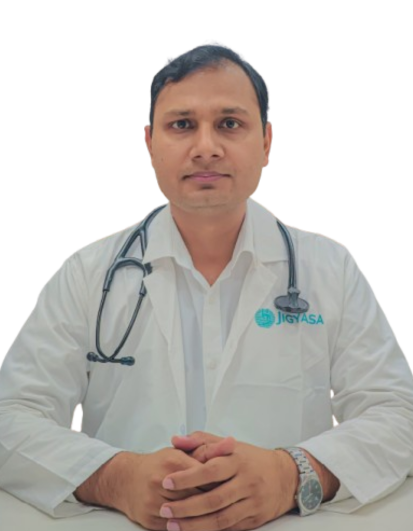
Heart Bypass Surgery in Moradabad - Cardiac Care by Dr. Amit Kumar Singh at Jigyasa Hospital
For patients with severe or extensive coronary artery blockage, coronary artery bypass grafting, commonly known as bypass surgery, remains one of the most established treatments in cardiac care. The procedure creates a new pathway for blood to reach the heart muscle when one or more coronary arteries are seriously narrowed or blocked.
Although bypass surgery is a major operation, decades of clinical experience have made it a well-established option for patients with complex or multi-vessel coronary disease. At Jigyasa Hospital, Moradabad, Dr. Amit Kumar Singh helps patients understand their diagnosis, treatment options, surgical referral, and long-term cardiac care.
This coordinated approach helps patients and families receive expert guidance at every stage without having to navigate the bypass surgery journey alone or travel repeatedly to larger cities for cardiac follow-up.
What Is Bypass Surgery?
Coronary artery bypass grafting, or CABG, is a surgical treatment for severely narrowed or blocked coronary arteries. These arteries supply oxygen-rich blood to the heart muscle. During surgery, a healthy blood vessel is taken from another part of the body and used to create a new route around the blocked section.
The healthy vessel may come from the leg, chest wall, or forearm. The new vessel, known as a graft, allows blood to flow beyond the blockage and reach the heart muscle. The surgery may be described as a single, double, triple, or quadruple bypass depending on the number of blocked vessels treated.
Bypass surgery does not remove the underlying tendency toward coronary artery disease. However, it can improve blood flow, relieve symptoms such as chest pain and breathlessness, and may improve long-term outcomes in selected patients when combined with medicines and healthy lifestyle changes.
Who Needs Bypass Surgery?
Not every patient with a heart blockage requires bypass surgery. Some blockages can be managed with medicines, while others may be treated with angioplasty and stent placement. Bypass surgery is considered when the disease is extensive, complex, or not suitable for catheter-based treatment.
The final decision depends on the location and severity of blockages, heart pumping function, diabetes, age, kidney health, other medical conditions, and the patient's preferences. Common situations in which bypass surgery may be recommended include:
Patients with multiple severely blocked coronary arteries, including double, triple, or quadruple vessel disease.
Patients with significant blockage in the left main coronary artery, which supplies a large portion of the heart muscle.
Patients with complex or diffuse blockages that are not suitable for angioplasty and stenting.
Patients with diabetes and multi-vessel coronary artery disease, where bypass may provide better long-term outcomes in selected cases.
Patients with reduced heart pumping function and significant coronary artery blockage.
Patients in whom angioplasty was unsuccessful or technically difficult because of the location or nature of the blockage.
Patients with recurrent blockage after previous angioplasty or stent placement.
The choice between angioplasty, bypass surgery, and medical management is never made on the basis of one test alone. Dr. Amit Kumar Singh reviews the complete cardiac profile and explains why a particular treatment is being recommended.
How Is the Decision Made?
Dr. Amit Kumar Singh follows a detailed diagnostic process before recommending bypass surgery. The purpose is to confirm the severity of coronary artery disease, assess heart function, identify other health risks, and determine whether surgery, angioplasty, or medicines are most appropriate.
Clinical Assessment
Dr. Amit Kumar Singh reviews symptoms such as chest pain, breathlessness, fatigue, and reduced exercise tolerance. Medical history, diabetes, hypertension, previous heart attacks, and earlier cardiac procedures are also considered.
ECG
An electrocardiogram provides information about heart rhythm and may show evidence of a previous heart attack, electrical conduction problems, or strain on the heart muscle.
Echocardiography
A 2D Echo measures the heart's pumping function, known as the ejection fraction. It also evaluates the heart valves, chambers, wall movement, and other structural findings that influence treatment planning.
TMT or Stress Testing
A treadmill test or other stress evaluation may help assess how the heart responds to exertion. The findings are considered along with symptoms and other investigations to understand how limiting the coronary disease may be.
Coronary Angiography
Coronary angiography is the definitive investigation for mapping the coronary arteries. It shows which arteries are blocked, the severity of each blockage, and the location of disease so that the cardiology and surgical teams can plan grafts.
Pre-Operative Fitness Evaluation
Before a major operation, the patient may require kidney function tests, lung assessment, blood counts, clotting tests, diabetes evaluation, thyroid testing, peripheral vascular assessment, and anaesthesia fitness review.
Once the findings are reviewed, the results are discussed with the patient and family in clear language. If bypass surgery is recommended, the patient is coordinated with the cardiac surgical team for the operation, while pre-operative and post-operative cardiac care continues under appropriate medical supervision.
What Happens During Bypass Surgery?
Bypass surgery is performed by a cardiac surgical team. Knowing the basic steps can help patients and families feel more prepared. The exact technique depends on the number of grafts required, the patient's anatomy, heart function, and the recommendation of the surgical team.
Traditional on-pump bypass surgery uses a heart-lung machine to temporarily support the heart and lungs. Selected patients may be candidates for off-pump surgery, which is performed while the heart continues beating without using the heart-lung machine.
Anaesthesia: The patient is placed under general anaesthesia for the complete procedure.
Graft harvesting: A healthy blood vessel may be taken from the leg, chest wall, or forearm according to the surgical plan.
Accessing the heart: In traditional on-pump surgery, the chest is opened and a heart-lung machine temporarily supports the heart and lungs.
Grafting: The surgeon attaches the healthy vessel above and below the blocked portion of the coronary artery to create a new route for blood flow.
Restoring heart function: After grafting is complete, the heart is restarted when required and its function is checked carefully.
Closure and monitoring: The chest is closed and the patient is moved to intensive care for close observation and recovery.
The operation commonly takes around 3 to 6 hours, although the duration may vary according to the number of grafts required and the complexity of the patient's coronary disease. After surgery, the patient is shifted to intensive care for close monitoring.
Recovery After Bypass Surgery
Recovery after bypass surgery happens gradually. Most patients experience steady improvement in energy and symptoms, but the body needs time to heal after a major operation. The cardiac team provides guidance on movement, breathing exercises, wound care, medicines, diet, and follow-up appointments.
In the Hospital
The first 1 to 2 days are usually spent in intensive care for close observation. Patients are gradually shifted to a regular ward as recovery progresses. Breathing exercises, light movement, pain control, incision care, and monitoring for complications are important parts of the early recovery period. Many patients are discharged within 6 to 10 days.
At Home
At home, patients usually begin with short walks and slowly increase activity according to medical advice. Wound care is required for the chest incision and, when applicable, the leg or forearm graft site. Heavy lifting, driving, and strenuous activity should be avoided until the cardiac team confirms that it is safe.
Cardiac Rehabilitation
Many patients benefit from cardiac rehabilitation after bypass surgery. It combines supervised exercise, education, nutrition guidance, emotional support, and lifestyle counselling. Rehabilitation helps patients return safely to normal activities and reduces the risk of future cardiac events.
Long-Term Follow-Up
Long-term cardiology follow-up remains important even when a patient feels completely well. Dr. Amit Kumar Singh monitors heart function and helps manage cholesterol, blood pressure, diabetes, medicines, diet, physical activity, and other factors that protect the bypass grafts and overall heart health.
Life After Bypass Surgery
Bypass surgery improves blood flow to the heart but does not eliminate the underlying causes of coronary artery disease. Long-term success depends on regular medicines, control of cholesterol and blood pressure, diabetes management, a heart-healthy diet, physical activity, and complete avoidance of smoking and tobacco.
Patients should continue follow-up appointments even when they feel healthy. Regular monitoring helps identify new symptoms, medication-related concerns, changes in risk factors, or other issues at an early stage.
Take prescribed antiplatelet, cholesterol-lowering, blood pressure, and other medicines consistently.
Follow a heart-healthy diet that is low in saturated fat, salt, processed foods, and trans fats.
Stay physically active according to cardiac rehabilitation or cardiologist guidance.
Stop smoking and tobacco use completely because they increase the risk of graft blockage.
Maintain good control of diabetes, blood pressure, and cholesterol.
Attend all follow-up appointments, even if there are no symptoms.
With good long-term management, bypass grafts, particularly arterial grafts such as the internal mammary artery, can remain functional for many years. Many patients return to active, productive lives after surgery when they continue appropriate medical care and lifestyle changes.
Why Choose Jigyasa Hospital for Your Bypass Surgery Journey?
A bypass surgery journey includes much more than the operation itself. Patients need accurate diagnosis, a clear comparison of treatment options, pre-operative fitness assessment, surgical coordination, and long-term follow-up. At Jigyasa Hospital, Dr. Amit Kumar Singh provides structured cardiac guidance at each stage.
Patients from Moradabad and nearby areas can receive essential cardiac evaluation and follow-up locally, reducing the burden of repeated travel while ensuring that treatment decisions are explained carefully to patients and families.
Thorough cardiac evaluation to determine whether bypass surgery, angioplasty, or medicines are appropriate.
Access to ECG, 2D Echo, TMT, coronary angiography, and required diagnostic testing.
Detailed pre-operative fitness assessment to help minimise avoidable surgical risks.
Coordinated referral to experienced cardiac surgical teams.
Structured post-surgical care focused on graft protection and long-term heart health.
Ayushman Bharat PM-JAY empanelment for eligible patients.
Ayushman Bharat PM-JAY at Jigyasa Hospital
Jigyasa Hospital is empanelled under the Ayushman Bharat Pradhan Mantri Jan Arogya Yojana, also known as PM-JAY. Eligible patients may be able to receive benefits for covered cardiac procedures and related treatment according to the applicable scheme guidelines.
Coverage depends on individual eligibility and the specific treatment package. The hospital team can assist patients and families with eligibility verification and provide guidance about the process during consultation.
Complete Cardiac Evaluation
Detailed assessment using ECG, 2D Echo, TMT, coronary angiography, and required blood tests to understand the severity and location of heart blockages.
Personalised Treatment Planning
Evidence-based guidance to determine whether bypass surgery, angioplasty, or medical management is most suitable for the patient.
Pre-Operative Fitness Assessment
Evaluation of kidney function, lung health, blood counts, diabetes, thyroid function, vascular health, and anaesthesia fitness before surgery.
Coordinated Surgical Referral
Structured coordination with experienced cardiac surgical teams when coronary artery bypass grafting is recommended.
Post-Surgical Cardiac Care
Regular follow-up after surgery to monitor heart function, medicines, blood pressure, cholesterol, diabetes, and graft protection.
Accessible Care in Moradabad
Cardiac evaluation, treatment planning, and long-term follow-up are available locally at Jigyasa Hospital, Near Miglani Cinema, Rampur Road.
Consult Dr. Amit Kumar Singh for Bypass Surgery Guidance
If you have been diagnosed with multiple heart blockages, left main artery disease, recurrent blockage after stenting, or symptoms such as chest pain and breathlessness, a detailed cardiac evaluation is important. Contact Jigyasa Hospital, Moradabad, to discuss your condition with Dr. Amit Kumar Singh.
The cardiac team can help you understand your reports, compare angioplasty and bypass surgery, assess treatment risks, and coordinate pre-operative and post-operative cardiac care.
Address
Near Miglani Cinema, Rampur Road, Moradabad 244001
Phone
7900903333Frequently Asked Questions About Bypass Surgery
Is bypass surgery better than angioplasty?
Neither treatment is universally better for every patient. The right option depends on the number and location of blockages, heart function, diabetes status, age, and overall health. Bypass surgery is commonly preferred for extensive multi-vessel disease or significant left main artery blockage, while angioplasty may be suitable for many single or double-vessel blockages.
How long does recovery take after bypass surgery?
Hospital recovery after bypass surgery usually takes around 6 to 10 days, depending on the patient's condition and progress. Most patients gradually return to normal activities over 6 to 8 weeks. Complete recovery, including more strenuous activity, may take 2 to 3 months and should follow the advice of the cardiac team.
Is bypass surgery safe?
Bypass surgery is a well-established cardiac procedure performed worldwide for many decades. Its safety depends on the patient's overall health, heart function, kidney and lung health, diabetes control, and the complexity of the blockages. A detailed pre-operative assessment helps the cardiac team understand and reduce individual surgical risks.
How many bypasses might I need?
The number of bypass grafts depends on how many coronary arteries are significantly blocked and where those blockages are located. Coronary angiography provides the detailed information required for planning surgery. Depending on the severity of disease, a patient may need a single bypass, double bypass, triple bypass, quadruple bypass, or more grafts.
Will I need medication after bypass surgery?
Yes. Bypass surgery improves blood flow but does not completely remove the underlying tendency toward coronary artery disease. Patients generally need ongoing medicines such as antiplatelet drugs, cholesterol-lowering medicines, blood pressure medicines, and diabetes treatment when required. Taking these medicines regularly helps protect the grafts and overall heart health.
Can bypass surgery be done for elderly patients?
Many elderly patients undergo bypass surgery successfully after careful assessment. The decision depends on overall fitness, heart function, kidney and lung health, other medical conditions, and the complexity of the coronary blockages. The cardiac team discusses the potential benefits and risks with the patient and family before surgery.
Is bypass surgery available in Moradabad?
Complete cardiac evaluation and diagnosis are available at Jigyasa Hospital under Dr. Amit Kumar Singh. When bypass surgery is recommended, the patient is coordinated with an experienced cardiac surgical team for the operation. Pre-operative assessment and post-operative cardiac follow-up can continue locally in Moradabad.
Does Ayushman Bharat PM-JAY cover bypass surgery?
Jigyasa Hospital is empanelled under Ayushman Bharat Pradhan Mantri Jan Arogya Yojana, also known as PM-JAY. Coverage for bypass surgery depends on individual eligibility, applicable package guidelines, and scheme requirements. The hospital team can assist eligible families with verification and guidance during consultation.
Why Patients Choose Us
- 24/7 Emergency & Trauma Care
- Top Specialist Doctors
- Modern ICU & Operation Theatres
- Transparent & Affordable Pricing
- Ayushman Bharat Empanelled
- Cashless Insurance Support
- Multispeciality Under One Roof
Our Location
Near Miglani Cinema,
Rampur Road,
Moradabad 244001