
Cardiac Arrest Treatment in Moradabad: Emergency Heart Care and Long-Term Protection at Jigyasa Hospital
Cardiac arrest is among the most serious emergencies in medicine. It happens suddenly, often without warning, and it can affect people who seemed healthy a moment before. The heart stops pumping blood effectively, and within minutes the brain and other organs are starved of oxygen. What happens in the first few minutes decides whether a person survives and how well they recover.
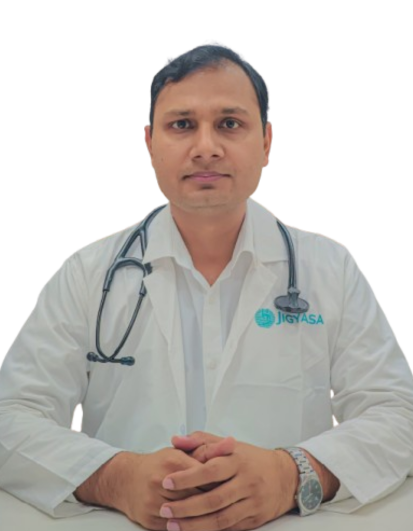
At Jigyasa Hospital, Moradabad, Dr. Amit Kumar Singh, a cardiologist, and the cardiac care team provide emergency evaluation and treatment for patients with cardiac arrest. They also provide follow-up care and prevention for those at risk. This page explains what cardiac arrest is, what causes it, how it is treated, and what every family should know to act quickly in an emergency.
What Is Cardiac Arrest?
Cardiac arrest is the sudden loss of heart function, breathing, and consciousness. It is caused by an electrical problem in the heart that produces a dangerous irregular rhythm, called an arrhythmia. The lower chambers of the heart may quiver instead of pumping, a condition called ventricular fibrillation; beat dangerously fast, called ventricular tachycardia; or stop beating altogether.
When this happens, blood does not reach the brain, lungs, or other organs. Without immediate treatment, a person can die within minutes. Cardiac arrest can be reversible if the right treatment is given very quickly. This is why awareness, early CPR, and rapid access to emergency care matter so much.
Cardiac Arrest vs. Heart Attack: Are They the Same?
Many people use the terms cardiac arrest and heart attack interchangeably, but they are different conditions. A heart attack is mainly a circulation problem caused by a blocked artery, while cardiac arrest is mainly an electrical problem that stops the heart from pumping. A heart attack can trigger cardiac arrest, but cardiac arrest can also occur due to other heart conditions.
| Feature | Heart Attack | Cardiac Arrest |
|---|---|---|
| Basic problem | A blockage in an artery cuts blood supply to part of the heart. | An electrical malfunction stops the heart from pumping. |
| Type of problem | Circulation, or plumbing. | Rhythm, or electrical. |
| Consciousness | The person is usually awake and may have pain. | The person collapses and becomes unresponsive. |
| Breathing | Usually present. | Absent or abnormal gasping. |
| Pulse | Usually present. | Absent. |
| Urgency | Emergency. | Immediate life-threatening emergency. |
What Causes Sudden Cardiac Arrest?
Several heart conditions and other factors can lead to cardiac arrest. The most common cause in adults is coronary artery disease, but dangerous rhythm disorders, heart muscle disease, severe electrolyte imbalance, and other emergencies can also trigger it.
Heart-related causes
Coronary artery disease, which is the most common cause in adults.
Heart attack, which can damage the electrical system of the heart.
Cardiomyopathy, a disease of the heart muscle.
Heart failure, where the heart becomes weak.
Heart rhythm disorders, including inherited rhythm conditions.
Valve disease and certain congenital heart problems.
Scarring of the heart from a previous heart attack.
Other triggers
Severe electrolyte imbalance, such as very low or high potassium.
Drug overdose or certain medicines that affect heart rhythm.
Severe blood loss or shock.
Drowning, suffocation, or severe lack of oxygen.
Electrocution.
A severe blow to the chest.
Risk factors
Previous heart attack or known coronary artery disease.
Weak heart muscle or heart failure.
High blood pressure, diabetes, or high cholesterol.
Smoking or use of tobacco in any form.
Obesity and a physically inactive lifestyle.
Family history of sudden cardiac death or inherited heart rhythm disease.
Excessive alcohol consumption or recreational drug use.
A previous cardiac arrest or life-threatening arrhythmia.
Warning Signs and Symptoms
During a cardiac arrest, the person collapses suddenly, becomes unresponsive, stops breathing normally, and has no detectable pulse. Some people may have warning symptoms before the event, but others may have none at all.
Sudden collapse and loss of consciousness.
No response when the person is shaken or spoken to.
No normal breathing, or only abnormal gasping.
No detectable pulse.
Chest pain or discomfort before the event in some cases.
Palpitations, a racing heartbeat, or a fluttering sensation.
Dizziness, light-headedness, or fainting, especially during exertion.
Unexplained breathlessness or extreme tiredness.
If you or a family member has chest pain, palpitations, fainting, unexplained breathlessness, or extreme tiredness, consult a cardiologist soon. Do not wait for symptoms to happen again, especially if there is a history of heart disease or sudden cardiac death in the family.
What to Do in a Cardiac Arrest: Act in the First Minutes
Time is the most important factor in cardiac arrest. Bystanders can make a real difference even before the ambulance arrives. Remember the sequence: check, call, compress, and shock.
Check Responsiveness and Breathing
Tap the person firmly on the shoulders and shout for a response. If there is no response and no normal breathing, treat the situation as a cardiac arrest and act immediately.
Call for Emergency Help
Call an ambulance or emergency number immediately, or ask someone nearby to do so. Ask for the nearest hospital with cardiac emergency care and request that someone find an AED if available.
Start CPR Immediately
Place the person on a firm, flat surface. Put the heel of one hand on the centre of the chest and the other hand on top. Push hard and fast, about 5 to 6 cm deep, at a rate of around 100 to 120 compressions per minute. Allow the chest to rise fully between compressions and continue without long pauses.
Use an AED as Soon as Available
An automated external defibrillator, or AED, analyses the heart rhythm and delivers an electric shock if needed. Switch it on and follow the voice instructions. AEDs are designed to be used by ordinary people.
Continue Until Help Arrives
Continue CPR until the emergency team arrives, the AED instructs you to stop, or the person clearly recovers. Hands-only CPR is much better than doing nothing.
Learning CPR is one of the most valuable skills anyone can have. Consider attending a training session, because the person you save may be someone in your own family.
Emergency Treatment of Cardiac Arrest at the Hospital
Once a patient reaches the hospital, the medical team continues the life-saving steps that began outside. The immediate aim is to restore an effective heart rhythm, support breathing and circulation, and identify the cause of the arrest.
High-quality CPR continued without long pauses.
Defibrillation to restore a normal heart rhythm when required.
Emergency medicines to support the heart and circulation.
Airway and breathing support, including oxygen or ventilator support when needed.
Rapid ECG, blood tests, and bedside echocardiography to identify the cause.
Intravenous access and close monitoring in an intensive care setting.
Treatment aimed at achieving return of spontaneous circulation, known as ROSC.
Identification and treatment of the underlying cause after the heart restarts.
Care After the Heart Restarts: Post-Cardiac Arrest Treatment
Restarting the heart is only the first step. The period after a cardiac arrest is critical because the brain and other organs may have been without oxygen. Post-arrest care focuses on protecting the brain, supporting the heart, and treating the underlying cause.
Intensive care monitoring of heart rhythm, blood pressure, oxygen levels, and organ function.
Support for breathing and circulation as required.
Brain protection measures, including careful temperature management and prevention of low oxygen or low blood pressure.
ECG, echocardiography, blood tests, and coronary angiography where appropriate to identify the cause.
Angioplasty and stenting if a blocked coronary artery caused the cardiac arrest.
Correction of electrolyte imbalances and other reversible triggers.
Treatment of infections, complications, or other conditions that may arise after the event.
Long-term follow-up, medicines, rehabilitation, and prevention planning.
The outcome depends on many factors, including how quickly CPR began, how soon the heart restarted, and the underlying cause. The team at Jigyasa Hospital keeps families informed with honest and compassionate communication at every stage.
Finding the Cause: Why Diagnosis Matters
Treating a cardiac arrest does not end with survival. To prevent it from happening again, doctors must identify why it happened. Evaluation may include ECG and rhythm monitoring, echocardiography, coronary angiography, blood tests, and advanced imaging in selected cases.
ECG and rhythm monitoring help detect dangerous or inherited rhythm disorders. Echocardiography checks the structure and pumping function of the heart. Coronary angiography looks for blocked arteries, while blood tests check electrolytes, cardiac markers, and other contributing factors.
A review of family history is also important because some heart rhythm conditions run in families. Once the cause is known, Dr. Amit Kumar Singh creates a personalised plan to reduce the risk of another cardiac arrest.
Preventing Another Cardiac Arrest: Long-Term Treatment
For people who survive a cardiac arrest, or who are at high risk of one, several treatments can protect the heart and reduce the chance of another life-threatening event.
Medicines to control heart rhythm, protect the heart muscle, lower blood pressure, reduce cholesterol, or prevent clots.
Angioplasty and stenting to open a blocked artery and restore blood flow when a blockage caused the event.
Coronary artery bypass surgery for selected patients with multiple or complex coronary blockages.
Implantable cardioverter defibrillator, or ICD, for people at high risk of another dangerous heart rhythm.
Treatment of heart failure, valve disease, and other underlying heart conditions.
Cardiac rehabilitation with supervised exercise, education, and lifestyle guidance.
Regular follow-up to monitor heart function, medicines, and risk factors.
An ICD may be recommended for people at high risk of another dangerous arrhythmia. It continuously monitors the heart rhythm and delivers a shock if needed. Your cardiologist will explain whether an ICD is suitable for your condition.
Who Is at Higher Risk? When to See a Cardiologist
Consider consulting a cardiologist in Moradabad soon if you have had a heart attack, have known coronary artery disease, have a weak heart or heart failure, or have experienced unexplained fainting, palpitations, or a racing heartbeat.
You should also seek timely evaluation if you have diabetes, high blood pressure, high cholesterol, a family history of sudden cardiac death, or a heart rhythm condition. People who smoke, use tobacco, or are above 40 and have never had a heart check-up should also consider a cardiac assessment.
A timely check-up can identify risk factors and allow treatment before an emergency occurs. Early evaluation is especially important for people with previous heart disease or a family history of sudden cardiac death.
Why Choose Jigyasa Hospital for Cardiac Emergencies in Moradabad?
In a cardiac emergency, you cannot afford to lose time. Families across Moradabad, Rampur, Sambhal, Amroha, Bijnor, and nearby areas choose Jigyasa Hospital for experienced cardiology care, emergency readiness, and complete cardiac services under one roof.
Dr. Amit Kumar Singh treats patients with serious heart conditions, including life-threatening rhythm problems and coronary artery disease. The hospital provides diagnostics such as ECG, echocardiography, and angiography, along with treatments including angioplasty, in one place.
Experienced cardiology care for serious heart conditions and life-threatening rhythm problems.
Emergency readiness for rapid assessment and treatment of cardiac emergencies.
Complete cardiac services, including ECG, echocardiography, angiography, and angioplasty, under one roof.
Honest and compassionate communication with patients and families during difficult situations.
Support after discharge, including guidance on medicines, lifestyle, follow-up, and rehabilitation.
Advanced heart care close to home, reducing the need to travel to another city during an emergency.
Experienced Cardiology Care
Dr. Amit Kumar Singh and the cardiac care team provide evaluation and treatment for serious heart conditions, including life-threatening rhythm problems and coronary artery disease.
Emergency Readiness
Cardiac arrest requires immediate recognition, CPR, defibrillation, and urgent hospital care. Jigyasa Hospital is focused on rapid assessment and treatment of cardiac emergencies.
Complete Cardiac Services
ECG, echocardiography, angiography, angioplasty, and follow-up cardiac care are available under one roof, helping patients receive timely diagnosis and treatment.
Post-Arrest and Preventive Care
Care continues after the heart restarts with intensive monitoring, tests to identify the cause, treatment of blockages or rhythm disorders, and long-term prevention planning.
Honest and Compassionate Communication
The team explains the condition, treatment options, recovery expectations, and prevention plan clearly, while supporting families through a difficult and urgent situation.
Advanced Heart Care Close to Home
Emergency cardiac care in Moradabad helps patients from Moradabad, Rampur, Sambhal, Amroha, Bijnor, and nearby areas avoid delays caused by travelling to another city.
Lifestyle Changes to Protect Your Heart
Healthy habits are a strong defence against heart disease and sudden cardiac events. Small, consistent changes can reduce risk factors and support long-term heart health.
Quit smoking and avoid tobacco in every form.
Eat a heart-healthy diet rich in vegetables, fruits, whole grains, and pulses, and low in salt, sugar, and fried food.
Exercise regularly as advised by your doctor.
Maintain a healthy weight.
Control blood pressure, blood sugar, and cholesterol.
Limit alcohol and avoid recreational drugs.
Manage stress and get enough sleep.
Take medicines regularly and never stop them on your own.
Go for regular heart check-ups, especially if you have risk factors.
Common Myths About Cardiac Arrest
Myth: Cardiac arrest and heart attack are the same.
They are different. A heart attack is a blockage problem, while cardiac arrest is an electrical problem. One can lead to the other.
Myth: Only older people get cardiac arrest.
It can affect younger people too, especially those with hidden rhythm disorders or heart muscle disease.
Myth: CPR can harm the person, so it is better not to try.
Without CPR, a person in cardiac arrest may not survive. Doing compressions gives them a chance. A rib injury is far less serious than death.
Myth: Only doctors can use an AED.
AEDs are made for ordinary people to use. The device gives clear voice instructions.
Myth: If someone seems healthy, they cannot have a heart problem.
Some heart conditions give no warning. Regular check-ups matter, particularly when there is a family history of heart disease or sudden cardiac death.
Consult Dr. Amit Kumar Singh for Cardiac Arrest Prevention and Follow-Up
If you have had a heart attack, experience fainting or palpitations, have a family history of sudden cardiac death, or have risk factors such as high blood pressure, diabetes, high cholesterol, or tobacco use, a timely cardiac evaluation is important. Contact Jigyasa Hospital, Moradabad, to discuss your condition with Dr. Amit Kumar Singh.
The cardiac team can assess your risk, arrange appropriate tests, guide treatment, and help create a prevention plan. Patients from Moradabad, Rampur, Sambhal, Amroha, Bijnor, and nearby areas can access cardiac care close to home without the delay of travelling to another city.
Address
Near Miglani Cinema, Rampur Road, Moradabad 244001
Phone
7900903333Frequently Asked Questions About Cardiac Arrest
What is the first thing to do when someone has a cardiac arrest?
Check for response and breathing, call for emergency help immediately, and start chest compressions. Use an AED if one is available. Hands-only CPR can be started by anyone, even without formal training.
Can a person survive a cardiac arrest?
Yes. Quick CPR, early defibrillation, and prompt hospital care greatly improve the chances of survival. Every minute without treatment reduces the chance of recovery, so immediate action is essential.
Is cardiac arrest the same as a heart attack?
No. A heart attack is caused by a blocked artery that reduces blood supply to part of the heart muscle. Cardiac arrest is an electrical problem that stops the heart from pumping effectively. A heart attack can sometimes lead to cardiac arrest.
Can cardiac arrest happen without warning?
Yes, it can happen suddenly and without warning. Some people experience warning signs such as chest pain, palpitations, dizziness, fainting, or breathlessness before the event, while others have no symptoms at all.
What is an ICD, and who needs it?
An implantable cardioverter defibrillator, or ICD, is a small device placed under the skin of the chest. It continuously monitors the heart rhythm and delivers a shock if it detects a dangerous rhythm. It may be recommended for people at high risk of another life-threatening arrhythmia.
What happens after someone survives a cardiac arrest?
After survival, the patient usually receives intensive care monitoring, tests to identify the cause, and treatment to prevent another event. This may include medicines, angioplasty and stenting, an ICD, lifestyle changes, and long-term cardiac follow-up.
Can I do CPR if I am not trained?
Yes. Hands-only CPR, which means giving hard and fast chest compressions in the centre of the chest, can save a life. Do not wait for professional training before starting compressions if someone has collapsed and is not breathing normally.
How can I reduce my risk of cardiac arrest?
Control blood pressure, diabetes, and cholesterol; quit tobacco; maintain a healthy weight; exercise as advised; limit alcohol; manage stress; and attend regular heart check-ups. People with previous heart disease, fainting episodes, or a family history of sudden cardiac death should consult a cardiologist promptly.
Why Patients Choose Us
- 24/7 Emergency & Trauma Care
- Top Specialist Doctors
- Modern ICU & Operation Theatres
- Transparent & Affordable Pricing
- Ayushman Bharat Empanelled
- Cashless Insurance Support
- Multispeciality Under One Roof
Our Location
Near Miglani Cinema,
Rampur Road,
Moradabad 244001