
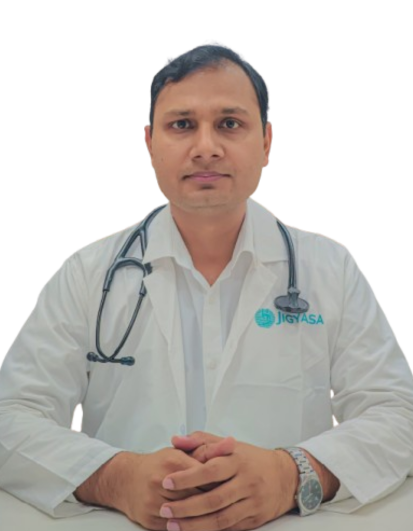
Cardiac Catheterization and Coronary Angiography in Moradabad: A Complete Guide by Dr. Amit Kumar Singh
When non-invasive tests like an ECG, echocardiogram, or TMT stress test point toward a possible blockage in the heart's arteries, the next definitive step is often cardiac catheterization. More specifically, coronary angiography is the gold-standard test for directly visualizing the coronary arteries and confirming the exact location, severity, and extent of any blockages. This procedure provides the most accurate diagnosis of coronary artery disease available today.
For patients in Moradabad, this used to mean a mandatory trip to Delhi, Lucknow, or Meerut, often during moments of significant anxiety about their heart health. At Jigyasa Hospital, Dr. Amit Kumar Singh provides this critical diagnostic service locally, ensuring that patients from Moradabad and surrounding areas get timely, accurate cardiac evaluation without unnecessary delays or travel. This includes patients from Sambhal, Amroha, Rampur, Bijnor, and Chandausi.
What Is Cardiac Catheterization?
Cardiac catheterization is a procedure in which a thin, flexible tube called a catheter is guided through a blood vessel up to the heart and its coronary arteries. The access is usually through the wrist via the radial artery or the groin via the femoral artery, depending on the patient's anatomy and the cardiologist's preference. Once in position, a contrast dye is injected through the catheter, and X-ray imaging known as fluoroscopy captures real-time pictures of blood flow through the coronary arteries.
This specific application of catheterization is called coronary angiography, which has become the gold standard for diagnosing coronary artery disease. Unlike a stress test or echocardiogram, which infer heart function indirectly through various measurements and observations, coronary angiography provides a direct, detailed map of the coronary arteries. This shows precisely where narrowing or blockage exists, how severe it is, and how many vessels are affected by the disease process.
Why This Matters for Patients in Moradabad
Coronary artery disease has become increasingly common across Moradabad and the wider Rohilkhand region, driven by a combination of factors familiar to cardiologists practicing in North India. Rising rates of diabetes and hypertension are both major accelerants of coronary artery blockage, affecting a growing number of patients in the region. These chronic conditions damage the blood vessel walls over time, making them more susceptible to plaque buildup and narrowing.
Diets high in refined oils, fried snacks, and sugar are common across both urban and semi-urban households in the region. Tobacco use, including smoking and smokeless forms like gutkha and khaini, remains widespread in the region and significantly increases cardiovascular risk. Family history plays an important role, with heart disease often running strongly through North Indian families, making some individuals more predisposed to early coronary artery disease.
When Is Cardiac Catheterization (Angiography) Recommended?
Dr. Amit Kumar Singh typically recommends coronary angiography in specific clinical situations where the diagnosis of coronary artery disease needs to be confirmed definitively. This procedure is essential when non-invasive tests suggest significant blockage or when patients present with symptoms that strongly indicate heart disease. The decision to proceed with angiography is based on a careful assessment of symptoms, test results, and overall cardiovascular risk profile.
Common situations in which coronary angiography may be recommended include patients with abnormal stress tests, ongoing chest pain despite medication, or those who have experienced a heart attack. The procedure helps identify the exact location and severity of blockages, enabling precise treatment planning. Early diagnosis through angiography can be lifesaving, particularly in patients with acute coronary syndromes who need urgent intervention.
Abnormal or strongly positive stress test (TMT) suggesting significant blockage in the coronary arteries requiring definitive evaluation.
Ongoing or worsening chest pain (angina) despite medication, indicating possible progressive coronary artery disease needing further assessment.
Unstable angina with chest pain that occurs at rest or with minimal exertion, requiring urgent coronary angiography to identify the problem.
Heart attack (acute myocardial infarction), where emergency or urgent angiography helps identify the blocked artery for immediate treatment.
Abnormal echocardiogram findings suggesting reduced heart function possibly linked to blocked arteries supplying the heart muscle.
Unexplained heart failure symptoms, to rule out coronary artery disease as an underlying cause requiring specific management.
Pre-surgical evaluation, particularly before valve surgery or other major cardiac procedures, to check for coexisting blockages.
Inconclusive non-invasive test results, where the clinical picture still strongly suggests coronary artery disease requiring confirmation.
The decision to perform angiography is never made lightly and always considers the individual patient's clinical picture and risk factors. Dr. Amit Kumar Singh discusses the indications, benefits, and risks with each patient before proceeding with the procedure. This ensures that patients are well-informed and comfortable with the diagnostic plan. The goal is always to provide accurate diagnosis while minimizing unnecessary procedures.
How the Procedure Is Performed
Understanding the steps involved in cardiac catheterization can help patients feel more prepared and less anxious about the procedure. The entire process is carefully planned and monitored by an experienced cardiology team to ensure safety and accuracy. Most diagnostic coronary angiography procedures take between 20 to 45 minutes, though timing varies based on individual findings and complexity. Patients are awake throughout the procedure and can communicate with the team, though mild sedation may be used to help with relaxation.
Before the Procedure
Patients typically need to fast for a few hours beforehand to ensure safety during the procedure. Blood tests including kidney function, clotting parameters, and blood counts are done to ensure the procedure is safe. Current medications, especially blood thinners and diabetes medications, are reviewed and adjusted as needed by the medical team.
During the Procedure
The patient lies on an X-ray table in the catheterization lab while local anesthesia is given at the access site, typically the wrist. A thin catheter is threaded through the artery and guided carefully up to the openings of the coronary arteries. Contrast dye is injected, and X-ray images are captured showing the dye flowing through the coronary arteries in real time.
After the Procedure
Pressure is applied to the access site, whether wrist or groin, to prevent bleeding and ensure proper healing. Patients are monitored for a few hours afterward to watch for any complications and ensure stability. Wrist-access procedures generally allow same-day discharge in straightforward cases, while groin-access procedures may require a longer observation period.
Dr. Amit Kumar Singh reviews the images live during the procedure, identifying any areas of narrowing or blockage, their location, and severity. This real-time assessment allows for immediate discussion of findings and treatment options with the patient and family. The procedure and its risks are explained beforehand, and informed consent is taken to ensure patients understand what to expect. The medical team remains available throughout to address any questions or concerns.
Understanding Your Angiography Results
Once the images are reviewed, Dr. Amit Kumar Singh explains the findings directly to the patient and family in clear, understandable language. The results generally fall into a few categories that determine the appropriate treatment pathway. Understanding these categories helps patients make informed decisions about their cardiac care. The discussion includes the severity of any blockages, the number of vessels affected, and the recommended treatment options.
No Significant Blockage
Arteries appear normal or have only mild, non-flow-limiting narrowing that does not require intervention. Management typically continues with lifestyle changes, risk factor control, and regular monitoring to detect any progression early.
Mild to Moderate Blockage
Some narrowing is present but not severe enough to significantly restrict blood flow to the heart muscle. These cases are often managed with medications and closer monitoring rather than immediate invasive intervention.
Significant Blockage Requiring Intervention
When one or more arteries show severe narrowing, typically 70 percent or more, or 50 percent or more in the main left coronary artery, intervention is usually recommended. Treatment options include angioplasty with stenting or coronary artery bypass grafting depending on the extent of disease.
Dr. Amit Kumar Singh discusses these options with the patient, taking into account the angiographic findings, overall cardiac function, other health conditions, and patient preference. He coordinates referral for further intervention as needed, whether that involves angioplasty and stenting or coronary artery bypass grafting. The treatment decision is individualized based on the number of blocked vessels, their location, and overall heart function. This comprehensive approach ensures patients receive the most appropriate care for their specific condition.
Is Cardiac Catheterization Safe?
Coronary angiography is a well-established, widely performed procedure with a strong safety record when performed by experienced cardiologists. It has been performed millions of times worldwide over many decades, with continuous improvements in technique and equipment. The procedure is particularly safe when done via the wrist or radial approach, which has significantly reduced bleeding complications compared to the older groin-access technique. This approach also allows for faster recovery and greater patient comfort.
As with any invasive procedure, some risks exist, including bleeding or bruising at the access site, allergic reaction to the contrast dye, or rarely, more serious complications. These risks are carefully evaluated beforehand, and the procedure is performed in a properly equipped cath lab with a trained cardiology team. Emergency backup is always available to handle any unexpected situations that may arise during the procedure. Patient safety is the top priority throughout the entire process.
Dr. Amit Kumar Singh evaluates each patient's individual risk factors beforehand to ensure the procedure is appropriate and as safe as possible. This includes reviewing kidney function, allergies, bleeding risk, and overall health status. The benefits of accurate diagnosis almost always outweigh the small risks associated with the procedure. Patients are encouraged to discuss any concerns with the medical team before the procedure.
Cardiac Catheterization Cost in Moradabad
For many families in Moradabad and nearby towns, cost and travel logistics have historically been major barriers to timely cardiac catheterization. This often meant a multi-day trip to Delhi or Lucknow, including consultation fees, procedure costs, travel, and accommodation for family members accompanying the patient. These additional expenses and logistical challenges often delayed diagnosis and treatment, sometimes with serious consequences for heart health.
Having this service available locally at Jigyasa Hospital reduces this burden considerably, making essential cardiac diagnostics more accessible to the community. Patients can receive the same quality of care without the stress and expense of traveling to distant cities. This local availability also enables faster diagnosis and treatment, which is crucial in cardiac care where time matters. The hospital team works to make cardiac care as affordable and accessible as possible.
Exact pricing depends on the type of procedure, whether diagnostic angiography alone or angiography with angioplasty, the access site used, and any additional requirements. The cost is best confirmed directly with the hospital during consultation, as it may vary based on individual patient needs. The hospital staff can provide detailed cost information and discuss payment options during the consultation. Transparency in pricing is maintained to help patients plan accordingly.
Why Choose Jigyasa Hospital for Cardiac Catheterization in Moradabad
A cardiac catheterization procedure requires expertise, modern facilities, and a coordinated approach to ensure the best outcomes for patients. At Jigyasa Hospital, Dr. Amit Kumar Singh provides cardiologist-led diagnostic procedures with direct, same-visit interpretation of results. This ensures that patients receive accurate diagnosis and immediate guidance on the next steps in their treatment journey. The hospital's commitment to quality cardiac care is reflected in every aspect of the service.
Patients from Moradabad, Sambhal, Amroha, Rampur, and nearby areas benefit from local accessibility, saving them the burden of traveling to bigger cities for a fundamental cardiac diagnostic test. This local availability also enables faster diagnosis and treatment, which is crucial in cardiac care where time matters. The hospital's coordinated treatment pathway connects diagnosis directly to the appropriate next step without fragmented care across multiple hospitals. This seamless approach reduces stress and improves outcomes for patients.
Cardiologist-led diagnostic procedure under Dr. Amit Kumar Singh, with direct, same-visit interpretation of results.
Modern cath lab facilities for accurate imaging and safe procedural care with emergency backup available.
Radial or wrist access preferred where appropriate, for faster recovery and reduced complications.
Local accessibility, saving patients from Moradabad, Sambhal, Amroha, Rampur, and nearby areas the burden of traveling to bigger cities.
Coordinated treatment pathway, connecting diagnosis directly to the appropriate next step without fragmented care across multiple hospitals.
Emergency readiness for patients presenting with acute chest pain or suspected heart attack requiring urgent evaluation.
Cardiologist-Led Procedure
Diagnostic cardiac catheterization and coronary angiography performed under the direct supervision of Dr. Amit Kumar Singh with same-visit interpretation of results.
Modern Cath Lab Facilities
Advanced imaging equipment and properly equipped catheterization laboratory for accurate diagnosis and safe procedural care with emergency backup available.
Radial Access Preferred
Wrist access approach preferred where appropriate, offering faster recovery, reduced bleeding complications, and greater patient comfort during and after the procedure.
Coordinated Treatment Pathway
Seamless connection from diagnosis to appropriate next steps including medication management, angioplasty referral, or surgical referral without fragmented care across multiple hospitals.
Emergency Readiness
Immediate evaluation available for patients presenting with acute chest pain or suspected heart attack requiring urgent coronary angiography and timely intervention.
Accessible Care in Moradabad
Local cardiac catheterization services at Jigyasa Hospital, Near Miglani Cinema, Rampur Road, saving patients from Moradabad, Sambhal, Amroha, and Rampur the burden of traveling to bigger cities.
Consult Dr. Amit Kumar Singh for Cardiac Catheterization
If you have been diagnosed with coronary artery disease, have an abnormal stress test, or are experiencing symptoms such as chest pain and breathlessness, a detailed cardiac evaluation including coronary angiography may be necessary. Contact Jigyasa Hospital, Moradabad, to discuss your condition with Dr. Amit Kumar Singh. The cardiac team can help you understand your reports, determine the need for angiography, and coordinate appropriate treatment based on the findings.
Whether you need diagnostic angiography, angioplasty referral, or surgical consultation, comprehensive cardiac care is available locally at Jigyasa Hospital. Patients from Moradabad, Sambhal, Amroha, Rampur, and surrounding areas benefit from accessible cardiac diagnostics without repeated travel to larger cities. The hospital's coordinated approach ensures seamless care from diagnosis through treatment and long-term follow-up for optimal heart health.
Address
Near Miglani Cinema, Rampur Road, Moradabad 244001
Phone
7900903333Frequently Asked Questions About Cardiac Catheterization
What is the difference between cardiac catheterization and coronary angiography?
Cardiac catheterization is the general procedure of guiding a catheter into the heart's blood vessels. Coronary angiography is the specific application of this technique to visualize the coronary arteries using contrast dye and X-ray imaging. It is the most common reason catheterization is performed. This procedure provides a direct, detailed map of the coronary arteries showing precisely where narrowing or blockage exists. The results help determine the most appropriate treatment strategy for each patient.
Is angiography painful?
Most patients feel minimal discomfort during the coronary angiography procedure. Local anesthesia numbs the access site, typically the wrist, ensuring the area is comfortable throughout. While you may feel some pressure or a brief warm sensation when the contrast dye is injected, the procedure itself is not typically painful. Patients remain awake and can communicate with the medical team. Most describe the experience as much less uncomfortable than they anticipated.
How long does the procedure take, and how long is the hospital stay?
Diagnostic angiography usually takes 20 to 45 minutes, though timing varies based on individual findings and complexity. With wrist access, many patients can go home the same day after a few hours of monitoring. Groin access or additional procedures like angioplasty may require a longer observation period overnight. The medical team will provide specific guidance based on your procedure and recovery progress. Most patients resume light activities within a day or two.
Does an abnormal angiography always mean I need surgery?
No. Depending on the severity and location of blockages, treatment may range from medication and lifestyle changes to angioplasty with stenting. In more extensive cases with multi-vessel disease, bypass surgery may be recommended. Dr. Amit Kumar Singh will explain which option fits your specific findings and overall health. The decision considers the number of blocked vessels, heart function, and other medical conditions. Many patients with mild to moderate blockages are managed successfully with medications.
Is angiography safe for diabetic or elderly patients?
Yes, angiography is routinely performed in diabetic and elderly patients with appropriate precautions. Additional measures such as kidney function monitoring are taken, given the contrast dye's effect on the kidneys. The medical team evaluates each patient's individual risk factors beforehand to ensure the procedure is as safe as possible. Radial or wrist access has significantly reduced bleeding complications compared to older techniques. The procedure has a strong safety record when performed by experienced cardiologists.
What is the difference between angiography and angioplasty?
Angiography is a diagnostic procedure that visualizes the arteries to identify blockages and assess their severity. Angioplasty is a treatment procedure where a blocked artery identified on angiography is opened using a balloon and typically a stent. Angioplasty is sometimes performed in the same sitting as the diagnostic test if significant blockage is found. The decision to proceed with angioplasty depends on the angiographic findings and clinical situation. Both procedures are performed in the catheterization lab by the cardiology team.
Do I need to stay awake during the procedure?
Yes, most patients remain awake throughout, often with mild sedation to help with comfort and relaxation. Being awake allows you to communicate with the medical team and report any discomfort during the procedure. This also reduces certain risks compared to general anesthesia. The local anesthesia ensures the access site is numb, so you should not feel pain. The medical team monitors your comfort level continuously throughout the procedure.
How soon can I resume normal activities after angiography?
For straightforward diagnostic angiography via the wrist, many patients resume light activities within a day or two. Heavy lifting or strenuous exercise should be avoided for about a week to allow the access site to heal properly. Your specific recovery timeline will be discussed based on the access site used and any additional procedures performed. Most patients return to work within a few days if their job does not involve heavy physical activity. Follow your doctor's specific instructions for the best recovery.
Why Patients Choose Us
- 24/7 Emergency & Trauma Care
- Top Specialist Doctors
- Modern ICU & Operation Theatres
- Transparent & Affordable Pricing
- Ayushman Bharat Empanelled
- Cashless Insurance Support
- Multispeciality Under One Roof
Our Location
Near Miglani Cinema,
Rampur Road,
Moradabad 244001