
Cardiologist on Rampur Road, Moradabad: Heart Care with Dr. Amit Kumar Singh at Jigyasa Hospital
Chest pressure after climbing stairs. A racing heartbeat at night. Swollen ankles and breathlessness that seem to be getting worse. Or perhaps nothing at all yet, but a father with diabetes, a family history of heart attacks, and a nagging feeling that it is time to get checked. In each of these situations, the question is the same: who is the right heart doctor, and where?
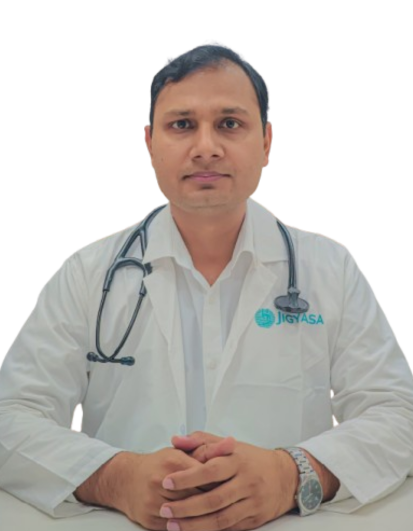
If you live in or around Moradabad, Dr. Amit Kumar Singh, Interventional Cardiologist, at Jigyasa Hospital on Rampur Road is available for heart consultations, diagnosis, and treatment. This guide explains what a cardiologist does, which symptoms should never be ignored, what to expect at a first visit, which tests and treatments are used, and how to reach us.
Why Location Matters in Heart Care
Heart problems are time-sensitive. In a heart attack, the heart muscle is injured every minute that blood flow stays blocked, and the chances of a good recovery depend heavily on how quickly the artery is opened. Having a cardiologist and a hospital within easy reach can make a real difference.
Even outside emergencies, proximity helps. Heart conditions such as high blood pressure, coronary artery disease, and heart failure need regular follow-up, medicine adjustments, and tests. A clinic you can reach easily makes it far more likely that you stay on track.
Where Is Jigyasa Hospital?
Jigyasa Hospital – Multispeciality Hospital
The hospital is on Rampur Road, and Miglani Cinema is a well-known landmark that makes it easy to find. Families from different parts of Moradabad city, and from nearby areas such as Rampur, Sambhal, Amroha, Bijnor, and Chandausi, can reach the hospital by road.
Tip for finding us: Search "Jigyasa Hospital Moradabad" in your maps app, or call 7900903333 and the reception team will guide you.
Meet Your Heart Specialist: Dr. Amit Kumar Singh
Dr. Amit Kumar Singh is an interventional cardiologist at Jigyasa Hospital. An interventional cardiologist is a heart specialist trained not only to diagnose and medically treat heart disease, but also to perform catheter-based procedures, in which the heart's blood vessels are examined and treated through a thin tube passed through an artery, usually in the wrist or groin, without open-heart surgery.
At Jigyasa Hospital, this includes coronary angiography to look at the heart arteries, and coronary angioplasty with stenting, also called PCI, to open blocked arteries.
For some conditions, treatment lies outside what is done here. For example, heart valve replacement, whether surgical or catheter-based such as TAVI, is not performed at Jigyasa Hospital. Valve disease can be diagnosed, monitored, and medically managed, and when replacement is needed, patients are guided on referral to an appropriate centre. Being clear about this helps patients plan.
His listed qualifications include MD (BHU), DM Cardiology (KGMU), and FSCAI. For confirmed details about his experience, OPD timings, and available facilities, please call Jigyasa Hospital on 7900903333.
What Does a Cardiologist Treat?
Cardiology covers the heart and blood vessels. Common conditions include:
• Coronary artery disease: narrowing or blockage of the arteries that supply the heart, causing angina or a heart attack
• Heart attack, also called myocardial infarction
• High blood pressure and its effects on the heart
• Heart failure, when the heart cannot pump as effectively as the body needs
• Heart rhythm problems, including palpitations, irregular heartbeat, atrial fibrillation, and slow or fast heart rates
• Heart valve disease, including leaking or narrowed valves
• Cardiomyopathy, or diseases of the heart muscle
• Congenital heart conditions that are present from birth and are monitored in adults
• High cholesterol and other risk factors for heart disease
• Heart problems related to diabetes, kidney disease, or thyroid disorders
• Pre-operative heart assessment before surgery
• Syncope, or fainting, and dizziness that may be heart-related
Symptoms You Should Never Ignore
Heart disease does not always announce itself dramatically. Watch for:
• Chest pain, pressure, tightness, or heaviness, especially when walking, climbing stairs, or under stress, and relieved by rest
• Breathlessness with activity, or on lying flat
• Palpitations, meaning a racing, fluttering, or skipped heartbeat
• Fainting or near-fainting
• Unusual tiredness, particularly if it is new or worsening
• Swelling of the feet, ankles, or legs
• Dizziness or light-headedness
• Pain spreading to the left arm, shoulder, neck, jaw, or back
• Sweating, nausea, or indigestion-like discomfort that comes with exertion
• A family history of early heart disease, together with symptoms
Symptoms can be different in women, older adults, and people with diabetes, who may have less typical signs such as extreme fatigue, breathlessness, nausea, or upper back and jaw discomfort, without classic chest pain. Do not dismiss unusual symptoms because they "do not look like a heart attack."
Emergency Signs: Heart Attack and Stroke
Call for emergency help or go to the hospital immediately, or call 7900903333, if you or someone near you has:
• Chest pain or pressure lasting more than a few minutes, or that returns, particularly with sweating, nausea, breathlessness, or pain spreading to the arm, jaw, neck, or back
• Sudden severe breathlessness
• Fainting with chest pain or palpitations
• Sudden weakness or numbness on one side of the body, face drooping, slurred speech, or sudden confusion, which may suggest stroke
What to do while waiting for help:
• Stop all activity and sit or lie down in a comfortable, semi-upright position
• Loosen tight clothing
• Do not drive yourself. Ask someone else to take you, or call for an ambulance
• Do not eat or drink, and do not ignore the pain hoping it will pass
• If a doctor has previously advised you to chew an aspirin in a suspected heart attack and you have no allergy or bleeding problem, follow that advice. If you are unsure, tell the emergency team immediately and follow their instructions
Time matters. Early treatment of a heart attack saves heart muscle and lives.
Who Should Get a Heart Check-Up?
You do not have to wait for symptoms. A heart check is sensible if you:
• Are over 40, or younger with risk factors
• Have diabetes, high blood pressure, or high cholesterol
• Smoke, or use tobacco in any form
• Are overweight, or have a sedentary lifestyle
• Have a family history of heart attack, stroke, or sudden death at a young age
• Have kidney disease
• Experience chest discomfort, breathlessness, palpitations, or unexplained tiredness
• Are planning major surgery or a strenuous exercise programme
• Are a woman after menopause, when heart risk rises
• Have been told you have an abnormal ECG or a heart murmur
What Happens at Your First Cardiology Visit?
Your story. The doctor will ask about your symptoms, when they occur, what triggers or relieves them, and how they affect your daily life. Your medical history, medicines, family history, smoking, alcohol, diet, and activity levels are also important.
Examination. This includes checking your blood pressure, pulse, heart and lung sounds, swelling in the legs, and other signs.
Tests, if needed. The doctor will advise only the tests that are relevant to you. Common ones include:
• ECG: Records the heart's electrical activity. It is quick and painless
• Echocardiography or echo: An ultrasound of the heart that shows its size, pumping strength, and valves
• Treadmill test or stress test: Records the heart while you exercise, to look for blockages that appear under effort
• Holter monitoring: A portable ECG worn for a day or more to detect rhythm problems
• Blood tests: Cholesterol, blood sugar, kidney function, thyroid, and cardiac markers such as troponin in suspected heart attack
• Chest X-ray
• CT coronary angiography: A scan that images the heart arteries, used in selected patients
• Coronary angiography: A catheter-based test that directly images the heart arteries, usually advised when blockages are suspected and treatment may follow
Diagnosis and plan. You will be told what the findings mean, what the options are, and what the next steps are. Many heart conditions are managed with medicines and lifestyle changes. Procedures are advised only when they are likely to help, and the reasons, benefits, and risks should be explained.
Which tests and procedures are available depends on the hospital's facilities. Please call Jigyasa Hospital on 7900903333 to confirm before you travel.
Coronary Artery Disease, Angioplasty and Stenting
Coronary artery disease happens when fatty deposits, called plaque, build up in the arteries that supply the heart, narrowing them. This can cause angina, chest discomfort when the heart does not get enough blood during exertion. If a plaque ruptures and a clot forms, the artery can suddenly block, causing a heart attack.
Treatment depends on the extent and severity of the disease. Many patients are treated with medicines and lifestyle changes. Medicines may include those that reduce the heart's workload, lower cholesterol, prevent clots, and control blood pressure and diabetes. Never start, stop, or change these without your doctor's advice.
Angiography shows exactly where and how severe the blockages are. If a significant blockage is found, coronary angioplasty with stenting may be recommended:
1. A thin tube, or catheter, is guided through an artery, usually in the wrist, to the heart
2. Contrast dye is injected so the arteries can be seen on an X-ray screen
3. A tiny balloon is passed to the blockage and inflated to open the artery
4. A small mesh tube, called a stent, is placed to keep the artery open
The procedure is done under local anaesthesia, and many patients go home within a day or two, depending on their condition. After a stent, you will need to take blood-thinning medicines exactly as prescribed, and stopping them early can be dangerous.
In some patients, such as those with very extensive or complex blockages, or certain other conditions, bypass surgery may be a better option than stenting. This decision is made after assessing your angiogram, heart function, and overall health, and the options should be explained to you clearly. Whether a particular procedure can be performed depends on the hospital's facilities, so please confirm with the hospital.
Heart Valve Disease: What Is and Isn't Done Here
Heart valves control the one-way flow of blood through the heart. A valve can become narrowed, called stenosis, or leaky, called regurgitation, causing breathlessness, fatigue, chest discomfort, or swelling. An echocardiogram is the key test.
Dr. Amit Kumar Singh can diagnose and monitor valve disease and manage it with medicines and regular follow-up. When a valve needs to be repaired or replaced, by open surgery or by catheter, these procedures are not performed at Jigyasa Hospital. In such cases, patients are advised on timing and guided on referral to a centre that performs them. If you have been told you have a valve problem, a consultation can clarify how serious it is and whether and when a procedure is likely to be needed.
Heart Failure, Rhythm Problems and Blood Pressure
Heart failure does not mean the heart has stopped. It means it is not pumping as well as the body needs, causing breathlessness, fatigue, and swelling. Treatment includes medicines, salt and fluid advice, treating the underlying cause, and regular monitoring, and many people live well with it.
Rhythm problems range from harmless extra beats to serious arrhythmias such as atrial fibrillation, which raises stroke risk and often needs blood-thinning treatment. A Holter monitor or ECG can identify the problem, and treatment may include medicines or other options, depending on the rhythm.
High blood pressure is a major, and silent, risk factor for heart attack, stroke, and kidney damage. It often has no symptoms, so regular checks matter. Control usually needs a combination of lifestyle changes and medicines, taken consistently.
Protecting Your Heart: Everyday Habits
• Do not smoke or use tobacco in any form. Quitting is among the most effective things you can do for your heart
• Eat a heart-healthy diet: more vegetables, fruit, pulses, whole grains, and nuts; less salt, sugar, refined flour, and deep-fried and processed foods. Use oil in moderation
• Be active: aim for about 30 minutes of brisk walking or similar activity most days, after checking with your doctor if you have symptoms or heart disease
• Maintain a healthy weight, especially around the waist
• Control blood pressure, blood sugar, and cholesterol, and take medicines regularly
• Limit alcohol
• Manage stress and get enough sleep
• Get regular check-ups, especially if you have risk factors
• Know your numbers: blood pressure, blood sugar, and cholesterol
• Learn the warning signs of a heart attack and stroke, and make sure your family does too
Common Myths About Heart Disease
"Heart attacks only happen to older people." They can occur in younger adults too, particularly with smoking, diabetes, high blood pressure, high cholesterol, or a family history.
"If I have no chest pain, my heart is fine." Heart disease can be silent, and symptoms in women, older adults, and people with diabetes may be unusual.
"A normal ECG means I have no heart problem." An ECG at rest can be normal even when there are blockages. Further tests may be needed if symptoms continue.
"Once I have a stent, I am cured." A stent opens one blockage, but the underlying disease continues. Medicines, lifestyle changes, and follow-up remain essential.
"I can stop my heart medicines when I feel better." Stopping medicines, especially after a stent or heart attack, can be dangerous. Always check with your doctor.
"Gas pain and heart pain are easy to tell apart." They can feel similar. If chest discomfort is new, severe, or comes with sweating or breathlessness, get it checked urgently.
"Heart disease is inevitable if it runs in my family." Family history raises risk, but lifestyle and treatment of risk factors make a large difference.
Why Consider Jigyasa Hospital for Heart Care?
Heart problems rarely come alone. Many patients also have diabetes, kidney disease, high blood pressure, or thyroid problems, and need assessment before surgery or other procedures. As a multispeciality hospital, Jigyasa Hospital makes it easier to bring cardiology, internal medicine, endocrinology, and other departments together under one roof, so you do not have to move between different hospitals for each part of your care.
With Dr. Amit Kumar Singh at Jigyasa Hospital, patients can have their heart assessed, undergo angiography, and, where appropriate, have angioplasty and stenting performed by an interventional cardiologist, with follow-up care in the same place.
The hospital is on Rampur Road, near Miglani Cinema, Moradabad – 244001, and is easy to reach from Moradabad city and nearby towns. Patients and families are encouraged to ask questions, and explanations are given in simple Hindi or English so that you understand your diagnosis and options.
For confirmed details about Dr. Amit Kumar Singh's qualifications, experience, OPD timings, diagnostic facilities, cath lab, ICU or CCU, emergency cardiac care, ambulance, and insurance or cashless support, please call Jigyasa Hospital on 7900903333.
How to Prepare for Your Appointment
• Call ahead on 7900903333 to confirm timings, unless it is an emergency
• Bring previous records: ECGs, echo reports, angiograms, blood tests, discharge summaries, and prescriptions
• List all medicines and supplements you take, with doses, including blood thinners
• Note your symptoms: when they began, what brings them on, how long they last, and what relieves them
• Mention your medical history: diabetes, blood pressure, kidney or thyroid problems, previous surgeries, and allergies
• Share your family history of heart disease, stroke, or sudden death
• Know your recent readings of blood pressure, blood sugar, and cholesterol if you have them
• Bring a family member who can help you remember the discussion
• Write down your questions
Questions Worth Asking Your Cardiologist
• What is my diagnosis, and how serious is it?
• Which tests do I need, and how will the results change my treatment?
• What are my options with and without a procedure?
• If a stent or procedure is advised, why, and what are the risks and alternatives?
• What medicines will I take, for how long, and what side effects should I watch for?
• What changes should I make to my diet, activity, and daily routine?
• Which symptoms should make me call or come back urgently?
• When should I have my next check-up?
• What is the expected cost, and what does it include?
• Would a second opinion be reasonable?
Interventional Cardiologist Consultation
Dr. Amit Kumar Singh assesses chest pain, breathlessness, palpitations, high blood pressure, heart failure, and coronary artery disease.
Cardiac Diagnosis and Testing
Evaluation may include ECG, 2D Echo, treadmill test, Holter monitoring, blood tests, chest X-ray, CT coronary angiography, and coronary angiography.
Angioplasty and Stenting
Where appropriate, blocked coronary arteries can be assessed with angiography and treated with angioplasty and stenting.
Prevention and Long-Term Care
Guidance covers tobacco cessation, diet, exercise, blood pressure, diabetes, cholesterol, medicines, and follow-up after a heart event or stent.
Emergency-Focused Cardiac Care
Jigyasa Hospital provides 24/7 emergency and OPD services. Suspected heart attack symptoms require immediate emergency assessment.
Easy-to-Find Location
Jigyasa Hospital is on Rampur Road, near Miglani Cinema, Moradabad, and is reachable from the city and nearby districts.
Book a Heart Consultation with Dr. Amit Kumar Singh
If you have chest discomfort, breathlessness, palpitations, high blood pressure, diabetes, high cholesterol, or a family history of heart disease, early assessment can help protect your heart.
To consult Dr. Amit Kumar Singh at Jigyasa Hospital, Moradabad, call 7900903333. In a suspected heart attack, call the emergency number or an ambulance immediately.
Address
Near Miglani Cinema, Rampur Road, Moradabad 244001
Phone
7900903333Frequently Asked Questions About Heart Care
Who is the cardiologist at Jigyasa Hospital on Rampur Road?
Dr. Amit Kumar Singh, an interventional cardiologist, is available at Jigyasa Hospital, Rampur Road, near Miglani Cinema, Moradabad – 244001.
What is an interventional cardiologist?
A heart specialist who, in addition to diagnosing and treating heart conditions with medicines, performs catheter-based procedures such as coronary angiography and angioplasty with stenting.
Is angioplasty and stenting performed at Jigyasa Hospital?
Dr. Amit Kumar Singh performs coronary angioplasty and stenting. Please call 7900903333 to confirm current availability and facilities.
Are heart valve replacements done at Jigyasa Hospital?
No. Valve disease can be diagnosed, monitored, and medically managed here, but valve replacement, surgical or TAVI, is not performed. Patients who need it are guided on referral.
When should I see a cardiologist?
If you have chest pain or pressure, breathlessness, palpitations, fainting, unexplained tiredness, or leg swelling, or if you have risk factors such as diabetes, high blood pressure, high cholesterol, smoking, or a family history of heart disease.
What should I do if I think I am having a heart attack?
Call for emergency help or go to the hospital immediately, or call 7900903333. Do not drive yourself, and do not wait for the pain to pass.
Do I need a stent if I have a blockage?
Not always. Some blockages are treated with medicines and lifestyle changes. A stent or bypass surgery is advised based on the severity, location, and your symptoms and overall health.
Why Patients Choose Us
- 24/7 Emergency & Trauma Care
- Top Specialist Doctors
- Modern ICU & Operation Theatres
- Transparent & Affordable Pricing
- Ayushman Bharat Empanelled
- Cashless Insurance Support
- Multispeciality Under One Roof
Our Location
Near Miglani Cinema,
Rampur Road,
Moradabad 244001