
Cartilage Repair in Moradabad: Understanding Cartilage Damage and Your Treatment Options
Knee pain that keeps returning after a twist. A joint that catches, clicks, or swells after activity. A sports injury that never quite settled. Sometimes the cause is damaged cartilage, the smooth cushioning tissue inside your joints. Cartilage problems can be frustrating, because cartilage has very limited ability to heal itself, and the right treatment depends on the size and location of the damage, your age, and your goals.
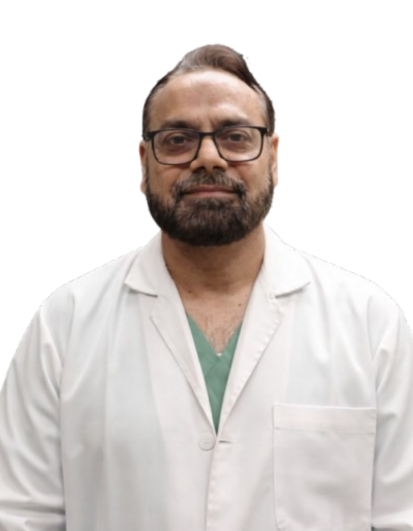
This guide explains what cartilage is, how it gets damaged, which symptoms to watch for, and the options from simple rehabilitation to surgery. It is written for patients and families in Moradabad and nearby areas who are considering a consultation with Dr. Shariq Arshad, Orthopedics, at Jigyasa Hospital, a multispeciality hospital on Rampur Road.
What Is Cartilage?
Cartilage is a smooth, slippery, rubbery tissue. In the knee there are two main kinds, and the difference matters.
Articular, or hyaline, cartilage covers the ends of the bones inside a joint, such as the thigh bone, the shin bone, and the back of the kneecap. It lets the bones glide against each other with very little friction and spreads load across the joint.
The menisci are two C-shaped pads of tougher cartilage in the knee. They act as shock absorbers and stabilisers, and a meniscus tear is the most common cartilage injury in the knee.
Cartilage has no direct blood supply, which is why it heals poorly. A small cut in the skin or a torn muscle heals easily, but damaged joint-surface cartilage often does not repair itself well and may slowly worsen if left alone.
What Causes Cartilage Damage?
• Sudden injury: Twisting the knee, a direct blow, a fall, or a dislocated kneecap. Ligament injuries such as an ACL tear often damage cartilage at the same time.
• Meniscus tears: From twisting, squatting, or pivoting in sport, or from gradual degeneration with age.
• Repetitive stress: Years of heavy loading, kneeling, squatting, or high-impact sport.
• Misalignment: Bow legs, knock knees, or a poorly tracking kneecap can overload one part of the joint.
• Osteochondritis dissecans: A condition in which a piece of cartilage and the bone under it loses its blood supply and may loosen, most often seen in adolescents and young adults.
• Age-related wear (osteoarthritis): Cartilage thins gradually over time.
• Excess weight, which increases the load on the joints.
• Inflammatory joint disease or a previous joint infection.
Symptoms of Cartilage Damage
Symptoms depend on the type and size of the damage, and small lesions may cause few symptoms. Common signs include:
• Joint pain, often worse with activity, squatting, stairs, or after sitting for a long time
• Swelling that comes and goes, often the day after activity
• Catching, clicking, or grinding in the joint
• Locking, where the knee gets stuck and cannot fully straighten, which suggests a loose fragment or a displaced meniscus tear
• Giving way or a feeling of instability
• Stiffness and reduced movement
• Pain along the joint line, typical of a meniscus tear
• Reduced ability to run, jump, kneel, or climb stairs
When to See an Orthopedic Doctor
Consider an assessment if:
• Knee pain or swelling lasts more than two weeks or keeps returning
• The knee locks, catches, or gives way
• You had a twisting injury and the knee has never felt right since
• Pain limits sport, work, or daily activities
• Pain persists after an ACL injury or kneecap dislocation
• A teenager or young adult has deep, activity-related knee pain with swelling
Go to the hospital urgently, or call 7900903333, if:
• The knee is locked and cannot be straightened
• The joint is hot, red, and swollen with fever, which may indicate infection
• You cannot bear weight after an injury
• The leg turns pale, cold, or numb
How Is Cartilage Damage Diagnosed?
Diagnosis begins with your story: how the injury happened, what you feel, what makes it better or worse, and what you want to return to. The examination checks for swelling, tenderness along the joint line, range of movement, ligament stability, and specific tests that stress the menisci and kneecap.
An X-ray shows bone alignment, joint space, and signs of arthritis, but cartilage itself does not show on X-ray. An MRI is the key test for cartilage, showing the menisci, the surface cartilage, and any associated ligament or bone injury. In some cases, arthroscopy, a keyhole look inside the joint, lets the surgeon see the cartilage directly and sometimes treat it in the same sitting. The doctor reads your scan together with your symptoms, because scans can show cartilage changes in people who have no pain at all.
Which diagnostic services are available depends on the hospital's facilities. Please call Jigyasa Hospital on 7900903333 to confirm before you travel.
Treatment Options: From Conservative Care to Surgery
There is no single best treatment. The right plan depends on:
• The type of cartilage damage, whether meniscus or joint surface
• The size, depth, and location of the lesion
• Your age and activity level
• Associated injuries, such as ligament tears
• The alignment of the leg
• Whether there is widespread arthritis
• Your goals and your willingness to commit to rehabilitation
Non-Surgical Treatment
Many people with small or mildly symptomatic cartilage lesions improve without surgery.
• Activity modification: Reducing high-impact activities such as running and jumping for a period, while staying gently active.
• Physiotherapy: Strengthening the thigh, hip, and calf muscles reduces load on the damaged area and improves control and movement.
• Weight management: Every extra kilo adds several times that load across the knee.
• Medicines: Pain and anti-inflammatory medicines for short periods, as advised. Long-term unsupervised use can affect the stomach, kidneys, and heart.
• Supports and footwear: Braces in selected cases, and suitable shoes.
• Injections: Options such as corticosteroid, hyaluronic acid, or platelet-rich plasma (PRP) may be considered in selected patients. They can relieve symptoms for some people but do not rebuild lost cartilage, so ask your doctor what to expect.
• Treating contributing problems, such as alignment or ligament instability.
A word of caution: you may hear claims about cartilage "regrowth" from supplements, stem cell injections, or other products. The evidence that they regrow lost cartilage is limited, and they can be costly. Ask for the evidence and the realistic results before agreeing to any such treatment.
Surgical Treatment
Surgery is considered when symptoms persist despite proper non-surgical care, when there is a mechanical problem such as locking, or when the lesion is likely to progress. Most of these procedures are done by arthroscopy, also called keyhole surgery, though some need a small open incision.
For meniscus tears
• Meniscus repair: Where possible, the torn meniscus is stitched back together to preserve its function. Suitable tears are generally those in the better-supplied outer part, and often in younger patients.
• Partial meniscectomy: If the tear cannot be repaired, only the damaged portion is trimmed, keeping as much healthy meniscus as possible.
For damage to the joint surface
• Debridement and chondroplasty: Smoothing damaged cartilage and removing loose fragments. It can relieve catching and swelling, but does not regenerate cartilage.
• Microfracture: Small holes are made in the bone beneath the defect so that blood and marrow cells form a repair tissue called fibrocartilage. It suits small lesions, and the repair tissue is not as durable as normal cartilage.
• Osteochondral autograft transfer (OATS / mosaicplasty): Small plugs of healthy cartilage and bone from a less weight-bearing area are moved to fill the defect.
• Osteochondral allograft: Donor cartilage and bone are used for larger defects, where availability and facilities allow.
• Autologous chondrocyte implantation (ACI): A sample of your own cartilage cells is grown in a laboratory and implanted in a second operation. It is used for larger lesions in selected, usually younger, patients, and is complex, staged, and costly.
• Fixation of loose fragments, as in osteochondritis dissecans, to preserve the patient's own cartilage and bone.
Associated procedures
• ACL reconstruction or other ligament surgery when instability is contributing.
• Realignment osteotomy, in which a bone is cut and realigned to shift load away from the damaged part of the knee, in selected patients.
For advanced arthritis, when cartilage is lost across the joint, repair techniques are generally unsuitable, and options such as partial or total knee replacement may be discussed.
Whether a particular procedure can be performed depends on the hospital's facilities and the surgeon's expertise, so please confirm with the hospital.
Who Is a Good Candidate for Cartilage Repair?
Cartilage repair works best for a focal lesion, a defined area of damage in otherwise healthy cartilage. Good candidates are often:
• Younger, active patients with a localised defect
• People with a well-aligned, stable knee, or whose alignment and ligaments can be corrected at the same time
• Patients willing to follow a long rehabilitation programme
• Non-smokers, and those at a healthy weight
Repair techniques are generally not suitable for widespread osteoarthritis, where cartilage is worn over large areas. In that situation, treatment focuses on symptom control, rehabilitation, and, when needed, joint replacement.
Questions to Ask Before Cartilage Surgery
• What exactly is damaged: the meniscus or the joint surface? How large is the damage?
• Does my MRI match my symptoms and examination?
• Which non-surgical options have I tried, and are there others?
• Which procedure do you recommend for me, and why?
• What are the realistic results, the risks, and the chance of needing more surgery?
• How long will rehabilitation take, and when can I return to work and sport?
• Will alignment or ligament problems be treated as well?
• What is the expected cost, and what does it include?
• Would a second opinion be reasonable?
A good surgeon welcomes these questions and answers them clearly.
Recovery and Rehabilitation
Cartilage recovery is slow, and patience matters. Timing depends on the procedure.
After meniscus trimming: Recovery is usually quicker, with walking allowed within days and a return to activity in a few weeks, as your surgeon advises.
After meniscus repair: The repair needs protection while it heals. You may need crutches and a brace, with limits on bending and weight-bearing for several weeks, and a return to sport often takes several months.
After microfracture, OATS, or other joint-surface procedures: Weight-bearing is usually restricted for a period, and gentle movement may be encouraged to nourish the healing tissue. Return to impact sport commonly takes many months, sometimes a year or more, depending on the procedure and the size of the repair.
After more complex procedures such as ACI: Recovery is the longest, often up to a year or more before full sport.
In every case, physiotherapy is central. It restores movement, rebuilds muscle strength, improves control, and gradually returns you to activity. Follow your surgeon's weight-bearing and movement limits exactly, and do not rush back because the pain has settled. Report increasing pain, swelling, redness, fever, locking, or new instability.
Warning Signs After Surgery
Contact your surgeon or go to the hospital promptly if you have:
• Increasing redness, warmth, swelling, or discharge from a wound
• Fever or chills
• Severe pain not controlled by prescribed medicines
• Calf pain or swelling in one leg
• Numbness, coldness, or colour change in the foot
• Sudden chest pain or breathlessness, which is an emergency, so call for help at once
Protecting Your Cartilage
• Keep a healthy weight to reduce load on the knees and hips
• Strengthen the muscles around your knees and hips, and work on balance and landing technique
• Warm up before sport, and build up training gradually
• Wear proper footwear and replace worn shoes
• Treat ligament and meniscus injuries properly instead of ignoring them
• Avoid long periods of deep squatting and kneeling on hard surfaces where you can
• Stay active with low-impact exercise such as walking, swimming, and cycling
• Do not ignore persistent knee pain or swelling
Cartilage Problems in Young Patients
Teenagers and young adults can develop cartilage problems too, often after sports injuries, kneecap dislocations, or osteochondritis dissecans. In growing patients, the bones near the joint are still developing, so treatment is planned carefully around growth. Deep, activity-related knee pain with swelling in a young person should be examined rather than dismissed as "growing pains." For general health and growth questions in children and teenagers, a pediatrician can be a useful partner alongside the orthopedic team.
Why Consider Jigyasa Hospital and Dr. Shariq Arshad?
Cartilage damage rarely occurs in isolation. It often comes with ligament injuries, alignment problems, or arthritis, and choosing the right treatment depends on seeing the whole picture. Dr. Shariq Arshad, Orthopedics, is available at Jigyasa Hospital to assess knee and joint problems and discuss the options that suit your injury, age, and goals.
If surgery is advised, anaesthesia and pre-operative checks are part of the process, and many patients also have conditions such as diabetes or high blood pressure that need coordination. As a multispeciality hospital, Jigyasa Hospital makes it easier to bring these together under one roof, so you are not moving between different hospitals.
The hospital is on Rampur Road, near Miglani Cinema, Moradabad 244001, reachable from Moradabad city and nearby areas such as Rampur, Sambhal, Amroha, Bijnor, and Chandausi. Patients and families are encouraged to ask questions, and explanations are given in simple Hindi or English so that you understand your diagnosis and options.
For confirmed details about Dr. Shariq Arshad's qualifications, OPD timings, available knee and cartilage procedures, MRI, arthroscopy facilities, and physiotherapy support, please call Jigyasa Hospital on 7900903333 before travelling.
How to Prepare for Your Appointment
• Call ahead on 7900903333 to confirm timings
• Bring MRI films and reports, X-rays, and previous prescriptions
• Note how the injury happened and how the knee behaves, including locking, swelling, and giving way
• Describe your sport, job, and goals
• Mention previous injuries or surgery on either knee
• List all medicines and supplements you take, and any allergies
• Tell the doctor about other conditions such as diabetes or high blood pressure
• Wear shorts or loose clothing so the knee can be examined easily
• Write down your questions
Orthopedic Assessment for Knee and Joint Problems
Dr. Shariq Arshad, Orthopedics, assesses knee pain, cartilage injuries, meniscus tears, and joint problems to help plan appropriate care.
Treatment Matched to the Injury
Care is planned according to the type of cartilage damage, age, activity level, associated injuries, alignment, and personal goals.
Conservative Care First Where Suitable
Many patients with mild or small cartilage lesions may improve with activity modification, physiotherapy, weight management, and guided medication use.
Rehabilitation-Focused Recovery
Physiotherapy and staged rehabilitation are central to restoring movement, strength, balance, and confidence after injury or surgery.
Multispeciality Hospital Support
Cartilage injuries can occur with ligament injuries, alignment problems, or other health conditions. A multispeciality hospital helps coordinate care.
Accessible Location in Moradabad
Jigyasa Hospital is on Rampur Road, near Miglani Cinema, and is reachable from Moradabad and nearby areas.
Book a Knee and Cartilage Consultation with Dr. Shariq Arshad
If you have persistent knee pain, swelling, locking, clicking, instability, or a sports injury that has not settled, an orthopedic assessment can help identify the cause and plan the right treatment.
Dr. Shariq Arshad at Jigyasa Hospital assesses knee and joint problems and discusses conservative and surgical options based on your condition and goals.
Address
Near Miglani Cinema, Rampur Road, Moradabad 244001
Phone
7900903333Frequently Asked Questions About Cartilage Repair
Can damaged cartilage heal on its own?
Joint-surface cartilage has very limited ability to heal, because it has no direct blood supply. Small lesions may become symptom-free with rehabilitation, but significant damage often needs a treatment plan.
What are the symptoms of cartilage damage in the knee?
Pain, swelling, catching or clicking, locking, giving way, stiffness, and difficulty with stairs, squatting, or sport.
Is a meniscus tear the same as a cartilage tear?
The meniscus is a type of cartilage in the knee, so a meniscus tear is a cartilage injury. Damage to the joint-surface cartilage is a different problem and is treated differently.
Do I need surgery for cartilage damage?
Not always. Many people improve with physiotherapy and activity changes. Surgery is considered for persistent symptoms, locking, or significant lesions.
What is microfracture surgery?
A procedure in which small holes are made in the bone below a cartilage defect so that marrow cells form repair tissue. It is generally used for small lesions, and the repair tissue is not identical to normal cartilage.
Do stem cell or PRP injections regrow cartilage?
Evidence that they rebuild lost cartilage is limited. Some people get symptom relief, but results vary. Ask your doctor what to expect and what it will cost.
How long does recovery take after cartilage surgery?
It ranges from a few weeks after meniscus trimming to many months, and sometimes a year or more, after joint-surface repair. Your surgeon will give you a timeline for your case.
Why Patients Choose Us
- 24/7 Emergency & Trauma Care
- Top Specialist Doctors
- Modern ICU & Operation Theatres
- Transparent & Affordable Pricing
- Ayushman Bharat Empanelled
- Cashless Insurance Support
- Multispeciality Under One Roof
Our Location
Near Miglani Cinema,
Rampur Road,
Moradabad 244001