
Congenital Heart Disease in Moradabad: Diagnosis & Care by Dr. Amit Kumar Singh
Congenital heart disease is one of the most common birth defects and affects the structure or function of the heart from the earliest stages of development. For families in Moradabad and the surrounding Rohilkhand region, discovering that a child or adult has a heart defect can feel overwhelming. With timely diagnosis and appropriate specialist care, many congenital heart conditions can be monitored, treated, and managed effectively.
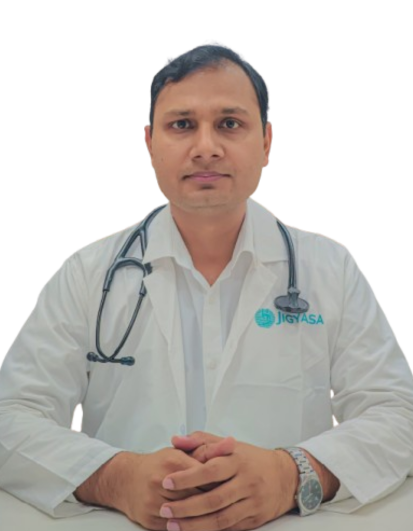
Dr. Amit Kumar Singh, interventional cardiologist at Jigyasa Hospital, provides evaluation and long-term management for congenital heart conditions from infancy through adulthood. His approach includes clinical assessment, ECG, echocardiography, treatment planning, catheter-based guidance, surgical referral, and continued cardiac follow-up.
What Is Congenital Heart Disease?
Congenital heart disease refers to structural problems with the heart that are present at birth. These defects develop when the heart does not form normally during pregnancy and may affect the heart chambers, valves, walls, or major blood vessels. Some defects are small and may never cause noticeable symptoms, while others are complex and require treatment shortly after birth or later in childhood.
Congenital heart disease is not always diagnosed immediately. Some defects are identified during a prenatal ultrasound, while others become apparent after birth when a baby has breathing difficulty, poor feeding, low oxygen levels, or poor weight gain. Mild defects may remain undetected until a murmur is heard during a routine check-up or symptoms develop during childhood, adolescence, or adulthood.
Common Types of Congenital Heart Disease
Congenital heart defects vary widely in severity and may affect different parts of the heart or the major blood vessels. Some conditions cause only mild changes in blood flow, while others can reduce oxygen delivery to the body or place extra pressure on the heart. Correct diagnosis is important because treatment depends on the specific defect and its effect on heart function.
Septal Defects
Septal defects are openings in the wall separating the heart chambers. An atrial septal defect affects the upper chambers, while a ventricular septal defect affects the lower chambers. Small defects may close naturally, whereas larger defects may require intervention.
Patent Ductus Arteriosus
Patent Ductus Arteriosus occurs when a blood vessel that normally closes shortly after birth remains open. It can cause abnormal blood flow between two major arteries and is more common in premature babies.
Tetralogy of Fallot
Tetralogy of Fallot is a combination of four heart defects that affect blood flow and oxygen levels. Affected infants may develop bluish skin or lips, known as cyanosis, and the condition commonly requires specialised surgical correction.
Coarctation of the Aorta
Coarctation of the aorta is a narrowing of the body's main artery. This forces the heart to work harder to pump blood and may lead to high blood pressure or other complications if it remains untreated.
Valve Abnormalities
Some children are born with valves that are narrowed, leaky, or improperly formed. Pulmonary valve stenosis and aortic valve stenosis are examples that can affect the efficiency of blood flow through the heart.
Transposition of the Great Arteries
Transposition of the great arteries is a complex condition in which the two main arteries leaving the heart are switched. It usually requires early diagnosis and specialised intervention to support adequate oxygen delivery.
Every congenital heart condition presents differently. The appropriate treatment depends on the defect, its size and location, oxygen levels, symptoms, age, growth, heart function, and the overall health of the patient.
Recognising the Signs and Symptoms
Congenital heart disease can present differently in infants, children, adolescents, and adults. Some babies show symptoms soon after birth, while others remain active and appear healthy for many years. Persistent breathlessness, poor growth, unexplained fatigue, bluish discolouration, fainting, or a murmur should prompt a proper cardiac evaluation rather than prolonged observation without assessment.
Infants and Young Children
Rapid or laboured breathing, especially during feeding or at rest.
Bluish discolouration of the lips, skin, or fingertips.
Poor weight gain, fatigue during feeding, or excessive sweating.
A heart murmur detected during a routine medical examination.
Unusual tiredness during play compared with other children of the same age.
Older Children and Adolescents
Breathlessness or unusual fatigue during physical activity.
Chest pain, fainting spells, dizziness, or poor exercise tolerance.
Delayed growth or delayed puberty in more significant cases.
Palpitations or fast heartbeat without an obvious explanation.
A heart murmur detected during a school or routine health check-up.
Adults with Congenital Heart Disease
Unexplained breathlessness, fatigue, or reduced exercise capacity.
Palpitations, dizziness, fainting, or repeated rhythm-related symptoms.
Complications during pregnancy or difficulty tolerating physical activity.
A murmur or abnormal ECG found during a routine adult health examination.
Symptoms related to a congenital defect that was not diagnosed in childhood.
Symptoms can be subtle and may be mistaken for poor fitness, respiratory problems, anxiety, or general weakness. A detailed cardiac evaluation is particularly important when symptoms are persistent, worsening, or associated with an abnormal examination finding.
What Causes Congenital Heart Disease?
In most cases, the exact cause of a congenital heart defect cannot be identified with certainty. Research has identified several factors that may increase the likelihood of a baby developing a heart condition, but many affected children are born without any identifiable risk factor. Parents should not blame themselves because most congenital heart defects are beyond anyone's control.
Genetic Factors
Certain genetic and chromosomal conditions, including Down syndrome, are associated with an increased risk of congenital heart defects. A family history of congenital heart disease may also modestly increase risk in future pregnancies.
Maternal Health During Pregnancy
Poorly controlled diabetes, rubella infection during early pregnancy, and certain maternal illnesses may increase the chance of congenital heart disease. Regular antenatal care and screening are important throughout pregnancy.
Medicine and Substance Exposure
Certain medicines, alcohol use, and smoking during pregnancy may be associated with an increased risk of heart defects. Pregnant women should inform their doctor about every medicine, supplement, and substance they use.
Environmental Factors
Exposure to some infections or chemicals during early pregnancy may contribute to the risk of congenital heart defects. However, in many cases, no single clear cause can be identified.
The most important step after identifying a possible heart condition is timely diagnosis and coordinated care. Appropriate antenatal screening, paediatric assessment, and follow-up with a cardiologist can help families understand the condition and plan the next steps.
How Congenital Heart Disease Is Diagnosed
Accurate diagnosis is the foundation of effective treatment. Dr. Amit Kumar Singh follows a structured evaluation process to understand the exact heart defect, its severity, its effect on blood flow, and whether the patient requires monitoring, medicines, a catheter-based procedure, or surgical referral.
Clinical Examination
The assessment begins with a detailed history and physical examination. Dr. Amit Kumar Singh listens for murmurs or abnormal heart sounds, checks oxygen levels, and reviews growth, feeding, activity, pregnancy, birth, and family history as appropriate.
Echocardiography
A 2D echocardiogram is one of the most important tests for congenital heart disease. This ultrasound-based examination shows the heart chambers, valves, major vessels, blood flow patterns, and structural abnormalities without an invasive procedure.
Electrocardiogram
An ECG records the electrical activity of the heart. It may identify rhythm abnormalities, conduction problems, or signs of strain that can occur along with structural heart defects.
Chest X-ray
A chest X-ray can provide information about the size and shape of the heart and the condition of the lungs. Certain congenital heart defects may produce changes that can be seen through chest imaging.
Pulse Oximetry
Pulse oximetry is a simple, painless, and non-invasive test that measures blood oxygen levels. It can be particularly useful for identifying critical congenital heart defects in newborns.
Cardiac Catheterisation
In complex cases, cardiac catheterisation may be used to obtain detailed information about the heart and blood vessels. In selected patients, a catheter-based treatment may also be performed during the same procedure.
Once the findings are available, the diagnosis and severity are explained clearly to the patient or family. The discussion includes the expected course, treatment options, warning signs, follow-up schedule, and the need for referral when specialised intervention is required.
Treatment Approaches for Congenital Heart Disease
Treatment is never the same for every patient. It depends on the specific defect, its size and severity, the age of the patient, oxygen levels, symptoms, growth, heart function, and the effect of the condition on daily life. Some patients need only regular monitoring, while others require medicines, catheter treatment, or surgical correction.
Watchful Monitoring
Many minor defects, including some small septal defects, may not need immediate treatment and can close naturally. Regular examinations and echocardiograms help monitor the condition and identify any change requiring intervention.
Medication
Medicines may help control heart rate, reduce fluid accumulation, manage blood pressure, support heart function, or reduce the risk of complications such as blood clots in selected patients.
Catheter-Based Procedures
Some ASDs, VSDs, and PDAs can be treated through minimally invasive catheter-based procedures. These techniques may avoid open-heart surgery and often provide a shorter recovery period in suitable patients.
Surgical Correction
Complex conditions such as Tetralogy of Fallot or significant coarctation of the aorta may require surgical correction. Dr. Amit Kumar Singh coordinates with experienced paediatric and cardiac surgical teams when surgery is needed.
Long-Term Cardiac Follow-Up
Even after successful treatment, long-term monitoring remains important. Cardiac needs can change as a child grows into adolescence and adulthood, making regular follow-up an important part of lifelong care.
Even after successful treatment, long-term cardiac follow-up may remain important. As children grow, their heart function, activity level, rhythm, pregnancy considerations, and future medical needs may change. Continued care helps identify these changes early.
Why Local Access to a Cardiologist Matters
For families in Moradabad and nearby towns, access to a skilled cardiologist close to home can make a meaningful difference. Congenital heart disease may require repeated assessments over many years, and local care can reduce the practical, emotional, and financial burden of travelling to a distant city for every consultation or follow-up visit.
Earlier detection through accessible paediatric and cardiac screening.
Consistent long-term monitoring throughout childhood, adolescence, and adulthood.
Reduced emotional and financial burden caused by repeated travel to distant cities.
Coordinated care from initial echocardiography through treatment planning and surgical referral.
Local post-operative follow-up after a catheter-based procedure or surgical correction.
Access to cardiac guidance for families from Moradabad, Rampur, Amroha, Sambhal, Bijnor, and Chandausi.
Local evaluation also allows families to discuss concerns in a familiar setting, obtain timely testing, and receive guidance before travelling for specialised procedures. Post-operative monitoring and long-term cardiac care can then continue in Moradabad.
What to Expect During a Consultation
Bringing a child or adult for evaluation of a suspected heart condition can naturally cause anxiety. Understanding the consultation process may help families feel more prepared. Dr. Amit Kumar Singh begins with a detailed history and then performs a careful examination before recommending tests or treatment.
Detailed review of pregnancy, birth, growth, development, family history, previous reports, and current symptoms.
Physical examination, including heart sounds, pulse, oxygen saturation, growth assessment, and signs of heart failure or reduced circulation.
ECG, echocardiography, or other cardiac tests during the visit when clinically appropriate.
Clear explanation of the diagnosis, severity, expected course, and available treatment options.
A personalised follow-up schedule involving monitoring, medicines, catheter treatment, surgical referral, or long-term cardiac care.
Families are encouraged to ask questions about the diagnosis, expected symptoms, activity, medicines, treatment options, surgery, and follow-up. The goal is to ensure that parents and patients understand the condition and know what to expect at every stage of care.
Why Choose Jigyasa Hospital for Congenital Heart Care?
Congenital heart disease requires careful diagnosis, age-appropriate communication, and consistent follow-up. At Jigyasa Hospital, Dr. Amit Kumar Singh provides structured cardiac evaluation and helps families understand whether their child or adult family member needs monitoring, medicines, catheter-based treatment, surgical referral, or long-term care.
Evaluation of congenital heart disease in infants, children, adolescents, and adults.
Access to echocardiography, ECG, pulse oximetry, and other cardiac investigations when required.
Clear explanation of the diagnosis, severity, treatment, and expected follow-up.
Coordination with experienced paediatric and cardiac surgical teams for complex cases.
Local follow-up in Moradabad after catheter-based procedures or surgical correction.
Convenient access for families from Rampur, Amroha, Sambhal, Bijnor, and Chandausi.
Complete Congenital Heart Evaluation
Clinical examination, ECG, echocardiography, pulse oximetry, and additional testing when required to understand the exact heart defect.
Child and Adult Cardiac Care
Evaluation and long-term management for infants, children, adolescents, and adults with congenital heart conditions.
Personalised Treatment Planning
Clear guidance regarding monitoring, medicines, catheter-based procedures, surgery, and long-term follow-up.
Specialist Referral Coordination
Coordination with experienced paediatric and cardiac surgical teams when complex procedures or surgical correction are required.
Long-Term Follow-Up
Regular monitoring as children grow and adults continue care after earlier congenital heart treatment.
Accessible Care in Moradabad
Diagnosis, treatment planning, referral support, and follow-up are available locally at Jigyasa Hospital, Near Miglani Cinema, Rampur Road.
Consult Dr. Amit Kumar Singh for Congenital Heart Disease
If your child has a heart murmur, breathing difficulty, poor feeding, poor weight gain, bluish lips, excessive tiredness, fainting, or reduced exercise tolerance, a detailed cardiac evaluation may be important. Adults with unexplained breathlessness, palpitations, fatigue, or a previous congenital heart diagnosis can also seek specialist assessment.
Contact Jigyasa Hospital, Moradabad, to discuss symptoms, previous reports, echocardiography findings, and treatment options with Dr. Amit Kumar Singh. The cardiac team can guide you through diagnosis, monitoring, medicines, catheter-based procedures, surgical referral, and long-term follow-up.
Address
Near Miglani Cinema, Rampur Road, Moradabad 244001
Phone
7900903333Frequently Asked Questions About Congenital Heart Disease
Can congenital heart disease be detected before birth?
Yes, many congenital heart defects can be detected during a prenatal ultrasound, particularly during the anomaly scan performed around the 18th to 22nd week of pregnancy. However, not every defect is visible before birth, and some conditions are diagnosed only after delivery or later in childhood.
Is congenital heart disease always serious?
No. Some defects, such as small septal defects, may be mild and can close on their own without treatment. Other conditions are more complex and may require medicines, catheter-based procedures, or surgery. The seriousness depends on the type, size, location, and effect of the defect on heart function.
Can a child with congenital heart disease live a normal life?
Many children with congenital heart disease go on to live full, active, and productive lives after timely diagnosis and appropriate treatment. Some may need regular monitoring throughout childhood and adulthood, while others may require treatment only once. Long-term follow-up remains important even after successful correction.
At what age is congenital heart disease usually diagnosed?
The age of diagnosis depends on the defect. Severe conditions may be detected during pregnancy or shortly after birth, while mild defects may not be identified until childhood, adolescence, or adulthood. Some cases are discovered when a doctor hears a heart murmur during a routine examination.
Does Jigyasa Hospital treat congenital heart disease in adults?
Yes. Dr. Amit Kumar Singh evaluates and manages congenital heart conditions in adults, including defects that were not diagnosed during childhood and patients who require continued monitoring after earlier treatment. Adult patients can receive assessment, cardiac testing, treatment planning, and follow-up guidance.
What tests are used to diagnose congenital heart disease?
Common tests include clinical examination, echocardiography, ECG, chest X-ray, and pulse oximetry. Cardiac catheterisation may be recommended in selected cases when a more detailed evaluation is required or when a catheter-based procedure may be possible.
Is surgery always required for congenital heart disease?
No. Some defects can be monitored without immediate treatment, while others may respond to medicines or minimally invasive catheter-based procedures. Surgery is generally considered for complex or severe defects that cannot be managed safely through observation, medicines, or catheter treatment.
Does Jigyasa Hospital coordinate surgical treatment?
Yes. When surgical correction is required, Dr. Amit Kumar Singh coordinates with experienced paediatric and cardiac surgical teams. Pre-operative evaluation and post-operative cardiac follow-up can continue locally in Moradabad, helping families maintain continuity of care.
How often should a child with congenital heart disease be monitored?
The follow-up schedule depends on the type and severity of the defect. Some children may require reviews every few months, while others with mild conditions may need annual monitoring. Dr. Amit Kumar Singh recommends a personalised schedule based on symptoms, examination findings, and echocardiography results.
Are congenital heart defects hereditary?
Some congenital heart defects have a genetic component and may occur more frequently in certain families, while many develop without any clear hereditary cause. A family history of congenital heart disease should be discussed during consultation because it may influence screening and evaluation during future pregnancies.
Why Patients Choose Us
- 24/7 Emergency & Trauma Care
- Top Specialist Doctors
- Modern ICU & Operation Theatres
- Transparent & Affordable Pricing
- Ayushman Bharat Empanelled
- Cashless Insurance Support
- Multispeciality Under One Roof
Our Location
Near Miglani Cinema,
Rampur Road,
Moradabad 244001