
Coronary Stenting in Moradabad: Advanced Treatment for Heart Disease
Coronary artery disease (CAD) remains one of the leading causes of death worldwide, affecting millions of people each year and significantly impacting quality of life for patients and their families. In Moradabad, cardiac healthcare has advanced rapidly with the availability of modern interventional cardiology techniques, particularly coronary stenting, which can restore blood flow to the heart and prevent life‑threatening cardiac events.
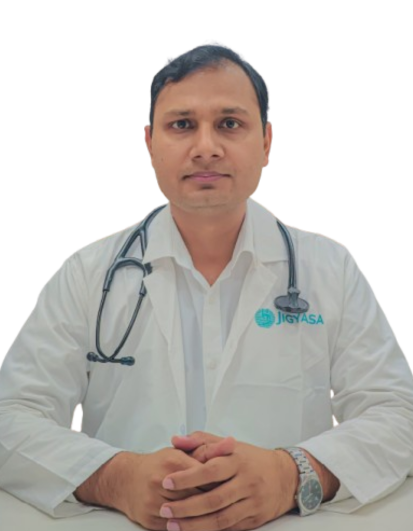
At Jigyasa Hospital in Moradabad, under the expert guidance of Dr. Amit Kumar Singh, a renowned interventional cardiologist, patients have access to state‑of‑the‑art coronary stenting procedures performed in a dedicated catheterization laboratory with advanced imaging and monitoring facilities. The focus is on accurate diagnosis, timely intervention, and comprehensive follow‑up care to reduce the risk of future heart attacks and complications.
This comprehensive guide explains what coronary stenting is, how the procedure is performed, the different types of stents available, expected recovery timelines, and why Jigyasa Hospital in Moradabad is an excellent choice for patients seeking advanced yet compassionate treatment for coronary artery disease.
What is Coronary Stenting?
Coronary stenting is a minimally invasive procedure used to treat narrowed or blocked coronary arteries, which are the blood vessels that supply oxygen‑rich blood to the heart muscle. During the procedure, a small, tubular metal mesh device called a stent is placed inside the artery to act as a scaffold, keeping it open and restoring adequate blood flow to the heart.
When fatty deposits known as plaque build up inside the coronary arteries, a process called atherosclerosis, the vessel narrows and blood flow becomes restricted. This can lead to symptoms and complications such as angina (chest pain), heart attacks, abnormal heart rhythms, and progressive heart failure if left untreated. Coronary stenting provides a rapid and effective solution in many cases without the need for open‑heart surgery.
During a coronary stenting procedure, a cardiologist guides a thin catheter to the blocked artery, inflates a small balloon to compress the plaque against the artery wall, and deploys the stent to maintain the widened opening. Modern drug‑eluting stents are coated with special medications that are slowly released to reduce the risk of the artery narrowing again.
Interventional Cardiology Expertise
Advanced coronary stenting
Minimally invasive angioplasty and stent placement for blocked coronary arteries using radial or femoral access.
Drug-eluting and bare-metal stents
Selection of stent type based on lesion complexity, bleeding risk, and need for future surgery.
Complex and high-risk interventions
Management of multivessel disease, acute coronary syndromes, and high-risk lesions with evidence-based techniques.
24/7 heart attack care
Primary angioplasty (PCI) for ST-elevation and non-ST elevation myocardial infarction with round-the-clock availability.
Comprehensive cardiac rehab
Structured recovery plans including medication optimization, supervised activity, and lifestyle counselling.
Expert cardiac team in Moradabad
Specialized interventional cardiology care at Jigyasa Hospital for patients from Moradabad and nearby regions.
Types of Coronary Stents
Several types of coronary stents are available today, and the most appropriate option is chosen based on your artery size, blockage characteristics, bleeding risk, and other medical conditions. Dr. Amit Kumar Singh will explain the advantages and limitations of each type in simple language before the procedure so that you can make an informed decision.
1. Bare‑Metal Stents (BMS)
Bare‑metal stents are made of metal mesh without a drug coating. They are generally less expensive and may be considered in certain situations, such as when the duration of dual antiplatelet therapy must be kept short or when future surgery is anticipated within the next year. However, they have a higher risk of restenosis (re‑narrowing) compared with modern drug‑eluting stents.
2. Drug‑Eluting Stents (DES)
Drug‑eluting stents are coated with medications such as sirolimus, everolimus, or paclitaxel that are slowly released into the artery wall to prevent excessive tissue growth and reduce the chance of restenosis. Compared with bare‑metal stents, DES have significantly lower rates of re‑narrowing and repeat procedures, making them the gold standard for most interventions, especially in complex or long lesions.
Newer generations of DES use more biocompatible polymers and thinner struts, which improve healing and reduce the risk of stent thrombosis. Some of the latest designs use biodegradable or polymer‑free coatings that gradually disappear over time, leaving a more natural vessel environment while maintaining excellent long‑term patency.
3. Bioresorbable Vascular Scaffolds (BVS)
Bioresorbable vascular scaffolds are advanced devices designed to provide temporary support to the artery and then gradually dissolve over several years, allowing the vessel to regain more natural movement and function. These are currently used selectively, as they require careful patient selection, precise technique, and longer‑term dual antiplatelet therapy compared with standard stents.
The Coronary Stenting Procedure: Step‑by‑Step
Pre‑Procedure Assessment
Before coronary stenting, patients undergo a detailed evaluation that includes medical history, physical examination, ECG, blood tests, and cardiac imaging. Diagnostic coronary angiography is performed to identify the exact location, severity, and number of blockages, and to assess heart function, including ejection fraction. Allergies, kidney function, and current medications are reviewed carefully.
Patients are usually advised to fast for several hours before the procedure, and certain medications such as blood thinners may be adjusted under medical guidance. The cardiology team explains the benefits, risks, and alternatives, and informed consent is obtained in a clear, reassuring manner so that patients and their families feel confident.
During the Procedure
The procedure is typically performed under local anaesthesia with mild sedation. A thin catheter is introduced through an artery in the wrist (radial access) or groin (femoral access), with radial access increasingly preferred due to a lower risk of bleeding and quicker mobility after the procedure. Contrast dye is injected to visualize the coronary arteries under X‑ray.
A fine guidewire is passed across the narrowed segment, and a balloon is advanced and inflated at high pressure to compress the plaque and widen the artery. The stent, mounted on a balloon, is then positioned precisely across the lesion and expanded. Additional imaging tools such as intravascular ultrasound (IVUS) or optical coherence tomography (OCT) may be used to confirm optimal stent expansion and apposition. The entire procedure usually takes between 30 minutes and 2 hours, depending on how many arteries are treated and how complex the blockages are.
Advantages of Coronary Stenting
Compared with medical therapy alone, coronary stenting offers rapid relief of angina symptoms in most patients, improves exercise capacity, and can reduce the risk of future heart attacks in selected high‑risk lesions. Many individuals are able to return to their regular activities and work sooner, which has a positive impact on both physical and emotional wellbeing.
Compared with coronary artery bypass graft (CABG) surgery, stenting is less invasive, does not require opening the chest in most cases, and is associated with shorter hospital stays and faster recovery. While bypass surgery remains the preferred option for some patients with very extensive multivessel disease or diabetes, coronary stenting is highly effective for many single‑vessel and selected multivessel blockages.
Why Choose Jigyasa Hospital, Moradabad?
Jigyasa Hospital in Moradabad provides comprehensive cardiac services with a dedicated interventional cardiology unit led by Dr. Amit Kumar Singh, DM Cardiology, who has extensive experience in performing coronary angiography and stenting for a wide variety of cases. The hospital is equipped with advanced angiography systems, continuous monitoring, and a coronary care unit designed for safe and efficient management of heart emergencies. [web:2][web:14][web:15]
Patients benefit from a multidisciplinary approach that includes cardiology, critical care, nursing, and rehabilitation specialists working together to deliver personalized treatment plans. From primary angioplasty in heart attacks to elective stenting for stable angina, the focus is on evidence‑based protocols, transparent communication, and long‑term follow‑up for patients from Moradabad, Rampur, Sambhal, and surrounding areas. [web:14][web:15]
Recovery and Post‑Procedure Care
Immediately after the procedure, patients are observed in a monitored setting where heart rhythm, blood pressure, puncture site, and overall condition are checked regularly. Most patients who undergo radial access can sit up and walk sooner compared with femoral access, and hospital stay is often 1–2 days for uncomplicated cases. Any signs of chest pain, shortness of breath, bleeding, or allergic reactions are addressed promptly.
Over the next few weeks, activity is gradually increased under guidance. Light household activities usually resume within the first week, followed by walking and office work over the next 2–4 weeks in many patients. Long‑term success depends on strict adherence to prescribed medications, especially dual antiplatelet therapy, as well as lifestyle changes including a heart‑healthy diet, regular exercise, smoking cessation, and control of blood pressure, cholesterol, and diabetes.
When is Coronary Stenting Recommended?
Coronary stenting is commonly recommended in acute coronary syndromes such as ST‑elevation and non‑ST‑elevation myocardial infarction, where rapid opening of the blocked artery can save heart muscle and improve survival. It is also considered in patients with stable angina who have significant coronary narrowing causing persistent symptoms despite optimal medical therapy or in those with high‑risk findings on stress tests or imaging.
In some cases, stenting may not be suitable, such as when patients cannot safely take dual antiplatelet therapy, have very small vessels, significant bleeding disorders, or multiple complex blockages better managed by bypass surgery. The decision is always individualized after a detailed discussion between the cardiologist, patient, and family, weighing benefits and risks.
Preventing Coronary Artery Disease
Prevention is the foundation of long‑term heart health. Even after successful coronary stenting, aggressive risk‑factor control is essential to prevent new blockages and protect the stented segments. This includes regular blood pressure and cholesterol monitoring, diabetes control, weight management, quitting tobacco in all forms, and following a balanced diet such as the Mediterranean or DASH pattern.
At Jigyasa Hospital, patients receive guidance on exercise plans, stress management, and cardiac rehabilitation strategies tailored to their age and medical condition. Family members may also be advised to undergo screening if there is a strong history of heart disease, helping identify risks early and reduce the likelihood of future cardiac events.
Book Your Consultation
Dr. Amit Kumar Singh – Interventional Cardiologist, Coronary Stenting Specialist, Moradabad
Jigyasa Hospital, Near Miglani Cinema, Rampur Road, Moradabad, Uttar Pradesh, 244001
Call Us
+91-7900903333Email Us
info@jigyasahospital.inFrequently Asked Questions
How long does a coronary stent last?
Modern coronary stents are designed to be permanent scaffolds inside the artery. With proper medication adherence and risk-factor control, drug-eluting stents provide excellent long-term patency, with more than 95% of stents remaining open at 5 years in most patients.
Can I get another stent if the first one fails?
Yes. If in-stent restenosis occurs, it can often be treated with repeat angioplasty, drug-eluting balloons, or additional stenting. In more complex cases, bypass surgery may be considered. Dr. Amit Kumar Singh will recommend the safest and most effective strategy based on your angiography findings and overall health.
How long do I need to take dual antiplatelet therapy (DAPT) after stenting?
Dual antiplatelet therapy usually includes aspirin plus a P2Y12 inhibitor such as clopidogrel, prasugrel, or ticagrelor. After bare-metal stents, a minimum of 1 month is required, while drug-eluting stents typically need 6–12 months of DAPT, depending on your bleeding risk and clinical situation. Your cardiologist will individualize the duration for you.
Can I fly or travel after coronary stenting?
In most cases, patients can travel or fly after 1–2 weeks once they are clinically stable and cleared by their cardiologist. It is important to avoid strenuous lifting, stay hydrated, and continue all prescribed medications. Always confirm travel plans with your treating doctor, especially after a recent heart attack or complex intervention.
Is stenting safe during pregnancy?
Elective coronary stenting is usually postponed until after delivery whenever possible. However, in life-threatening situations such as acute coronary syndrome during pregnancy, stenting may be performed in a specialized setting with careful planning by a multidisciplinary team. Radiation exposure and medication choices are managed very carefully to protect both mother and baby.
What lifestyle activities should I avoid after stenting?
For the first few weeks, avoid heavy lifting, contact sports, and sudden intense exertion. Most daily activities, including walking, gentle household work, and sexual activity, can typically resume within 2–4 weeks, as guided by your cardiologist. Long-term success depends on heart-healthy habits, so regular exercise, a proper diet, and strict smoking cessation are strongly encouraged.
Why Patients Choose Us
- 24/7 Emergency & Trauma Care
- Top Specialist Doctors
- Modern ICU & Operation Theatres
- Transparent & Affordable Pricing
- Ayushman Bharat Empanelled
- Cashless Insurance Support
- Multispeciality Under One Roof
Our Location
Near Miglani Cinema,
Rampur Road,
Moradabad 244001