
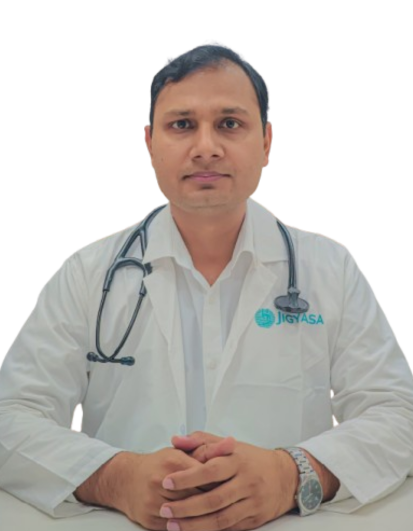
DM Cardiology Doctor in Moradabad: Dr. Amit Kumar Singh at Jigyasa Hospital
Choosing a heart doctor is one of the most important health decisions you can make. Heart conditions can change quickly, and the person guiding your care should have deep, specialised training. At Jigyasa Hospital, Moradabad, Dr. Amit Kumar Singh, a DM (Cardiology) specialist, provides advanced diagnosis and treatment for adults with heart and blood vessel disorders.
This page explains what a DM cardiologist is, how that differs from other doctors who treat the heart, which conditions Dr. Singh manages, and how to know when it is time to book a consultation.
Meet Dr. Amit Kumar Singh, Cardiology Specialist
Dr. Amit Kumar Singh is a consultant cardiologist at Jigyasa Hospital, Moradabad. He has completed super-specialty training in cardiology (DM) and treats the full spectrum of heart disease, from high blood pressure and rhythm problems to heart attacks and blocked arteries.
His listed qualifications include MD (BHU), DM Cardiology (KGMU), and FSCAI. For confirmed details about his experience, fellowships, memberships, awards, and OPD timings, please call Jigyasa Hospital on 7900903333.
Patients describe the experience of consulting Dr. Singh as unhurried and clear. He listens to the full story, explains test results in everyday language, and discusses every option, including the option of not doing a procedure when medicines and lifestyle changes are enough.
What Does "DM Cardiology" Mean?
Many people see "DM Cardiology" next to a doctor's name without knowing what it signifies. Here is the path in simple terms:
• MBBS. The basic medical degree, about five and a half years including internship.
• MD (General Medicine) or equivalent. Three years of postgraduate training in internal medicine, covering the body's major systems.
• DM (Cardiology). Three more years of super-specialty training, focused entirely on the heart and circulation.
DM stands for Doctorate of Medicine, and in India it is the recognised super-specialty qualification in cardiology. During DM training, a doctor works in cardiac wards, coronary care units and catheterisation laboratories. They learn to interpret ECGs and echocardiograms, manage heart attacks and heart failure, perform diagnostic angiography and, in many programmes, angioplasty, and to handle emergencies at all hours.
In short, a DM cardiologist is not a general physician who "also sees heart patients." Cardiology is the doctor's entire field of practice.
DM Cardiologist vs Other Doctors: Understanding the Difference
It helps to know who does what, so you can see the right specialist at the right time.
• General physician or MD (Medicine). Handles overall health and can do first-level screening for blood pressure, sugar and basic ECG. Ideal for first contact, but complex heart conditions should be referred.
• DM cardiologist. A super-specialist who diagnoses and treats heart disease. Manages medicines, imaging, heart attacks, rhythm disorders and heart failure, and in appropriate cases performs catheter-based procedures.
• Interventional cardiologist. A cardiologist with further skills in angioplasty, stenting and device implantation.
• Cardiothoracic and vascular surgeon. Performs open-heart surgery, such as bypass (CABG) and valve replacement.
A DM cardiologist often works together with the others. If you need bypass surgery, for example, your cardiologist coordinates with the surgical team and manages your care before and after the operation.
When Should You See a DM Cardiologist?
You do not need to wait for a heart attack. Consider booking a consultation if you notice any of the following.
Symptoms
• Chest pain, tightness, heaviness or burning, especially during walking or exertion
• Breathlessness while climbing stairs or lying flat
• Palpitations, a racing or irregular heartbeat
• Dizziness, blackouts or fainting
• Swollen ankles or feet
• Unusual tiredness that you cannot explain
• Pain in the jaw, shoulder, back or arm that comes with exertion
Risk factors
• High blood pressure, diabetes or high cholesterol
• Smoking or tobacco use in any form
• Obesity or a sedentary lifestyle
• A family history of heart disease, heart attack or sudden death at a young age
• A previous heart attack, stent, bypass or heart surgery
• Kidney disease, thyroid problems or sleep apnoea
Emergency warning. Chest pain that lasts more than a few minutes, especially with sweating, nausea, breathlessness or pain spreading to the arm or jaw, may be a heart attack. Do not wait, do not self-medicate, and go to the nearest hospital emergency department right away.
Conditions Treated by Dr. Amit Kumar Singh
Coronary Artery Disease
When the arteries that feed the heart become narrowed by plaque, the heart muscle gets less blood. The result may be angina, or chest pain on effort, or, if an artery blocks suddenly, a heart attack. Treatment depends on severity and may include medicines, lifestyle change, angioplasty with stenting, or referral for bypass surgery.
Heart Attack
A heart attack is a medical emergency in which blood flow to part of the heart is cut off. The faster the artery is reopened, the more heart muscle is saved. Dr. Singh's approach emphasises early ECG, rapid assessment and prompt treatment decisions, along with recovery planning after the acute phase.
Heart Failure
Heart failure does not mean the heart has stopped. It means the heart is not pumping as well as the body needs. Symptoms include breathlessness, swelling and fatigue. Modern medicines, fluid and salt guidance, monitoring and regular follow-up can improve quality of life significantly.
High Blood Pressure
Often called a silent condition, hypertension damages the heart, brain, kidneys and eyes without obvious symptoms. Dr. Singh helps patients confirm the diagnosis, find the cause where possible, and build a long-term plan that includes medicines, home monitoring, diet and exercise.
Rhythm Disorders (Arrhythmias)
The heart's electrical system can misfire, causing it to beat too fast, too slow or irregularly. Atrial fibrillation, a common rhythm problem, increases the risk of stroke. Evaluation may involve ECG, Holter monitoring and echocardiography, followed by medicines or device therapy such as a pacemaker where indicated.
Valvular Heart Disease
Valves control the direction of blood flow. When they narrow or leak, the heart works harder. Echocardiography allows careful assessment, and Dr. Singh helps you understand when watchful follow-up is enough and when intervention should be considered.
Cardiomyopathy and Heart Muscle Disease
Diseases that weaken, thicken or enlarge the heart muscle require careful diagnosis and long-term management to protect heart function.
Congenital Heart Disease in Adults
Some people reach adulthood with a heart defect from birth that was never diagnosed or has changed over time. Evaluation and appropriate referral are part of comprehensive cardiology care.
Preventive Cardiology
Many heart attacks can be prevented. Dr. Singh offers risk assessment, cholesterol and blood sugar management, and guidance on lifestyle, helping you protect your heart before disease develops.
Diagnostic and Treatment Services at Jigyasa Hospital
Please confirm each service with the hospital before travelling, as availability may depend on current facilities and scheduling.
Electrocardiogram (ECG). A quick, painless recording of the heart's electrical activity, often the first step in assessing chest pain or palpitations.
Echocardiography (2D Echo). An ultrasound of the heart that shows its size, pumping strength and valve function.
Treadmill Test (TMT). Monitors the heart during exercise to uncover problems that may not show at rest.
Holter and Ambulatory BP Monitoring. Wearable monitors that record rhythm or blood pressure over 24 hours or more, catching problems that a single clinic reading may miss.
Coronary Angiography. A detailed X-ray study of the heart's arteries, commonly done through the wrist artery for greater comfort and quicker recovery.
Angioplasty and Stenting. Opens blocked arteries and places a stent to keep them open, both as a planned procedure and in heart attack emergencies.
Pacemaker Implantation. For people whose heart rate is dangerously slow or whose electrical conduction is impaired.
Medical Management and Follow-Up. Many heart patients do very well with the right combination of medicines, monitoring and lifestyle changes, and Dr. Singh does not recommend procedures that are not needed.
Heart Health Checkup Packages. Screening that combines blood pressure, blood sugar, lipid profile, ECG and echocardiography as appropriate.
What Happens During Your Consultation?
Knowing what to expect can make the visit less stressful.
1. Conversation. Dr. Singh asks about your symptoms, when they started, what triggers them, your past illnesses, medicines, habits and family history.
2. Examination. Pulse, blood pressure, heart sounds, lungs and swelling are checked.
3. Initial tests. An ECG is commonly done during the visit. Based on your findings, further tests such as echo, TMT, Holter or blood tests may be advised.
4. Explanation. You receive an honest, plain-language explanation of what is wrong, how serious it is and what can be done.
5. Treatment plan. The plan is personalised. It may involve lifestyle changes, medicines, more tests or a procedure. You and your family can ask questions at every step.
What to carry: All previous reports such as ECG, echo, angiography, and blood tests; a list or photos of your current medicines; discharge summaries from earlier admissions; and your ID and insurance documents if you plan to claim.
Everyday Habits That Protect Your Heart
Medicine and procedures matter, but daily habits decide long-term heart health. Dr. Singh commonly counsels patients on these basics.
• Stop all tobacco. Smoking, bidi, chewing tobacco and gutka all damage the heart and blood vessels. Quitting lowers risk at any age.
• Stay active. Aim for about 30 minutes of brisk walking or similar activity most days, unless your cardiologist advises otherwise.
• Eat sensibly. Choose vegetables, fruit, whole grains, pulses and nuts. Cut back on salt, sugar, refined flour and deep-fried or packaged foods.
• Watch your weight and waistline. Excess belly fat is closely linked with heart risk.
• Control diabetes, blood pressure and cholesterol. These three silently harm the heart, so regular checks and consistent treatment are essential.
• Sleep well and manage stress. Poor sleep and chronic stress raise blood pressure and strain the heart.
• Limit alcohol. Heavy drinking can cause rhythm problems and weaken the heart muscle.
• Never stop heart medicines on your own. This is especially important after a stent or heart attack.
• Get regular checkups. Do not wait for symptoms, particularly if you have risk factors.
Heart Disease in Younger Adults: A Growing Concern
Heart attacks were once considered a problem of old age, but cardiologists across India are seeing patients in their 30s and 40s. Contributing factors include tobacco use, diabetes, high blood pressure, high cholesterol, long working hours, low physical activity, poor sleep and a strong family history. Warning signs in younger people are often dismissed as acidity, gas or stress. If chest discomfort or breathlessness appears with exertion, get it examined rather than assuming it is nothing.
DM Cardiology Specialist Consultation
Dr. Amit Kumar Singh provides advanced consultation for heart disease, chest pain, blockages, heart failure, rhythm problems, and blood pressure.
Complete Cardiac Evaluation
Assessment may include ECG, 2D Echo, treadmill test, Holter monitoring, ambulatory blood pressure monitoring, and coronary angiography.
Interventional Heart Care
Where appropriate, treatment may include coronary angiography, angioplasty, stenting, primary angioplasty, and pacemaker implantation.
Prevention and Long-Term Follow-Up
Guidance covers tobacco cessation, diet, exercise, blood pressure, diabetes, cholesterol, medicines, and recovery after a heart event or stent.
Emergency-Focused Care
Jigyasa Hospital provides 24/7 emergency and OPD services. Suspected heart attack symptoms require immediate emergency assessment.
Advanced Heart Care in Moradabad
Jigyasa Hospital is on Rampur Road, near Miglani Cinema, making specialised cardiology accessible to patients in Moradabad and nearby areas.
Book a Consultation with Dr. Amit Kumar Singh, DM Cardiology
If you have chest discomfort, breathlessness, palpitations, high blood pressure, diabetes, high cholesterol, or a family history of heart disease, early assessment can help protect your heart.
To consult Dr. Amit Kumar Singh at Jigyasa Hospital, Moradabad, call 7900903333. In a suspected heart attack, call the emergency number or an ambulance immediately.
Address
Near Miglani Cinema, Rampur Road, Moradabad 244001
Phone
7900903333Frequently Asked Questions About DM Cardiology
Who is a DM cardiology doctor in Moradabad?
Dr. Amit Kumar Singh at Jigyasa Hospital, Moradabad, is a DM (Cardiology) specialist who treats heart attacks, coronary artery disease, heart failure, rhythm disorders, high blood pressure and other cardiac conditions.
What is the full form of DM in cardiology?
DM stands for Doctorate of Medicine. In cardiology, it is a three-year super-specialty course taken after MD (Medicine) or an equivalent postgraduate degree.
Is a DM cardiologist better than an MD physician for heart problems?
For heart disease, a DM cardiologist has deeper, dedicated training. An MD physician is valuable for general care and first assessment, and can refer you to a cardiologist when a heart problem is suspected or confirmed.
Does a DM cardiologist perform surgery?
No. Open-heart surgery, such as bypass or valve replacement, is done by cardiothoracic surgeons. A cardiologist treats with medicines and, if trained, catheter-based procedures such as angiography and angioplasty, and coordinates with surgeons when surgery is needed.
Do all heart blockages need angioplasty?
No. Some blockages are best managed with medicines and lifestyle changes, some need angioplasty, and a few need bypass surgery. The decision depends on your symptoms, test results and overall health, and Dr. Singh explains the reasoning before recommending anything.
What symptoms should make me visit a cardiologist?
Chest discomfort, breathlessness on exertion, palpitations, fainting, unexplained fatigue and swollen feet are all reasons. So is a strong family history or a combination of risk factors such as diabetes, hypertension and smoking.
How often should I get a heart checkup?
If you are over 35 or have risk factors, an annual review is commonly advised. Your cardiologist can recommend a schedule that suits your risk level.
Why Patients Choose Us
- 24/7 Emergency & Trauma Care
- Top Specialist Doctors
- Modern ICU & Operation Theatres
- Transparent & Affordable Pricing
- Ayushman Bharat Empanelled
- Cashless Insurance Support
- Multispeciality Under One Roof
Our Location
Near Miglani Cinema,
Rampur Road,
Moradabad 244001