
DVT Treatment in Moradabad: Expert Hematology Care with Dr. Faran Naim at Jigyasa Hospital
Deep Vein Thrombosis (DVT) is a condition that often develops silently — a little swelling here, some calf pain there — until it either resolves quietly or, in more serious cases, leads to a life-threatening complication. Because DVT can escalate quickly and its symptoms are easy to dismiss as a muscle strain or fatigue, timely diagnosis by an experienced specialist is critical. Patients across Moradabad, Rampur, Amroha, Sambhal, Bijnor, and the wider Rohilkhand region now have access to expert DVT diagnosis and treatment at Jigyasa Hospital, Moradabad, under the care of Dr. Faran Naim, Consultant – Hematology & Bone Marrow Transplant.
This article explains what DVT is, why it happens, how it is diagnosed, and the full range of treatment options available — along with why Jigyasa Hospital has become a trusted choice for hematology care in the region.
What Is Deep Vein Thrombosis (DVT)?
Deep Vein Thrombosis is a condition in which a blood clot (thrombus) forms in one of the deep veins of the body, most commonly in the legs — though it can also occur in the pelvis, arms, or other deep veins. Unlike clots in superficial veins near the skin's surface, a DVT poses a more serious risk because the clot, or a piece of it, can break loose and travel through the bloodstream to the lungs, causing a pulmonary embolism (PE) — a medical emergency that can be fatal if not treated promptly.
DVT and pulmonary embolism together are referred to as Venous Thromboembolism (VTE), and understanding the risk factors, warning signs, and treatment options for DVT is essential for preventing this potentially life-threatening progression.
What Causes DVT?
Blood clots in deep veins typically form due to one or more of three underlying factors, sometimes called Virchow's Triad:
• 1. Slowed blood flow (stasis) — such as during prolonged immobility from long flights, extended bed rest after surgery or illness, or a sedentary lifestyle.
• 2. Damage to the vein wall — caused by injury, surgery, or inflammation.
• 3. Increased tendency of the blood to clot (hypercoagulability) — due to inherited clotting disorders, certain cancers, pregnancy, hormone therapy, or other underlying medical conditions.
Common Risk Factors for DVT
- • Recent major surgery, particularly orthopedic or abdominal surgery
- • Prolonged immobility — long-haul travel, extended hospital stays, or bed rest
- • Pregnancy and the postpartum period
- • Use of oral contraceptives or hormone replacement therapy
- • Obesity
- • Smoking
- • Active cancer or cancer treatment
- • Inherited clotting disorders (thrombophilia), such as Factor V Leiden mutation, or deficiencies in Protein C, Protein S, or Antithrombin
- • Age above 60, though DVT can occur at any age
- • A personal or family history of previous blood clots
- • Dehydration
- • Certain chronic conditions, including heart failure and inflammatory bowel disease
Recognizing the Symptoms of DVT
DVT symptoms typically affect one leg (or occasionally one arm) and can include:
• Swelling in the affected limb, often sudden
• Pain or tenderness, frequently starting in the calf and sometimes described as a cramp or soreness
• Warmth in the swollen or painful area
• Red or discolored skin over the affected vein
• A visible surface vein that appears larger than usual
It's important to note that some cases of DVT cause no noticeable symptoms at all, which is one reason at-risk patients — such as those recovering from major surgery — are often screened proactively.
When Symptoms Signal an Emergency
If a clot breaks loose and travels to the lungs, it can cause a pulmonary embolism. Seek emergency medical care immediately if you experience:
• Sudden shortness of breath
• Sharp chest pain that worsens with deep breathing
• Rapid heart rate
• Coughing up blood
• Lightheadedness or fainting
These symptoms require immediate evaluation, and Jigyasa Hospital's 24/7 emergency department is equipped to manage such situations without delay.
Specialist-Led Diagnosis and Treatment
A dedicated hematology consultant with training from premier institutions, ensuring DVT is managed by a true specialist rather than general protocol alone for optimal outcomes.
Rapid, Accurate Diagnostics
On-site Doppler ultrasound and D-dimer testing for prompt confirmation or exclusion of DVT, enabling treatment decisions to begin without unnecessary delays.
24/7 Emergency and ICU Care
Essential for managing suspected pulmonary embolism or severe clots without delay, ensuring rapid stabilization and treatment without the need to transfer to another city.
Continuity of Care and Monitoring
Structured follow-up for patients on long-term anticoagulant therapy, including dose adjustments and monitoring for bleeding risk, all available close to home in Moradabad.
Affordable, Accessible Specialist Care
Jigyasa Hospital is empaneled under Ayushman Bharat PM-JAY, helping eligible families access specialist hematology care and thrombophilia screening without financial strain.
How Is DVT Diagnosed?
An accurate and prompt diagnosis is essential, both to confirm DVT and to rule out other causes of leg swelling and pain, such as muscle injury or cellulitis. At Jigyasa Hospital, the diagnostic process led by Dr. Naim typically includes:
1. Clinical Assessment and Risk Scoring
Evaluating symptoms, risk factors, and using standardized clinical prediction tools (such as the Wells score) to estimate the likelihood of DVT.
2. D-dimer Blood Test
A blood test that measures a substance released when a clot breaks down; a normal result can help rule out DVT in low-risk patients, though an elevated result requires further imaging to confirm.
3. Doppler Ultrasound (Venous Duplex Scan)
The primary imaging test used to visualize blood flow in the veins and detect clots; it is non-invasive, painless, and highly accurate.
4. Additional Imaging
Such as CT or MR venography, occasionally used in complex cases or when clots are suspected in less accessible veins, such as the pelvis.
5. Thrombophilia Screening
Recommended in select patients, particularly younger individuals, those with recurrent clots, or those with no obvious triggering factor, to check for an underlying inherited or acquired clotting tendency.
6. CT Pulmonary Angiography
Performed urgently if pulmonary embolism is suspected alongside DVT.
This structured approach ensures that treatment decisions are based on a confirmed diagnosis rather than assumption, which matters greatly given the risks associated with both untreated clots and unnecessary long-term blood thinners.
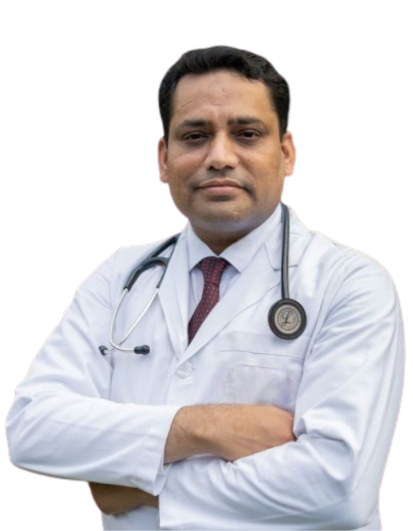
Meet Dr. Faran Naim — Consultant, Hematology & Bone Marrow Transplant
Patients seeking DVT and clotting disorder treatment in Moradabad now have access to a hematologist with extensive experience gained at leading centers in India and abroad.
Dr. Faran Naim brings his expertise in clinical hematology, thrombosis and coagulation disorders, hemato-oncology, and bone marrow transplantation to Jigyasa Hospital, Moradabad. His academic and professional background includes:
• MBBS – Madras Medical College, Chennai
• MD (Internal Medicine) – MLB Medical College, Jhansi, Uttar Pradesh
• DNB (Clinical Hematology) – Sir Ganga Ram Hospital, New Delhi
His prior clinical roles include:
• Kuwait Cancer Control Centre — as a Specialist in Malignant Hematology
• Metro Heart Institute with Multispeciality, Faridabad — as Senior Consultant, Hemato-Oncology
• Sarvodaya Hospital & Research Centre, Faridabad — as Consultant, Hematology
• Rajiv Gandhi Cancer Institute & Research Centre, New Delhi — as Attending Consultant, Clinical Hematology and Bone Marrow Transplant
He is an active member of the Delhi Society of Hematology and the Indian Society of Oncology, and has contributed to hematology research published in journals such as the South Asian Journal of Cancer and the Indian Journal of Hematology and Blood Transfusion.
Dr. Naim's clinical focus includes deep vein thrombosis, pulmonary embolism, inherited and acquired thrombophilia, and other coagulation disorders — bringing specialist, metro-level hematology expertise directly to patients across Moradabad and the surrounding region.
Treatment Options for DVT at Jigyasa Hospital
Treatment for DVT is tailored to the location and extent of the clot, the patient's bleeding risk, and whether any underlying condition needs to be addressed. Dr. Naim and the hematology team at Jigyasa Hospital create an individualized treatment plan following a complete evaluation.
1. Anticoagulant (Blood-Thinning) Therapy
Anticoagulation is the cornerstone of DVT treatment. It doesn't dissolve an existing clot immediately but prevents it from growing larger and reduces the risk of new clots forming while the body's own processes gradually break down the existing one. Options include:
• Low molecular weight heparin (LMWH) — often used as initial treatment, given by injection.
• Oral anticoagulants — including newer direct oral anticoagulants (DOACs) as well as traditional vitamin K antagonists like warfarin, chosen based on the patient's specific situation.
• Unfractionated heparin — sometimes used in hospitalized patients or those with kidney impairment, allowing for close monitoring and rapid reversal if needed.
2. Duration of Treatment
• Clots triggered by a temporary factor (such as recent surgery) typically require a shorter treatment course.
• Clots with no clear trigger, or those occurring in patients with an underlying clotting disorder, often require longer-term or even indefinite anticoagulation, with periodic reassessment of ongoing risk.
3. Compression Therapy
Graduated compression stockings are often recommended alongside anticoagulation to reduce swelling, relieve discomfort, and lower the risk of a long-term complication called post-thrombotic syndrome, which can cause chronic leg swelling and pain.
4. Thrombolytic Therapy
In select, severe cases — such as extensive clots threatening limb viability — clot-dissolving medication (thrombolysis) may be considered under close hospital monitoring, weighing the higher bleeding risk against the potential benefit.
5. Inferior Vena Cava (IVC) Filter
For patients who cannot safely take anticoagulants, or who develop new clots despite adequate treatment, a small filter may be placed in a major vein to help prevent clots from reaching the lungs. This is typically reserved for specific high-risk situations rather than routine use.
6. Emergency Management of Pulmonary Embolism
If a clot has already traveled to the lungs, urgent hospital-based treatment is required, which may include oxygen support, anticoagulation, and in severe cases, thrombolytic therapy or other interventions to restore blood flow. Jigyasa Hospital's 24/7 emergency and ICU facilities allow for rapid stabilization and treatment without the delay of transfer to another city.
Preventing DVT: Who Is at Risk and What Helps
Prevention is particularly important for patients undergoing surgery, those with prolonged hospital stays, or individuals with known risk factors. Preventive strategies discussed with your hematologist may include:
• Early mobilization after surgery or illness whenever possible
• Prophylactic anticoagulation for high-risk hospitalized patients, as determined by a physician
• Compression stockings or pneumatic compression devices during periods of immobility
• Adequate hydration, especially during long journeys
• Simple leg exercises during long flights or car rides, along with periodic movement breaks
• Awareness of personal risk factors, such as a family history of clotting or a known thrombophilia, so preventive measures can be planned in advance of surgery, pregnancy, or long travel
Special Considerations
DVT During Pregnancy and Postpartum
Pregnancy increases clotting risk due to hormonal and circulatory changes, and DVT risk remains elevated for several weeks after delivery. Management requires careful coordination between the hematologist and obstetric team, using anticoagulants considered safe during pregnancy and breastfeeding.
Recurrent DVT
Patients who experience more than one episode of DVT warrant a thorough evaluation for underlying thrombophilia or other contributing conditions, since recurrence often signals a persistent risk factor that needs to be identified and managed long-term.
DVT and Cancer
Cancer and certain cancer treatments increase clotting risk, and DVT can sometimes be the first sign of an underlying malignancy in patients without other risk factors. This connection is one reason a comprehensive hematology evaluation matters, rather than treating DVT in isolation.
Why Choose Jigyasa Hospital for DVT Treatment in Moradabad?
Jigyasa Hospital has built a strong reputation over more than two decades as a trusted, multispeciality healthcare provider in Moradabad and the surrounding Western Uttar Pradesh region. For patients with DVT or other clotting concerns, several factors make it a preferred choice:
- • Specialist-led diagnosis and treatment: A dedicated hematology consultant with training from premier institutions, ensuring DVT is managed by a true specialist rather than general protocol alone.
- • Rapid, accurate diagnostics: On-site Doppler ultrasound and D-dimer testing for prompt confirmation or exclusion of DVT.
- • 24/7 emergency and ICU care: Essential for managing suspected pulmonary embolism or severe clots without delay.
- • NABL-accredited laboratory services: Supporting thrombophilia screening and ongoing anticoagulation monitoring.
- • Continuity of care: Structured follow-up for patients on long-term anticoagulant therapy, including dose adjustments and monitoring for bleeding risk.
- • Affordable, accessible treatment: Jigyasa Hospital is empaneled under Ayushman Bharat PM-JAY, helping eligible families access specialist care without financial strain.
- • Clear, compassionate communication: Patients and families receive a clear explanation of diagnosis, treatment duration, and warning signs to watch for, empowering confident self-management.
Living with a DVT Diagnosis
Most patients treated appropriately for DVT recover well and can prevent recurrence with the right long-term precautions. General guidance your hematologist may recommend includes:
• Taking anticoagulant medication exactly as prescribed, without skipping or doubling doses
• Attending scheduled follow-up appointments and blood tests
• Wearing compression stockings as advised, particularly during the first months after diagnosis
• Staying active and avoiding prolonged immobility once cleared by your doctor
• Informing any healthcare provider — including dentists — about your anticoagulant therapy before procedures
• Watching for warning signs of bleeding (such as unusual bruising, blood in urine or stool, or prolonged bleeding from cuts) and reporting them promptly
Book an Appointment with Dr. Faran Naim
Jigyasa Hospital offers specialist DVT and clotting disorder care under the guidance of Dr. Faran Naim. From prompt diagnosis and individualized anticoagulant therapy to long-term monitoring and emergency support, comprehensive hematology care is available closer to home.
Near Miglani Cinema, Rampur Road, Moradabad 244001
Call Now
7900903333Frequently Asked Questions
How quickly does DVT need to be treated?
DVT should be evaluated and treated promptly, ideally within 24 hours of symptom onset, to reduce the risk of the clot growing or traveling to the lungs.
Can DVT go away on its own?
Some small clots may resolve without treatment, but this cannot be predicted reliably, and untreated DVT carries a real risk of pulmonary embolism. Any suspected DVT should be evaluated by a specialist rather than monitored without medical guidance.
How long will I need to take blood thinners?
This varies widely — from a few months for a clot triggered by a temporary factor, to years or indefinitely for clots linked to an ongoing risk factor. Your hematologist will reassess this periodically.
Is DVT the same as varicose veins?
No. Varicose veins are enlarged, twisted superficial veins and are generally not dangerous on their own, whereas DVT involves a clot in a deep vein and carries a risk of serious complications. However, some symptoms can overlap, which is why proper evaluation matters.
Why Patients Choose Us
- 24/7 Emergency & Trauma Care
- Top Specialist Doctors
- Modern ICU & Operation Theatres
- Transparent & Affordable Pricing
- Ayushman Bharat Empanelled
- Cashless Insurance Support
- Multispeciality Under One Roof
Our Location
Near Miglani Cinema,
Rampur Road,
Moradabad 244001