
Fat Transfer Surgery in Moradabad: Expert Care by Dr. Anil Rajput at Jigyasa Hospital
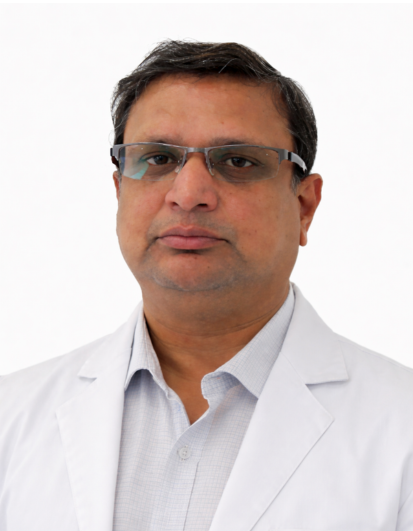
Dr. Anil Rajput is a plastic surgeon at Jigyasa Hospital, Moradabad, who evaluates patients seeking fat transfer for facial volume restoration, breast or buttock enhancement, hand rejuvenation, and contour correction.
His approach focuses on assessing available donor fat, treatment-area requirements, body proportions, skin characteristics, and individual goals before developing a personalised plan.
Patients from Moradabad and nearby towns can discuss autologous fat grafting, body contouring, and natural volume restoration with Dr. Anil Rajput at Jigyasa Hospital.
Using Your Own Fat to Restore Volume and Contour
Fat transfer surgery uses the body's own fat, harvested from an area with excess and carefully transferred to another area where additional volume or contour refinement is needed.
This approach offers a natural, biocompatible way to restore lost volume or create subtle enhancement using tissue the body already recognises as its own.
For residents of Moradabad, Rampur, Sambhal, Amroha, and Bijnor, fat transfer surgery is available locally at Jigyasa Hospital on Rampur Road near Miglani Cinema under the care of Dr. Anil Rajput.
What Is Fat Transfer Surgery?
Fat transfer surgery, also called autologous fat grafting, is a two-part procedure. Fat is first harvested from one area using liposuction, then processed and purified before being injected into another area to add volume, improve contour, or restore a more youthful appearance.
Because the transferred fat comes from the patient's own body, it may provide a natural look and feel. It also avoids the type of foreign-body reaction associated with some synthetic implants or fillers.
- • Facial volume restoration for hollow cheeks, temples, or under-eye areas.
- • Subtle breast volume enhancement using the patient's own tissue.
- • Buttock enhancement and contouring, commonly known as Brazilian Butt Lift or BBL.
- • Hand rejuvenation for age-related volume loss.
- • Correction of contour irregularities after liposuction, injury, or surgery.
- • Improvement in selected scars or depressed areas of skin.
Types of Fat Transfer Procedures
- 1. Facial fat transfer restores volume in areas such as the cheeks, temples, under-eyes, and nasolabial folds.
- 2. Breast fat transfer provides modest volume enhancement and may be considered by patients who prefer their own tissue rather than implants.
- 3. Buttock fat transfer enhances buttock volume and shape using fat harvested from areas such as the abdomen, flanks, or thighs.
- 4. Hand rejuvenation restores lost volume on the backs of the hands and may soften the appearance of prominent veins and tendons.
- 5. Contour correction uses precise amounts of fat to smooth irregularities caused by previous surgery, injury, or scarring.
- 6. Combined fat transfer and liposuction may contour the donor area while enhancing the recipient area.
Donor-site selection, injection technique, and the amount of fat transferred depend on the treatment area, available donor fat, skin characteristics, and the patient's goals.
Who May Be a Good Candidate?
Fat transfer may be suitable for patients seeking natural, usually modest volume enhancement or contour correction using their own tissue.
- • Facial volume loss associated with ageing.
- • Subtle breast or buttock enhancement without or in addition to implants.
- • Sufficient donor fat available in another body area.
- • Contour irregularities after surgery, injury, or scarring.
- • Good general health and willingness to pause smoking around the surgical period.
- • Realistic expectations about modest enhancement and possible fat reabsorption.
A portion of transferred fat is naturally reabsorbed by the body over time. Patients should understand this normal process and the possibility that more than one session may be needed.
Consultation and Pre-Surgical Evaluation
Every fat transfer case at Jigyasa Hospital begins with a detailed consultation with Dr. Anil Rajput. The evaluation may include:
- • Review of your goals, whether facial, breast, buttock, hand, or contour-related.
- • Assessment of the treatment area and available donor sites.
- • Discussion of expected volume retention and the possibility of staged treatment.
- • Photographic documentation for planning and later evaluation.
- • Pre-operative investigations through the hospital's NABL-accredited laboratory.
- • Explanation of anaesthesia, recovery, and possible risks.
Consultation places particular emphasis on realistic expectations about fat survival and the gradual nature of the final result.
Fat Transfer Procedure
Fat transfer surgery at Jigyasa Hospital is typically performed under local anaesthesia with sedation or general anaesthesia, depending on the treatment areas and extent of surgery.
The procedure begins with liposuction of the selected donor area, commonly the abdomen, flanks, or thighs. A gentle harvesting technique is used with the aim of preserving the viability of the fat cells.
The harvested fat is processed and purified to remove excess fluid and damaged cells. It is then injected into the recipient area in small, precise amounts and multiple layers to support smooth, natural contouring.
Procedure time generally ranges from one to three hours, depending on the treatment areas and volume involved. Most patients go home the same day.
Personalised Fat Transfer Planning
Dr. Anil Rajput evaluates your treatment goals, available donor fat, recipient area, body proportions, skin quality, and overall health before planning surgery.
Natural, Patient-Owned Tissue
Fat transfer uses the patient's own fat to restore volume or refine contours, offering a natural look and feel in appropriately selected cases.
Careful Fat Harvesting and Processing
Harvested fat is processed and purified before being injected in small, precise amounts to support smooth contouring and fat survival.
Structured Recovery Monitoring
Follow-up appointments help monitor swelling, bruising, volume retention, donor-site healing, recipient-site recovery, and long-term results.
Fat Transfer Care in Moradabad
Patients from Moradabad, Rampur, Sambhal, Amroha, and Bijnor can access personalised fat transfer consultation at Jigyasa Hospital.
Recovery: What to Expect
Recovery involves healing at both the donor and recipient sites. A general recovery timeline may include:
First Few Days
Swelling and bruising are common at the donor and recipient sites. A compression garment is generally worn at the donor site, while gentle handling of the recipient area helps protect the newly transferred fat.
First Week
Most patients rest at home while initial swelling remains. The treated area may temporarily appear more pronounced than the eventual settled result.
Weeks Two to Three
Swelling gradually decreases, and many patients return to non-strenuous daily activities.
Weeks Four to Six
The treated area continues to settle as swelling reduces, providing a clearer indication of the fat that has survived.
Three to Six Months
Final results become more apparent after initial swelling has resolved and the surviving fat cells have integrated into the treated area.
Patients should avoid direct pressure on treated areas, particularly after buttock fat transfer, follow activity restrictions, and attend all scheduled follow-up appointments.
Risks and Realistic Expectations
Like any surgical procedure, fat transfer carries potential risks. These are discussed openly during consultation and included in the informed-consent process.
- • Swelling and bruising.
- • Soreness at the donor site.
- • Asymmetry or contour differences.
- • Partial reabsorption and volume loss over time.
- • Infection, bleeding, or wound-healing concerns.
- • Anaesthesia-related risks, although uncommon.
- • Uneven fat survival between different areas.
- • The possibility of a second treatment session.
Fat survival varies between individuals and treatment areas. Some patients may benefit from a second session to achieve their desired result.
Dr. Anil Rajput's approach at Jigyasa Hospital emphasises careful harvesting, processing, and injection technique, together with honest expectations about the natural and sometimes gradual development of results.
Why Choose Dr. Anil Rajput at Jigyasa Hospital?
Fat transfer requires careful coordination between the donor area and the recipient site. Planning must consider available fat, desired volume, tissue quality, body proportions, fat survival, and recovery requirements.
- • Local access to specialist plastic surgery care in Moradabad.
- • Personalised assessment of donor and recipient areas.
- • Individualised treatment planning for facial, breast, buttock, hand, and contour concerns.
- • Pre-surgical testing through the hospital's NABL-accredited laboratory.
- • Round-the-clock hospital infrastructure and emergency support.
- • Careful explanation of fat survival, recovery, and possible risks.
- • Follow-up support throughout the healing period.
- • Convenient access for patients from Rampur, Sambhal, Amroha, and Bijnor.
Ayushman Bharat PM-JAY coverage may apply to eligible reconstructive cases depending on scheme classification and hospital assessment. Cosmetic fat transfer coverage should be confirmed with the hospital's billing and insurance desk.
Common Myths About Fat Transfer Surgery
Myth: All transferred fat stays permanently.
Reality: A portion of transferred fat is naturally reabsorbed by the body. This is why realistic expectations and, sometimes, a second session are discussed from the beginning.
Myth: Fat transfer gives the same dramatic increase as implants.
Reality: Fat transfer generally provides a more modest and natural enhancement compared with implants.
Myth: Anyone can undergo fat transfer regardless of body type.
Reality: Fat transfer requires adequate donor fat, so candidacy partly depends on having suitable donor areas.
Myth: Facial fat transfer looks and moves differently from natural facial volume.
Reality: Because the transferred tissue is the patient's own fat, it may integrate naturally with surrounding tissue when appropriately planned and performed.
Myth: Buttock fat transfer and buttock implants are the same procedure.
Reality: Fat transfer uses the patient's own harvested fat, while implants use a synthetic device. The techniques, risks, and recovery experiences are different.
Book a Fat Transfer Consultation with Dr. Anil Rajput
Jigyasa Hospital offers personalised plastic surgery consultation for facial fat transfer, breast fat transfer, buttock enhancement, hand rejuvenation, contour correction, and integrated liposuction-based fat transfer under the guidance of Dr. Anil Rajput.
Near Miglani Cinema, Rampur Road, Moradabad 244001
Call Now
7900903333Frequently Asked Questions
Is fat transfer surgery painful?
Most patients experience soreness at the donor site, similar to liposuction, along with mild discomfort at the treated area. These symptoms are generally managed with prescribed medication and proper post-operative care.
How much of the transferred fat survives long-term?
Fat survival varies between individuals and treatment areas. A portion of the transferred fat is naturally reabsorbed by the body, which is discussed during consultation as part of realistic goal-setting.
Will I need more than one fat transfer session?
Some patients achieve their desired result after one session, while others may benefit from a second session to build on the fat that successfully survived the initial transfer.
How long is recovery after fat transfer to the buttocks?
Recovery generally includes restricted sitting for a period to protect the transferred fat. Swelling and bruising at both donor and recipient sites usually improve gradually over several weeks.
Can fat transfer be combined with liposuction elsewhere on the body?
Yes. Since fat transfer involves harvesting fat through liposuction, body contouring at the donor site may be combined with volume enhancement at the recipient area during one planned procedure.
Does fat transfer leave visible scars?
The small incisions used for fat harvesting and injection are generally minimal and placed in less noticeable areas. Any resulting marks are usually small and well concealed.
How soon will I see the final results after fat transfer?
Initial swelling may make the result appear more pronounced. Final, settled results are generally assessed around three to six months after surgery once swelling has reduced and the surviving fat has integrated.
Is fat transfer a good alternative to breast implants?
For patients seeking a subtle and natural volume increase using their own tissue, fat transfer may be an alternative or complement to implants. The appropriate option depends on individual goals and assessment.
Why Patients Choose Us
- 24/7 Emergency & Trauma Care
- Top Specialist Doctors
- Modern ICU & Operation Theatres
- Transparent & Affordable Pricing
- Ayushman Bharat Empanelled
- Cashless Insurance Support
- Multispeciality Under One Roof
Our Location
Near Miglani Cinema,
Rampur Road,
Moradabad 244001