
Fracture Treatment in Moradabad — Dr. Shariq Arshad, Jigyasa Hospital
A fracture is a break or crack in a bone, ranging from a hairline stress fracture that barely shows on X-ray to a complete break that fragments the bone into multiple pieces. Fractures can affect anyone — a child falling from a playground slide, a young athlete injured on the cricket field, a working adult involved in a road accident on NH-9, or an elderly person with thinning bones who trips at home. At Jigyasa Hospital, Moradabad, Dr. Shariq Arshad and his orthopaedic team see and manage all grades of fracture injuries with the goal of restoring full function and getting patients back to their lives as quickly and safely as possible.
Patients from Moradabad, Rampur, Sambhal, Amroha, and surrounding districts of western Uttar Pradesh trust Dr. Shariq Arshad for his meticulous approach to fracture management, his ability to explain complex treatment decisions in plain language, and his commitment to ensuring every patient leaves with a clear understanding of their injury, their recovery plan, and the next steps in their care.
Closed (Simple) Fracture Management
The bone is broken but the skin remains intact. These are the most common fractures seen in everyday accidents and falls. Dr. Shariq Arshad provides precise alignment and immobilisation for optimal healing without surgery wherever possible.
Open (Compound) Fracture Surgery
When broken bone pierces or is exposed through the skin, urgent surgical attention is required to clean the wound and stabilise the bone. Jigyasa Hospital provides round-the-clock emergency orthopaedic surgical care for open fractures.
Intramedullary Nailing
A metal rod inserted down the hollow centre of a long bone such as the femur, tibia, or humerus. One of the most reliable methods for stabilising shaft fractures of the leg and thigh, allowing early mobilisation and faster return to function.
Hip Fracture Surgery (DHS / PFN)
Specialised implants for hip fractures — among the most common and serious fractures in elderly patients in Moradabad. Early fixation allows patients to be mobilised within days, dramatically reducing life-threatening complications of prolonged bed rest.
Paediatric Fracture Management
Children's fractures require specialist evaluation because growth plates can affect future bone growth if not managed correctly. Dr. Shariq Arshad applies the minimum intervention necessary to achieve good alignment while harnessing children's remarkable healing capacity.
Rehabilitation and Physiotherapy
Fracture care does not end with surgery or casting. A structured phased physiotherapy programme beginning from Day 1 restores joint movement, muscle strength, and full function — getting patients back to work, sport, and daily life as quickly as safely possible.
What Is a Fracture?
A fracture is a break or crack in a bone. The term covers a wide spectrum of injuries — from a hairline stress fracture that is barely visible on X-ray and causes only mild discomfort, to a severe comminuted fracture in which the bone shatters into multiple fragments following high-energy trauma such as a road accident or a heavy fall.
In Moradabad and the broader Rohilkhand belt, road traffic accidents, occupational injuries particularly in the brass and handicraft industries, and age-related bone fragility contribute to a high volume of fracture cases every year. Understanding the type and severity of a fracture is essential because different fractures require fundamentally different treatments — what works for a simple closed fracture in a young adult is entirely wrong for an osteoporotic hip fracture in an elderly patient.
Warning signs — seek immediate fracture care if you notice:
- Severe or increasing pain at the injury site that worsens with any movement or pressure
- Visible deformity where the limb looks bent, rotated, or shortened compared to the other side
- Swelling and bruising that develops rapidly around the injury
- Inability to bear weight on a leg or inability to move a joint through its normal range
- Numbness or tingling in a limb, which may indicate nerve involvement
- Open wound near the injury with or without bone visible — this is a surgical emergency
- Loss of pulse or sensation below the injury indicating possible vascular damage requiring emergency intervention
Common Types of Fractures Treated at Jigyasa Hospital
At Jigyasa Hospital, Dr. Shariq Arshad manages the full range of fracture types. Understanding what kind of fracture you have is the first step toward the right treatment plan.
1. Closed (Simple) Fractures
The bone is broken, but the skin remains intact. These are the most common fractures seen in everyday accidents and falls. Many closed fractures can be managed effectively without surgery using casting or bracing, provided they are correctly aligned from the outset. Early and accurate treatment prevents malunion and long-term functional problems.
2. Open (Compound) Fractures
The broken bone pierces or is exposed through the skin. Open fractures carry a significant risk of infection and almost always require urgent surgical attention to thoroughly clean the wound and stabilise the bone. Delayed or inadequate treatment of an open fracture can result in serious bone infection (osteomyelitis) that is far more difficult to treat than the original fracture.
3. Greenstick Fractures
Common in children, where the bone bends and cracks on one side rather than breaking completely — much like a green twig. Children's bones are more flexible than adult bones, which accounts for this distinctive fracture pattern. While children heal faster, correct alignment must be ensured from the start to prevent growth disturbance.
4. Comminuted Fractures
The bone shatters into three or more fragments. These are typically caused by high-energy trauma such as road accidents or a heavy object falling on a limb. Surgical fixation is usually required to reconstruct the bone precisely. At Jigyasa Hospital, intramedullary nails, plates, and screws are available to manage even complex comminuted fracture patterns.
5. Stress Fractures
Tiny cracks caused by repetitive force — common in athletes, military recruits, and labourers who perform the same motion hundreds of times a day. The pain is gradual and progressively worsening rather than sudden. Rest and activity modification are key. Some stress fractures need immobilisation, and certain high-risk locations such as the femoral neck require surgical fixation to prevent complete fracture.
6. Pathological Fractures
Fractures that occur through bone that has been weakened by osteoporosis, bone tumours, or other systemic diseases. Even a minor fall or normal activity can snap a pathologically weakened bone. Treatment at Jigyasa Hospital addresses both the fracture and the underlying condition — including initiating osteoporosis management to prevent the next fracture.
How Fractures Are Diagnosed at Jigyasa Hospital
Accurate diagnosis is the foundation of effective fracture treatment. At Jigyasa Hospital, Moradabad, Dr. Shariq Arshad uses a structured, evidence-based approach to fracture assessment that ensures nothing is missed.
Diagnostic approach used at Jigyasa Hospital:
- Thorough clinical history of how the injury occurred, combined with physical examination assessing tenderness, deformity, range of motion, and neurovascular status
- Digital X-ray in multiple views to visualise the fracture line, degree of displacement, and alignment — available on-site with immediate reporting
- CT scan for complex fractures around joints, the spine, and pelvis where precise 3D anatomy is needed to plan surgical fixation accurately
- MRI for suspected stress fractures not visible on X-ray, fractures near growth plates in children, and cases involving soft tissue or spinal cord assessment
- Bone density scan (DEXA) recommended for patients above 50 years or any patient whose fracture occurs after minimal trauma to detect underlying osteoporosis
The diagnosis at Jigyasa Hospital is never rushed. Understanding the full picture of the fracture — its pattern, displacement, involvement of nerves or vessels, and the patient's overall health — is what guides the most appropriate and personalised treatment plan.
Meet Your Orthopaedic Surgeon: Dr. Shariq Arshad
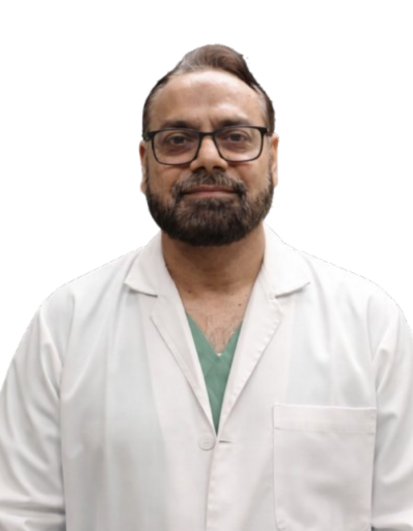
Dr. Shariq Arshad is a qualified orthopaedic surgeon at Jigyasa Hospital, Moradabad, with extensive training and clinical experience in fracture management — from simple closed fractures to complex polytrauma, joint fractures, and osteoporotic fractures. He is the foremost orthopaedic specialist for fracture care in Moradabad, personally managing every stage of a patient's treatment from initial assessment through surgery and rehabilitation.
His areas of clinical expertise include all types of fracture surgery including intramedullary nailing, dynamic hip screw and proximal femoral nail fixation, open reduction and internal fixation (ORIF), management of paediatric and elderly fractures, sports-related fracture management and return-to-sport rehabilitation, and treatment of osteoporotic fractures with concurrent bone health optimisation.
Dr. Arshad believes in the principle that the best treatment is the one that achieves solid bone union with the best possible functional outcome for that specific patient. This may be a cast, a brace, or an operation — the decision is always personalised and evidence-based, never based on convenience.
His approach is patient-centred and grounded in clear communication. He is fluent in Hindi and Urdu, making direct and meaningful communication effortless for patients across the Rohilkhand region. He takes genuine time with each patient and family to explain their injury, the treatment options available, and the expected recovery journey in terms everyone can understand.
Fracture Treatment at Jigyasa Hospital: What to Expect
Many patients and families are uncertain about what fracture treatment involves. Here is a clear overview of what happens at Jigyasa Hospital so you know exactly what to expect at every stage.
Before Treatment
- A full clinical assessment and appropriate imaging are performed to diagnose the fracture type and plan treatment accurately.
- For patients requiring surgery, pre-operative investigations including blood tests, ECG, and chest X-ray are completed, and the anaesthesia team assesses fitness for the operation.
- Dr. Shariq Arshad explains the planned procedure, the type of implant to be used where relevant, expected outcomes, and possible risks in clear, accessible language.
- Pain relief is initiated promptly so patients are comfortable throughout the assessment and treatment planning process.
During Treatment (Surgical)
- The operation is performed under spinal, regional, or general anaesthesia depending on the fracture site and patient profile.
- Modern intraoperative fluoroscopy (real-time X-ray) is used to confirm accurate fracture reduction and implant positioning during surgery, minimising the risk of malalignment.
- Implants including plates, screws, intramedullary nails, dynamic hip screws, or proximal femoral nails are selected based on the specific fracture pattern and patient requirements.
- The wound is closed carefully and a post-operative dressing applied. The entire procedure is explained to the family immediately afterward.
After Treatment
- A structured post-operative protocol begins immediately — effective pain management, wound care, and graded physiotherapy.
- For most limb surgeries, patients are encouraged to begin gentle movement within 24 to 48 hours to prevent stiffness and maintain muscle tone.
- Weight-bearing timelines are defined individually based on the fracture type, fixation achieved, and the patient's bone quality and general health.
Common Fracture Types and Treatment Overview
When Dr. Shariq Arshad assesses your fracture, the key factors that guide treatment include the fracture type, degree of displacement, bone quality, and the patient's age and activity requirements. Here is a guide to the most common fracture types and their typical management approach:
| Fracture Type | Key Characteristic | Typical Treatment |
|---|---|---|
| Closed (Simple) Fracture | Bone broken, skin intact | Cast or surgery |
| Open (Compound) Fracture | Bone exposed through skin | Urgent surgery |
| Greenstick Fracture | Partial crack — common in children | Cast or brace |
| Comminuted Fracture | Bone shattered into 3+ fragments | Surgical fixation |
| Stress Fracture | Tiny cracks from repetitive force | Rest and immobilisation |
| Pathological Fracture | Fracture through weakened bone | Treat fracture and cause |
The treatment decision is always personalised. A comminuted fracture in a young active patient, for example, requires different surgical planning than the same fracture pattern in an elderly patient with osteoporosis. Dr. Shariq Arshad determines the best approach based on all individual factors.
Fractures and Orthopaedic Conditions Managed at Jigyasa Hospital
Fracture management is the foundation of orthopaedic care at Jigyasa Hospital. Based on clinical assessment and imaging, Dr. Shariq Arshad evaluates and manages the full spectrum of fracture and related orthopaedic conditions.
Hip Fractures in the Elderly
Hip fractures in patients above 60 years of age are among the most serious orthopaedic emergencies. Without surgical treatment, many elderly patients are unable to get out of bed, leading to life-threatening complications including pneumonia, deep vein thrombosis, and pressure sores. At Jigyasa Hospital, the approach is to operate early and mobilise early — most patients are taken to surgery within 24 to 48 hours of injury. Post-operative physiotherapy begins on Day 1.
Long Bone Fractures (Femur, Tibia, Humerus)
Shaft fractures of major long bones are typically managed with intramedullary nailing at Jigyasa Hospital. A metal rod inserted down the hollow centre of the bone provides stable fixation that allows early mobilisation and significantly reduces healing time compared to prolonged casting. This approach is particularly important for working adults and young patients where time off work and loss of independence must be minimised.
Wrist, Forearm, and Ankle Fractures
These common fractures from falls are precisely assessed and managed at Jigyasa Hospital. Where displacement is minimal, a well-applied cast gives excellent results. Where the fracture is displaced or involves the joint surface, open reduction and internal fixation with plates and screws restores anatomy and protects against long-term arthritis and joint stiffness.
Paediatric Fractures and Growth Plate Injuries
Children's fractures are not simply smaller adult fractures. The presence of growth plates means that certain fractures can affect future bone growth if not managed correctly. Greenstick fractures, torus fractures, and Salter-Harris growth plate injuries require specialist paediatric orthopaedic evaluation. Dr. Shariq Arshad manages paediatric fractures with the minimum intervention necessary to achieve good alignment, avoiding unnecessary surgery wherever possible.
Sports Fractures and Return to Sport
Athletes in Moradabad whether playing cricket, kabaddi, football, or weightlifting are at risk of specific fracture patterns. Clavicle fractures from falls, stress fractures of the metatarsals or tibia from overtraining, and ankle fractures from contact sports are common. Dr. Shariq Arshad's management of sports fractures focuses not just on healing but on return-to-sport timelines and performance preservation.
Fractures with Nerve or Vessel Injury
Some fractures occur close to major nerves or blood vessels and can injure them at the time of trauma. Radial nerve injury with humeral shaft fractures and popliteal artery injury with knee dislocations or distal femur fractures are recognised complications that require immediate identification and management. At Jigyasa Hospital, neurovascular status is assessed at the first point of contact and reassessed at every stage of treatment — because a missed vascular injury can result in limb loss.
Osteoporotic and Pathological Fractures
Fractures occurring after trivial injury in patients above 50 years of age are frequently caused by underlying osteoporosis. Treatment at Jigyasa Hospital addresses both the fracture and the root cause — with calcium and Vitamin D supplementation, bisphosphonate therapy, and lifestyle counselling initiated as part of the acute fracture management to prevent future fractures.
Why Choose Jigyasa Hospital for Fracture Treatment in Moradabad?
Residents of Moradabad and the surrounding regions including Sambhal, Amroha, Rampur, Bijnor, and Hapur need not travel to Delhi or Meerut for high-quality orthopaedic fracture care. Here is what sets Jigyasa Hospital apart.
Expert Orthopaedic Surgeon On-Site
Dr. Shariq Arshad personally manages every fracture case. You receive specialist care from a qualified orthopaedic surgeon who explains your injury and treatment options directly — not a general practitioner managing a complex fracture beyond their expertise.
Full Range of Fracture Implants
Plates, screws, intramedullary nails, proximal femoral nails, and dynamic hip screws are all available on-site. Patients never face delays due to unavailability of the correct implant for their fracture type.
24/7 Emergency Orthopaedic Services
Fractures do not wait for office hours. Emergency fracture assessment, stabilisation, and surgery are available around the clock at Jigyasa Hospital, ensuring no patient faces dangerous delays in receiving definitive fracture care.
Physiotherapy and Rehabilitation Unit
In-hospital physiotherapy begins from Day 1 of treatment. A phased rehabilitation programme restores joint movement, muscle strength, and full function — getting patients back to work, sport, and daily life as quickly and safely as possible.
Advanced Imaging On-Site
Digital X-ray with immediate reporting, CT, and MRI are all available at Jigyasa Hospital to support accurate diagnosis and precise surgical planning. Intraoperative fluoroscopy is used during surgery to confirm real-time fracture reduction and implant positioning.
Affordable, Transparent Pricing
Quality orthopaedic care should be accessible to all. Treatment is available under various health insurance schemes and Ayushman Bharat. Detailed pre-treatment cost estimates are provided with no hidden charges, making high-standard fracture care available to patients across the region.
What Patients Say About Dr. Shariq Arshad
My father fell at home and broke his hip at the age of 74. We were very worried about surgery at his age, but Dr. Shariq Arshad explained everything clearly and reassured us that operating quickly was the safest option. The surgery went smoothly and within three days my father was sitting up and starting to walk with support. The care at Jigyasa Hospital was exceptional from start to finish. We are deeply grateful.
Rajesh Verma
Hip Fracture Surgery · Moradabad
I slipped on wet stairs and fractured my wrist badly. I came to Jigyasa Hospital and Dr. Shariq Arshad examined me thoroughly and explained exactly what the X-ray showed and what treatment was needed. He fixed the fracture with a plate and screws and within six weeks I had nearly full movement back. His patience in explaining the recovery process and the physiotherapy steps made a big difference to my confidence.
Sunita Agarwal
Wrist Fracture Treatment · Rampur
I was in a road accident on NH-9 and suffered multiple fractures in my leg. I was brought to Jigyasa Hospital and Dr. Shariq Arshad operated the same night. The surgery was complex but he handled it with great skill. The follow-up care and physiotherapy at Jigyasa Hospital was thorough and consistent. I was back on my feet and returned to work within three months. I cannot thank Dr. Shariq Arshad and the entire team enough.
Mohammed Irfan
Road Accident Fracture Reconstruction · Sambhal
Book Your Fracture Consultation at Jigyasa Hospital, Moradabad
Do not delay fracture care. Fractures treated promptly and correctly heal better, function better, and cause fewer long-term complications than those that are ignored or inadequately managed. Whether you have suffered a fresh fracture, are experiencing persistent pain after an injury that was never properly evaluated, or need a second opinion on a previous orthopaedic assessment, Dr. Shariq Arshad and the Jigyasa Hospital orthopaedic team are here to help. Expert fracture care and complete orthopaedic management are available right here in Moradabad — no need to travel to Delhi or Meerut.
Jigyasa Hospital is located near Miglani Cinema, Rampur Road, Moradabad 244001 — easily accessible from across the city and from surrounding districts including Rampur, Sambhal, Amroha, and Bijnor. Emergency orthopaedic services are available 24 hours a day, 7 days a week. You can also search Jigyasa Hospital Rampur Road Moradabad on Google Maps for precise directions.
Address
Near Miglani Cinema, Rampur Road, Moradabad 244001
Call Us (24/7)
+91-7900903333Email Us
info@jigyasahospital.inFrequently Asked Questions — Fracture Treatment in Moradabad
How do I know if my bone is fractured or just bruised?
A bruise causes discolouration and tenderness but the bone is intact. A fracture typically causes sharper, more localised pain that worsens significantly with any attempt to move the injured part or bear weight. Swelling is often more pronounced, and deformity may be visible. The only definitive way to confirm a fracture is through an X-ray. If in doubt, always get it checked at Jigyasa Hospital.
Can a fracture heal on its own without a cast or surgery?
Some very minor fractures such as hairline stress fractures and certain rib fractures can heal with rest and activity modification alone. However, most fractures require some form of immobilisation to ensure the bone heals in the correct position. Attempting to ignore a fracture risks malunion, non-union, or chronic pain and disability. Always seek proper medical assessment at Jigyasa Hospital.
How long will I need to be in the hospital after fracture surgery?
This depends on the type of surgery. For limb fractures such as wrist, forearm, and ankle, most patients go home within 1 to 3 days. Hip fracture surgery typically requires a 4 to 7 day stay to ensure safe mobilisation. More complex pelvic or spinal surgeries may require a longer stay. Dr. Shariq Arshad will give you a specific estimate based on your surgery plan.
Will the metal plate or nail need to be removed after the fracture heals?
In most adults, implants such as plates, screws, and nails do not need to be removed once the bone has healed — they are designed to stay in permanently without causing problems. Removal may be considered if the implant is prominent and causing local discomfort, or in young patients and children where implant removal is sometimes preferred. This decision is made individually after reviewing healed X-rays, usually 12 to 18 months after surgery.
Is surgery safe for elderly patients with a hip fracture?
The risk of not operating is much greater than the surgical risk in most elderly patients. Prolonged bed rest after a hip fracture leads to serious complications including pneumonia, blood clots, and skin breakdown that are often fatal. Modern anaesthesia and surgical techniques make hip fracture surgery safe even for patients in their 80s and 90s. At Jigyasa Hospital, pre-operative medical optimisation is done rapidly so surgery can proceed at the earliest safe opportunity.
How do I book an appointment with Dr. Shariq Arshad?
Call +91-7900903333, email info@jigyasahospital.in, or visit jigyasahospital.com to book online. You can also walk in to Jigyasa Hospital, Near Miglani Cinema, Rampur Road, Moradabad 244001. Same-day consultation slots are often available for urgent fracture and orthopaedic cases.
Why Patients Choose Us
- 24/7 Emergency & Trauma Care
- Top Specialist Doctors
- Modern ICU & Operation Theatres
- Transparent & Affordable Pricing
- Ayushman Bharat Empanelled
- Cashless Insurance Support
- Multispeciality Under One Roof
Our Location
Near Miglani Cinema,
Rampur Road,
Moradabad 244001