
FSCAI Cardiologist in Moradabad: Dr. Amit Kumar Singh at Jigyasa Hospital
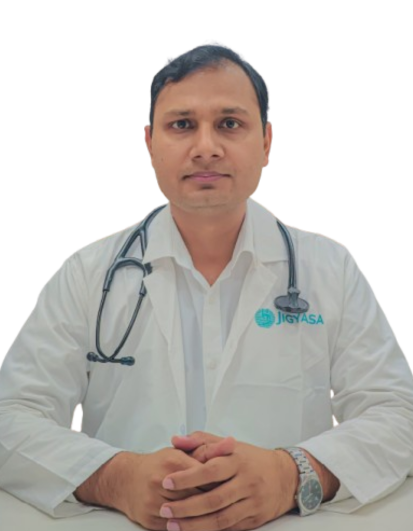
When a heart problem strikes, you need more than a doctor. You need a specialist whose training is recognised beyond borders, a team that acts fast, and a hospital equipped for emergencies. At Jigyasa Hospital, Moradabad, Dr. Amit Kumar Singh, FSCAI, leads the cardiology department and offers advanced, evidence-based care for heart patients in Moradabad and nearby districts such as Rampur, Sambhal, Bijnor, Amroha and Bareilly.
This page explains what the FSCAI title means, which heart conditions Dr. Singh treats, what procedures are available at Jigyasa Hospital, and when you should book a consultation.
Who Is Dr. Amit Kumar Singh?
Dr. Amit Kumar Singh is a consultant cardiologist at Jigyasa Hospital, Moradabad, with a special focus on interventional cardiology, the branch of cardiology that treats blocked arteries and structural heart problems using minimally invasive, catheter-based techniques. He holds the FSCAI, or Fellow of the Society for Cardiovascular Angiography and Interventions, designation, an internationally respected credential among interventional cardiologists.
His listed qualifications include MD (BHU), DM Cardiology (KGMU), and FSCAI. For confirmed details about his experience, previous hospitals, memberships, publications, awards, and OPD timings, please call Jigyasa Hospital on 7900903333.
Patients value Dr. Singh for his clear communication, his careful diagnosis, and his habit of choosing the least invasive effective treatment. He believes every patient should understand their condition, their options and their risks before any decision is made.
What Does FSCAI Mean, and Why Does It Matter?
The Society for Cardiovascular Angiography and Interventions (SCAI) is one of the leading professional organisations for interventional cardiology, based in the United States. It focuses on education, quality standards and best practice in procedures such as angiography, angioplasty and stenting.
FSCAI is a fellowship granted to physicians who meet the society's criteria, which include training, professional standing and a record of contribution to the field. For a patient, the title gives practical reassurance:
• Recognised expertise. An FSCAI cardiologist has been assessed by a global professional body and found to meet its standards in interventional cardiology.
• Commitment to current practice. Fellows stay connected to international guidelines, new techniques and safety protocols.
• Focus on quality and safety. Interventional procedures involve the heart's most delicate vessels, and a fellow's commitment to the society's standards supports careful, protocol-driven care.
In a city like Moradabad, having an FSCAI cardiologist means you can often receive advanced heart care close to home instead of travelling to a metro city, which matters most in an emergency, when every minute counts.
Heart Conditions Treated by Dr. Amit Kumar Singh
Dr. Singh diagnoses and treats a wide range of cardiovascular conditions, including:
1. Coronary artery disease (CAD). Fatty deposits, called plaque, narrow the arteries that supply the heart muscle. Left untreated, CAD can lead to chest pain or angina, heart attack and heart failure.
2. Heart attack (myocardial infarction). A heart attack happens when an artery is suddenly blocked. Rapid opening of the blockage, often by primary angioplasty, saves heart muscle and lives.
3. Heart failure. The heart cannot pump blood as efficiently as the body needs. Dr. Singh offers medication optimisation, lifestyle guidance and long-term follow-up.
4. Hypertension, or high blood pressure. A leading cause of heart attack, stroke and kidney disease. Proper diagnosis, home monitoring and tailored medication make a major difference.
5. Arrhythmias. Irregular, too-fast or too-slow heartbeats, including atrial fibrillation, can cause palpitations, dizziness, fainting or stroke. Evaluation includes ECG, Holter monitoring and, when needed, device therapy.
6. Valvular heart disease. Narrowed or leaking heart valves can cause breathlessness, fatigue and swelling. Echocardiography helps assess severity and timing of intervention.
7. Congenital heart disease. Heart defects present from birth may be diagnosed in childhood or even in adulthood.
8. Cardiomyopathy and cardiac conditions after viral illness. Weakness or enlargement of the heart muscle needs careful evaluation and long-term management.
9. High cholesterol and metabolic risk. Preventive cardiology addresses cholesterol, diabetes, obesity and smoking before they cause serious damage.
Advanced Cardiology Services at Jigyasa Hospital
Please confirm each service with the hospital before travelling, as availability may depend on current facilities and scheduling.
Coronary Angiography
Coronary angiography is a diagnostic test in which a thin catheter, usually inserted through the wrist or radial artery, delivers contrast dye to the heart's arteries. X-ray images show exactly where and how severely the arteries are blocked. The radial route typically means less bleeding, less discomfort and a faster return to walking compared with the groin approach.
Angioplasty and Stenting (PCI)
Percutaneous coronary intervention, commonly called angioplasty, opens a blocked artery using a tiny balloon and places a stent, a small mesh tube, to keep it open. Dr. Singh performs both planned angioplasty for patients with significant blockages and emergency or primary angioplasty for patients having a heart attack. Modern drug-eluting stents help reduce the chance of the artery narrowing again.
Primary Angioplasty for Heart Attack
In a heart attack, time is heart muscle. Jigyasa Hospital's cardiac team is organised to move quickly from arrival to ECG, diagnosis and, where indicated, opening of the blocked artery. If you or someone near you has chest pain, sweating and breathlessness, do not wait or try home remedies. Go to the nearest emergency facility immediately.
Pacemaker and Device Implantation
When the heart beats too slowly or conducts electrical signals poorly, a pacemaker can restore a healthy rhythm. Dr. Singh evaluates patients who have fainting spells, extreme fatigue or very slow pulse, and advises on device therapy where appropriate.
Echocardiography, ECG, TMT and Holter Monitoring
• ECG: Records the heart's electrical activity
• 2D Echo: Uses ultrasound to see the heart's structure, valves and pumping strength
• Treadmill Test (TMT): Checks how the heart responds to exertion
• Holter monitoring: Records heart rhythm over 24 to 48 hours to catch irregular beats
• Ambulatory blood pressure monitoring: Assesses blood pressure across a full day
Preventive Cardiology and Heart Health Checkups
Prevention is the best treatment. Heart health packages evaluate blood pressure, blood sugar, cholesterol, ECG, echocardiography and risk factors, so problems can be caught early, even before symptoms appear.
Cardiac Rehabilitation and Follow-Up
Recovery does not end at discharge. After a heart attack, angioplasty or heart failure, guided exercise, diet counselling, medication review and regular follow-up reduce the chance of future problems.
Warning Signs: When Should You See a Cardiologist?
Do not ignore the following symptoms. Some need an urgent visit, others a prompt appointment.
Seek emergency care immediately for:
• Chest pain, pressure, tightness or burning that lasts more than a few minutes
• Pain spreading to the left arm, jaw, neck, back or stomach
• Sudden severe breathlessness
• Cold sweat with nausea or vomiting
• Sudden fainting or collapse
Book a consultation soon if you have:
• Chest discomfort during walking, climbing stairs or exertion
• Unexplained tiredness or reduced stamina
• Palpitations or a racing, skipping heartbeat
• Swelling in the feet or ankles
• Dizziness or blackouts
• Persistently high blood pressure
• A family history of heart disease or sudden cardiac death
• Diabetes, high cholesterol, obesity, or a history of smoking or tobacco use
Women, older adults and people with diabetes may have atypical symptoms such as unusual fatigue, indigestion-like discomfort or breathlessness without obvious chest pain. If something feels wrong, get checked.
Why Heart Disease Is Rising, and What You Can Do
India has seen a steady rise in heart disease, and it often affects people at younger ages than in many other countries. Common contributors include:
• Tobacco use, including smoking, bidi, gutka and other forms
• Uncontrolled diabetes and high blood pressure
• High cholesterol and diets rich in refined carbohydrates and fried food
• Low physical activity and long sedentary hours
• Chronic stress and poor sleep
• Family history
The encouraging part is that most of these risks can be reduced. Dr. Singh commonly advises patients to:
• Quit tobacco in every form. This is the single most powerful step.
• Walk or exercise regularly. Around 30 minutes a day, most days of the week, is a good goal for most adults, unless advised otherwise.
• Eat a heart-friendly diet with vegetables, fruit, whole grains, pulses and nuts, and less salt, sugar and deep-fried food.
• Know your numbers. Check blood pressure, blood sugar and cholesterol regularly.
• Take medicines exactly as prescribed. Never stop heart medicines, especially blood thinners or stent-related medicines, without your cardiologist's advice.
• Manage stress and sleep with consistent routines and relaxation.
• Go for periodic heart checkups if you are over 35 or have risk factors.
What to Expect During Your First Consultation
Many people feel anxious before their first cardiology visit. Here is how the process usually works:
1. Detailed history. Dr. Singh will ask about your symptoms, lifestyle, medicines, past illnesses and family history.
2. Physical examination. This includes pulse, blood pressure and a heart and lung examination.
3. Basic tests. An ECG is often done the same day. Depending on your needs, you may be advised to have an echocardiogram, TMT, blood tests or Holter monitoring.
4. Clear explanation. You will be told what the findings mean, in plain language, and what options exist.
5. Personalised plan. This may include lifestyle changes, medicines, further testing or a procedure if required. If a procedure is needed, you and your family will be informed of the benefits, risks and alternatives before any decision.
What to bring: Previous reports such as ECG, echo, angiography, and blood tests; a list of current medicines; discharge summaries if you have been hospitalised; and your ID and insurance details if applicable.
FSCAI-Credentialed Cardiologist
Dr. Amit Kumar Singh, FSCAI, provides interventional cardiology consultation for heart disease, chest pain, blockages, rhythm problems, and heart failure.
Advanced Diagnostic Support
Evaluation may include ECG, 2D Echo, treadmill test, Holter monitoring, ambulatory blood pressure monitoring, and coronary angiography.
Minimally Invasive Heart Procedures
Where appropriate, care may include radial angiography, angioplasty, stenting, primary angioplasty, and pacemaker or device implantation.
Prevention and Rehabilitation
Guidance covers tobacco cessation, diet, exercise, blood pressure, diabetes, cholesterol, medicines, and follow-up after a heart event or stent.
Emergency-Focused Cardiac Care
Jigyasa Hospital provides 24/7 emergency and OPD services. Suspected heart attack symptoms require immediate emergency assessment.
Accessible Location in Moradabad
Jigyasa Hospital is on Rampur Road, near Miglani Cinema, making advanced cardiac care accessible to patients in Moradabad and nearby districts.
Book an Appointment with Dr. Amit Kumar Singh, FSCAI
If you or a family member has chest discomfort, breathlessness, palpitations, high blood pressure, diabetes, high cholesterol, or a family history of heart disease, early assessment can help protect your heart.
To consult Dr. Amit Kumar Singh at Jigyasa Hospital, Moradabad, call 7900903333. In a suspected heart attack, call the emergency number or an ambulance immediately.
Address
Near Miglani Cinema, Rampur Road, Moradabad 244001
Phone
7900903333Frequently Asked Questions About FSCAI Cardiology
Who is the best FSCAI cardiologist in Moradabad?
Dr. Amit Kumar Singh, FSCAI, at Jigyasa Hospital is an interventional cardiologist who treats heart attacks, blocked arteries, arrhythmias, heart failure and other cardiac conditions. Choose a cardiologist based on qualifications, experience, communication and the hospital's facilities, and Dr. Singh's FSCAI fellowship reflects international recognition in interventional cardiology.
What is the difference between a cardiologist and an interventional cardiologist?
A cardiologist diagnoses and manages heart conditions, often with medicines and lifestyle advice. An interventional cardiologist has additional training in catheter-based procedures such as angiography, angioplasty and stenting to open blocked arteries.
Does FSCAI mean the doctor is a surgeon?
No. FSCAI stands for Fellow of the Society for Cardiovascular Angiography and Interventions. It refers to expertise in interventional cardiology, which uses catheters instead of open surgery. Open-heart surgery is performed by cardiothoracic surgeons.
Is angioplasty safe?
Angioplasty is a routine procedure with a strong safety record when performed by experienced teams. Like any procedure, it carries some risk, which depends on the patient's age, overall health and the urgency of the situation. Your cardiologist will explain risks specific to you.
How long does recovery take after angioplasty?
Many patients walk the same or next day and are discharged within a few days after planned angioplasty, and return to routine activity within about a week or as advised. Recovery after a heart attack takes longer and includes rehabilitation.
Do I need to take medicines after a stent?
Yes. Antiplatelet medicines are essential after stenting to prevent clots, and you must not stop them without consulting your cardiologist. Medicines for cholesterol, blood pressure and diabetes are also usually continued.
Can young people get heart attacks?
Yes. Smoking, tobacco use, diabetes, high cholesterol, obesity, stress and family history can cause heart disease in people in their 20s, 30s and 40s.
Why Patients Choose Us
- 24/7 Emergency & Trauma Care
- Top Specialist Doctors
- Modern ICU & Operation Theatres
- Transparent & Affordable Pricing
- Ayushman Bharat Empanelled
- Cashless Insurance Support
- Multispeciality Under One Roof
Our Location
Near Miglani Cinema,
Rampur Road,
Moradabad 244001