
Hair Transplant in Moradabad | Advanced Hair Restoration by Dr. Anil Rajput — Jigyasa Hospital
Hair loss is more than a cosmetic concern. It can gradually affect self-confidence, influence how you present yourself in professional and social settings, and impact how you feel about your appearance every day. Whether you are noticing a receding hairline, a thinning crown, or more advanced androgenetic alopecia, effective treatment options are available.
At Jigyasa Hospital in Moradabad, modern hair transplant surgery offers a long-term, natural-looking solution for suitable candidates. Instead of travelling to distant metropolitan centres, patients can now access advanced hair restoration under the care of an experienced plastic and reconstructive surgeon in their own city.
Led by Dr. Anil Rajput, the hair transplant services at Jigyasa Hospital combine careful evaluation, evidence-based techniques, and personalised planning to help restore hair density and confidence in a safe, structured environment.
Advanced FUE and FUT Techniques
Modern follicular unit extraction and strip techniques designed to create natural, long-lasting coverage in thinning and bald areas.
Specialist Plastic Surgeon
Hair transplant procedures performed by an experienced plastic and reconstructive surgeon with a focus on natural aesthetics.
Natural Hairline Design
Individualised hairline planning that respects facial proportions, age, and future hair loss patterns for realistic results.
PRP and Growth Support
Platelet-rich plasma therapy and supportive treatments to enhance graft survival, promote growth, and improve hair thickness.
Structured Treatment Journey
Stepwise care from initial consultation and graft planning through surgery, post-operative care, and long-term follow-up.
Accessible Care in Moradabad
Hair restoration services at Jigyasa Hospital, conveniently located for patients from Moradabad and nearby cities in western Uttar Pradesh.
Understanding Hair Loss: Why It Happens
Hair loss, or alopecia, can occur due to multiple overlapping causes. Identifying the underlying reason is important before deciding on hair transplant or other treatments.
Androgenetic alopecia: Commonly called male or female pattern baldness, this hereditary condition is driven by genetic sensitivity to DHT and typically causes a receding hairline, thinning at the crown, or diffuse thinning.
Hormonal changes: Thyroid disorders, PCOS, post-pregnancy hormonal shifts, and other endocrine imbalances can contribute to excessive hair shedding.
Nutritional deficiencies: Inadequate intake of iron, protein, zinc, biotin, and other nutrients can weaken hair over time and lead to thinning.
Stress and illness: Prolonged physical or emotional stress, or recent illnesses, can push a large number of hair follicles into a resting phase, leading to increased shedding several weeks later.
Scarring alopecia: Burns, injuries, and certain skin conditions can permanently destroy follicles in specific areas. In such cases, hair transplant often becomes the main restorative option.
At Jigyasa Hospital, hair loss evaluation includes medical history, scalp examination, and grading of baldness. Common scales such as the Norwood-Hamilton Scale in men and the Ludwig Scale in women help classify pattern and severity before planning surgery or medical therapy.
What Is a Hair Transplant?
A hair transplant is a minimally invasive surgical procedure in which healthy hair follicles are taken from a donor area, most commonly the back or sides of the scalp, and implanted into thinning or bald regions. These donor follicles are usually more resistant to DHT, so they tend to keep growing even in areas where previous hair was lost.
Modern hair transplant methods are designed to produce natural results, with careful attention to graft direction, density, and hairline shape. At Jigyasa Hospital, Dr. Anil Rajput focuses on techniques that aim to maximise graft survival and minimise visible scarring.
FUE and FUT Hair Transplant Techniques
Follicular Unit Extraction (FUE): In FUE, individual follicular units containing one to four hairs are extracted from the donor area using a small punch device. The grafts are then implanted into prepared recipient sites. Because no long strip is removed, there is no linear donor scar, which can be helpful for patients who prefer shorter hairstyles.
FUE typically offers quicker initial recovery and less post-operative discomfort at the donor site. It can be used for scalp restoration as well as selected beard, moustache, or eyebrow cases, depending on suitability and donor availability.
Follicular Unit Transplantation (FUT): Also known as the strip method, FUT involves removing a narrow strip of skin from the donor area, from which grafts are carefully separated under magnification. This technique can provide a higher graft yield in a single session and is often considered for patients with more advanced baldness.
The donor incision is closed with sutures, leaving a linear scar that is normally concealed by surrounding hair at typical lengths. Technique selection is decided after assessment of donor density, scalp laxity, hair characteristics, and restoration goals.
PRP Therapy: Supporting Hair Growth
Platelet-rich plasma, or PRP, is a supportive treatment in which a small amount of the patient's own blood is processed to concentrate platelets and growth factors. The resulting PRP is then injected into areas of thinning hair or into the transplant area according to the treatment plan.
PRP therapy aims to support hair follicle function, improve blood supply around follicles, and encourage stronger growth from both native and transplanted hair. It is often used as an adjunct to hair transplant and can also be considered for early-stage hair thinning in selected cases.
Because PRP is prepared from the patient's own blood, the risk of allergic reaction is minimal. Sessions are usually completed within an hour, with most people able to resume routine non-strenuous activities soon after treatment.
Are You a Good Candidate for Hair Transplant?
Not everyone experiencing hair loss is an immediate candidate for surgery. A detailed evaluation is essential to confirm whether hair transplant is appropriate and to plan the best timing for the procedure.
Suitable candidates usually include adults with stable or slowly progressive hair loss, adequate donor hair, and realistic expectations about density and coverage.
Patients with ongoing medical issues such as uncontrolled diabetes, certain autoimmune diseases, or active scalp disorders may need additional evaluation and management before considering surgery.
In some situations, medical treatment with agents such as minoxidil, finasteride, or PRP may be recommended first to stabilise hair loss before transplant is planned.
Your Hair Transplant Journey at Jigyasa Hospital
Step 1 — Consultation and Planning: The process begins with a consultation in which scalp condition, donor availability, hairline design, and medical history are reviewed. Treatment options, approximate graft requirements, and cost estimates are discussed at this stage.
Step 2 — Pre-operative Preparation: Before surgery, patients receive instructions regarding medicines to avoid, scalp hygiene, and lifestyle measures such as smoking cessation. Routine blood tests may be advised to confirm fitness for the procedure.
Step 3 — Procedure Day: Hair transplant is generally performed under local anaesthesia on an outpatient basis. Depending on the number of grafts, the procedure may take several hours. Grafts are harvested from the donor area and implanted into the recipient area in a pattern that mimics natural hair growth.
Step 4 — Immediate Aftercare: After the procedure, patients receive a written care plan and medicines to manage discomfort or swelling. Guidelines on head elevation, washing, and physical activity are explained in detail.
Step 5 — Recovery and Growth: Crusting and redness typically settle over several days. Transplanted hairs normally shed in the first few weeks and then re-enter an active growth phase over the following months, with progressive improvement.
What Hair Transplant Can and Cannot Do
Hair transplant can: Restore hair in bald and thinning areas, help reconstruct a receded hairline, improve appearance after scars or previous surgery, and significantly enhance self-confidence in many individuals.
Hair transplant cannot: Prevent future hair loss in non-transplanted areas, recreate original childhood density, treat all forms of autoimmune hair loss, or replace the need for ongoing medical treatment when indicated.
A clear discussion of goals and limitations during consultation helps ensure that expectations remain realistic and aligned with what the procedure can safely achieve.
Why Choose Jigyasa Hospital for Hair Transplant in Moradabad
Choosing the right centre and surgeon is essential for a safe and satisfactory hair restoration experience. Jigyasa Hospital provides hair transplant services within a multi-speciality hospital environment, combining surgical expertise with system-based support.
Specialist plastic surgeon: Hair transplant procedures are overseen by a plastic and reconstructive surgeon with experience in aesthetic planning and tissue handling.
Modern equipment: Precision instruments for graft extraction and implantation, magnification for graft handling, and standardised protocols support consistent results.
Dedicated care pathway: From consultation and pre-operative workup to follow-up visits, patients are guided through each step with clear instructions and accessible support.
Location and convenience: Being located in Moradabad allows patients from neighbouring districts to receive care closer to home without compromising on quality of treatment and follow-up.
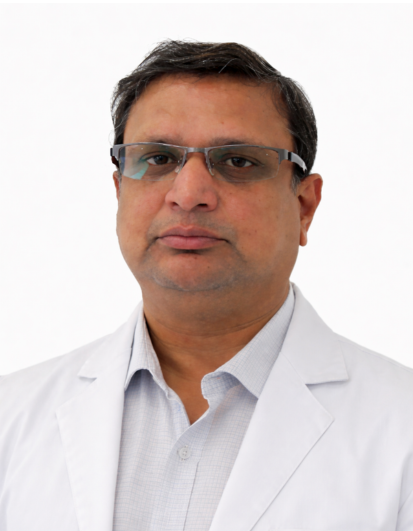
Meet Dr. Anil Rajput
Dr. Anil Rajput is a plastic and reconstructive surgeon practising at Jigyasa Hospital in Moradabad. His work includes both reconstructive and aesthetic procedures, and hair restoration forms an important part of his practice.
In hair transplant surgery, his focus is on achieving natural-looking results that complement each patient's face and age. This includes meticulous planning of hairline placement, direction of grafts, and long-term strategy for areas that may thin in the future.
His broader experience in plastic surgery, including scar revision, cleft surgery, and burn reconstruction, contributes to a refined approach to tissue handling and aesthetic judgement in hair restoration cases.
Hair Transplant Cost in Moradabad: What to Expect
Hair transplant costs are generally calculated based on the number of grafts required, the technique used, and whether additional treatments such as PRP are included. The final plan can only be confirmed after clinical assessment.
Important factors include the degree of baldness, donor hair quality, whether FUE or FUT is chosen, and whether scar coverage or eyebrow or beard restoration is needed.
Having the procedure in Moradabad allows many patients to save on travel and accommodation compared with undergoing treatment in distant cities, while still receiving care in a multi-speciality hospital setting.
For an individualised estimate, scheduling a consultation is recommended so that graft numbers and treatment combinations can be discussed in detail.
What Patients Say
I had been worried about my receding hairline for years. After my transplant at Jigyasa Hospital, my hairline looks natural and I feel much more confident meeting people at work.
Rohit Verma
FUE Hair Transplant · Moradabad
The team explained everything clearly before surgery. Recovery was smoother than I expected, and by the eighth month my friends could not believe how much my hair had improved.
Imran Khan
FUT Hair Transplant with PRP · Rampur
During consultation, my hair loss pattern and donor area were assessed in detail. I received a realistic plan instead of false promises, which helped me make an informed decision.
Vikas Sharma
Hair Transplant Consultation · Sambhal
Take the First Step Towards Fuller Hair
If hair loss has been affecting your confidence or daily life, an informed consultation can help you understand your options. Whether you are considering hair transplant, PRP therapy, or medical treatment, early evaluation allows better planning and long-term outcomes.
You can book a consultation with Dr. Anil Rajput at Jigyasa Hospital in Moradabad to discuss your concerns, understand suitable treatments, and receive a personalised hair restoration plan.
Address
Near Miglani Cinema, Rampur Road, Moradabad 244001
Phone
7900903333Frequently Asked Questions About Hair Transplant
Is hair transplant surgery painful?
Hair transplant is usually performed under local anaesthesia, so patients do not feel pain during the procedure. Mild soreness or tightness in the donor area for a few days after surgery is common and is managed with prescribed painkillers and post-operative care instructions.
How many sessions of hair transplant will I need?
Most patients achieve a satisfactory result in a single hair transplant session. However, individuals with very advanced baldness or those aiming for maximum density may benefit from a planned second session 12 to 18 months after the first, once the initial results are fully visible.
Will the transplanted hair look natural?
When hair transplant surgery is performed with careful planning, precise hairline design, and proper graft placement, the results can appear very natural. Attention to hair angulation, density, and facial proportions is especially important for a natural outcome.
When will I see full results after hair transplant?
Transplanted hair typically sheds within the first few weeks, and new growth starts around 3 to 4 months. Visible improvement can usually be seen by 6 to 9 months, while final results and full hair maturation are appreciated around 12 to 18 months after the procedure.
Can women undergo hair transplant?
Yes. Female-pattern hair loss, traction alopecia, and certain types of scarring alopecia can be treated with hair transplant in suitably selected candidates. A detailed evaluation is important to confirm the cause of hair loss and the suitability of surgical restoration.
Are hair transplant results permanent?
Transplanted follicles are typically taken from areas that are genetically resistant to common balding patterns and tend to grow for many years. However, non-transplanted hair in surrounding areas may continue to thin over time, so ongoing medical treatment is often advised.
Why Patients Choose Us
- 24/7 Emergency & Trauma Care
- Top Specialist Doctors
- Modern ICU & Operation Theatres
- Transparent & Affordable Pricing
- Ayushman Bharat Empanelled
- Cashless Insurance Support
- Multispeciality Under One Roof
Our Location
Near Miglani Cinema,
Rampur Road,
Moradabad 244001