
Heart Attack Symptoms and the Right Heart Doctor in Moradabad: Expert Cardiac Care at Jigyasa Hospital
A heart attack does not always begin with a dramatic collapse, the way it is shown in films. For many people, it starts with a vague pressure in the chest, an unusual heaviness, or a sudden bout of sweating. Some people mistake it for acidity or tiredness and lose hours that the heart can never get back. Recognising the symptoms early and reaching a qualified heart doctor quickly can protect the heart muscle and save a life.
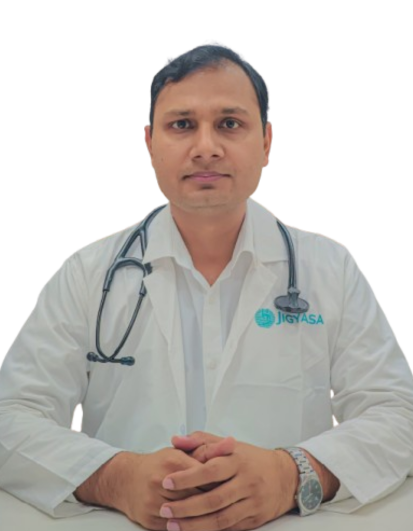
At Jigyasa Hospital, Moradabad, Dr. Amit Kumar Singh, a cardiologist, and the cardiac care team evaluate and treat patients with suspected and confirmed heart attacks. They also help people with risk factors prevent one. This page explains the symptoms in plain language, what to do in an emergency, how heart attacks are diagnosed and treated, and when you should see a heart doctor in Moradabad.
What Is a Heart Attack?
A heart attack, medically called myocardial infarction, happens when blood flow to part of the heart muscle is suddenly blocked. The heart receives its own blood supply through the coronary arteries. Over time, fatty deposits called plaque can build up inside these arteries.
If a plaque cracks, a blood clot can form on it and block the artery. When the blood supply is cut off, the heart muscle in that area begins to be damaged. The longer the blockage lasts, the more heart muscle is lost. This is why doctors say that time is muscle. Opening the blocked artery quickly can limit the damage.
Common Heart Attack Symptoms
Symptoms differ from person to person. Some people have severe chest pain, while others may have only mild discomfort, breathlessness, sweating, or unusual tiredness. Learn the most common warning signs.
Chest pain or discomfort, including pressure, tightness, squeezing, fullness, or heaviness, usually in the centre or left side of the chest.
Pain spreading to the left arm, both arms, shoulder, back, neck, jaw, or upper abdomen.
Shortness of breath, with or without chest discomfort.
Cold sweats that come on suddenly.
Nausea or vomiting.
Light-headedness, dizziness, or a feeling of faintness.
Unusual tiredness or weakness.
A sense of anxiety or impending doom.
Discomfort that lasts more than a few minutes or goes away and comes back.
Chest pain from a heart attack often does not change with body position or breathing, and it may not ease with rest.
Early Warning Signs You Should Never Ignore
Sometimes the body gives warning signs days or weeks before a heart attack. Pay attention to new or changing symptoms, especially if they occur during exertion or at rest.
Chest pain on exertion that is new, more frequent, or lasts longer than before.
Chest discomfort at rest or during sleep.
Unusual breathlessness while doing everyday tasks.
Persistent, unexplained fatigue.
Recurrent indigestion-like discomfort that does not respond to usual remedies.
These may be signs of unstable angina, which is a serious warning that a heart attack could follow. Seek prompt medical assessment if you experience any of these symptoms.
Heart Attack Symptoms in Women
Women can have the classic chest pain, but they are more likely than men to have other, less obvious symptoms. These symptoms are often missed or blamed on stress, acidity, or menopause.
Unusual or extreme tiredness.
Breathlessness without chest pain.
Pain in the upper back, jaw, neck, or upper abdomen.
Nausea, vomiting, or indigestion-like discomfort.
Dizziness or cold sweats.
Women should never feel they are overreacting by getting these symptoms checked. If something feels wrong, seek medical care promptly.
Silent Heart Attacks: Symptoms Without Pain
A silent heart attack causes little or no chest pain. The person may feel only mild discomfort, unusual fatigue, or what seems like indigestion, and may not realise that anything serious has happened.
Silent heart attacks are more common in people with diabetes and in older adults because nerve changes can dull the sensation of pain. They still damage the heart and increase the risk of future heart events.
A silent heart attack is often identified later through an ECG, echocardiogram, or other tests. If you have diabetes or are over 50, regular heart check-ups are especially important.
Heart Attack or Acidity? How to Tell the Difference
Many people delay care because they believe chest discomfort is just gas or acidity. Acidity can cause burning in the chest, but heart-related pain has some typical differences. This table is only a guide and is not a substitute for medical assessment.
| Feature | Likely Acidity | Possible Heart Attack |
|---|---|---|
| Sensation | Burning or sour taste. | Pressure, tightness, or heaviness. |
| Link to food | Often occurs after meals or spicy food. | May occur at any time, including during rest. |
| Relief | Usually eases with antacids. | Does not ease with antacids. |
| Other signs | Belching and bloating. | Sweating, breathlessness, nausea, or spreading pain. |
If there is any doubt, treat it as a possible heart problem and get an ECG done immediately.
What to Do If You Suspect a Heart Attack
Act immediately. Do not wait to see whether the pain settles. Early treatment can limit damage to the heart and improve recovery.
Call for Emergency Help
Call an ambulance or emergency number immediately, or go to the nearest hospital with cardiac emergency care. Do not wait to see whether the pain goes away.
Do Not Drive Yourself
Ask someone to take you to the hospital or use an ambulance. Driving yourself can be dangerous if symptoms worsen suddenly.
Stop Activity and Stay Calm
Stop all physical activity and sit or lie down in a comfortable position. Loosen tight clothing and keep someone with you.
Follow Medical Advice on Medicines
In many emergency situations, doctors may advise chewing a regular aspirin tablet if you are not allergic and have no condition that makes it unsafe. Take it only on medical advice, as it is not right for everyone. If you already have a prescription for heart medicine, such as a nitrate, take it exactly as your doctor has instructed.
Start CPR if Needed
If the person collapses and stops breathing, start chest compressions and use an AED if one is available. Every minute matters in a cardiac emergency.
How Doctors Diagnose a Heart Attack
When a patient arrives with suspected heart attack symptoms, the medical team acts quickly. Diagnosis usually involves an ECG, blood tests, echocardiography, and, when needed, coronary angiography.
ECG or electrocardiogram, done within minutes of arrival, to identify changes caused by a heart attack.
Blood tests for cardiac markers such as troponin, which help detect damage to the heart muscle.
2D echocardiography, an ultrasound of the heart, to assess how well the heart is pumping.
Coronary angiography, using contrast dye and X-ray imaging, to identify which artery is blocked and how severely.
Chest X-ray and routine blood tests to assess the overall condition and guide treatment.
These results help Dr. Amit Kumar Singh choose the fastest and safest treatment for each patient.
Heart Attack Treatment at Jigyasa Hospital
Treatment aims to restore blood flow quickly, protect the heart muscle, and prevent complications. The plan depends on the type and severity of the heart attack.
Emergency medicines to prevent clots from growing, relieve pain, reduce the workload on the heart, and stabilise the heart rhythm.
Clot-dissolving medicines in selected emergency situations where appropriate.
Primary angioplasty and stenting to open a blocked coronary artery and restore blood flow.
Drug eluting stents to reduce the chance of the treated artery narrowing again.
Coronary artery bypass grafting, or CABG, for selected patients with multiple or complex blockages.
Intensive monitoring after treatment for rhythm problems, blood pressure changes, and signs of heart weakness.
Long-term medicines such as antiplatelets, statins, beta-blockers, and other heart-protective medicines.
Cardiac rehabilitation with gradual exercise, diet guidance, and emotional support.
For many heart attacks, primary angioplasty is the most effective treatment. A thin tube is passed through an artery in the wrist or groin to reach the blocked coronary artery. A balloon opens the blockage, and a stent keeps the artery open. A modern drug eluting stent is commonly used to reduce the chance of the artery narrowing again.
Who Is at Risk of a Heart Attack?
Anyone can have a heart attack, but some people are at higher risk. Heart attacks are increasingly seen in younger adults, often linked to smoking, stress, poor diet, and undiagnosed diabetes or high blood pressure. Do not assume that being young protects you.
High blood pressure.
Diabetes.
High cholesterol.
Smoking and tobacco use.
Obesity and lack of physical activity.
Family history of heart disease, especially at a young age.
Increasing age.
Unhealthy diet high in oil, salt, and sugar.
Chronic stress and poor sleep.
Excessive alcohol use.
When Should You See a Heart Doctor in Moradabad?
Do not wait for an emergency. Book a consultation with a cardiologist if you have symptoms or risk factors that may indicate heart disease.
Chest pain, tightness, or discomfort, even if it comes and goes.
Breathlessness more easily than before.
Unusual fatigue or weakness without a clear cause.
Palpitations or fainting spells.
Age above 40 with no previous heart check-up.
Diabetes, high blood pressure, or high cholesterol.
Smoking or tobacco use.
Family history of heart disease or sudden cardiac death.
Previous heart attack, stent, or bypass surgery requiring follow-up.
A routine check-up with ECG, echocardiography, and blood tests can uncover problems early, often before symptoms appear.
Why Choose Jigyasa Hospital for Heart Attack Care in Moradabad?
When you or a loved one has chest pain, you need quick action and clear guidance. Families across Moradabad, Rampur, Sambhal, Amroha, Bijnor, and nearby areas choose Jigyasa Hospital for experienced cardiology care and prompt emergency evaluation.
Dr. Amit Kumar Singh focuses on diagnosing and treating heart disease, from emergencies to long-term care. The hospital provides consultation, ECG, echocardiography, angiography, and angioplasty together, so patients do not lose time moving between facilities.
Experienced cardiology care for emergency and long-term heart disease management.
Quick evaluation with ECG, blood tests, and other investigations in suspected heart attack.
Complete cardiac services, including consultation, echocardiography, angiography, and angioplasty, under one roof.
Honest, clear communication so patients and families can make confident decisions.
Support through recovery, including medicines, diet, activity, and regular follow-up.
Expert heart care close to home for patients across Moradabad and nearby areas.
Experienced Cardiology Care
Dr. Amit Kumar Singh focuses on diagnosing and treating heart disease, from emergency heart attack care to long-term prevention and follow-up.
Quick Emergency Evaluation
In a suspected heart attack, speed saves heart muscle. The team focuses on prompt assessment with ECG, blood tests, and other essential investigations.
Complete Cardiac Services
Consultation, ECG, echocardiography, angiography, and angioplasty are available together, reducing the need to move between multiple facilities.
Treatment and Recovery Support
Care continues after emergency treatment with medicines, monitoring, lifestyle guidance, cardiac rehabilitation, and regular follow-up.
Clear and Compassionate Communication
The team explains the diagnosis, treatment options, recovery expectations, and prevention plan in simple language so families can make confident decisions.
Expert Heart Care Close to Home
Patients from Moradabad, Rampur, Sambhal, Amroha, Bijnor, and nearby areas can receive advanced cardiac care locally, with family support close by.
Preventing a Heart Attack: Protect Your Heart Every Day
Many heart attacks can be prevented or delayed through healthy habits and early treatment of risk factors.
Do not smoke or use tobacco. Quitting is one of the most powerful steps you can take.
Eat a heart-healthy diet with plenty of vegetables, fruits, whole grains, and pulses. Reduce fried and packaged foods, salt, and sugar.
Stay active with regular brisk walking or other exercise, as advised by your doctor.
Maintain a healthy weight.
Control blood pressure, blood sugar, and cholesterol with lifestyle changes and medicines if prescribed.
Limit alcohol.
Manage stress and get enough sleep.
Get regular health check-ups, especially after 40 or with a family history of heart disease.
Take medicines as prescribed and never stop them without asking your cardiologist.
Common Myths About Heart Attacks
Myth: Heart attacks always cause severe chest pain.
Not always. Some heart attacks are mild, and others, especially in women, people with diabetes, and older adults, may cause little or no pain.
Myth: I am young and fit, so it cannot happen to me.
Heart attacks are seen in younger adults too, especially with smoking, stress, poor diet, or hidden risk factors.
Myth: If the pain settles, I am fine.
Pain that comes and goes may still be a warning sign. Get checked promptly.
Myth: A normal ECG once means my heart is healthy.
An ECG taken at one moment may not show a problem. Further tests may be needed if symptoms continue.
Myth: Once I have a stent, I am cured.
A stent treats one blockage, but the underlying disease remains. Medicines and healthy habits are still essential.
Consult Dr. Amit Kumar Singh for Heart Attack Care in Moradabad
If you have chest pain, breathlessness, unusual fatigue, palpitations, or risk factors such as diabetes, high blood pressure, high cholesterol, or tobacco use, do not ignore it. Contact Jigyasa Hospital, Moradabad, to discuss your symptoms and heart health with Dr. Amit Kumar Singh.
The cardiac team can assess your risk, arrange appropriate tests, guide treatment, and support your recovery. Patients from Moradabad, Rampur, Sambhal, Amroha, Bijnor, and nearby areas can access advanced cardiac care close to home.
Address
Near Miglani Cinema, Rampur Road, Moradabad 244001
Phone
7900903333Frequently Asked Questions About Heart Attack
What are the first symptoms of a heart attack?
Common early symptoms include chest pressure or heaviness, pain spreading to the arm, jaw, or back, breathlessness, sweating, nausea, and unusual tiredness. Symptoms can vary from person to person.
How long does heart attack pain last?
Heart attack pain usually lasts more than a few minutes or comes and goes. Any chest pain that lasts more than a few minutes needs emergency evaluation.
Can a heart attack happen without chest pain?
Yes. Silent heart attacks and atypical symptoms such as breathlessness, fatigue, nausea, or upper abdominal discomfort are more common in women, older adults, and people with diabetes.
What is the difference between a heart attack and cardiac arrest?
A heart attack is caused by a blocked artery that reduces blood supply to part of the heart muscle. Cardiac arrest is an electrical problem that suddenly stops the heart from pumping. A heart attack can lead to cardiac arrest.
What should I do first if I think I am having a heart attack?
Call emergency help or get to the nearest hospital immediately. Do not drive yourself, and do not wait for the symptoms to pass. Stop activity, stay calm, and keep someone with you.
How is a heart attack treated?
Treatment includes emergency medicines and, in many cases, angioplasty with a stent to reopen the blocked artery. Some patients with multiple or complex blockages may need bypass surgery.
How long does recovery take after a heart attack?
Recovery time varies depending on the extent of heart damage and the treatment given. Many patients gradually return to normal activities with proper medicines, follow-up, and cardiac rehabilitation.
Can a heart attack be prevented?
Many heart attacks can be prevented or delayed by controlling blood pressure, diabetes, and cholesterol; quitting tobacco; maintaining a healthy weight; exercising regularly; managing stress; and attending regular heart check-ups.
Why Patients Choose Us
- 24/7 Emergency & Trauma Care
- Top Specialist Doctors
- Modern ICU & Operation Theatres
- Transparent & Affordable Pricing
- Ayushman Bharat Empanelled
- Cashless Insurance Support
- Multispeciality Under One Roof
Our Location
Near Miglani Cinema,
Rampur Road,
Moradabad 244001