
Heart Blockage Treatment in Moradabad – Dr. Amit Kumar Singh, Cardiologist at Jigyasa Hospital
Heart disease has quietly become one of the leading causes of death in India, and Moradabad is no exception. Rising rates of diabetes, high blood pressure, obesity, and stressful lifestyles have made coronary artery blockage, commonly called heart blockage, a growing concern for families across the city and surrounding towns.
At Jigyasa Hospital, Dr. Amit Kumar Singh offers comprehensive diagnosis and treatment for heart blockages, from lifestyle-based management to angioplasty, stenting, and coordinated bypass surgery care. The aim is to provide expert heart treatment close to home so patients do not have to travel to Delhi or Lucknow unnecessarily.
Why Choose Jigyasa Hospital for Heart Blockage Treatment
Jigyasa Hospital offers local access to advanced cardiac care for patients who may otherwise struggle to reach specialist treatment in larger cities. This matters because coronary artery disease can become serious quickly, and timely diagnosis plays a major role in preventing heart attacks and long-term damage.
Dr. Amit Kumar Singh evaluates each patient in a structured and thoughtful manner, using a step-by-step approach that begins with clinical assessment and moves to targeted testing only when needed. This helps avoid unnecessary procedures while ensuring that serious blockages are identified early.
The hospital also supports patients who require angioplasty or bypass surgery through proper coordination and follow-up, so the entire care journey remains clear, safe, and easy to manage.
About Dr. Amit Kumar Singh
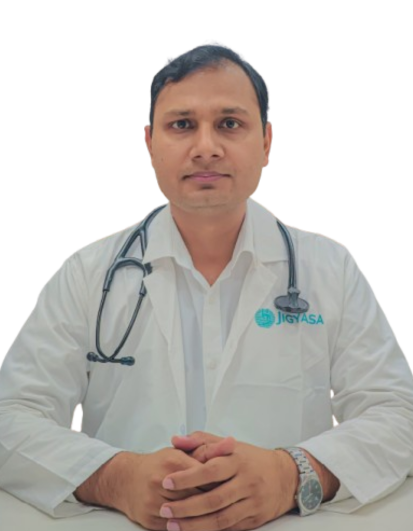
Dr. Amit Kumar Singh is a senior cardiologist at Jigyasa Hospital, Moradabad, with extensive experience in diagnosing and treating heart blockages, chest pain, and related coronary artery disease. His focus is not only on finding the blockage, but also on deciding the safest and most effective treatment path for each patient.
His diagnostic approach combines careful history taking, ECG, echocardiography, stress testing, blood investigations, and angiography referral when indicated. This allows him to measure the severity of the disease accurately before recommending medication, angioplasty, or surgery.
Patients from Moradabad and nearby districts trust him because he explains the condition in simple language and keeps the treatment plan practical, patient-focused, and medically sound.
What Is Heart Blockage?
Heart blockage, medically known as coronary artery disease, happens when the arteries that supply oxygen-rich blood to the heart become narrowed or blocked. This usually occurs because of fatty plaque buildup on the inner walls of the arteries, a process called atherosclerosis.
As blood flow becomes restricted, the heart may not receive enough oxygen during activity, leading to chest discomfort or angina. If the blockage becomes severe or a plaque suddenly ruptures, it can trigger a heart attack, which requires urgent medical care.
The severity and location of blockage determine whether the right treatment is medication, angioplasty, or bypass surgery, which is why a proper diagnosis is essential before deciding the next step.
Why Are Heart Blockages Increasing in Moradabad?
Several factors are contributing to a rise in heart blockage cases in Moradabad and the surrounding region. Dietary changes, less physical activity, rising diabetes and hypertension, and tobacco use have all increased the risk of coronary artery disease in many families.
Stress, irregular sleep, and family history also play important roles, while air pollution is becoming an increasingly recognized contributor to cardiovascular strain. Because many of these factors can be modified, early awareness and regular checkups can make a significant difference.
Preventive care is especially important for people above 40 and for anyone who already has diabetes, high blood pressure, or a family history of heart disease.
Common Symptoms of Heart Blockage
Heart blockage does not always show dramatic symptoms in the beginning. In many patients it develops silently and becomes obvious only when the condition is more advanced, which is why routine screening is important for people with risk factors.
1. Chest pain or discomfort: This may appear during physical exertion and often improves with rest. It can feel like heaviness, pressure, tightness, or squeezing in the chest.
2. Pain spreading to other areas: Discomfort may travel to the left arm, jaw, neck, back, or shoulder. In some patients, this is the first warning sign of significant coronary disease.
3. Breathlessness and fatigue: Reduced blood flow to the heart can make even mild activity tiring and may cause shortness of breath, weakness, or reduced exercise tolerance.
4. Sweating, dizziness, or palpitations: These symptoms can appear when the heart is under strain or when a blockage is affecting circulation more seriously.
5. Swelling in the legs or ankles: In advanced cases where heart function is affected, fluid buildup may lead to swelling in the lower limbs.
When Should You See a Cardiologist?
You should consult Dr. Amit Kumar Singh if you have recurring chest discomfort, new or worsening breathlessness, a family history of heart disease combined with warning symptoms, or long-standing diabetes or high blood pressure that has not been well controlled.
Sudden severe chest pain should never wait for an appointment. This can be a heart attack emergency, and immediate medical attention is required. The earlier the evaluation begins, the better the chance of preventing permanent damage.
Even when symptoms are mild, periodic screening is wise for adults above 40 or for anyone with major risk factors such as obesity, high cholesterol, smoking, or a family history of coronary disease.
How Is Heart Blockage Diagnosed?
Diagnosis at Jigyasa Hospital follows a step-by-step process to understand the extent and severity of blockage. This starts with clinical evaluation and moves to tests that show electrical activity, pumping function, blood flow response, and artery condition.
Clinical Evaluation: Dr. Amit Kumar Singh begins with a detailed history of symptoms, risk factors, family history, and a physical examination including blood pressure and pulse assessment.
ECG: A quick, non-invasive test that records the heart's electrical activity and can reveal signs of reduced blood flow, old heart attacks, or rhythm abnormalities.
Echocardiography (2D Echo): An ultrasound of the heart that evaluates pumping function, valve health, and any areas of the heart muscle affected by reduced blood supply.
TMT (Treadmill Test) / Stress Test: This evaluates how the heart performs during exertion and helps identify blockages that may not show up at rest.
Blood Investigations: Lipid profile, blood sugar, kidney function, and cardiac biomarkers help assess overall cardiovascular risk and rule out an acute cardiac event.
Coronary Angiography: This is the gold standard test for mapping coronary blockages and guiding the choice between medicines, angioplasty, and bypass surgery.
CT Coronary Angiography: In select cases, a non-invasive CT-based scan may be used to assess the coronary arteries without a catheter-based procedure.
Treatment Options for Heart Blockage in Moradabad
Treatment is tailored to the number of arteries affected, the severity of blockage, overall heart function, and the patient's general health. Some patients respond well to medicines and lifestyle change, while others need angioplasty or bypass surgery.
1. Lifestyle Modification and Medical Management: Mild to moderate blockages are often treated with statins, blood pressure medicines, antiplatelets, diabetes control, dietary changes, weight management, exercise, and smoking cessation.
2. Angioplasty and Stenting: This minimally invasive procedure opens the blocked artery using a balloon and usually a stent. It offers faster recovery and can be used during emergencies such as a heart attack.
3. Coronary Artery Bypass Grafting: For complex multi-vessel blockages or critical disease, bypass surgery may provide better long-term results by creating a new route for blood flow around the blocked segment.
4. Emergency Care for Heart Attack: When a coronary artery becomes completely blocked, rapid evaluation and stabilization are critical. Jigyasa Hospital is equipped to act quickly and guide patients to the right intervention.
Why Local Heart Care Matters
Many patients assume that advanced cardiac care is only available in metro cities, but that is no longer true for families in Moradabad. A large part of heart blockage care, including diagnosis, risk assessment, and treatment planning, can be done locally.
This local first approach saves time, reduces travel cost, and gives patients a trusted doctor who understands the full history from the first symptom through follow-up care. It also reduces anxiety by making specialist care more accessible.
For patients who need angioplasty or bypass surgery referral, local evaluation ensures the right pathway is chosen before any major decision is made.
Heart Blockage Evaluation
Detailed assessment for chest pain, breathlessness, fatigue, and other symptoms linked to coronary artery disease and heart blockage.
Specialist Cardiologist
Care led by Dr. Amit Kumar Singh, a senior cardiologist experienced in diagnosing and managing coronary artery disease.
Angioplasty and Surgery Coordination
Coordinated treatment pathways for angioplasty, stenting, and bypass surgery when advanced intervention is required.
Advanced Cardiac Diagnostics
ECG, 2D Echo, TMT, blood investigations, angiography referral, and CT coronary angiography support accurate diagnosis.
Long-Term Follow-Up
Ongoing monitoring for blood pressure, diabetes, cholesterol, lifestyle changes, and recurrence prevention after treatment.
Accessible Care in Moradabad
Trusted heart blockage treatment is available locally at Jigyasa Hospital, near Miglani Cinema, Rampur Road, Moradabad.
Book a Consultation with Dr. Amit Kumar Singh
If you are worried about chest pain, shortness of breath, or a possible heart blockage, Jigyasa Hospital in Moradabad offers specialist cardiac evaluation and coordinated treatment under Dr. Amit Kumar Singh.
Patients from Moradabad and nearby towns can receive testing, treatment planning, angioplasty referral support, and long-term follow-up care in one trusted place.
Address
Near Miglani Cinema, Rampur Road, Moradabad 244001
Phone
7900903333Frequently Asked Questions About Heart Blockage
What are the early warning signs of heart blockage?
Early signs may include mild chest discomfort during exertion, breathlessness with activity, and unusual fatigue. However, blockage can also be silent in its early stages, which is why regular screening is important for at-risk individuals.
Is heart blockage always treated with surgery?
No. Many cases, especially mild to moderate blockages, are managed effectively with medications and lifestyle changes. Angioplasty or bypass surgery is recommended only when the blockage is significant or affects critical areas of the heart.
What is the difference between angioplasty and bypass surgery?
Angioplasty is a minimally invasive procedure using a catheter and stent to open a blocked artery, typically with a shorter recovery time. Bypass surgery is a more invasive open-heart procedure used for complex, multi-vessel blockages, creating a new path for blood flow around the blocked segment.
How long does recovery take after angioplasty?
Most patients can return to light daily activities within a few days to a week after angioplasty, though full recovery and return to strenuous activity may take a few weeks, depending on individual health status.
Can heart blockage be reversed without a procedure?
While existing plaque cannot always be completely eliminated, aggressive lifestyle changes and medications can help stabilize plaque, slow progression, and in some cases modestly reduce blockage severity, particularly when caught early.
Is heart blockage treatment available in Moradabad, or do I need to go to Delhi?
Comprehensive cardiac evaluation, diagnosis, and coordinated treatment, including angioplasty and referral pathways for bypass surgery, are available locally at Jigyasa Hospital under the care of Dr. Amit Kumar Singh, reducing the need to travel for routine and semi-urgent cardiac care.
Does Jigyasa Hospital accept Ayushman Bharat card for heart treatment?
Yes, Jigyasa Hospital is empanelled under Ayushman Bharat PM-JAY, and eligible patients can avail benefits for covered cardiac treatments after eligibility verification.
At what age should I start getting my heart checked regularly?
It is advisable to begin regular cardiac risk screening from age 40 onward, or earlier if you have diabetes, high blood pressure, high cholesterol, obesity, a family history of heart disease, or use tobacco.
Why Patients Choose Us
- 24/7 Emergency & Trauma Care
- Top Specialist Doctors
- Modern ICU & Operation Theatres
- Transparent & Affordable Pricing
- Ayushman Bharat Empanelled
- Cashless Insurance Support
- Multispeciality Under One Roof
Our Location
Near Miglani Cinema,
Rampur Road,
Moradabad 244001