
Heart Hospital Near Miglani Cinema, Moradabad: Cardiac Care at Jigyasa Hospital
When someone in your family has chest pain, you do not want to search, compare, and wonder. You want to know where to go, how to get there, and what will happen when you arrive. That is why people search for a "heart hospital near me," and why a landmark such as Miglani Cinema matters: it is something everyone in Moradabad can find, even in a panic.
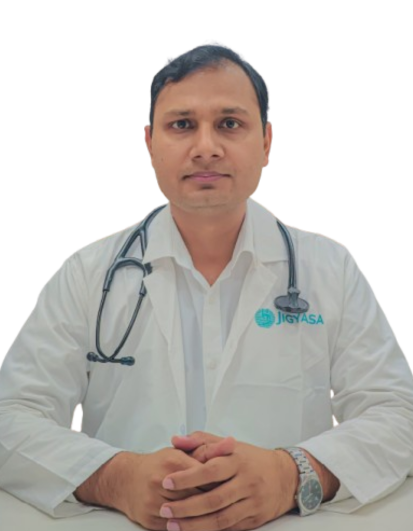
Jigyasa Hospital, a multispeciality hospital on Rampur Road, near Miglani Cinema, offers cardiology care with Dr. Amit Kumar Singh, Interventional Cardiologist. This guide explains how to find us, what a good heart hospital should offer, what the journey looks like from emergency to recovery, and how to prepare, so that you can make decisions calmly before an emergency happens.
How to Find Jigyasa Hospital
Jigyasa Hospital – Multispeciality Hospital
• Landmark: Miglani Cinema, on Rampur Road
• Easy to search: Type "Jigyasa Hospital Moradabad" into your maps app
• Coming from nearby towns: Families from Rampur, Sambhal, Amroha, Bijnor, and Chandausi can reach the hospital by road
• Not sure of the route? Call 7900903333 and the reception team will guide you
A practical suggestion: save the hospital's number and a map pin on the phones of everyone at home, especially older family members, before you ever need it. In an emergency, you will not have time to look it up.
Why the Choice of Heart Hospital Matters
A heart attack is a race against time. The artery supplying part of the heart muscle is blocked, and the longer it stays blocked, the more muscle is lost. Treatment that opens the artery quickly saves heart muscle, protects the heart's pumping strength, and improves survival. This is why doctors say, "time is muscle."
Beyond emergencies, heart conditions such as coronary artery disease, high blood pressure, heart failure, and rhythm problems need long-term care: tests, medicine adjustments, and regular review. A heart hospital that is easy to reach, and that keeps your records and care in one place, makes it more likely that you stay on track and avoid a crisis.
What Should a Good Heart Hospital Offer?
Whether you choose Jigyasa Hospital or compare several options, these are the points that matter most.
A qualified cardiologist. Ideally, one who can both diagnose and treat, including an interventional cardiologist for procedures such as angiography and angioplasty.
Emergency readiness. The ability to assess chest pain quickly, record an ECG within minutes, and begin treatment without delay.
Core diagnostic tests. ECG, echocardiography, treadmill testing, blood tests including cardiac markers, and, when needed, angiography.
A catheterisation lab. Where angiography and angioplasty are performed, with a trained team.
Intensive monitoring. An ICU or cardiac care unit where heart patients can be closely watched after a heart attack or a procedure.
Support from other specialities. Heart patients often have diabetes, kidney disease, high blood pressure, or breathing problems, and some need anaesthesia or surgical opinions.
Honesty about limits. No hospital does everything. A trustworthy one tells you clearly what it can treat and what it will refer, and guides you through the referral.
Follow-up and rehabilitation. Recovery after a heart event includes medicines, lifestyle changes, monitoring, and, ideally, guided cardiac rehabilitation.
Clear communication. You should understand your diagnosis, the plan, the risks, and the costs before agreeing to a procedure.
Which facilities and services are available depends on the hospital. Please call Jigyasa Hospital on 7900903333 to confirm current cardiac services before you travel.
Dr. Amit Kumar Singh and the Cardiology Team
Dr. Amit Kumar Singh is an interventional cardiologist at Jigyasa Hospital. An interventional cardiologist diagnoses and treats heart disease with medicines and also performs catheter-based procedures, in which the heart's arteries are examined and treated through a thin tube passed through an artery, usually at the wrist or groin, without open-heart surgery.
What is done here:
• Heart consultations and risk assessment
• Diagnosis and medical management of heart conditions
• Coronary angiography, to look at the heart arteries
• Coronary angioplasty with stenting, also called PCI, to open blocked arteries, performed by Dr. Amit Kumar Singh
What is not done here:
Heart valve replacement, whether open surgery or catheter-based such as TAVI, is not performed at Jigyasa Hospital. Valve disease can be diagnosed, monitored, and medically managed, and when replacement is needed, patients are advised and guided on referral to a suitable centre. Being clear about this up front helps families plan and avoids surprises at a stressful time.
Heart Attack: What Happens When You Arrive
Knowing the sequence can reduce fear. The exact steps vary with each patient, but a typical pathway looks like this.
1. Arrival and triage. Tell the staff immediately that it is chest pain. Chest pain with sweating, breathlessness, or pain spreading to the arm or jaw is treated as an emergency.
2. ECG within minutes. A quick, painless recording of the heart's electrical activity can show whether a heart attack is under way, and which type.
3. Blood tests. Cardiac markers such as troponin help confirm heart muscle injury, and other tests check blood sugar, kidney function, and more.
4. Initial treatment. Depending on the findings, the doctor may start medicines to ease the heart's workload, prevent clotting, relieve pain, and stabilise the patient, along with oxygen if needed.
5. Decision about opening the artery. In many heart attacks, the best treatment is to open the blocked artery urgently, usually by angioplasty and stenting. In others, clot-dissolving medicines may be used, or the patient is stabilised first, depending on the type of heart attack, timing, and what is available. Your cardiologist will explain the decision.
6. Angiography and angioplasty. A thin catheter is passed to the heart, dye is injected to show the arteries, the blockage is opened with a balloon, and a stent is placed to keep the artery open. This is done under local anaesthesia.
7. Monitoring in the ICU or cardiac care unit. After a heart attack or procedure, patients are closely watched for rhythm problems, blood pressure changes, and bleeding.
8. Recovery on the ward and planning for home. Medicines, diet, activity, and follow-up are explained before discharge.
Please ask the hospital in advance what its emergency cardiac pathway is, including whether angiography and angioplasty are available around the clock. It is a reasonable question, and the answer can help you decide where to go in an emergency.
Warning Signs: Go Immediately
Call 7900903333, or go to the nearest emergency facility, if you or someone near you has:
• Chest pain, pressure, tightness, or heaviness lasting more than a few minutes, or that comes and goes
• Pain spreading to the left arm, shoulder, neck, jaw, or back
• Sweating, nausea, vomiting, or sudden breathlessness with chest discomfort
• Fainting or near-fainting with chest pain or palpitations
• Sudden severe breathlessness
• Sudden weakness or numbness on one side, face drooping, slurred speech, or confusion, which may suggest stroke
Remember: symptoms can be unusual in women, older adults, and people with diabetes, who may have extreme tiredness, breathlessness, nausea, or upper back and jaw discomfort, without classic chest pain.
While waiting for help:
• Stop all activity and sit or lie down in a comfortable, semi-upright position
• Loosen tight clothing
• Do not drive yourself. Ask someone to take you, or call for an ambulance
• Do not eat or drink, and do not wait for the pain to pass
• If a doctor has previously advised you to chew aspirin in a suspected heart attack and you have no allergy or bleeding problem, follow that advice. If you are unsure, tell the emergency team immediately and follow their instructions
Every minute counts. Do not delay because it is night, because you are embarrassed, or because the pain is "probably gas."
Conditions Treated
A heart hospital deals with much more than heart attacks. Common conditions include:
• Coronary artery disease and angina
• Heart attack
• High blood pressure
• Heart failure
• Rhythm problems: palpitations, atrial fibrillation, and slow or fast heart rates
• Heart valve disease, including diagnosis, monitoring, and medical treatment
• Cardiomyopathy and other heart muscle problems
• High cholesterol and risk factor management
• Heart problems linked to diabetes, kidney disease, or thyroid disorders
• Pre-operative cardiac assessment before other surgeries
• Fainting and dizziness that may be heart-related
Tests and Procedures You May Come Across
Non-invasive tests
• ECG: Records the heart's electrical activity
• Echocardiography or echo: An ultrasound showing the heart's size, pumping strength, and valves
• Treadmill test (TMT): Records the heart during exercise to look for blockages that appear under effort
• Holter monitor: A portable ECG worn for a day or more to detect rhythm problems
• Blood tests: Cholesterol, sugar, kidney function, thyroid, and cardiac markers
• CT coronary angiography: A scan of the heart arteries, used in selected patients
Procedures
• Coronary angiography: A catheter-based test that directly images the heart arteries
• Coronary angioplasty and stenting (PCI): Opens a blocked artery with a balloon and keeps it open with a stent
Treatments done elsewhere
Bypass surgery and valve replacement are surgical treatments not performed at Jigyasa Hospital. When a patient needs them, the options are explained and referral is guided.
Not every patient needs every test, and a good cardiologist orders only those that will change your treatment.
Angioplasty and Stenting: What You Should Know
When angiography shows a significant blockage, angioplasty with stenting may be advised.
• The procedure: A thin tube is passed through an artery, usually in the wrist, to the narrowed spot. A tiny balloon opens the artery, and a small mesh tube, or stent, keeps it open
• Anaesthesia: Usually local anaesthesia at the puncture site, with you awake and comfortable
• Duration and stay: It often takes under an hour or so, though this varies, and many patients go home within a day or two depending on their condition
• After the stent: You must take the prescribed blood-thinning medicines exactly as advised. Stopping them early can cause a dangerous clot in the stent
• A stent is not a cure. The underlying disease continues, so medicines, healthy lifestyle, and regular follow-up remain essential
In some patients, for example those with very extensive or complex disease, bypass surgery may be a better option than stenting. This is decided after reviewing the angiogram, the heart's pumping function, and your overall health, and it should be explained to you clearly. It is reasonable to ask for a second opinion before a major procedure.
Whether a particular procedure can be performed depends on the hospital's facilities, so please confirm with the hospital.
Recovery After a Heart Attack or Stent
In the hospital. Early recovery focuses on monitoring, medicines, and gentle movement as the doctor allows.
At home. Most people gradually return to normal activity over weeks, with guidance from their cardiologist. Practical points:
• Take all medicines regularly, and do not stop any without your doctor's advice
• Walk daily, gradually increasing as advised
• Eat a heart-healthy diet, low in salt, deep-fried foods, sugar, and refined flour
• Stop smoking and tobacco completely
• Control blood pressure, blood sugar, and cholesterol
• Attend all follow-up visits and repeat tests as advised
• Learn your warning signs, and keep the hospital number handy
• Ask when you can return to work, driving, travel, and intimacy, since this varies with your condition
• Pay attention to mood. Anxiety and low mood are common after a heart event, and talking about it helps
Cardiac rehabilitation is a structured programme of supervised exercise, education, and support, shown to improve recovery and reduce the chance of another event. Ask whether it is available or how you can follow a similar plan safely.
Protecting Your Heart: Everyday Habits
• No tobacco, in any form
• Heart-healthy eating: more vegetables, fruit, pulses, whole grains, and nuts; less salt, sugar, refined flour, and deep-fried and processed foods
• Be active: about 30 minutes of brisk walking most days, as suits your health
• Healthy weight, especially around the waist
• Know your numbers: blood pressure, blood sugar, and cholesterol
• Take medicines regularly if you have risk factors or heart disease
• Limit alcohol
• Manage stress and sleep well
• Regular check-ups, especially after 40 or if you have risk factors
• Teach your family the warning signs of a heart attack and stroke, and the hospital's number
Who Should Have a Heart Check-Up?
You do not need symptoms to get checked. Consider it if you:
• Are over 40, or younger with risk factors
• Have diabetes, high blood pressure, or high cholesterol
• Smoke or use tobacco
• Have a family history of heart attack or sudden death at a young age
• Have kidney disease
• Are overweight or inactive
• Are a woman after menopause
• Have chest discomfort, breathlessness, palpitations, or unexplained tiredness
• Are planning major surgery or strenuous exercise
Why Consider Jigyasa Hospital for Heart Care?
A cardiologist who can diagnose and treat. Dr. Amit Kumar Singh performs coronary angiography and angioplasty with stenting, so many patients with blocked arteries can be assessed and treated in one place.
Honesty about what is and isn't done. Valve replacement and bypass surgery are not performed here, and patients who need them are advised clearly and guided on referral.
A multispeciality hospital. Heart patients often need help from internal medicine, endocrinology, nephrology, or anaesthesia, and bringing these together under one roof reduces the need to move between hospitals.
Convenient, easy-to-find location. Near Miglani Cinema on Rampur Road, reachable from Moradabad city and nearby towns.
Clear communication. Questions are welcome, and explanations are given in simple Hindi or English so that you understand your diagnosis, options, and costs.
For confirmed details about Dr. Amit Kumar Singh's qualifications, experience, OPD timings, diagnostic facilities, cath lab, ICU or CCU, emergency cardiac care, ambulance, and insurance or cashless support, please call Jigyasa Hospital on 7900903333.
Cost, Insurance and Planning Ahead
Families often worry about cost at exactly the wrong moment. If you can, ask in advance:
• Which insurance and cashless options are accepted
• Whether any government health schemes apply
• What an angiography or angioplasty typically involves in terms of charges, and what is included, such as stent, medicines, ICU stay, and tests
• What the emergency admission process is
Having the answers before an emergency means decisions can focus on the patient, not the paperwork.
How to Prepare for a Visit
• Call ahead on 7900903333 to confirm timings, unless it is an emergency
• Bring previous records: ECGs, echo reports, angiograms, blood tests, discharge summaries, and prescriptions
• List all medicines, with doses, including blood thinners
• Note your symptoms: when they began, what triggers them, and what relieves them
• Mention your history: diabetes, blood pressure, kidney or thyroid problems, previous surgeries, and allergies
• Share your family history of heart disease, stroke, or sudden death
• Bring a family member, and write down your questions
Cardiology Consultation and Risk Assessment
Dr. Amit Kumar Singh assesses chest pain, breathlessness, palpitations, high blood pressure, heart failure, and coronary artery disease.
Cardiac Diagnosis and Testing
Evaluation may include ECG, 2D Echo, treadmill test, Holter monitoring, blood tests, chest X-ray, CT coronary angiography, and coronary angiography.
Angioplasty and Stenting
Where appropriate, blocked coronary arteries can be assessed with angiography and treated with angioplasty and stenting.
Recovery and Rehabilitation Guidance
Guidance covers medicines, diet, activity, tobacco cessation, blood pressure, diabetes, cholesterol, and follow-up after a heart event or stent.
Emergency-Focused Cardiac Care
Jigyasa Hospital provides 24/7 emergency and OPD services. Suspected heart attack symptoms require immediate emergency assessment.
Easy-to-Find Location
Jigyasa Hospital is on Rampur Road, near Miglani Cinema, Moradabad, making cardiac care accessible to local and nearby patients.
Book a Heart Consultation with Dr. Amit Kumar Singh
If you or a family member has chest discomfort, breathlessness, palpitations, high blood pressure, diabetes, high cholesterol, or a family history of heart disease, early assessment can help protect your heart.
To consult Dr. Amit Kumar Singh at Jigyasa Hospital, Moradabad, call 7900903333. In a suspected heart attack, call the emergency number or an ambulance immediately.
Address
Near Miglani Cinema, Rampur Road, Moradabad 244001
Phone
7900903333Frequently Asked Questions About Heart Care
Where is Jigyasa Hospital located?
On Rampur Road, near Miglani Cinema, Moradabad – 244001.
Who is the cardiologist at Jigyasa Hospital?
Dr. Amit Kumar Singh, an interventional cardiologist.
Is angioplasty and stenting done at Jigyasa Hospital?
Dr. Amit Kumar Singh performs coronary angiography and angioplasty with stenting. Please call 7900903333 to confirm current availability and facilities.
Are heart valve replacement and bypass surgery done here?
No. These surgical treatments are not performed at Jigyasa Hospital. Valve disease can be diagnosed and medically managed here, and patients who need surgery are advised and guided on referral.
What should I do if someone has chest pain?
Call 7900903333 or go to the hospital immediately. Do not drive yourself, and do not wait for the pain to pass.
Is the hospital open for cardiac emergencies at night?
Please call 7900903333 to confirm emergency cardiac availability and timings.
Why Patients Choose Us
- 24/7 Emergency & Trauma Care
- Top Specialist Doctors
- Modern ICU & Operation Theatres
- Transparent & Affordable Pricing
- Ayushman Bharat Empanelled
- Cashless Insurance Support
- Multispeciality Under One Roof
Our Location
Near Miglani Cinema,
Rampur Road,
Moradabad 244001