
Heart Valve Replacement in Moradabad: Guidance from Dr. Amit Kumar Singh, Jigyasa Hospital
Being told that you need a heart valve replacement can feel overwhelming. Terms such as TAVI, SAVR, mechanical valve, tissue valve, repair, and replacement may create confusion when important decisions need to be made. For patients in Moradabad, this journey usually begins with symptoms, clinical examination, echocardiography, and other diagnostic tests before the actual procedure is planned.
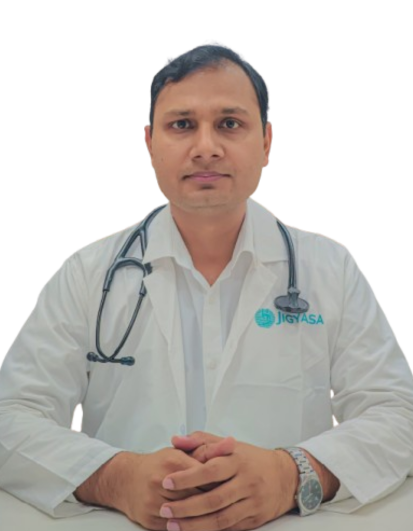
Dr. Amit Kumar Singh, interventional cardiologist at Jigyasa Hospital, helps patients understand valve disease and guides them through each stage of treatment. His role includes diagnosing valve problems, assessing severity, deciding when replacement may be required, explaining available choices, and coordinating referral to the appropriate surgical or interventional specialist.
The Heart's Four Valves
The heart has four valves that open and close with every heartbeat. Their purpose is to ensure that blood flows in the correct direction through the heart and into the major blood vessels. Valve disease may cause narrowing, known as stenosis, or leakage, known as regurgitation. The severity and effect on the heart determine whether monitoring, medicines, repair, or replacement is required.
Aortic Valve
Located between the left ventricle and the aorta, the aortic valve is the valve most frequently requiring replacement, particularly because of age-related calcification and severe narrowing.
Mitral Valve
Located between the left atrium and left ventricle, the mitral valve may be affected by degenerative disease, leakage, narrowing, or rheumatic heart disease.
Tricuspid Valve
Located between the right atrium and right ventricle, the tricuspid valve less commonly requires isolated replacement but may be affected by other heart or lung conditions.
Pulmonary Valve
Located between the right ventricle and pulmonary artery, the pulmonary valve is most often relevant in people with congenital heart conditions or previous heart procedures.
The aortic and mitral valves are most frequently affected in adults, although all four valves can develop disease. The diagnostic process and treatment decision depend on the specific valve involved, the type of abnormality, symptom severity, heart function, age, and other medical conditions.
When Does Valve Disease Require Replacement?
Not every valve problem requires immediate replacement. Some patients can be monitored with regular echocardiograms and treated for symptoms or related conditions. Dr. Amit Kumar Singh assesses whether the disease has progressed from a stage that can be monitored to a stage where repair or replacement is needed.
The valve disease is severe on echocardiography, based on measurable narrowing or leakage.
Symptoms such as breathlessness, chest pain, fatigue, dizziness, or fainting significantly affect daily life.
The heart is beginning to enlarge or its pumping function is declining because of the valve problem.
The patient requires another heart operation and a significant valve problem can be addressed during the same procedure.
The valve disease is progressing and delaying treatment may increase the risk of permanent heart damage or worsening symptoms.
When severe valve disease causes symptoms or begins to affect heart function, delaying treatment may worsen long-term outcomes. A patient may feel that the symptoms are manageable, but the heart can continue to change silently. Regular evaluation helps identify the appropriate time for intervention.
Diagnostic Journey Before Valve Replacement
Before a patient is referred for valve replacement, a complete diagnostic workup is performed to understand the valve anatomy, severity of disease, heart function, coronary arteries, and general health. This information helps the specialist team plan the safest and most suitable treatment approach.
Echocardiography
An echocardiogram is the central test for valve disease. It shows how the valve opens and closes, measures the severity of narrowing or leakage, evaluates the heart chambers, and assesses overall pumping function.
Electrocardiogram
An ECG identifies rhythm disturbances, electrical conduction problems, and strain patterns that may be associated with long-standing valve disease or changes in the heart chambers.
Coronary Angiography
Coronary angiography may be performed before valve replacement, particularly in older patients, to identify coronary artery blockages that may need to be addressed during the same treatment plan.
Blood Tests
Blood tests assess general health, kidney function, blood counts, infection risk, and other factors that are relevant for surgical or catheter-based procedural planning.
CT Angiography
CT angiography is particularly important when TAVI is being considered. Detailed measurements of the aortic valve, blood vessels, and surrounding anatomy help guide device selection and procedural planning.
Transoesophageal Echocardiography
In selected cases, a more detailed echocardiogram performed through the oesophagus provides a closer view of the valve. This may be useful for surgical planning or when standard echocardiography does not provide enough information.
Completing much of this workup at Jigyasa Hospital means that the patient can reach the referral centre with relevant reports and imaging already available. This may reduce unnecessary delays, avoid duplicate testing, and help the specialist team make decisions more efficiently.
Treatment Options for Heart Valve Disease
Surgical Valve Replacement
Traditional surgical valve replacement, also called SAVR or open valve surgery, remains an important treatment for many patients. During the operation, the diseased valve is removed and replaced with an artificial mechanical valve or a biological tissue valve. The choice depends on age, health, valve anatomy, surgical risk, lifestyle, ability to take blood thinners, and personal preferences.
Mechanical Valve
A mechanical valve is made from durable artificial materials and may last for a lifetime. However, patients generally need lifelong blood-thinning medication, commonly warfarin, with regular INR monitoring to keep blood clotting within a safe range.
Biological or Tissue Valve
A tissue valve is made from animal tissue, usually from a pig or cow. It generally does not require lifelong blood-thinning treatment, but its durability may be more limited. Some patients may require another procedure after 10 to 15 or more years, depending on age and valve degeneration.
Transcatheter Aortic Valve Implantation
TAVI, also called TAVR, is a minimally invasive treatment for selected patients with aortic valve disease. A replacement valve is delivered through a catheter, usually through an artery in the groin, without traditional open-heart surgery. TAVI has changed treatment options for many elderly patients and people with increased surgical risk.
TAVI often offers a shorter hospital stay and faster early recovery, but it is not suitable for every patient. Detailed CT imaging and assessment of the valve, arteries, heart function, age, surgical risk, and overall health are required before a decision can be made.
Valve Repair Instead of Replacement
In selected patients, particularly those with mitral valve disease, repair may be possible instead of complete replacement. Repair preserves the patient's own valve tissue and may avoid some long-term concerns associated with an artificial valve. However, repair is not technically suitable for every valve problem, and detailed imaging is required to assess the possibility of successful repair.
How Dr. Amit Kumar Singh Guides the Decision
Choosing between valve repair, surgical replacement, TAVI, mechanical valves, and tissue valves is not a one-size-fits-all decision. Each option has benefits, limitations, procedural requirements, and long-term considerations. Dr. Amit Kumar Singh reviews the complete clinical picture and explains these choices to patients and families in clear language.
Age and expected valve durability, with younger patients often considering longevity and older patients sometimes being suitable for tissue valves or TAVI.
Surgical risk, including kidney disease, lung disease, frailty, diabetes, previous surgery, and other medical conditions.
Ability to manage lifelong blood-thinning medication and regular INR monitoring when a mechanical valve is considered.
Valve anatomy and the detailed imaging findings that determine which treatment options are technically possible.
Coexisting conditions such as coronary artery disease that may need to be treated at the same time.
Personal preferences, occupation, lifestyle, family circumstances, and future plans such as pregnancy.
The purpose of this discussion is to ensure that patients understand the trade-offs before they reach the referral centre. With a clear diagnosis, relevant reports, and realistic expectations, patients and families can participate more confidently in the final treatment decision.
Referral and Coordination Process
Once valve replacement is considered necessary, Dr. Amit Kumar Singh helps coordinate the next stage of care. Patients are provided with the relevant diagnostic information and guidance regarding the type of specialist and facility required. The aim is to make the referral feel like a continuation of care rather than the beginning of an unfamiliar process.
Compiling the complete diagnostic workup, including echocardiography, angiography, CT imaging, and relevant blood tests.
Discussing suitable centres and specialists according to the type of valve replacement and the patient's specific condition.
Explaining what to expect at the referral centre so the patient and family feel prepared for the next stage.
Coordinating communication with the surgical or interventional team to reduce unnecessary repeat testing.
Continuing follow-up in Moradabad after the procedure to monitor valve function, medicines, and long-term cardiac health.
After the procedure, patients can return to Moradabad for continued follow-up. Monitoring valve function, reviewing medicines, managing blood pressure and other risk factors, and arranging repeat echocardiograms are important parts of long-term cardiac care.
Life After Valve Replacement
Recovery depends on the type of procedure, the valve selected, the patient's age, heart function, and other medical conditions. Surgical replacement usually involves a hospital stay of several days followed by gradual recovery at home. Many patients return to normal activities over approximately 6 to 8 weeks with guidance from the cardiac team.
TAVI generally involves a shorter hospital stay and faster early recovery because it is performed through a catheter rather than traditional open-heart surgery. However, every patient recovers differently, and follow-up instructions should be followed carefully regardless of the procedure used.
Ongoing Care After Both Procedures
Regular follow-up echocardiograms to monitor valve function and heart pumping ability.
Regular INR testing and blood-thinner adjustment for patients with mechanical valves.
Management of blood pressure, cholesterol, diabetes, rhythm problems, and other cardiovascular risk factors.
Awareness of endocarditis prevention and precautions that may be recommended before dental or other procedures.
Gradual return to activity, cardiac rehabilitation, healthy diet, and regular follow-up appointments.
Cardiac rehabilitation, gradual physical activity, a healthy diet, medication adherence, and regular cardiology follow-up can support recovery. Patients should promptly report new breathlessness, chest discomfort, fainting, swelling, unusual bleeding, fever, or other concerning symptoms to their healthcare team.
Why Start Your Valve Replacement Journey at Jigyasa Hospital?
For families in Moradabad, the idea of valve replacement can raise questions about where to go, which specialist to consult, and how to manage treatment in another city. Starting locally with Dr. Amit Kumar Singh allows the patient to receive a thorough evaluation, understand the diagnosis, discuss available options, and prepare the required reports before travelling for the procedure.
Detailed and unhurried evaluation of valve disease and heart function.
Clear explanation of monitoring, repair, surgical replacement, TAVI, mechanical valves, and tissue valves.
Complete diagnostic information prepared before referral to reduce unnecessary repeat testing.
Coordination with the appropriate surgical or interventional valve specialist.
Continued cardiac follow-up in Moradabad after the procedure.
Complete Valve Evaluation
Detailed evaluation with echocardiography, ECG, coronary angiography, CT angiography, and other tests required to understand the valve condition.
Personalised Treatment Planning
Clear guidance regarding valve monitoring, repair, surgical replacement, TAVI, mechanical valves, and tissue valves.
Specialist Referral Coordination
Complete diagnostic information and structured coordination with the appropriate surgical or interventional valve specialist.
Pre-Procedure Cardiac Assessment
Assessment of heart function, coronary arteries, kidney health, blood counts, surgical risk, and other factors before the procedure.
Long-Term Valve Follow-Up
Ongoing monitoring after valve replacement, including echocardiography, medication review, INR monitoring, and cardiovascular risk management.
Accessible Care in Moradabad
Initial diagnosis, treatment planning, referral support, and post-procedure follow-up are available locally at Jigyasa Hospital.
Consult Dr. Amit Kumar Singh for Heart Valve Guidance
If you have been diagnosed with valve narrowing or leakage, or you experience breathlessness, chest discomfort, fatigue, dizziness, fainting, swelling, or reduced exercise capacity, a detailed cardiac evaluation is important. Early assessment helps determine whether the valve requires monitoring, medicines, repair, or replacement.
Contact Jigyasa Hospital, Moradabad, to discuss your symptoms, echocardiography reports, and treatment options with Dr. Amit Kumar Singh. The cardiac team can guide you through diagnosis, pre-procedure testing, specialist referral, valve replacement planning, and long-term follow-up.
Address
Near Miglani Cinema, Rampur Road, Moradabad 244001
Phone
7900903333Frequently Asked Questions About Heart Valve Replacement
Does Dr. Amit Kumar Singh perform valve replacement surgery himself?
Dr. Amit Kumar Singh specialises in diagnosing and managing valve disease, determining when replacement is needed, and guiding patients through the available options. For the replacement procedure itself, whether surgical replacement or TAVI, he coordinates referral to the appropriate surgical or interventional specialist and remains involved in ongoing care afterward.
What is the difference between a mechanical and a tissue valve?
Mechanical valves are made from durable artificial materials and can last a lifetime, but they require lifelong blood-thinning medication and regular clotting tests. Tissue valves are made from biological material and generally do not require lifelong blood thinners, but they may have a more limited lifespan and may require another procedure after 10 to 15 or more years.
Is TAVI available for all valve replacement cases?
TAVI is most established for aortic valve replacement and is particularly useful for selected elderly patients or people with higher surgical risk. Its suitability depends on detailed anatomical assessment, valve condition, age, overall health, and the assessment of the specialist team. Not every patient or every valve is suitable for TAVI.
How long does recovery take after valve replacement?
Surgical valve replacement usually requires several weeks of recovery, with a gradual return to normal activities over approximately 6 to 8 weeks. TAVI generally offers a shorter hospital stay and faster recovery because it is minimally invasive. The exact timeline depends on the procedure, the valve used, the patient's age, and overall health.
Will I need medicines for the rest of my life after valve replacement?
The requirement depends on the type of valve and the patient's overall cardiac condition. Mechanical valves require lifelong blood-thinning medication with regular monitoring. Tissue valves generally do not require lifelong anticoagulation, although other medicines may still be needed for blood pressure, rhythm, heart function, or related conditions.
How do I know if I need valve repair or valve replacement?
The decision depends on the valve anatomy, the type and severity of disease, heart function, symptoms, and detailed imaging findings. Repair may be preferred when it is technically possible because it preserves the patient's own valve tissue. However, some valve conditions cannot be repaired reliably and require replacement.
Can valve replacement be combined with another heart procedure?
Yes. If a patient has significant valve disease along with coronary artery blockages or another cardiac condition, multiple problems may sometimes be addressed during the same surgical procedure. This is one reason coronary angiography and a complete pre-procedure assessment are important before valve replacement.
Will Dr. Amit Kumar Singh continue my care after valve replacement?
Yes. Once the patient returns to Moradabad after the replacement procedure, Dr. Amit Kumar Singh provides ongoing follow-up care. This may include monitoring valve function, reviewing echocardiograms, adjusting medicines, checking blood-thinning levels when required, and managing long-term cardiac risk factors.
Why Patients Choose Us
- 24/7 Emergency & Trauma Care
- Top Specialist Doctors
- Modern ICU & Operation Theatres
- Transparent & Affordable Pricing
- Ayushman Bharat Empanelled
- Cashless Insurance Support
- Multispeciality Under One Roof
Our Location
Near Miglani Cinema,
Rampur Road,
Moradabad 244001