

Hernia Operation in Moradabad: Advanced Surgical Solutions at Jigyasa Hospital
A hernia occurs when an internal organ or tissue protrudes through a weak spot in the surrounding muscle or connective tissue. While some hernias may not cause immediate symptoms, they rarely resolve on their own and often require surgical intervention to prevent serious complications like strangulation or obstruction.
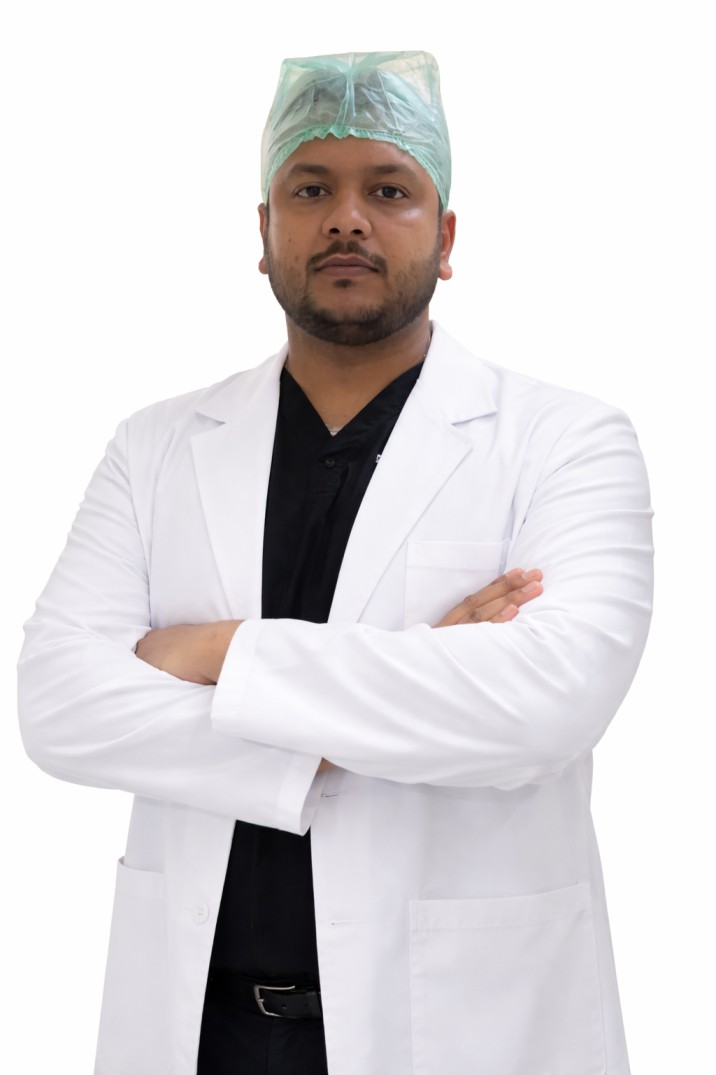
At Jigyasa Hospital in Moradabad, we specialize in comprehensive hernia treatment under the expert guidance of Dr. Vibhor Agarwal, a distinguished general and laparoscopic surgeon. Our hospital combines cutting-edge surgical technology with personalized patient care to deliver exceptional outcomes for patients seeking hernia repair in Moradabad and surrounding regions.
Hernia treatment today is more advanced, more precise, and more recovery-friendly than ever before. With proper diagnosis, timely surgery, and expert follow-up, most patients can return safely to normal life with excellent long-term results.
This page explains the common types of hernia, available treatment approaches, laparoscopic and open surgery options, recovery expectations, and why Jigyasa Hospital is a trusted destination for hernia operation in Moradabad.
Why choose Jigyasa Hospital for hernia surgery
Expert hernia evaluation
Comprehensive diagnosis and treatment planning for different types of abdominal and groin hernias.
Advanced laparoscopic repair
Minimally invasive hernia surgery designed for faster recovery, reduced pain, and smaller incisions.
Safe surgical protocols
Modern operation theatres, strict sterilization standards, and structured post-operative care.
Open and complex hernia surgery
Specialized management for recurrent, large, ventral, and incisional hernias.
Recovery-focused care
Personalized follow-up, pain control, complication monitoring, and guidance for return to activity.
Trusted care in Moradabad
Advanced hernia treatment close to home for patients across Moradabad and surrounding regions.
Understanding hernias and modern treatment
A hernia develops when tissue or part of an organ pushes through a weakened area of muscle or fascia. This weakness may be present naturally, may develop over time due to strain, or may occur after a previous surgery.
Although some hernias may appear as only a small swelling at first, they can gradually enlarge and become painful or dangerous. Delayed treatment can increase the risk of incarceration, bowel obstruction, and strangulation, which may require emergency surgery.
Modern hernia surgery focuses not only on closing the defect but also on reinforcing the weakened abdominal wall, reducing recurrence risk, and promoting smoother recovery. At Jigyasa Hospital, Dr. Vibhor Agarwal offers both open and laparoscopic solutions depending on the patient's hernia type, anatomy, and overall medical condition.
Expertise and surgical facilities
Expertise and Specialization
Dr. Vibhor Agarwal brings extensive experience in both traditional open surgery and advanced laparoscopic techniques. His specialization in general and laparoscopic surgery ensures that every patient receives the most appropriate surgical approach for their specific hernia type and medical condition.
Key advantages of our surgical team:
- Comprehensive pre-operative evaluation and patient counseling
- Customized surgical planning based on individual hernia characteristics
- Access to state-of-the-art laparoscopic equipment
- Post-operative care protocols that minimize complications
- Proven track record of successful hernia repairs
Advanced Surgical Facilities
Jigyasa Hospital is equipped with:
- Modern operation theaters with advanced laparoscopic technology
- High-definition imaging systems for precision surgery
- Sterilization and infection control protocols meeting international standards
- Comfortable recovery suites with 24/7 nursing care
- Emergency response systems for acute complications
Types of hernias we treat
1. Inguinal Hernia
The most common type of hernia, inguinal hernias occur in the groin area where the abdominal wall is naturally weak. They account for approximately 70% of all abdominal hernias.
Symptoms:
- Bulge in the groin that may worsen when standing or straining
- Pain or discomfort, especially during physical activity
- Burning or aching sensation
- In some cases, no symptoms until complications arise
Treatment Options:
- Watchful Waiting: For asymptomatic hernias, observation may be recommended
- Laparoscopic Repair: Minimally invasive with faster recovery
- Open Surgical Repair: Traditional approach with proven long-term stability
2. Femoral Hernia
Less common than inguinal hernias, femoral hernias develop below the groin where blood vessels pass through the abdominal wall. They are more prevalent in women and carry a higher risk of strangulation.
Risk Factors:
- Female gender
- Pregnancy and childbirth
- Chronic coughing or constipation
- Heavy lifting or physically demanding work
Surgical Intervention: Femoral hernias typically require prompt surgical repair due to the high risk of incarceration. Dr. Agarwal employs minimally invasive techniques whenever possible to reduce post-operative discomfort.
3. Umbilical Hernia
Occurring around the navel, umbilical hernias are caused by incomplete closure of the abdominal muscles during fetal development. While common in infants, they can also develop in adults due to increased abdominal pressure.
Common Causes in Adults:
- Obesity
- Pregnancy
- Heavy lifting
- Chronic coughing
Surgical Management: Adult umbilical hernias require surgical repair to prevent complications. Our minimally invasive approach reduces scarring and recovery time.
4. Ventral (Incisional) Hernia
Ventral hernias develop through a weakness in the abdominal wall, often resulting from a previous surgical incision. They represent approximately 10-15% of hernia cases.
Risk Factors:
- Infection at the surgical site
- Obesity
- Smoking
- Poor wound healing
- Straining after surgery
Surgical Reconstruction: Incisional hernias often require reconstruction with mesh reinforcement. Our surgical team has extensive experience in complex ventral hernia repair.
5. Hiatal Hernia
A hiatal hernia occurs when part of the stomach protrudes through the diaphragm. While some cases are managed medically, surgery becomes necessary when conservative treatment fails.
Symptoms:
- Acid reflux and heartburn
- Chest pain
- Difficulty swallowing
- Regurgitation
Surgical Options: Laparoscopic repair of hiatal hernias offers excellent success rates with minimal invasiveness.
The surgical process
Pre-Operative Assessment
Initial Consultation:
During your first visit to Jigyasa Hospital, Dr. Agarwal will:
- Review your medical history and current symptoms
- Perform a thorough physical examination
- Order appropriate diagnostic imaging (ultrasound or CT scan)
- Discuss surgical options and expected outcomes
- Address all your concerns and questions
Pre-Operative Testing:
- Blood work to assess overall health
- ECG for cardiac evaluation if needed
- Imaging studies to determine hernia size and location
- Anesthesia evaluation for surgical safety
Laparoscopic Hernia Repair: The Minimally Invasive Advantage
Procedure Overview: Laparoscopic hernia repair is the gold standard for many hernia types due to its numerous advantages:
Key Benefits:
- Smaller incisions (typically 0.5-1 cm) compared to open surgery
- Reduced post-operative pain and discomfort
- Faster return to normal activities (within 1-2 weeks)
- Lower infection rates
- Minimal scarring
- Shorter hospital stay
Technical Approach:
- Anesthesia: General anesthesia is administered for your comfort and safety
- Port Placement: Surgeon creates 2-3 small incisions for instrument insertion
- Visualization: High-definition camera provides clear view of the hernia
- Defect Repair: The hernia defect is identified and carefully reduced
- Mesh Placement: Medical-grade mesh is positioned to reinforce the abdominal wall
- Closure: Incisions are closed with absorbable sutures
Operative Time: Typically 30-60 minutes depending on hernia complexity
Open Hernia Repair: Traditional Surgical Approach
While laparoscopic surgery is our preferred method, open repair remains the most appropriate option in certain situations:
Indications for Open Surgery:
- Complex or very large hernias
- Multiple recurrent hernias
- Patient preference
- Specific anatomical considerations
Advantages:
- Direct visualization and control of hernia defect
- Ability to address complex anatomy
- Proven long-term success rates
- Suitable for emergency hernia surgery
Post-operative care and recovery
Immediate Post-Operative Period
In Hospital (First 24 Hours):
- Continuous monitoring by our nursing staff
- Pain management with prescribed medications
- Gradual diet advancement from liquids to solid food
- Early mobilization as tolerated
Recovery Timeline
Week 1:
- Rest at home with limited activities
- Pain typically manageable with prescribed analgesics
- Light dressing changes if needed
- Avoid heavy lifting or strenuous exercise
Weeks 2-4:
- Return to light activities and work if desk-based
- Gradual increase in walking and normal movement
- Avoid heavy lifting (more than 5-10 lbs)
- Continue prescribed medications as advised
Weeks 4-6:
- Progressive return to normal activities
- Resume exercise with doctor's approval
- Most patients return to full activities
- Follow-up appointment with Dr. Agarwal
Months 2-3:
- Complete return to all activities including sports
- Final assessment of healing and surgical outcome
- Mesh integration with surrounding tissue
Post-Operative Instructions
Do's:
- Take prescribed antibiotics as directed
- Wear supportive garments if recommended
- Apply ice packs to reduce swelling
- Keep incisions clean and dry
- Eat a balanced, high-protein diet for optimal healing
- Stay hydrated and maintain adequate rest
- Gradually increase activity levels
Don'ts:
- Don't lift heavy objects (over 10 lbs) for at least 4-6 weeks
- Avoid strenuous exercise or sports during initial recovery
- Don't ignore signs of infection (fever, increasing redness, drainage)
- Don't soak in bathtubs or swimming pools until incisions are fully healed
- Avoid constipation by maintaining adequate fiber intake
- Don't resume normal work duties until cleared by your surgeon
Managing Post-Operative Complications
Infection: While rare with our surgical protocols, signs include fever, increasing redness, or purulent drainage. Contact us immediately if these symptoms develop.
Seroma (Fluid Collection): Small fluid collections may develop under the incision. Most resolve spontaneously, but our medical team will monitor and manage if needed.
Recurrence: Modern surgical techniques and mesh reinforcement have significantly reduced recurrence rates:
- Laparoscopic repair: 5-10% recurrence rate
- Open repair: 10-15% recurrence rate
- Recurrent hernias can be successfully repaired with excellent outcomes
Pain or Discomfort: Some patients experience mild chronic pain, which typically resolves within 3-6 months.
Success rates and outcomes
Clinical Excellence
Our surgical outcomes reflect the expertise of Dr. Vibhor Agarwal and our dedicated surgical team:
- Primary Repair Success Rate: 95%+ for first-time hernia repairs
- Patient Satisfaction: 98% of patients report satisfaction with results
- Complication Rate: Less than 2% with proper surgical technique
- Return to Work: Average 2-3 weeks for laparoscopic procedures
- Mean Hospital Stay: 1-2 days for most hernia repairs
Long-Term Follow-Up
We maintain comprehensive follow-up care:
- Regular check-ups at 1 week, 4 weeks, and 3 months post-operation
- Assessment of wound healing and mesh integration
- Evaluation of functional outcomes and activity tolerance
- Long-term surveillance to detect any recurrence
Why patients choose Jigyasa Hospital
Patient-Centered Care Philosophy
Individualized Treatment Plans: Every patient is unique. We customize treatment based on hernia type, size, patient age, activity level, and personal preferences.
Comprehensive Education: We believe informed patients achieve better outcomes. Dr. Agarwal takes time to explain:
- Your specific hernia condition
- Surgical options and their pros/cons
- Expected recovery timeline
- Realistic outcome expectations
Compassionate Support:
- Experienced nursing staff available 24/7
- Support from hospital counselors if needed
- Family involvement in treatment planning
- Follow-up care ensuring your peace of mind
Accessibility and Affordability
Convenient Location: Jigyasa Hospital serves patients throughout Moradabad and surrounding regions with easy accessibility and ample parking.
Transparent Pricing: We provide detailed cost estimates upfront with no hidden charges. We work with major insurance providers to ensure maximum coverage.
Payment Options:
- Cash payments
- Insurance reimbursement
- Installment plans for eligible patients
- Corporate and family discounts
Schedule Your Consultation Today
Choose Excellence. Choose Jigyasa Hospital.
At Jigyasa Hospital, we're committed to providing world-class hernia surgery with compassionate patient care. Under the expert guidance of Dr. Vibhor Agarwal, we've helped hundreds of patients achieve successful hernia repair and return to their normal, active lives.
Address: Near Miglani Cinema, Rampur Road, Moradabad, 244001
Appointments: 7900903333
Email: info@jigyasahospital.in
Call Us
+91-7900903333Email Us
info@jigyasahospital.inFrequently Asked Questions
Will my hernia come back after surgery?
Modern surgical techniques have reduced recurrence rates significantly. With proper surgical technique and appropriate mesh reinforcement, recurrence rates are typically 5-15% for primary repairs. Lifestyle modifications and avoiding excessive strain also help prevent recurrence.
How long will I be unable to work?
Most patients return to desk jobs within 2-3 weeks. Those in physically demanding professions may need 4-6 weeks. Dr. Vibhor Agarwal will provide specific recommendations based on your job requirements.
Is laparoscopic repair suitable for all hernias?
While laparoscopic repair is ideal for most inguinal and ventral hernias, some cases require open surgery. Dr. Vibhor Agarwal will recommend the most appropriate approach during your consultation.
What is the cost of hernia surgery in Moradabad?
Costs vary based on hernia type, complexity, and surgical approach. Basic laparoscopic inguinal hernia repair typically ranges from ₹40,000-₹80,000, while complex cases may cost more. We provide detailed estimates and work with insurance providers.
Can I have hernia surgery without general anesthesia?
While local or regional anesthesia is sometimes possible, general anesthesia provides optimal safety and comfort for most procedures. Our anesthesiologists will discuss options during your pre-operative evaluation.
How long do I need to wear a support garment?
Most patients benefit from supportive garments for 2-4 weeks post-surgery. Dr. Vibhor Agarwal will provide specific recommendations based on your healing progress.
Why Patients Choose Us
- 24/7 Emergency & Trauma Care
- Top Specialist Doctors
- Modern ICU & Operation Theatres
- Transparent & Affordable Pricing
- Ayushman Bharat Empanelled
- Cashless Insurance Support
- Multispeciality Under One Roof
Our Location
Near Miglani Cinema,
Rampur Road,
Moradabad 244001