
IBD Surgeon in Moradabad — Coordinated Surgical Care by Dr. Rahul Kumar at Jigyasa Hospital
Inflammatory bowel disease is a long-term condition that often requires close collaboration between medical and surgical care. For patients in Moradabad, understanding when surgery becomes relevant can make a major difference in treatment planning and outcomes.
At Jigyasa Hospital, Dr. Rahul Kumar provides specialised surgical care for Crohn's disease and ulcerative colitis, working alongside your gastroenterologist to ensure surgery is considered at the right time and for the right reason.
Why Choose Jigyasa Hospital for IBD Surgery in Moradabad
IBD surgery is different from routine abdominal surgery because it takes place within the context of a chronic condition that may continue for years. Patients need surgical care that respects bowel preservation, recurrence risk, nutrition, and ongoing medical management.
Jigyasa Hospital provides the infrastructure and surgical support needed for both planned and urgent IBD procedures. This helps patients receive care close to home without compromising on clinical quality or coordination.
The hospital's approach focuses on clear counselling, practical treatment planning, and follow-up support so patients and families can move forward with confidence.
About Dr. Rahul Kumar — Senior GI Surgeon, Jigyasa Hospital
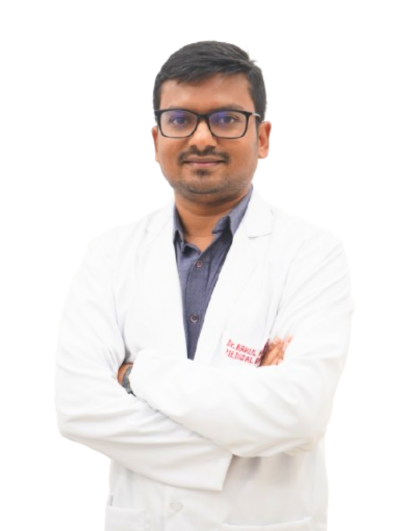
Dr. Rahul Kumar is a Senior GI Surgeon at Jigyasa Hospital with MBBS, DrNB in General Surgery, and DrNB in Gastro Surgery qualifications. His work includes the surgical evaluation and treatment of patients with Crohn's disease, ulcerative colitis, and related complications.
He understands that IBD surgery requires a different mindset from one-time surgical problems. Every decision must be made with the patient's broader disease course, medical therapy, and long-term quality of life in mind.
His consultations are focused on clarity, honesty, and individualised planning in Hindi or English, depending on the patient's comfort.
Understanding Crohn's Disease and Ulcerative Colitis
Crohn's disease can affect any part of the digestive tract and often causes patchy, full-thickness inflammation. It is more likely to cause strictures, fistulas, and abscesses, and it can recur even after surgery in a different location.
Ulcerative colitis is limited to the colon and rectum, with continuous inflammation confined to the inner lining of the bowel. Because of this, removal of the colon and rectum can sometimes offer a curative surgical solution.
These differences are important because they determine which operations are appropriate, how much bowel should be preserved, and what long-term follow-up is needed after surgery.
When Surgical Evaluation Becomes Relevant
Disease not responding to treatment: Some patients continue to have significant symptoms or need high-dose medicine despite modern medical therapy. In such cases, surgery may be considered as an additional treatment pathway.
Acute severe complications: Both Crohn's disease and ulcerative colitis can lead to urgent problems such as obstruction, perforation, significant bleeding, or toxic megacolon. These situations require immediate surgical evaluation.
Structural complications: Crohn's disease may develop strictures, fistulas, or abscesses that often need specialised surgical treatment. These problems are common reasons for referral to an experienced GI surgeon.
Cancer surveillance findings: Long-standing ulcerative colitis can increase colorectal cancer risk, so if dysplasia or early cancer is found on surveillance, surgery is usually recommended.
Perianal disease: Fistulas, abscesses, and fissures in the perianal area often require a surgeon familiar with inflammatory bowel disease and anorectal surgery.
Surgical Approach to IBD at Jigyasa Hospital
Dr. Rahul Kumar's approach begins with close coordination with gastroenterology care so that surgery is never considered in isolation. The goal is to understand disease activity, prior treatment, and the patient's overall risk profile before deciding on the next step.
Where possible, minimally invasive laparoscopic techniques are used to support smaller incisions, less pain, and faster recovery. This is especially helpful when patients are already dealing with the physical burden of chronic intestinal disease.
Pre-operative evaluation may include disease history review, imaging, endoscopy, and nutritional assessment so the team can plan surgery carefully and safely.
Recovery and Life After Surgery
Recovery after IBD surgery depends on the condition, the type of surgery performed, and whether the procedure was planned or urgent. Some patients recover quickly, while others need staged treatment and longer support.
Ongoing nutritional support, wound care, and regular follow-up remain important after surgery. In Crohn's disease, recurrence monitoring is especially important, while ulcerative colitis patients may need pouch-related follow-up if reconstruction was performed.
Even after surgery, long-term care often continues with the gastroenterology team. This helps maintain continuity and ensures that the patient's full disease journey remains properly managed.
Who Should Seek IBD Surgical Evaluation
You should consider a surgical consultation if your Crohn's disease or ulcerative colitis symptoms are not being controlled well despite appropriate medical treatment. Patients with bowel obstruction symptoms, fistula or abscess symptoms, or major bleeding should also seek help promptly.
A gastroenterologist may also recommend surgical input when the disease pattern suggests that surgery could improve outcomes or prevent further complications. This is especially relevant in long-standing ulcerative colitis with dysplasia concerns.
Any sign of a severe acute complication requires immediate emergency evaluation rather than routine appointment scheduling.
Specialised IBD Surgery
Surgical care for Crohn's disease, ulcerative colitis, and IBD-related complications with a focused gastrointestinal approach.
Experienced GI Surgeon
Dr. Rahul Kumar brings advanced training in general and gastro surgery for condition-specific treatment planning.
Careful Clinical Planning
Each case is evaluated with attention to bowel preservation, recurrence risk, nutrition, and medical coordination.
Minimally Invasive Options
Laparoscopic techniques are used where suitable to support smaller incisions, less pain, and quicker recovery.
Coordinated Follow-up
Recovery and ongoing monitoring are planned with the patient's gastroenterologist for continuity of care.
Accessible in Moradabad
IBD surgical consultation is available at Jigyasa Hospital, Near Miglani Cinema, Rampur Road, Moradabad.
Book a Consultation with Dr. Rahul Kumar
If you are living with inflammatory bowel disease and need expert surgical guidance, book a consultation at Jigyasa Hospital, Moradabad. Dr. Rahul Kumar will evaluate your case carefully and explain the role of surgery in your treatment plan.
The team provides accessible, coordinated care for patients who need planned surgery, urgent evaluation, or long-term follow-up support.
Address
Near Miglani Cinema, Rampur Road, Moradabad 244001
Phone
7900903333Frequently Asked Questions About IBD Surgery
Who is the IBD surgeon at Jigyasa Hospital, Moradabad?
Dr. Rahul Kumar, Senior GI Surgeon at Jigyasa Hospital, provides specialised surgical care for Crohn's disease and ulcerative colitis. He works in close coordination with gastroenterology care so surgery fits properly into the patient's long-term disease plan.
What is the difference between Crohn's disease and ulcerative colitis?
Crohn's disease can affect any part of the digestive tract with patchy, full-thickness inflammation, while ulcerative colitis is limited to the colon and rectum with continuous, superficial inflammation. This distinction strongly affects the surgical approach and long-term outcomes.
Does IBD always require surgery?
No, most patients are managed with medicines under gastroenterology care. Surgery becomes relevant only when there are complications, poor response to treatment, or other specific disease-related concerns that need surgical evaluation.
Can IBD surgery cure the disease?
For ulcerative colitis, removal of the colon and rectum can effectively address the intestinal disease because it is limited to those organs. In Crohn's disease, surgery treats specific complications, but the underlying disease can still recur elsewhere.
Will I still need a gastroenterologist after surgery?
Yes, in most cases ongoing medical follow-up remains important after surgery. IBD care is usually a long-term partnership between surgical and medical teams, especially when recurrence monitoring or nutritional support is needed.
Why Patients Choose Us
- 24/7 Emergency & Trauma Care
- Top Specialist Doctors
- Modern ICU & Operation Theatres
- Transparent & Affordable Pricing
- Ayushman Bharat Empanelled
- Cashless Insurance Support
- Multispeciality Under One Roof
Our Location
Near Miglani Cinema,
Rampur Road,
Moradabad 244001