
Incisional Hernia Repair in Moradabad: Expert Care for Post‑Surgical Hernias with Dr. Rahul Kumar at Jigyasa Hospital
Noticing a new bulge at the site of an old surgical scar — sometimes years after the original operation — can be worrying. Many patients assume that once a wound has healed, that area is back to full strength, but a previous abdominal incision can remain a point of relative weakness in the abdominal wall.
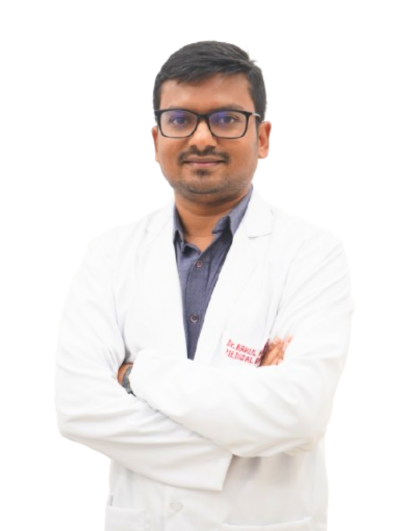
An incisional hernia can develop at that site long after surgery. For patients across Moradabad with this kind of bulge at a previous surgical site, Dr. Rahul Kumar, Senior GI Surgeon at Jigyasa Hospital, offers thorough evaluation and expert repair, including the more complex reconstructive techniques that larger or recurrent incisional hernias sometimes need.
What Is an Incisional Hernia?
An incisional hernia occurs when abdominal tissue pushes through a weakened area at the site of a previous surgical incision. While the skin and surface layers often appear well healed, the deeper muscle and connective tissue cut during the original operation may not fully regain their original strength, especially when certain risk factors are present.
Over time, this weakness can allow abdominal contents to protrude, forming a hernia. Incisional hernias can arise after many types of abdominal surgery — including gallbladder surgery, appendectomy, caesarean section, and major abdominal operations — and may appear from months to many years after the initial procedure.
Why Incisional Hernias Develop
Several factors increase the chance of an incisional hernia after abdominal surgery. Wound infection is one of the most significant, as it can markedly weaken healing tissue. Obesity places ongoing strain on the abdominal wall, and poor wound healing related to diabetes, smoking, poor nutrition, or certain medications further reduces tissue strength.
Emergency surgery, multiple operations through the same or nearby incision, chronic coughing, straining, or heavy lifting soon after surgery, larger incisions, and advanced age all contribute to risk. Understanding these factors helps in both preventing hernias after future surgery and planning repair for those that have already occurred.
Recognising the Symptoms
Typical features of an incisional hernia include a bulge at or near a previous surgical scar that is more obvious when standing, coughing, or straining, discomfort or aching at the site, a pulling sensation with activity, and gradual enlargement of the bulge over time. Many patients notice a feeling of pressure or fullness in the area.
Warning signs that require urgent medical care are sudden, severe pain at the hernia site; a bulge that becomes firm, tender, or discoloured and cannot be pushed back in; and nausea and vomiting along with these symptoms. These may indicate incarceration or strangulation of tissue, which is a surgical emergency.
Why Incisional Hernias Present Unique Surgical Challenges
Compared with primary hernias such as inguinal or umbilical hernias, incisional hernias often involve additional complexity. They vary greatly in size, from small defects to very large hernias involving much of the abdominal wall, and scar tissue from the original operation can make the anatomy more difficult to navigate during repair.
Recurrence rates are higher if repair technique is not chosen and executed carefully. There may be multiple defects along one incision instead of a single weak point, and the nature of the original surgery and any complications must be considered when planning the safest approach. These factors make specialised GI and general surgical expertise particularly important.
Dr. Rahul Kumar's Approach to Incisional Hernia Repair
With MBBS and dual DrNB qualifications in General Surgery and Gastro Surgery, Dr. Rahul Kumar offers the depth of training required to manage the added complexity of incisional hernias. He has specific expertise in minimally invasive laparoscopic techniques and in advanced open reconstructive procedures for larger or recurrent defects.
Thorough Pre‑Operative Evaluation
Careful pre‑operative planning is vital. CT scanning of the abdomen is often used to precisely measure the hernia defect, identify its exact location and any additional weaknesses, and plan the most suitable repair strategy. Previous surgical history is reviewed, including the type of original operation and any complications such as wound infection.
Modifiable risk factors are addressed wherever possible — for example, improving blood sugar control in diabetic patients, encouraging weight loss when appropriate, and supporting smoking cessation — all of which can improve healing and reduce recurrence.
Surgical Approaches to Incisional Hernia Repair
Laparoscopic Repair
For many small to moderate incisional hernias, laparoscopic repair offers significant benefits. It uses several small incisions placed away from the weakened scar, reduces wound exposure and infection risk, and usually allows faster recovery than open repair. Mesh is typically placed from within to reinforce the weakened area and provide durable support.
Open Repair with Component Separation
Larger, more complex incisional hernias, especially those involving a sizeable abdominal wall defect, may need an open reconstructive approach. Component separation is an advanced technique in which specific muscle layers of the abdominal wall are carefully released and repositioned so the defect can be closed using the patient’s own tissues, usually combined with mesh reinforcement.
This method aims to restore abdominal wall function and strength over a broad area, offering a more durable repair for extensive hernias than simple closure would provide.
Choosing the Right Approach
The choice between laparoscopic and open repair—and whether component separation or other advanced techniques are needed— depends on the hernia’s size, location, complexity, and the patient’s overall health. Dr. Kumar’s detailed evaluation and surgical judgement guide this decision individually rather than using a one‑size‑fits‑all method.
The Role of Mesh in Incisional Hernia Repair
Because incisional hernias generally have higher recurrence risk than primary hernias, mesh reinforcement is especially important for achieving a durable repair. The type of mesh and its placement are chosen based on the defect’s characteristics and the surgical approach, with the goal of providing strong, long‑term support to the previously weakened area.
What to Expect During Recovery
Recovery depends on hernia size and complexity and on whether the repair is laparoscopic or open. Laparoscopic repair of smaller to moderate defects usually involves a short hospital stay and quicker return to everyday activity. Larger, more complex repairs — such as those using component separation — typically need a longer stay and more gradual recovery.
Wound care following your surgeon’s instructions is vital, particularly if there was a previous wound complication. Activity restrictions around heavy lifting and strenuous exercise are clearly outlined, since early strain on the repair increases recurrence risk. Ongoing management of risk factors like blood sugar and weight also supports long‑term success.
Reducing the Risk of Recurrence
Because recurrence risk is higher for incisional hernias—especially large defects—several factors make a meaningful difference. Good blood sugar control in diabetic patients, stopping smoking, gradual weight loss where indicated, and careful adherence to activity limits during recovery all help protect the repair.
Prompt attention to any post‑operative wound issues also matters, as early management can prevent re‑weakening of the repair site.
A Thorough, Honest Approach to a Complex Condition
Because incisional hernias differ widely in size and complexity, patients benefit from an individualised explanation rather than a generic “hernia surgery” label. Dr. Kumar takes time to describe your specific hernia, why a particular approach is recommended, and realistic expectations for recovery and recurrence risk, in Hindi or English, so you feel informed about what can be a more involved surgical journey than a straightforward primary hernia repair.
Affordable, Accessible Care for Complex Hernia Repair
Jigyasa Hospital’s transparent pricing and Ayushman Bharat PM-JAY empanelment help make incisional hernia repair—including advanced reconstructive techniques where needed—accessible to families across Moradabad, so cost does not become a barrier while the condition gradually becomes more complex.
Who Should Seek Evaluation for a Suspected Incisional Hernia?
You should consider a consultation with Dr. Rahul Kumar if you notice a new bulge at or near a previous surgical scar, discomfort or a pulling sensation at an old incision site, a bulge gradually enlarging over time, or any sudden severe pain, firmness, discoloration, or inability to push a bulge back in — these last features require immediate emergency evaluation.
Specialised Incisional Hernia Care
Focused diagnosis and repair for hernias at previous abdominal surgery sites, including complex and recurrent cases.
Senior GI & General Surgeon Expertise
Care led by Dr. Rahul Kumar, with advanced training in General and Gastro Surgery and experience in complex abdominal wall reconstruction.
Laparoscopic & Advanced Open Techniques
Tailored choice between minimally invasive laparoscopic repair and open techniques such as component separation for large defects.
Mesh‑Reinforced Durable Repair
Appropriate use of modern surgical mesh to strengthen the repair and reduce recurrence in higher‑risk incisional hernias.
Structured Recovery & Follow‑Up
Clear guidance on wound care, activity restrictions, and long‑term risk‑factor management to protect the repair.
Accessible Complex Hernia Care
Advanced incisional hernia repair available locally at Jigyasa Hospital near Miglani Cinema, Rampur Road.
What to Expect During Your Visit
1. Book an appointment by calling 7900903333, or visit the emergency department directly if you have sudden severe pain or an irreducible hernia at a previous scar.
2. You will undergo a detailed evaluation, including review of your prior surgical history and, often, CT imaging to accurately assess the hernia’s size and complexity.
3. Treatment options—including laparoscopic repair or open surgery with or without component separation—will be discussed clearly in Hindi or English, with a specific recommendation tailored to your case.
4. The surgical procedure is followed by recovery guidance matched to the complexity of your repair.
5. Structured follow‑up care includes advice on activity limits and ongoing management of modifiable risk factors to support long‑term success.
Book Incisional Hernia Repair Consultation in Moradabad
If you have a bulge or discomfort at a previous surgical scar, you can consult Dr. Rahul Kumar at Jigyasa Hospital for a detailed evaluation and an individualised treatment plan for incisional hernia repair.
Address
Near Miglani Cinema, Rampur Road, Moradabad 244001
Phone
7900903333Frequently Asked Questions About Incisional Hernia Repair
Who should I consult for incisional hernia repair in Moradabad?
Dr. Rahul Kumar, Senior GI Surgeon (MBBS, DrNB General Surgery, DrNB Gastro Surgery) at Jigyasa Hospital, has the specialised surgical expertise needed for incisional hernia repair, including complex or recurrent cases.
Why did I develop a hernia at my old surgery scar years later?
The deeper layers of tissue at a surgical incision do not always regain their full original strength, even when the surface wound heals well. Factors such as prior wound infection, obesity, or ongoing strain on the area can lead to a hernia developing months or years after the original surgery.
Are incisional hernias harder to repair than other hernias?
Often yes. Incisional hernias can vary widely in size and complexity, and scar tissue from previous surgery makes the anatomy more challenging. They generally require more specialised surgical judgement than primary hernias like inguinal or umbilical hernias.
What is component separation, and when is it needed?
Component separation is an advanced reconstructive technique used for larger, complex incisional hernias. It involves releasing and repositioning abdominal wall muscle layers so the defect can be closed more durably, usually combined with mesh reinforcement.
Can incisional hernias be repaired laparoscopically?
Many small to moderate incisional hernias can be repaired laparoscopically, which offers benefits like smaller incisions, reduced infection risk, and faster recovery. Larger or more complex hernias may need open surgery, sometimes with advanced reconstructive techniques.
How can I reduce the risk of my incisional hernia coming back after repair?
Maintaining good blood sugar control if you are diabetic, stopping smoking, gradual weight management, and strictly following activity restrictions during recovery all help make the repair more durable and reduce recurrence risk.
Is incisional hernia repair covered under Ayushman Bharat?
Jigyasa Hospital is empanelled under Ayushman Bharat PM-JAY, which can help make incisional hernia repair, including complex cases, more affordable for eligible patients.
Where is Jigyasa Hospital located?
Near Miglani Cinema, Rampur Road, Moradabad – 244001, accessible from across the city and nearby towns via NH-24, with 24/7 emergency care available.
Why Patients Choose Us
- 24/7 Emergency & Trauma Care
- Top Specialist Doctors
- Modern ICU & Operation Theatres
- Transparent & Affordable Pricing
- Ayushman Bharat Empanelled
- Cashless Insurance Support
- Multispeciality Under One Roof
Our Location
Near Miglani Cinema,
Rampur Road,
Moradabad 244001