
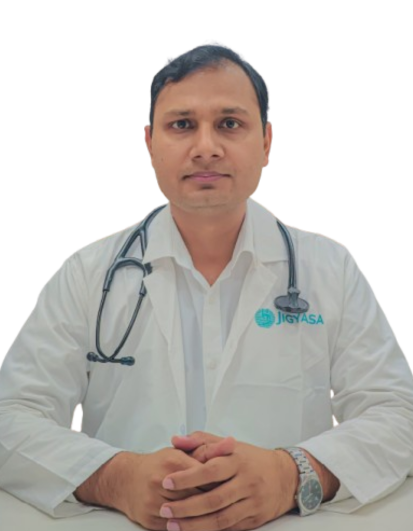
Interventional Cardiologist in Moradabad: Dr. Amit Kumar Singh at Jigyasa Hospital
Advanced Heart Care, Close to Home
Heart disease is now one of the most common serious health problems in India, and it often strikes earlier than people expect. For families in Moradabad and nearby districts such as Rampur, Sambhal, Amroha, Bijnor and Bareilly, a heart emergency used to mean a long journey to a metro city. That journey costs time, and in a heart attack time is muscle.
Jigyasa Hospital in Moradabad offers cardiac care in the city itself, with the interventional cardiologist Dr. Amit Kumar Singh at the centre of its cardiology services. This page explains what an interventional cardiologist does, which conditions and procedures Dr. Singh's department deals with, and how to know when to seek help.
Who Is an Interventional Cardiologist?
Cardiology is a broad field. A general cardiologist diagnoses heart conditions, manages blood pressure and cholesterol, treats rhythm problems and follows patients over the long term. An interventional cardiologist has additional super-specialty training in treating heart and blood vessel disease through catheter-based procedures. These are done through a small puncture in the wrist or groin, without open-heart surgery.
In practice, the interventional cardiologist is the doctor who:
• Performs coronary angiography to see blockages in the heart's arteries
• Opens blocked arteries with angioplasty and stents
• Treats heart attacks in the first critical hours
• Implants devices such as pacemakers
• Treats certain valve and structural problems of the heart without major surgery
Dr. Amit Kumar Singh is a Cardiology specialist who works in this field. Public doctor directories list his qualifications as MBBS, MD (Internal Medicine) and DM (Cardiology). A DM is the highest super-specialty degree in cardiology in India. The internal medicine training behind it matters, because heart patients often also have diabetes, kidney disease, hypertension or lung problems that must be managed together with the heart.
Why Moradabad Needs Local Cardiac Expertise
A heart attack usually happens when a blood clot suddenly blocks a coronary artery. The longer the artery stays blocked, the more heart muscle dies. Doctors often say "time is muscle", and the best outcomes come when the artery is reopened within the first few hours. Every hour lost to travel reduces the chance of full recovery.
Having a cardiologist, a cath lab and an emergency team in the same city can mean:
• Faster treatment. Patients reach definitive care sooner.
• Less stress on the family. Relatives are not forced to make decisions while travelling to an unfamiliar city.
• Continuity of care. Check-ups, medicine adjustments and rehabilitation are available locally.
• Lower overall cost. Travel, lodging and repeated trips to distant hospitals add up.
Jigyasa Hospital aims to make this standard of care available to families in the region.
Conditions Treated
Coronary Artery Disease (CAD)
CAD occurs when fatty deposits, called plaque, narrow the arteries that supply the heart. The common symptom is chest pain or pressure on exertion, known as angina, sometimes with breathlessness, sweating or pain spreading to the arm, jaw or back. Left untreated, CAD can lead to a heart attack.
Heart Attack (Myocardial Infarction)
A heart attack is a medical emergency. Typical warning signs include severe chest discomfort lasting more than a few minutes, cold sweat, nausea, dizziness and pain in the left arm or jaw. In diabetics, women and older adults the signs can be subtle, such as unusual fatigue, indigestion-like discomfort or breathlessness without obvious chest pain.
Heart Failure
In heart failure the heart cannot pump blood as efficiently as the body needs. Symptoms include breathlessness, swollen ankles and feet, persistent tiredness and difficulty lying flat. With modern medicines, lifestyle changes and sometimes device therapy, many patients live much better than they once could.
Arrhythmias (Irregular Heartbeat)
Palpitations, fluttering, a very slow or very fast pulse, or unexplained fainting can point to rhythm disorders. Some are harmless, while others need medicines or a pacemaker.
Valve Disease and Congenital Heart Problems
Narrowed or leaking heart valves, and defects present from birth, can sometimes be treated by catheter-based techniques, depending on the patient and the condition.
Hypertension and High Cholesterol
These are the silent drivers of most cardiac disease. Controlling blood pressure and lipids is the single most effective way to prevent heart attacks and strokes.
Peripheral Artery Disease
Blocked arteries in the legs can cause cramping pain while walking, non-healing wounds and, in severe cases, risk of limb loss. Some of these blockages can also be treated with angioplasty.
Procedures and Services
Diagnostic Services
• Consultation and risk assessment: A detailed history, examination and review of risk factors such as smoking, diabetes, family history and stress
• ECG (electrocardiogram): A quick recording of the heart's electrical activity
• Echocardiography (2D Echo): An ultrasound of the heart that shows pumping strength and valve function
• Treadmill Test (TMT): Looks for heart problems that appear only during exertion
• Holter monitoring: Continuous rhythm recording over 24 hours or longer, to catch irregular beats
• Coronary angiography: The definitive test for blockages, in which dye is injected into the heart's arteries and filmed under X-ray
Interventional Procedures
• Primary angioplasty for heart attack: Emergency opening of the blocked artery
• Elective coronary angioplasty and stenting: A small balloon opens the narrowed artery and a stent, a tiny metal mesh tube, keeps it open
• Pacemaker implantation: For patients whose heart beats too slowly or has conduction problems
• Peripheral angioplasty: For blocked arteries outside the heart
Which of these are available at any given time depends on the hospital's current facilities, so patients should confirm services when booking an appointment.
What Happens During Angioplasty? A Step-by-Step Explanation
Many people are frightened by the word "angioplasty". Understanding the procedure usually makes it much less intimidating.
1. Preparation. You are admitted, tests are reviewed, and you are told when to stop eating and which medicines to continue.
2. Access. The area, usually the wrist, is numbed with local anaesthetic. A wrist or radial approach is generally preferred where possible, because it tends to mean less bleeding and quicker walking afterwards.
3. Imaging. A thin tube, a catheter, is guided to the heart. Dye is injected to show the blockage.
4. Treatment. A tiny wire crosses the blockage, a balloon is inflated to widen the artery, and a stent is placed to keep it open.
5. Recovery. You are monitored, and many patients are able to go home within a day or two, depending on the case.
You are usually awake and comfortable throughout, and most people describe the procedure as far less painful than they expected.
A Patient-First Approach to Treatment
Not every patient with a blockage needs a stent, and not every chest pain is a heart problem. Good cardiology means choosing the right treatment, not the most treatment. In general, a responsible cardiac team will:
• Explain the diagnosis in simple language, in Hindi or English, and show the test findings
• Discuss all options, including medicines alone, angioplasty and bypass surgery, and explain why one is recommended
• Involve the patient and family in decisions about cost, risk and expected benefit
• Refer the patient to a cardiac surgery centre when open-heart surgery is the better option
• Plan follow-up so that treatment does not end when the procedure is over
When Should You See a Cardiologist?
Do not wait for a crisis. Consider a consultation if you have:
• Chest pain, tightness or heaviness, especially on exertion or stress
• Breathlessness that is new or getting worse
• Palpitations, or episodes of fainting or near-fainting
• Swelling of the feet or ankles with fatigue
• High blood pressure, diabetes or high cholesterol
• A family history of heart attack, especially before age 55 in men or 65 in women
• A history of smoking or tobacco chewing
• Age above 40, with several risk factors, even if you feel fine
Go to the Emergency Department Immediately If You Have:
• Chest pain lasting more than 10–15 minutes, or pain with sweating, vomiting or breathlessness
• Sudden severe breathlessness
• Fainting with chest discomfort
Do not drive yourself to the hospital. Call for an ambulance or ask someone to take you straight to the emergency room. If you have been prescribed aspirin, follow your doctor's earlier advice about when to take it.
Prevention: Protecting Your Heart Every Day
Up to 80% of premature heart disease can be reduced through lifestyle and early treatment. These steps matter most:
• Stop tobacco in every form. Smoking, bidis, hookah and chewing tobacco all damage blood vessels. Quitting lowers heart attack risk within a year.
• Eat for your heart. Favour vegetables, fruits, dals, whole grains and nuts. Reduce deep-fried food, sweets, bakery items and excess salt. Use oil in moderation and avoid repeatedly reheated oil.
• Move daily. About 30 minutes of brisk walking on most days is a good start. Anything is better than sitting all day.
• Control blood pressure. Check it regularly, even if you feel well. Many people have hypertension for years without symptoms.
• Manage diabetes. High blood sugar steadily damages arteries. Regular monitoring and medicines taken on time protect the heart.
• Know your cholesterol. Get a lipid profile checked, especially after age 30 or earlier with a family history.
• Maintain a healthy weight. A larger waistline, even with a normal weight, signals higher cardiac risk.
• Manage stress and sleep. Chronic stress and poor sleep raise blood pressure and strain the heart.
• Take your medicines. Never stop blood thinners, statins or blood pressure tablets on your own, especially after a stent.
Life After a Stent or Heart Attack
Treatment does not end when you leave the hospital. Recovery is partly a matter of daily habits:
• Take medicines regularly. After a stent, antiplatelet tablets are essential to prevent clots. Stopping them early can be dangerous.
• Attend follow-up visits. Check-ups let your doctor adjust medicines and monitor your recovery.
• Cardiac rehabilitation. A supervised, gradual return to activity improves stamina and confidence.
• Return to work gradually. Many people resume normal life within weeks, depending on their condition.
• Watch for warning signs. New chest pain, breathlessness or swelling should be reported promptly.
Common Myths About Heart Disease
"Heart attacks only happen to older people." Heart disease is increasingly seen in people in their 30s and 40s, particularly with smoking, diabetes, stress and inactivity.
"If I have no chest pain, my heart is fine." Many blockages cause no pain until they are advanced. Diabetics, women and the elderly may have atypical symptoms.
"Angioplasty means I am cured." A stent opens one blockage, but the underlying disease remains. Lifestyle and medicines are what protect the other arteries.
"Once I have a stent, I can stop my medicines." The opposite is true. Medicines after a stent are crucial, and should be stopped only on your cardiologist's advice.
"Heart tests are dangerous." Modern angiography and Echo are safe, routine tests when performed by a trained team.
Preparing for Your Appointment
To make your visit productive, bring:
• Previous ECGs, Echo reports, angiography films or discharge summaries
• A list of all medicines you take, including supplements
• Recent blood test results, such as sugar, lipid profile and kidney function
• A note of your symptoms: when they started, what triggers them and how long they last
• A family member, if possible, to help remember instructions
Questions worth asking your cardiologist include:
• What is the diagnosis, and how serious is it?
• Which tests do I really need, and why?
• What are my treatment options, and what are the risks and benefits of each?
• What lifestyle changes should I make?
• When should I come back, and what warning signs should send me to the emergency room?
Specialist Cardiology Consultation
Dr. Amit Kumar Singh, Senior Interventional Cardiologist, assesses heart disease, risk factors, chest pain, breathlessness, and rhythm problems.
Cause-Focused Diagnosis
Evaluation may include ECG, 2D Echo, treadmill test, Holter monitoring, and coronary angiography based on your symptoms and risk profile.
Interventional Heart Care
Where appropriate, treatment may include coronary angiography, angioplasty, stenting, pacemaker implantation, and peripheral artery procedures.
Prevention and Recovery Support
Guidance on blood pressure, diabetes, cholesterol, tobacco cessation, diet, activity, medicines, and follow-up after a heart event or stent.
Emergency-Focused Care
Jigyasa Hospital provides 24/7 emergency and OPD services, and patients with suspected heart attack symptoms should seek immediate care.
Advanced Heart Care in Moradabad
Jigyasa Hospital is on Rampur Road, near Miglani Cinema, making cardiac consultation accessible to patients in Moradabad and nearby districts.
Book an Appointment with Dr. Amit Kumar Singh
If you or a family member has symptoms, risk factors, or simply wants a heart check-up, do not delay. Early assessment is simple, and acting early can prevent a crisis.
To consult Dr. Amit Kumar Singh at Jigyasa Hospital, Moradabad, call 7900903333. In a suspected heart attack, call the emergency number or an ambulance immediately.
Address
Near Miglani Cinema, Rampur Road, Moradabad 244001
Phone
7900903333Frequently Asked Questions About Cardiac Care
Who should consult an interventional cardiologist?
Anyone with chest pain, breathlessness on exertion, an abnormal ECG or Echo, a known blockage, or a heart attack. People with several risk factors may also benefit from a preventive check-up.
Is angioplasty a major surgery?
No. It is a minimally invasive procedure done through a small puncture, usually at the wrist or groin, without opening the chest.
How long is the hospital stay after angioplasty?
It depends on the patient and the reason for the procedure. Many planned cases need a short stay of one to two days, while a heart attack may need longer monitoring.
Can I drive or work after a stent?
Most people return to light activity in a few days and to normal work within a few weeks, but you should follow your own doctor's instructions.
Do I need a stent every time there is a blockage?
No. Treatment depends on the severity and location of the blockage, your symptoms and your overall health. Some patients do well on medicines, and some need bypass surgery.
How can I lower my risk of a heart attack?
Avoid tobacco, eat a balanced diet, exercise regularly, control blood pressure, sugar and cholesterol, manage stress, and take prescribed medicines consistently.
Why Patients Choose Us
- 24/7 Emergency & Trauma Care
- Top Specialist Doctors
- Modern ICU & Operation Theatres
- Transparent & Affordable Pricing
- Ayushman Bharat Empanelled
- Cashless Insurance Support
- Multispeciality Under One Roof
Our Location
Near Miglani Cinema,
Rampur Road,
Moradabad 244001