
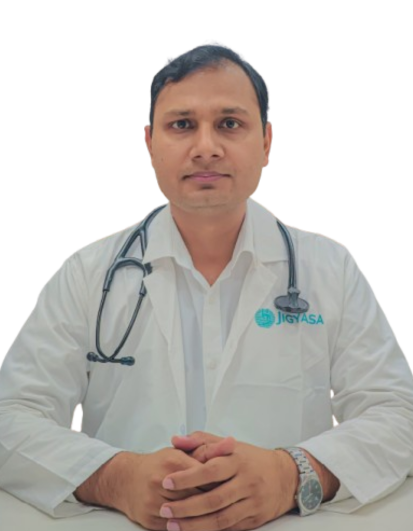
Best Interventional Cardiologist in Moradabad: Dr. Amit Kumar Singh, Jigyasa Hospital
For decades, patients in Moradabad facing serious heart conditions like blocked arteries, heart attacks, and valve disease had one difficult option. They had to travel to Delhi, Lucknow, or Meerut for advanced cardiac intervention during medical emergencies. That journey cost precious time, added enormous stress to already frightened families, and in the case of a heart attack, could mean the difference between a full recovery and permanent heart damage or even death.
That is no longer the case for patients in Moradabad and the surrounding region. Dr. Amit Kumar Singh, interventional cardiologist at Jigyasa Hospital, brings advanced, catheter-based cardiac treatment directly to Moradabad. This includes angioplasty, stenting, and emergency heart attack care, allowing patients across the city and surrounding region to access life-saving cardiac intervention without leaving home. This local availability has transformed cardiac care in the region.
What Is Interventional Cardiology?
Interventional cardiology is a specialized subspecialty within cardiology focused on treating heart conditions using minimally invasive, catheter-based techniques rather than open-heart surgery. Instead of a large chest incision requiring weeks of recovery, interventional cardiologists work through a small puncture, usually in the wrist or groin. They guide thin catheters through the blood vessels to reach the heart directly, performing treatments with far less trauma to the body.
This approach allows conditions like blocked coronary arteries, certain valve problems, and structural heart defects to be treated effectively. Patients experience shorter hospital stays and quicker recovery compared to traditional surgery while achieving outcomes that, for many conditions, rival or match surgical results. The minimally invasive nature means less pain, smaller scars, and faster return to normal activities for most patients.
Procedures Performed by Dr. Amit Kumar Singh
Dr. Amit Kumar Singh performs a comprehensive range of interventional cardiac procedures at Jigyasa Hospital. These procedures address various heart conditions from blocked arteries to rhythm disorders requiring device therapy. Each procedure is tailored to the individual patient's specific condition and anatomical considerations. The following list outlines the key interventional services available locally in Moradabad.
Coronary angiography to map the coronary arteries precisely before any interventional treatment using catheter and contrast dye.
Angioplasty and stenting or PCI to open blocked arteries using a tiny balloon and place a stent to keep the artery open long-term.
Primary angioplasty for heart attacks performed emergently to open the blocked artery causing the attack and restore blood flow quickly.
Balloon valvuloplasty in select cases of narrowed heart valves, particularly in younger patients or specific anatomical situations.
Peripheral angioplasty to treat blockages in other blood vessels such as the legs in peripheral artery disease using similar techniques.
Pacemaker and device implantation for patients with slow or irregular heart rhythms that require ongoing electrical support.
Modern drug-eluting stents, coated with medication that prevents scar tissue buildup, are now standard for most patients. These offer excellent long-term results with reduced risk of re-narrowing compared to older stent types. Having this capability available locally in Moradabad is enormously significant for patients facing serious heart conditions. They no longer need to travel to distant cities for these life-saving interventions.
Why Moradabad Needed a Local Interventional Cardiologist
Coronary artery disease and heart attacks do not wait for a convenient time or a convenient location. Yet for years, patients across Moradabad, Sambhal, Amroha, Rampur, Bijnor, and Chandausi faced a difficult reality during a cardiac emergency. The nearest interventional cardiac care was often hours away in Delhi, Lucknow, or Meerut, requiring dangerous travel during critical moments.
This delay has real, measurable consequences for heart attack patients and their families. In heart attack treatment, cardiologists refer to the concept of door-to-balloon time, which is the time between a patient arriving at the hospital and the blocked artery being opened. International guidelines recommend this happen within 90 minutes wherever possible, because outcomes worsen significantly with every minute of delay.
Who Should See an Interventional Cardiologist?
You may be referred to, or should consider consulting, Dr. Amit Kumar Singh if you have specific symptoms or test results suggesting heart disease. Early consultation with an interventional cardiologist can prevent delays in diagnosis and treatment. Many patients wait too long before seeking specialized cardiac care, missing the window for optimal intervention.
The following indications suggest you should seek evaluation from an interventional cardiologist in Moradabad. Some conditions require emergency care immediately, while others can be scheduled for routine consultation. Dr. Amit Kumar Singh evaluates each patient individually to determine the most appropriate treatment approach.
Chest pain or pressure, especially with exertion, that has not been properly evaluated by a cardiologist for underlying cause.
A positive or strongly suggestive stress test or TMT result indicating possible coronary artery blockage requiring further assessment.
Diagnosed coronary artery blockage requiring expert treatment planning to determine the best approach for individual circumstances.
Symptoms of an ongoing heart attack including severe chest pain, sweating, breathlessness, pain radiating to arm or jaw requiring emergency care.
Known coronary artery disease with worsening symptoms despite medication, suggesting disease progression needing re-evaluation.
Leg pain during walking that improves with rest, suggestive of peripheral artery disease requiring vascular assessment and treatment.
A slow or irregular heart rhythm that may require pacemaker evaluation and possible device implantation for symptom control.
Follow-up needs after a previous angioplasty or stent placement to monitor stent health and detect any new blockages early.
If you experience symptoms of an ongoing heart attack, seek emergency care immediately without waiting for a scheduled appointment. Every minute of delay during a heart attack means more heart muscle damage and worse outcomes. Do not attempt to drive yourself; call for emergency transport or have someone take you to the nearest hospital equipped for emergency cardiac care. Jigyasa Hospital provides emergency interventional cardiac care for heart attack patients in Moradabad.
What to Expect: The Patient Journey
Understanding what to expect during your cardiac care journey can help reduce anxiety and prepare you for the process ahead. Dr. Amit Kumar Singh provides comprehensive care from initial evaluation through treatment and long-term follow-up. The following steps outline the typical patient journey at Jigyasa Hospital for interventional cardiac care.
Initial Consultation and Evaluation
Dr. Amit Kumar Singh reviews your symptoms, medical history, and any prior test results thoroughly. Appropriate diagnostic tests are ordered including ECG, echocardiogram, stress test, or blood work to build a complete clinical picture. This comprehensive evaluation ensures accurate diagnosis and appropriate treatment planning for each patient.
Diagnostic Angiography (If Indicated)
If non-invasive tests suggest significant blockage, coronary angiography provides a definitive, detailed view of the coronary arteries. This procedure uses contrast dye and X-ray imaging to show exactly where blockages exist and how severe they are. The results form the foundation for deciding the right treatment approach for your specific condition.
Treatment Planning
Based on the angiography findings, Dr. Amit Kumar Singh determines the best treatment path for your condition. Options may include medication alone for mild disease, angioplasty with stenting for significant blockages, or referral for bypass surgery for more complex multi-vessel disease. The decision is individualized based on your specific anatomy and overall health.
Intervention (If Needed)
For patients requiring angioplasty, the procedure is often performed in the same sitting as the diagnostic angiography. This minimizes the number of hospital visits and, in urgent cases, reduces the critical time to treatment significantly. The interventional approach is less invasive than surgery with faster recovery and shorter hospital stay.
Recovery and Follow-Up
Most angioplasty patients recover quickly, often going home within a day or two after the procedure. Follow-up care includes medication management, particularly blood-thinning medications to protect the stent from clotting. Lifestyle counseling and scheduled check-ups monitor long-term heart health and detect any new issues early.
This coordinated approach ensures continuity of care throughout your treatment journey. Dr. Amit Kumar Singh manages diagnosis, intervention, and long-term follow-up, providing comprehensive cardiac care under one roof. Patients benefit from having the same cardiologist throughout their care, ensuring consistent management and personalized attention. This approach reduces fragmentation and improves outcomes for patients with heart disease.
Is Angioplasty Safe?
Angioplasty and stenting are well-established procedures performed millions of times worldwide with a strong safety profile. They have been refined over decades of clinical experience and technological advancement. When performed by an experienced interventional cardiologist in a properly equipped cath lab, these procedures are generally very safe with low complication rates.
As with any invasive procedure, risks exist, including bleeding at the access site, allergic reaction to contrast dye, or rarely, more serious complications. This is why careful patient evaluation and an experienced team are essential for safe outcomes. The medical team at Jigyasa Hospital is trained to handle any complications that may arise during the procedure.
Angioplasty and Interventional Cardiology Cost in Moradabad
Cardiac intervention in metro cities often comes with a compounded cost beyond just the procedure itself. This includes travel expenses, accommodation costs, and lost work time for family members accompanying the patient during a stressful hospital stay. These additional burdens can be significant for families already facing medical expenses and emotional stress.
Access to interventional cardiology locally at Jigyasa Hospital significantly reduces this burden for families across Moradabad and the surrounding region. Patients can receive the same quality of care without the stress and expense of traveling to distant cities. This local availability also enables faster diagnosis and treatment, which is crucial in cardiac care where time matters significantly.
Why Choose Dr. Amit Kumar Singh at Jigyasa Hospital
Choosing the right interventional cardiologist is one of the most important decisions you can make for your heart health. Dr. Amit Kumar Singh brings specialized interventional cardiology training to Moradabad, offering advanced catheter-based treatment previously available only in major cities. This expertise, combined with modern facilities and comprehensive care, makes Jigyasa Hospital the preferred choice for cardiac intervention in the region.
Patients from Moradabad, Sambhal, Amroha, Rampur, Bijnor, and Chandausi benefit from local accessibility, removing the need to travel to Delhi or Lucknow for advanced cardiac treatment. The continuity of care, with the same cardiologist managing diagnosis, intervention, and long-term follow-up, ensures comprehensive management. This coordinated approach improves outcomes and patient satisfaction significantly.
Specialized interventional cardiology training, offering advanced catheter-based treatment previously available only in major cities.
Comprehensive cardiac care under one roof from diagnosis including ECG, echo, TMT, angiography through to intervention and follow-up.
Emergency heart attack care, with the capability to perform primary angioplasty locally, critical for time-sensitive treatment within the golden window.
Modern cath lab facilities equipped for both diagnostic and interventional procedures with advanced imaging technology.
Radial or wrist access preferred where clinically appropriate, for faster recovery and reduced complication rates.
Local accessibility for patients from Moradabad, Sambhal, Amroha, Rampur, Bijnor, and Chandausi, removing the need to travel to Delhi or Lucknow.
Continuity of care, with the same cardiologist managing diagnosis, intervention, and long-term follow-up for comprehensive management.
Specialized Interventional Training
Advanced catheter-based treatment expertise previously available only in major cities, now accessible locally at Jigyasa Hospital in Moradabad.
Comprehensive Cardiac Care
Complete care under one roof from diagnosis including ECG, echo, TMT, angiography through to intervention with angioplasty, stenting, and follow-up.
Emergency Heart Attack Care
Capability to perform primary angioplasty locally for heart attack patients, critical for time-sensitive treatment within the golden window.
Modern Cath Lab Facilities
State-of-the-art catheterization laboratory equipped for both diagnostic and interventional procedures with advanced imaging technology.
Radial Access Preferred
Wrist access approach preferred where clinically appropriate, offering faster recovery, reduced complications, and greater patient comfort.
Local Accessibility
Advanced cardiac treatment available locally for patients from Moradabad, Sambhal, Amroha, Rampur, Bijnor, and Chandausi without travel to Delhi or Lucknow.
Consult Dr. Amit Kumar Singh for Interventional Cardiology
If you have been diagnosed with coronary artery disease, have chest pain or breathlessness, or have been told you need angioplasty or stenting, expert interventional cardiac care is available locally at Jigyasa Hospital. Contact Jigyasa Hospital, Moradabad, to discuss your condition with Dr. Amit Kumar Singh. The cardiac team can help you understand your reports, determine the need for intervention, and coordinate appropriate treatment based on your specific findings.
Whether you need diagnostic angiography, angioplasty, stenting, pacemaker implantation, or emergency heart attack care, comprehensive interventional cardiology services are available without traveling to distant cities. Patients from Moradabad, Sambhal, Amroha, Rampur, Bijnor, and Chandausi benefit from accessible, advanced cardiac care close to home. The hospital's coordinated approach ensures seamless care from diagnosis through treatment and long-term follow-up.
Address
Near Miglani Cinema, Rampur Road, Moradabad 244001
Phone
7900903333Frequently Asked Questions About Interventional Cardiology
What is the difference between a cardiologist and an interventional cardiologist?
A general cardiologist diagnoses and manages heart conditions, often using medication-based treatment and non-invasive tests. An interventional cardiologist has additional specialized training to perform catheter-based procedures like angioplasty, stenting, and other minimally invasive treatments. This extra fellowship training focuses specifically on catheter-based diagnostic and therapeutic techniques. Interventional cardiologists treat blocked arteries and certain structural heart conditions without open-heart surgery. Dr. Amit Kumar Singh brings this specialized skill set to patients in Moradabad.
How is angioplasty different from bypass surgery?
Angioplasty is a minimally invasive, catheter-based procedure performed through a small puncture in the wrist or groin, without open-heart surgery. Bypass surgery is a more invasive open-heart procedure typically reserved for extensive multi-vessel disease not well-suited to stenting. The right choice depends on the pattern and severity of blockages, heart function, and overall health. Angioplasty offers shorter recovery time, while bypass surgery may provide better long-term outcomes for complex disease. Dr. Amit Kumar Singh helps determine the most appropriate treatment for each patient.
How long does an angioplasty procedure take?
Typically 30 minutes to a couple of hours, depending on the complexity and number of blockages being treated. Many patients go home within a day or two after the procedure, especially with wrist access. The exact duration varies based on individual anatomy and the specific treatment required. Most patients experience significant symptom relief shortly after the procedure. Recovery is generally much faster compared to open-heart surgery options.
What should I do if I think I'm having a heart attack?
Seek emergency medical care immediately — every minute matters when heart muscle is at risk. Do not wait to see if symptoms improve on their own, as delay can cause permanent heart damage. Do not attempt to drive yourself; call for emergency transport or go to the nearest hospital equipped for emergency cardiac care right away. Symptoms include severe chest pain, sweating, breathlessness, and pain radiating to the arm or jaw. Jigyasa Hospital provides emergency interventional cardiac care for heart attack patients in Moradabad.
Will I need to take medication after getting a stent?
Yes, patients typically need blood-thinning medication known as dual antiplatelet therapy for a period after stent placement. This prevents clot formation within the stent, which is critical for long-term success. Dr. Amit Kumar Singh will provide a specific medication plan and duration based on your individual case. Patients must take these medications exactly as prescribed to protect the stent. Long-term risk factor management with cholesterol, blood pressure, and diabetes medications is also essential.
Is angioplasty a permanent solution?
Angioplasty with stenting effectively treats the specific blockage addressed, but it does not prevent new blockages from developing elsewhere. Underlying risk factors like high cholesterol, diabetes, hypertension, and smoking must be controlled to prevent future disease. Long-term risk factor management remains essential for protecting both the treated artery and overall heart health. Regular follow-up appointments help monitor progress and detect any new issues early. Lifestyle changes including diet, exercise, and smoking cessation are crucial components of care.
Can elderly patients safely undergo angioplasty?
Yes, age alone is not a barrier — angioplasty is regularly performed in elderly patients with good outcomes. The overall risk assessment considers other health conditions, kidney function, and general fitness for the procedure. Many elderly patients benefit significantly from angioplasty, experiencing relief from chest pain and improved quality of life. The medical team carefully evaluates each patient individually to ensure the procedure is appropriate. Radial or wrist access is often preferred in elderly patients for faster recovery and reduced complications.
Is emergency angioplasty available at Jigyasa Hospital for heart attack patients?
Yes, Dr. Amit Kumar Singh provides interventional cardiac care for patients presenting with heart attacks at Jigyasa Hospital. This allows for timely primary angioplasty rather than requiring transfer to another city during a critical emergency. Having this capability locally in Moradabad is enormously significant for patient outcomes. Every minute of delay in heart attack treatment means more heart muscle damage, so local availability saves lives. The hospital is equipped for emergency cardiac interventions with modern cath lab facilities.
Why Patients Choose Us
- 24/7 Emergency & Trauma Care
- Top Specialist Doctors
- Modern ICU & Operation Theatres
- Transparent & Affordable Pricing
- Ayushman Bharat Empanelled
- Cashless Insurance Support
- Multispeciality Under One Roof
Our Location
Near Miglani Cinema,
Rampur Road,
Moradabad 244001