
IVF for Blocked Fallopian Tubes in Moradabad | Expert Care by Dr. Karishma Singh at Jigyasa Hospital
Why IVF Helps When Tubes Are Blocked
A diagnosis of blocked fallopian tubes can feel like a door closing on the dream of motherhood. At Jigyasa Hospital, Moradabad, Dr. Karishma Singh helps patients understand that this is not the end of the journey.
Blocked fallopian tubes are a common cause of female infertility, and IVF offers a direct way forward because fertilisation happens in the laboratory rather than inside the tubes.
This page has been written under the clinical guidance of Dr. Karishma Singh to provide accurate, practical, and locally relevant information for women seeking IVF treatment for tubal factor infertility.
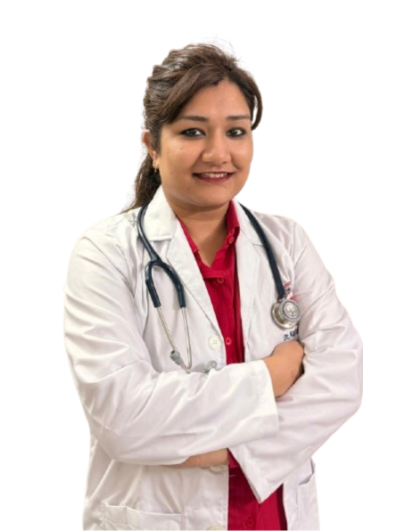
Meet Dr. Karishma Singh
Dr. Karishma Singh is a trusted fertility specialist at Jigyasa Hospital, Moradabad, with clinical experience in reproductive medicine and assisted reproductive technology.
Her care is especially valuable for patients with bilateral tubal blockage, hydrosalpinx, endometriosis-related tubal disease, and infertility after prior pelvic surgery or infection.
- • IVF and ICSI for tubal factor infertility
- • Laparoscopic assessment and treatment of tubal disease
- • Hysterosalpingography interpretation and management
- • Salpingectomy before IVF for hydrosalpinx
- • Ovarian stimulation and individualized IVF protocols
- • Recurrent IVF failure evaluation and management
- • High-risk pregnancy care following IVF conception
- • Endometriosis diagnosis and surgical management
- • PCOS management and fertility treatment
- • Preimplantation genetic testing advisory
IVF and ICSI Care
Personalized treatment for tubal factor infertility, including IVF and ICSI when needed.
Tubal Disease Evaluation
Assessment of blocked tubes, hydrosalpinx, prior surgery, and infection-related damage.
Laparoscopy and Hysteroscopy
Advanced diagnostic and surgical support for infertility-related uterine and tubal conditions.
PCOS and Hormonal Care
Management of ovulation issues, hormonal imbalance, and fertility-related endocrine concerns.
Pregnancy Support
Care for conception, early pregnancy monitoring, and high-risk follow-up after IVF.
Trusted in Moradabad
Serving couples from Moradabad, Rampur, Sambhal, Amroha, Bareilly, and nearby areas.
What Are Blocked Fallopian Tubes?
The fallopian tubes are two slender structures that connect the ovaries to the uterus. In natural conception, they capture the egg, provide the site of fertilisation, and transport the embryo to the uterus.
When one or both tubes are blocked or damaged, sperm and egg cannot meet normally, and the embryo may not be able to reach the uterus. IVF bypasses this problem by moving fertilisation into the laboratory.
Common causes include pelvic infection, endometriosis, prior surgery, ectopic pregnancy, genital tuberculosis, congenital abnormalities, and previous sterilisation.
Why IVF Is the Right Option
IVF works independently of the fallopian tubes. Eggs are retrieved directly from the ovaries, fertilised in the lab, and the resulting embryo is transferred directly into the uterus.
This approach can be especially effective for women with bilateral blockage, hydrosalpinx, or severe tubal damage where natural conception is unlikely.
| Natural Conception | IVF Process |
|---|---|
| Egg released from ovary | Eggs retrieved directly from ovaries |
| Egg travels through fallopian tube | No tube required |
| Sperm meets egg in tube | Sperm and egg combined in the lab |
| Fertilisation occurs in tube | Fertilisation occurs in controlled lab conditions |
| Embryo travels to uterus | Embryo transferred directly into uterus |
The IVF Process at Jigyasa Hospital
Step 1: Comprehensive Fertility Evaluation
Fertility workup may include hormonal tests, antral follicle count, semen analysis, tubal assessment, and screening for uterine pathology or genital tuberculosis where indicated.
Step 2: Pre-IVF Treatment
If needed, hydrosalpinx management, hysteroscopy, or treatment of infection-related factors is addressed before IVF begins.
Step 3: Ovarian Stimulation
Injectable medicines may be used to help the ovaries produce multiple mature eggs, with close ultrasound monitoring throughout the cycle.
Step 4: Trigger and Egg Retrieval
When follicles are ready, a trigger injection is given and egg retrieval is performed under sedation in a short procedure.
Step 5: Fertilisation and Embryo Culture
Retrieved eggs are fertilised with partner or donor sperm in the embryology lab, and embryos are monitored for several days.
Step 6: Embryo Transfer
The selected embryo is placed gently into the uterus using a soft catheter. The procedure is usually quick and simple.
Step 7: Luteal Support and Pregnancy Test
Progesterone support may be given after transfer, and a blood beta-hCG test is used to confirm pregnancy about 14 days later.
Book Your IVF Consultation Today
Blocked tubes do not end the dream of parenthood. At Jigyasa Hospital, you can receive expert fertility care close to home in Moradabad.
Address: Near Miglani Cinema, Rampur Road, Moradabad 244001
OPD Timings: Monday to Saturday, 9:00 AM to 6:00 PM
Call Now
7900903333Hospital Address
Jigyasa Hospital, Near Miglani Cinema, Rampur Road, Moradabad 244001
Email Us
info@jigyasahospital.inFrequently Asked Questions
Can I get pregnant naturally if only one fallopian tube is blocked?
It may be possible to conceive naturally if one fallopian tube remains open and functional. Dr. Karishma Singh will assess your complete fertility profile and guide you toward the most effective treatment.
Is IVF the only option for bilateral tubal blockage?
Yes. For complete bilateral tubal blockage, IVF is the most effective fertility treatment because it bypasses the fallopian tubes entirely.
Do I need to remove hydrosalpinx before IVF?
In many cases, yes. A hydrosalpinx can reduce IVF success, and Dr. Karishma Singh may advise salpingectomy or tubal occlusion before treatment.
Will salpingectomy affect ovarian reserve?
When performed carefully by an experienced laparoscopic surgeon, the impact on ovarian reserve is usually minimal. Dr. Singh will explain the benefit-risk balance in your case.
Can IVF be done if I have genital TB?
Genital tuberculosis must be fully treated before IVF is attempted. After treatment and confirmation of recovery, IVF may be planned if needed.
Why Patients Choose Us
- 24/7 Emergency & Trauma Care
- Top Specialist Doctors
- Modern ICU & Operation Theatres
- Transparent & Affordable Pricing
- Ayushman Bharat Empanelled
- Cashless Insurance Support
- Multispeciality Under One Roof
Our Location
Near Miglani Cinema,
Rampur Road,
Moradabad 244001