
IVF Success Rate in Moradabad – Dr. Karishma Singh | Jigyasa Hospital
Trusted IVF Care in Moradabad
Infertility is one of the most emotionally challenging journeys a couple can face. For thousands of families across Moradabad and the wider Rohilkhand region, Jigyasa Hospital has become a trusted name for advanced fertility treatment.
Under the expert care of Dr. Karishma Singh, a specialist in Gynecology and IVF, the hospital has helped numerous couples fulfill their dream of parenthood through evidence-based, compassionate medicine.
With personalized treatment planning, transparent counseling, and modern reproductive technology, Jigyasa Hospital offers a more informed and hopeful path for couples seeking fertility solutions in Moradabad.
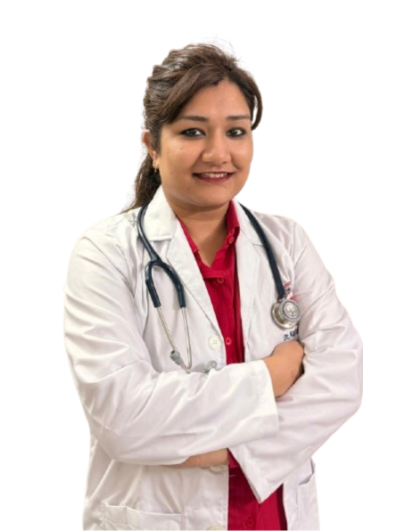
Who Is Dr. Karishma Singh?
Dr. Karishma Singh is a highly experienced gynecologist and IVF specialist at Jigyasa Hospital, Moradabad. With specialized training in reproductive medicine and infertility management, she brings a patient-first approach to every consultation.
Her expertise spans the complete spectrum of women's reproductive health — from routine gynecological care to complex assisted reproductive technology procedures, including IVF, IUI, and ICSI.
Her patient-centered practice and deep clinical expertise make her one of the most trusted IVF doctors in Moradabad and the surrounding Rohilkhand region.
Compassionate Fertility Care
Evidence-based and patient-centered IVF treatment with emotional support throughout the parenthood journey.
Personalized IVF Protocols
Customized fertility treatment plans based on hormonal profile, ovarian reserve, and medical history.
Advanced IVF Diagnostics
Comprehensive fertility workup including AMH, ultrasound, semen analysis, and uterine evaluation.
Modern ART Procedures
Specialized IVF, IUI, ICSI, fertility preservation, and infertility-related laparoscopic treatment under one roof.
Trusted Across Rohilkhand
Couples from Moradabad, Rampur, Sambhal, Amroha, Bijnor, and nearby areas visit Jigyasa Hospital for fertility care.
IVF Success Rate in Moradabad – What Couples Should Know
One of the first questions every couple asks before starting IVF is: “What is the success rate?” The honest answer is that success depends on several clinical and biological factors. Understanding these factors helps couples set realistic, informed expectations before beginning treatment.
1. Age of the Woman
Age is the single most important factor in IVF success. Women under 35 years generally achieve the highest success rates, typically ranging between 40–50% per embryo transfer cycle. Between 35 and 37 years, success rates remain strong but begin to decline. After the age of 40, success rates drop further, which is why early consultation with a fertility specialist is always recommended.
2. Cause of Infertility
Different underlying causes respond differently to IVF. Tubal factor infertility and ovulatory dysfunction often show good outcomes with IVF. Male factor infertility, including low sperm count or poor motility, is effectively addressed by combining IVF with ICSI.
3. Ovarian Reserve
A woman's ovarian reserve, measured through AMH levels and antral follicle count, directly affects how many eggs can be retrieved in a single cycle. A healthy ovarian reserve generally correlates with better IVF outcomes and more embryos available for transfer or freezing.
4. Embryo Quality
The grade and development stage of embryos transferred significantly impacts implantation success. Culturing embryos to the blastocyst stage on Day 5 is associated with higher success rates compared to Day 3 transfers, as only the strongest embryos survive to this stage.
5. Uterine Health
A healthy, receptive uterine lining is essential for successful embryo implantation. Conditions such as uterine fibroids, polyps, adhesions, or a thin endometrium may reduce success rates unless identified and treated before embryo transfer.
6. Number of IVF Cycles
Single-cycle success rates do not tell the complete story. Cumulative success rates, meaning the likelihood of achieving pregnancy across multiple IVF cycles, are significantly higher. Many couples conceive successfully in their second or third attempt, which is why persistence with medical guidance remains important.
Step-by-Step IVF Process at Jigyasa Hospital, Moradabad
Jigyasa Hospital is equipped with a modern fertility unit designed to support the complete IVF journey under one roof. Couples from Moradabad, Rampur, Sambhal, Amroha, Bijnor, and across western Uttar Pradesh regularly visit the hospital for fertility care.
Step 1 – Initial Consultation and Fertility Workup
Dr. Karishma Singh begins with a thorough evaluation of both partners. This includes blood tests such as FSH, LH, AMH, thyroid profile, transvaginal ultrasound, semen analysis, and a detailed review of previous treatment history.
Step 2 – Ovarian Stimulation
The patient receives controlled ovarian stimulation through injectable hormones over 8 to 14 days. The response is closely monitored through serial ultrasounds and estrogen level checks to optimize egg development and minimize the risk of ovarian hyperstimulation syndrome.
Step 3 – Egg Retrieval (OPU)
Once follicles reach the optimal size, an Ovum Pick-Up procedure is performed under short-duration sedation. The procedure is minimally invasive, guided by ultrasound, and typically takes 20 to 30 minutes.
Step 4 – Fertilization in the Laboratory
Retrieved eggs are combined with the partner's prepared sperm sample in a controlled laboratory environment. In cases of male factor infertility, ICSI is used, where a single healthy sperm is directly injected into each mature egg to maximize fertilization.
Step 5 – Embryo Culture and Development
Fertilized eggs are cultured in specialized incubators for 3 to 5 days. Embryologists monitor their development closely and select the best-quality embryos for transfer based on established grading criteria.
Step 6 – Embryo Transfer
The selected embryo or embryos are transferred into the uterus through a thin, flexible catheter, which is a painless procedure requiring no anesthesia. The number of embryos transferred is decided based on the patient's age, embryo quality, and medical guidelines.
Step 7 – Luteal Support and Pregnancy Confirmation
After the transfer, progesterone support medications are prescribed to prepare and maintain the uterine lining. A beta-hCG blood test is conducted approximately 14 days later to confirm whether implantation has occurred.
Additional Fertility Services Offered by Dr. Karishma Singh
IUI (Intrauterine Insemination)
A less invasive first-line fertility treatment where washed, prepared sperm is placed directly into the uterus during the ovulation window. It is recommended for couples with unexplained infertility, mild male factor issues, or cervical factor infertility.
ICSI (Intracytoplasmic Sperm Injection)
Used alongside IVF for cases of severe male infertility. A single healthy sperm is selected and injected directly into a mature egg under high magnification, significantly improving fertilization rates in difficult cases.
Fertility Preservation
Egg freezing, also known as oocyte cryopreservation, is available for women who wish to preserve their fertility for medical or personal reasons.
Laparoscopic Surgery for Infertility
Minimally invasive surgical treatment is available for conditions that impair fertility, including endometriosis, PCOS, blocked fallopian tubes, uterine fibroids, and intrauterine adhesions.
Recurrent Pregnancy Loss Management
Specialized evaluation and treatment are offered for couples experiencing repeated miscarriages, including chromosomal testing, immune workup, and structural uterine assessment.
Why Choose Jigyasa Hospital for IVF in Moradabad?
Couples choosing Jigyasa Hospital for IVF treatment benefit from several distinct advantages, including expert reproductive care, advanced fertility infrastructure, transparent pricing, and continuity of care under one roof.
- • Experienced specialist with training in reproductive medicine
- • Modern embryology lab and precision incubation systems
- • Transparent and affordable treatment planning
- • Multidisciplinary support when needed
- • Preconception, fertility, antenatal, and delivery care under one roof
- • Strong regional trust across Rohilkhand
Book an IVF Consultation in Moradabad
Jigyasa Hospital, Moradabad, offers expert consultation for couples looking for IVF treatment, fertility assessment, and personalized reproductive care under Dr. Karishma Singh.
Near Miglani Cinema, Rampur Road, Moradabad 244001
Call Now
7900903333Frequently Asked Questions About IVF Treatment
Who is the best IVF doctor in Moradabad?
Dr. Karishma Singh at Jigyasa Hospital is one of the most experienced gynecologists and IVF specialists in Moradabad and the Rohilkhand region.
What is the IVF success rate at Jigyasa Hospital?
Success rates depend on individual patient factors including age, ovarian reserve, and the cause of infertility. Women under 35 generally achieve success rates of 40–50% per cycle. Dr. Karishma Singh provides a realistic assessment during the initial consultation.
How much does IVF cost in Moradabad?
IVF costs vary depending on the treatment protocol, required medications, and individual clinical needs. Jigyasa Hospital offers transparent pricing. Couples are encouraged to schedule a consultation with Dr. Karishma Singh for a personalized cost estimate.
Can women with PCOS undergo IVF?
Yes. PCOS patients can successfully undergo IVF. Dr. Karishma Singh uses modified stimulation protocols designed to optimize egg production while minimizing the risk of ovarian hyperstimulation in PCOS patients.
What is the difference between IVF and IUI?
IUI is a simpler procedure where prepared sperm is placed directly into the uterus. IVF involves retrieving eggs, fertilizing them in a laboratory, and transferring resulting embryos into the uterus. IVF is recommended for more complex cases where IUI has not been successful or is unlikely to work.
How many IVF cycles should a couple attempt?
Most fertility specialists recommend attempting up to three IVF cycles before considering alternative options, as cumulative success rates are significantly higher than single-cycle rates. Dr. Karishma Singh provides individualized guidance based on each couple's clinical profile.
Why Patients Choose Us
- 24/7 Emergency & Trauma Care
- Top Specialist Doctors
- Modern ICU & Operation Theatres
- Transparent & Affordable Pricing
- Ayushman Bharat Empanelled
- Cashless Insurance Support
- Multispeciality Under One Roof
Our Location
Near Miglani Cinema,
Rampur Road,
Moradabad 244001