
Joint Replacement in Moradabad: Expert Orthopedic Care at Jigyasa Hospital
Why Joint Replacement Has Become Essential in Western Uttar Pradesh
Joint pain is no longer only a condition of old age. Across Moradabad, Rampur, Amroha, Sambhal, and nearby districts, many people in their forties and fifties are struggling to walk, climb stairs, or perform daily tasks because of advanced joint damage.
Osteoarthritis is now recognized as one of the leading causes of disability in India. In large states such as Uttar Pradesh, with a growing elderly and middle-aged population, the burden of joint disease is significant. In industrial areas like Moradabad, years of physically demanding work combined with lifestyle factors such as obesity and reduced activity further accelerate joint wear.
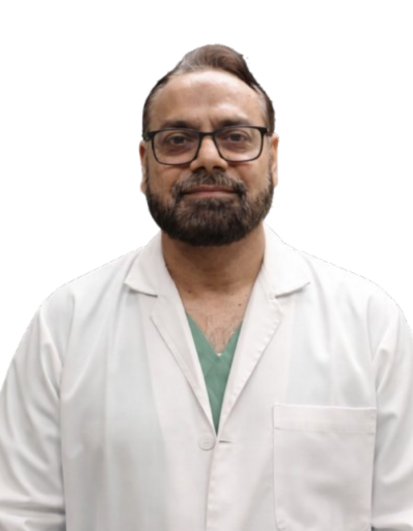
For many of these patients, joint replacement surgery offers a safe, proven, and long-lasting solution. At Jigyasa Hospital, Moradabad, joint replacement services are led by orthopedic surgeon Dr. Shariq Arshad, MS Orthopedics, with a focus on accuracy, safety, and long-term function.
What Is Joint Replacement Surgery?
Joint replacement surgery, also called arthroplasty, is a procedure in which a damaged joint is surgically removed and replaced with an artificial implant made of metal, ceramic, or medical-grade plastic. The aim is to relieve long-standing pain, restore joint movement, and help patients return to an independent, active life.
The most commonly replaced joints are the knee and the hip, followed by the shoulder in selected cases. Ankle and elbow replacement are also possible in particular situations of severe arthritis or post-traumatic damage.
Modern joint implants are designed to last many years. With appropriate surgical technique and good post-operative care, many patients can expect their implant to last 18 to 22 years or more. In numerous cases, people continue to function with the same implant well beyond two decades.
Joint replacement is one of the most studied and successful operations in modern medicine, with reported success rates above 90 to 95 percent when performed on appropriate candidates using proper technique and rehabilitation.
Types of Joint Replacement Surgeries at Jigyasa Hospital
1. Total Knee Replacement (TKR)
Total Knee Replacement is the most frequently performed joint replacement procedure. In this surgery, the damaged joint surfaces of the thigh bone, shin bone, and the underside of the kneecap are replaced with a precisely fitted implant. Patients with advanced knee osteoarthritis, post-traumatic arthritis, or inflammatory arthritis that involves the whole joint are often candidates for TKR.
2. Partial (Unicompartmental) Knee Replacement
When only one part of the knee, most often the inner compartment, is severely damaged, a partial knee replacement may be recommended. This procedure replaces only the affected compartment, preserving healthy bone and ligaments. Recovery is often faster and the incision is smaller compared to a full knee replacement, provided the patient is correctly selected.
3. Bilateral Knee Replacement
Some patients have severe arthritis affecting both knees. In such cases, both joints may be replaced in a single operation, or each knee may be treated in a separate planned surgery depending on the person's age, heart and lung function, and overall medical fitness. Combined treatment allows both knees to rehabilitate together in many cases.
4. Total Hip Replacement (THR)
Hip replacement is performed for conditions such as advanced osteoarthritis of the hip, avascular necrosis, certain hip fractures, and rheumatoid arthritis. The damaged ball and socket of the hip joint are replaced with an artificial prosthesis that mimics the natural shape and movement of the joint, providing pain relief and improved mobility.
5. Revision Joint Replacement
Some patients come to Jigyasa Hospital after having a joint replacement done elsewhere, with problems such as loosening, wear, infection, or fracture around the implant. Revision joint replacement involves removing or adjusting the old implant and reconstructing the joint with specialized techniques and components. These surgeries are more complex and require careful planning and experience.
Who Needs Joint Replacement? Recognizing the Signs
Joint replacement is not the first step in treatment. Many patients benefit from medicines, physiotherapy, weight management, injections, and lifestyle changes. However, when these measures no longer control symptoms, joint replacement may be the most appropriate option.
You may be a candidate for joint replacement if you have:
- Persistent joint pain that does not improve with medicines, rest, or physiotherapy
- Pain at rest or at night that disturbs sleep and daily comfort
- Severe stiffness that makes it difficult to bend, straighten, or rotate the joint
- Difficulty walking even short distances without significant discomfort
- Inability to climb stairs or get up from a chair without support
- Visible deformity of the leg such as bowing inward or outward
- X-ray evidence of advanced arthritis with loss of joint space or bone-on-bone contact
- Previous treatments including injections or arthroscopy that no longer provide relief
Delaying surgery for too long can lead to worsening deformity and further damage. Early specialist evaluation helps in choosing the right time for joint replacement.
The Joint Replacement Procedure: What to Expect
Understanding the treatment pathway helps patients and families feel more confident about surgery. At Jigyasa Hospital, joint replacement is performed through a structured process from assessment to rehabilitation.
Pre-Operative Assessment
Before surgery, each patient undergoes detailed clinical examination, gait assessment, weight-bearing X-rays, and additional imaging such as MRI or CT scan when required. Blood tests, cardiac evaluation, and anesthesia fitness are also completed so that surgery is as safe as possible.
Anaesthesia
Most joint replacement surgeries are done under spinal anaesthesia, which numbs the lower body while the patient is comfortable and relaxed. In selected situations, general anaesthesia may be used. The anesthesiology team monitors the patient closely throughout the procedure.
The Surgery
During surgery, damaged joint surfaces are removed and replaced with implants that match the patient's bone structure and alignment. Fixation may be cemented or cementless depending on age, bone quality, and implant design. The wound is closed in layers and covered with a sterile dressing. Standard joint replacement usually takes about one to one and a half hours per joint.
Post-Operative Care and Rehabilitation
After surgery, pain is managed using a combination of medicines. Measures to prevent blood clots and infection are followed as protocol. Physiotherapy often starts within the first 24 hours with gentle movement and weight-bearing as advised. Guided exercise continues during hospital stay and after discharge to regain strength and mobility.
What to Avoid After Joint Replacement
Certain activities place excessive strain on a replaced joint and should be avoided, especially in the early months after surgery.
- High-impact activities such as running and jumping
- Contact sports that involve sudden twisting or direct blows
- Deep squatting or sitting cross-legged without clearance from your surgeon
- Lifting heavy weights without medical advice
- Skipping prescribed physiotherapy or home exercises
- Ignoring warning signs such as sudden pain, swelling, redness, or fever
Why Choose Jigyasa Hospital for Joint Replacement in Moradabad?
Choosing where to have joint replacement surgery is a major decision. Jigyasa Hospital aims to provide metropolitan-level orthopedic services locally in Moradabad so that patients and families do not have to travel far for high-quality care.
Comprehensive Joint Replacement Care
End-to-end pathway from evaluation and optimization to surgery, physiotherapy, and long-term follow-up for knee, hip, and other joint replacements.
Advanced Orthopedic Expertise
Specialist orthopedic care for knee and hip arthritis, complex deformity, trauma-related joint damage, and revision joint replacement.
Quality Implants and Techniques
Use of certified, high-quality implants and precise surgical techniques designed for durability, stability, and natural joint movement.
Structured Rehabilitation Support
Post-operative physiotherapy programs that focus on safe mobilization, strength, balance, and return to daily activities.
Efficient Pre- and Post-Operative Pathway
Thorough pre-operative assessment, coordinated in-hospital care, and defined follow-up schedule for long-term results.
Trusted in Western Uttar Pradesh
Joint replacement care for patients from Moradabad, Rampur, Amroha, Sambhal, and surrounding districts at Jigyasa Hospital.
Jigyasa Hospital follows a clear, transparent approach to patient education, informed consent, and pricing. The clinical team explains the diagnosis, the type of implant being used, the expected benefits, possible risks, and the likely recovery timeline before surgery so that every patient and family can make confident decisions.
About Dr. Shariq Arshad – Orthopedic Surgeon, Moradabad
Dr. Shariq Arshad is an orthopedic surgeon with an MS in Orthopedics and extensive experience in managing joint diseases, trauma, and musculoskeletal conditions. At Jigyasa Hospital, Moradabad, his practice includes joint replacement, fracture management, arthroscopic procedures, and comprehensive orthopedic care.
His areas of expertise include total and partial knee replacement, hip replacement and hip fracture surgery, trauma surgery for fractures and dislocations, arthroscopic surgery of the knee and shoulder, and the management of sports injuries and certain spine conditions.
Patients often describe Dr. Arshad as a surgeon who listens carefully, explains options in simple language, and tailors treatment recommendations to each person's age, lifestyle, and overall health. This combination of technical skill and clear communication is especially important in joint replacement care, where long-term outcomes rely on partnership between doctor, physiotherapist, and patient.
Book Your Joint Replacement Consultation at Jigyasa Hospital
If you or a family member is living with severe joint pain, difficulty walking, or has been advised joint replacement surgery, do not postpone a specialist opinion. Early evaluation allows better planning, safer surgery, and smoother rehabilitation.
Jigyasa Hospital in Moradabad is located near Miglani Cinema on Rampur Road and is easily accessible from surrounding districts. The orthopedic team, led by Dr. Shariq Arshad, is available to assess your condition and discuss the most suitable treatment options.
Hospital: Jigyasa Hospital, Moradabad. Orthopedic and Joint Replacement Services – led by Dr. Shariq Arshad.
Call Now
7900903333Hospital Address
Jigyasa Hospital, Near Miglani Cinema, Rampur Road, Moradabad 244001
Email Us
info@jigyasahospital.inFrequently Asked Questions
Is joint replacement surgery safe for elderly patients?
Yes. Age alone is not a contraindication. Patients in their seventies and eighties routinely undergo successful joint replacement surgery. The key is careful pre-operative evaluation and optimization of conditions such as heart disease, diabetes, and hypertension before surgery.
How long does a joint replacement implant last?
Modern joint replacement implants are highly durable. Many last 18 to 22 years on average, and a significant number of patients continue to have good function even beyond 25 to 30 years with proper care and follow-up.
What is the success rate of knee replacement surgery?
Total knee replacement has an overall success rate of about 90 to 95 percent for pain relief and improved function. Partial knee replacement and bilateral knee replacement also show high success when patients are selected and treated appropriately.
Will I need a blood transfusion during joint replacement?
With modern surgical techniques and blood conservation protocols, many patients do not require blood transfusion. Pre-operative hemoglobin optimization and intra-operative blood-sparing methods further reduce the need for transfusion.
Can I climb stairs after knee replacement?
Yes. With structured physiotherapy and progressive rehabilitation, most patients are able to climb stairs within four to six weeks after surgery. Stair climbing is built into the rehabilitation plan under physiotherapy guidance.
Why Patients Choose Us
- 24/7 Emergency & Trauma Care
- Top Specialist Doctors
- Modern ICU & Operation Theatres
- Transparent & Affordable Pricing
- Ayushman Bharat Empanelled
- Cashless Insurance Support
- Multispeciality Under One Roof
Our Location
Near Miglani Cinema,
Rampur Road,
Moradabad 244001