
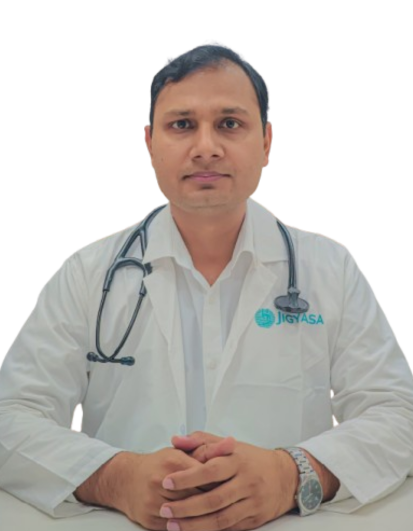
KGMU-Trained Cardiologist in Moradabad: Dr. Amit Kumar Singh at Jigyasa Hospital
Families in Uttar Pradesh often ask the same question when a heart problem appears: where was this doctor trained? It is a fair question. Cardiology is a field where judgment, speed and experience matter, and these are built over years of working in busy hospitals with many kinds of patients.
At Jigyasa Hospital, Moradabad, Dr. Amit Kumar Singh brings cardiology training from King George's Medical University (KGMU), Lucknow, one of the best-known medical institutions in North India. This page explains what that background means for you as a patient, which conditions Dr. Singh treats, what services are available, and when you should seek a consultation.
About Dr. Amit Kumar Singh
Dr. Amit Kumar Singh is a consultant cardiologist at Jigyasa Hospital, Moradabad. He treats adults with a wide range of heart and blood vessel conditions, from high blood pressure and rhythm disturbances to heart attacks and blocked arteries.
His listed qualifications include MD (BHU), DM Cardiology (KGMU), and FSCAI. For confirmed details about his experience, other institutions where he has worked or trained, memberships, publications, awards, and OPD timings, please call Jigyasa Hospital on 7900903333.
Patients often mention three things about his consultations: he listens fully, he explains findings in simple language, and he recommends only what is truly needed. If medicines and lifestyle changes can control your condition, he will say so. If a procedure is the right answer, he will explain why.
Why KGMU Training Matters
King George's Medical University in Lucknow is more than a century old and is widely regarded as one of the leading medical universities in Uttar Pradesh and in the country. It is a large government teaching institution and a major referral centre, which means doctors trained there see patients from across the state, many of them with advanced or neglected disease.
Doctors who train in a setting like this typically gain several advantages:
1. Exposure to a high volume and wide variety of cases. Large teaching hospitals treat everything from routine blood pressure problems to complex emergencies. Cardiologists trained in such settings become comfortable with both common and difficult presentations.
2. Experience with emergencies. Heart attacks, cardiogenic shock, acute heart failure and life-threatening rhythm problems arrive at all hours. Training in an emergency-heavy environment builds the ability to stay calm, prioritise and act quickly.
3. Strong clinical fundamentals. Teaching hospitals place heavy emphasis on careful history-taking and bedside examination. A cardiologist who has learnt to think clinically first does not depend only on machines and tests, which can reduce unnecessary investigations.
4. Understanding of patients from Uttar Pradesh. Training in a UP institution means familiarity with the health patterns, diets, habits, languages and financial realities of patients in this region, and with the challenges of those travelling from smaller towns and villages.
5. Culture of supervised, evidence-based learning. Academic training involves case discussions, audits and teaching rounds, which build habits of questioning, double-checking and following guidelines.
A training background does not guarantee outcomes on its own, and good cardiologists come from many institutions. But it is a meaningful indicator of the grounding a doctor has received, and it is one reason many families prefer a cardiologist whose roots are in a respected UP medical institution.
From Lucknow to Moradabad: Bringing Referral-Level Thinking Closer to Home
For many years, patients in Moradabad, Rampur, Sambhal, Amroha, Bijnor and neighbouring areas travelled to Lucknow, Delhi or other big cities for serious heart care. That travel means lost days of work, family disruption, higher costs and, in emergencies, dangerous delays.
Having a KGMU-trained cardiologist at Jigyasa Hospital allows many patients to receive specialist assessment locally. The goal is simple: apply the same careful, systematic approach used in large academic centres, in a hospital that is close to your home and family. When a case truly needs a higher centre, for example complex surgery, Dr. Singh will say so honestly and help arrange a timely referral.
Heart Conditions Treated
Coronary Artery Disease (CAD)
Plaque builds up in the arteries that supply the heart, restricting blood flow. Symptoms include chest pain or pressure on exertion, breathlessness and fatigue. Treatment may involve medicines, lifestyle changes, angioplasty with stenting, or referral for bypass surgery, depending on the severity and location of the blockages.
Heart Attack (Myocardial Infarction)
When a coronary artery is suddenly blocked, heart muscle begins to die. Every minute matters. Rapid ECG, quick assessment and prompt reopening of the artery, where indicated, protect heart function and save lives.
Heart Failure
The heart's pumping power is reduced, leading to breathlessness, swelling and tiredness. Modern medicines, salt and fluid guidance, regular monitoring and careful follow-up can significantly improve symptoms and daily life.
Hypertension
High blood pressure often causes no symptoms until damage is done. It is a leading cause of heart attack, stroke, kidney disease and heart failure. Dr. Singh helps patients confirm the diagnosis, check for underlying causes and plan long-term control.
Arrhythmias
Palpitations, a very fast or slow pulse, dizziness or fainting may signal a rhythm disorder. Evaluation includes ECG and Holter monitoring, and treatment may involve medicines, procedures or a pacemaker.
Valvular Heart Disease
Narrowed or leaking valves can cause breathlessness, fatigue and swelling. Echocardiography helps determine severity and the right timing for intervention. Rheumatic valve disease, still seen in many parts of India, needs particular attention.
Cardiomyopathy and Heart Muscle Disease
Weak, thickened or enlarged heart muscle needs thorough evaluation and long-term care to protect heart function.
Cardiac Care in Special Situations
This includes heart problems in people with diabetes, kidney disease or thyroid disorders, heart disease in older adults, and cardiac risk assessment before surgery.
Prevention and Risk Management
Preventive cardiology covers cholesterol control, blood sugar and blood pressure management, weight management and tobacco cessation. Preventing a first heart attack is always better than treating one.
Services Available at Jigyasa Hospital
Please confirm every service with the hospital before travelling, as availability may depend on current facilities and scheduling.
ECG. A quick, painless test that records the heart's electrical activity, usually the first step in evaluating chest pain or palpitations.
Echocardiography. An ultrasound scan of the heart showing its chambers, valves and pumping strength.
Treadmill Test (TMT). Evaluates the heart's response to exercise and can reveal blockages that do not show at rest.
Holter Monitoring and Ambulatory Blood Pressure Monitoring. Wearable devices that record rhythm or blood pressure for 24 hours or longer.
Coronary Angiography. An X-ray study of the heart's arteries, often performed through the wrist for greater comfort and faster recovery.
Angioplasty and Stenting. Opens blocked arteries with a balloon and a stent, as a planned procedure or in an emergency.
Pacemaker Implantation. For slow heart rhythms or conduction problems.
Medical Management and Long-Term Follow-Up. Many heart patients do very well on carefully chosen medicines and lifestyle changes with regular review.
Heart Health Checkups. Screening packages that assess blood pressure, sugar, cholesterol, ECG and echocardiography according to your age and risk.
Dr. Singh's Approach to Care
Listening first. A detailed history often tells a cardiologist more than any test. Dr. Singh takes time to understand when your symptoms occur, what triggers or relieves them, and how they affect your life.
Testing with purpose. Tests are ordered because they will change decisions, not by habit. This respects your time and your budget.
Honest communication. You will be told clearly what is wrong, how serious it is, what the options are and what each involves. Questions are welcome, and family members are encouraged to attend.
Procedures only when needed. Not every blockage needs a stent, and not every patient needs a procedure. The recommendation depends on your symptoms, test results and overall health.
Attention to the long term. A stent or a medicine is only part of heart care. Diet, exercise, medicine adherence, regular testing and follow-up determine how well you do over the following years.
Respect for your circumstances. Cost, distance, family responsibilities and the ability to follow a treatment plan are part of every discussion.
Warning Signs You Should Never Ignore
Go to an emergency department immediately if you or someone near you has:
• Chest pain, pressure, squeezing or burning lasting more than a few minutes
• Pain spreading to the left arm, jaw, neck, shoulder, back or upper abdomen
• Sudden severe breathlessness
• Cold sweat, nausea or vomiting with chest discomfort
• Sudden fainting or collapse
Book a cardiology consultation soon if you notice:
• Chest discomfort or breathlessness while walking, climbing stairs or exerting yourself
• Palpitations or an irregular heartbeat
• Swelling of the feet or ankles
• Unexplained tiredness or reduced stamina
• Dizziness or blackouts
• Persistently high blood pressure readings
• A family history of early heart disease
• Diabetes, high cholesterol, obesity, or tobacco use
Be alert to atypical symptoms. In women, older adults and people with diabetes, a heart attack may appear as unusual fatigue, nausea, upper-abdominal discomfort or breathlessness without obvious chest pain. Many people mistake these for acidity and delay seeking help. If something feels wrong, get an ECG.
Protecting Your Heart: Practical Advice
Good heart health does not require dramatic changes. Consistent small habits matter most.
• Quit tobacco in every form. Cigarettes, bidi, hookah and chewing tobacco all raise heart risk. Quitting helps at any age.
• Move every day. A brisk walk of about 30 minutes on most days is a good target for many adults, unless your doctor advises otherwise.
• Eat simply. Favour vegetables, fruit, pulses, whole grains and nuts. Reduce salt, sugar, refined flour, fried snacks, sweets and packaged foods.
• Know your numbers. Blood pressure, blood sugar and cholesterol should be checked regularly, and treated consistently if abnormal.
• Take medicines as prescribed. Never stop or skip heart medicines, especially after a stent or heart attack, because you feel fine.
• Sleep and stress. Aim for regular sleep and find healthy ways to manage stress.
• Limit alcohol.
• Do not ignore symptoms. Early evaluation can prevent serious events.
What to Expect at Your First Visit
1. Discussion. You will describe your symptoms, medical history, medicines, habits and family history.
2. Examination. Pulse, blood pressure, heart and lung examination, and checks for swelling.
3. Tests. An ECG is commonly done right away. Echo, TMT, Holter or blood tests may follow depending on your needs.
4. Explanation. Findings are explained in plain language, with Hindi or English as you prefer.
5. Plan. A personalised plan covering medicines, lifestyle, follow-up and any procedure that may be needed.
Please bring: All previous reports such as ECG, echo, angiography, and blood tests; your current medicines or photos of the prescriptions; discharge summaries from earlier admissions; and your ID and insurance details if applicable.
KGMU-Trained Cardiologist
Dr. Amit Kumar Singh has DM Cardiology training from King George's Medical University, Lucknow, and provides consultation for a wide range of heart conditions.
Complete Cardiac Evaluation
Assessment may include ECG, 2D Echo, treadmill test, Holter monitoring, ambulatory blood pressure monitoring, and coronary angiography.
Interventional Heart Care
Where appropriate, treatment may include coronary angiography, angioplasty, stenting, primary angioplasty, and pacemaker implantation.
Prevention and Rehabilitation
Guidance covers tobacco cessation, diet, exercise, blood pressure, diabetes, cholesterol, medicines, and follow-up after a heart event or stent.
Emergency-Focused Cardiac Care
Jigyasa Hospital provides 24/7 emergency and OPD services. Suspected heart attack symptoms require immediate emergency assessment.
Accessible Location in Moradabad
Jigyasa Hospital is on Rampur Road, near Miglani Cinema, making advanced cardiac care accessible to patients in Moradabad and nearby districts.
Book an Appointment with Dr. Amit Kumar Singh
If you or a family member has chest discomfort, breathlessness, palpitations, high blood pressure, diabetes, high cholesterol, or a family history of heart disease, early assessment can help protect your heart.
To consult Dr. Amit Kumar Singh at Jigyasa Hospital, Moradabad, call 7900903333. In a suspected heart attack, call the emergency number or an ambulance immediately.
Address
Near Miglani Cinema, Rampur Road, Moradabad 244001
Phone
7900903333Frequently Asked Questions About KGMU-Trained Cardiology
Who is a KGMU-trained cardiologist in Moradabad?
Dr. Amit Kumar Singh at Jigyasa Hospital, Moradabad, is a cardiologist with training from King George's Medical University, Lucknow. He treats heart attacks, coronary artery disease, heart failure, rhythm disorders, high blood pressure and other cardiac conditions.
What is KGMU?
KGMU stands for King George's Medical University, a well-known government medical university in Lucknow, Uttar Pradesh. It is a major teaching and referral institution.
Does training at KGMU make a cardiologist better?
Training in a large academic centre gives wide clinical exposure and strong fundamentals, which are valuable. Still, the best choice also depends on current experience, communication, the hospital's facilities and how comfortable you feel with the doctor.
Why should I see a cardiologist locally instead of travelling to a big city?
For ongoing care, follow-up and emergencies, local access saves time, money and effort, and in a heart attack, nearby treatment can be life-saving. If your condition needs a specialised centre, a good local cardiologist will tell you and help you with a timely referral.
What is the difference between a cardiologist and a cardiac surgeon?
A cardiologist diagnoses and treats heart disease with medicines and, where trained, catheter-based procedures. A cardiac surgeon performs open-heart operations such as bypass and valve replacement. They often work together.
Do all blocked arteries need a stent?
No. Treatment depends on the severity and location of the blockage, your symptoms and your overall health. Some patients are managed with medicines, some need stenting and a few need bypass surgery.
How soon should I see a doctor for chest pain?
If chest pain is severe, lasts more than a few minutes, or comes with sweating, breathlessness or pain spreading to the arm or jaw, go to an emergency department at once. For milder pain that appears with exertion, book a consultation promptly rather than waiting.
Why Patients Choose Us
- 24/7 Emergency & Trauma Care
- Top Specialist Doctors
- Modern ICU & Operation Theatres
- Transparent & Affordable Pricing
- Ayushman Bharat Empanelled
- Cashless Insurance Support
- Multispeciality Under One Roof
Our Location
Near Miglani Cinema,
Rampur Road,
Moradabad 244001