
Knee Pain Doctor in Moradabad: Expert Treatment by Dr. Shariq Arshad at Jigyasa Hospital
Understanding Knee Pain: Why Proper Diagnosis Matters
Knee pain affects many people and often interferes with walking, climbing stairs, work, and daily activities. Whether you experience sharp pain while moving, persistent aching, swelling, or a feeling of instability, knee problems should not be ignored.
The knee is the body's largest weight-bearing joint and plays a central role in movement. When pain develops, identifying the exact cause is essential so that treatment can be targeted and effective rather than temporary.
In Moradabad, patients with knee pain can consult Dr. Shariq Arshad at Jigyasa Hospital, where orthopedic expertise, modern diagnostics, and a patient-focused approach are combined to offer high-quality knee care.
What Causes Knee Pain?
Knee pain may result from acute injury, overuse, degenerative changes, or inflammatory disease. Understanding the underlying cause is critical because different conditions need different treatments.
Acute Injuries
Sudden knee injuries are common in sports, falls, and accidents. These can damage ligaments, cartilage, or the kneecap and often cause immediate pain and swelling.
- • ACL tears: The anterior cruciate ligament stabilizes the knee. Sudden pivoting, landing, or twisting can tear the ACL and cause pain, swelling, and the feeling that the knee is giving way.
- • MCL and PCL injuries: The medial collateral ligament and posterior cruciate ligament can be injured by direct blows or twisting, leading to pain, swelling, and instability.
- • Meniscal tears: The menisci are shock-absorbing cartilage pads. Tears may follow twisting movements or occur in degenerated cartilage and cause pain, swelling, catching, or locking.
- • Patellar dislocation: The kneecap can move out of its normal position, typically causing intense pain, swelling, and an obvious feeling of instability.
Overuse Injuries
Repetitive stress on the knee can cause irritation and inflammation without a single major injury.
- • Patellar tendinitis: Sometimes called jumper's knee, it causes pain at the front of the knee where the tendon connects the kneecap to the shin.
- • Iliotibial band syndrome: Tightness of the tissue on the outer thigh can cause pain on the outer side of the knee, often in runners and cyclists.
- • Anterior knee pain syndrome: Also called runner's knee, this causes aching around the front of the knee related to muscle imbalance, alignment, or training errors.
Degenerative Conditions
- • Knee osteoarthritis: Wear of the joint cartilage leads to pain, stiffness, and reduced mobility. Risk increases with age, prior injury, and excess body weight.
- • Cartilage damage: Focal cartilage injuries or generalized thinning can cause pain, swelling, and gradual joint deterioration.
Inflammatory Conditions
- • Bursitis: Inflammation of fluid-filled sacs around the knee can cause local pain and swelling.
- • Rheumatoid arthritis: This autoimmune disease affects multiple joints, including the knees, causing inflammation and damage that sometimes require orthopedic intervention.
When Should You See a Knee Pain Doctor?
Mild knee discomfort after unusual activity may improve with rest, ice, and care. However, certain symptoms mean you should seek professional evaluation promptly.
Seek urgent evaluation if you have:
- • Severe pain after trauma or a fall
- • Inability to bear weight or walk more than a few steps
- • Visible deformity or the knee looking out of position
- • Sudden marked swelling
- • Signs of infection such as fever, redness, and warmth in the knee
How Knee Pain is Diagnosed
Accurate diagnosis is the foundation of effective treatment. Dr. Shariq Arshad uses a structured diagnostic approach that includes clinical examination and appropriate imaging.
Clinical Examination
The consultation begins with questions about pain onset, location, severity, and activities that worsen or relieve symptoms. Examination includes inspection for swelling or deformity, palpation for tenderness, assessment of motion, strength testing, and special stability tests for ligaments and menisci.
Imaging Studies
Imaging helps confirm the diagnosis and define the extent of injury.
- • X-rays to assess bone alignment, fractures, and arthritis
- • MRI to visualize ligaments, menisci, cartilage, and other soft tissues
- • CT scans for complex fractures and surgical planning
- • Ultrasound for tendon problems, fluid collections, and guided injections
Additional Testing
In selected cases, blood tests or analysis of fluid from the knee joint may be recommended to look for infection, inflammation, or crystal-related disease such as gout.
Treatment Options for Knee Pain
Treatment depends on the cause of knee pain, the severity of symptoms, and your activity goals. Dr. Shariq Arshad generally starts with non-surgical treatment when safe and effective, and considers surgery when needed.
Conservative (Non-Surgical) Treatment
Many knee problems improve without surgery when managed properly.
- • Rest and activity modification to reduce stress on the knee
- • Ice, compression, and elevation to decrease pain and swelling
- • Anti-inflammatory medicines to reduce pain and inflammation when appropriate
- • Knee braces or supports to protect and stabilize the joint during healing
Physical Therapy
Physiotherapy is central to most knee treatment plans. Exercises improve flexibility, strengthen supporting muscles, enhance balance, and restore functional movement. Therapists at Jigyasa Hospital guide you through each phase of rehabilitation.
Injections
In selected patients, injections can provide relief:
- • Corticosteroid injections to reduce inflammation and pain in arthritic or inflamed joints
- • Hyaluronic acid injections to improve lubrication and cushioning in osteoarthritic knees
Surgical Treatment
When conservative treatment fails or structural damage requires repair, Dr. Arshad offers surgical options, often using minimally invasive arthroscopic techniques.
- • Arthroscopic ACL reconstruction for ligament tears in active individuals
- • Arthroscopic meniscal repair or partial meniscectomy for meniscal tears
- • Cartilage procedures such as microfracture for focal cartilage damage
- • Knee replacement for advanced osteoarthritis with severe pain and deformity
- • Fracture fixation for complex or unstable knee fractures
Meet Dr. Shariq Arshad: Knee Pain Specialist at Jigyasa Hospital
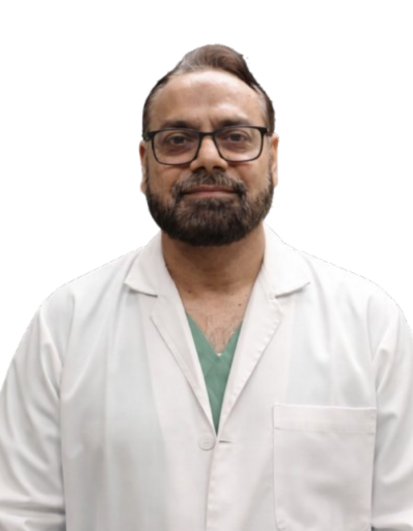
Dr. Shariq Arshad has extensive experience managing knee problems ranging from sports injuries to advanced arthritis. His approach combines careful diagnosis with individualized treatment plans that balance non-surgical and surgical options.
He emphasizes evidence-based medicine, conservative management when possible, minimally invasive surgery when required, and structured rehabilitation for complete recovery. Patients are encouraged to ask questions so they fully understand their condition and treatment choices.
Working in coordination with the physiotherapy team at Jigyasa Hospital, Dr. Arshad focuses on restoring function, reducing pain, and helping patients return to work, family life, and sports safely.
Why Choose Dr. Shariq Arshad for Knee Pain?
Specialized Knee Pain Care
Focused evaluation and treatment for ligament injuries, meniscal tears, cartilage damage, and knee arthritis.
Advanced Diagnostic Approach
Detailed clinical examination supported by X-rays, MRI, CT scans, ultrasound, and targeted tests.
Conservative and Surgical Options
Non-surgical treatment first whenever appropriate, with minimally invasive arthroscopic surgery when needed.
Sports and Activity-Focused Care
Treatment plans designed to help active individuals and athletes safely return to their sport or routine.
Structured Rehabilitation Planning
Close coordination with physiotherapy to guide each phase of knee recovery and prevent re-injury.
Trusted in Moradabad
Providing dedicated knee care to patients from Moradabad and surrounding areas at Jigyasa Hospital.
Book Your Consultation for Knee Pain at Jigyasa Hospital
If knee pain is affecting your walking, work, or daily routine, timely evaluation can prevent further damage and support faster recovery. You do not need to wait until pain becomes severe to ask for help.
At Jigyasa Hospital, Dr. Shariq Arshad provides comprehensive knee care, from accurate diagnosis and conservative management to advanced arthroscopic and joint replacement surgery when needed.
Specialist: Dr. Shariq Arshad – Orthopedic Surgeon and Knee Specialist, Jigyasa Hospital, Moradabad.
Call Now
7900903333Hospital Address
Jigyasa Hospital, Near Miglani Cinema, Rampur Road, Moradabad 244001
Email Us
info@jigyasahospital.inFrequently Asked Questions About Knee Pain
How long should I try home treatment before seeing a knee specialist?
If knee pain persists for more than two weeks despite rest, ice, and basic home care, a professional evaluation is recommended. Severe pain, marked swelling, deformity, or difficulty bearing weight requires earlier assessment.
Can I continue exercising if I have knee pain?
Many patients can continue low-impact activities while avoiding movements that clearly worsen pain. High-impact exercise, deep squats, or twisting should be avoided until properly evaluated. Dr. Shariq Arshad provides specific activity advice based on your diagnosis.
Will I definitely need surgery for knee pain?
No. Many knee conditions improve with non-surgical care such as physiotherapy, medications, activity modification, and injections. Surgery is recommended only when structural damage or persistent symptoms make it the most effective option.
How long is recovery after knee surgery?
Recovery varies with the procedure. Minor arthroscopic procedures often allow return to daily activities in 4 to 6 weeks, while ligament reconstruction and knee replacement need longer, structured rehabilitation, sometimes several months.
Can knee pain return after treatment?
Proper rehabilitation, weight management, and preventive strategies reduce recurrence risk. Some conditions, such as osteoarthritis, may progress slowly over time, but appropriate management helps maintain function and quality of life.
Why Patients Choose Us
- 24/7 Emergency & Trauma Care
- Top Specialist Doctors
- Modern ICU & Operation Theatres
- Transparent & Affordable Pricing
- Ayushman Bharat Empanelled
- Cashless Insurance Support
- Multispeciality Under One Roof
Our Location
Near Miglani Cinema,
Rampur Road,
Moradabad 244001