
Laser Skin Treatment in Moradabad: Expert Care by Dr. Anil Rajput at Jigyasa Hospital
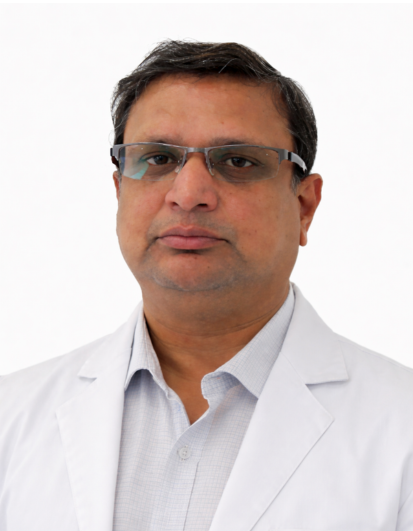
Dr. Anil Rajput is a plastic surgeon at Jigyasa Hospital, Moradabad, who evaluates patients seeking laser treatment for acne scars, pigmentation, fine lines, selected surgical or injury scars, vascular concerns, and unwanted hair.
His approach focuses on understanding the specific skin concern, assessing skin type and tone, reviewing previous treatments, and selecting a laser protocol suited to the patient's needs.
Patients from Moradabad and nearby towns can discuss laser skin renewal, scar improvement, pigmentation treatment, and laser hair reduction with Dr. Anil Rajput at Jigyasa Hospital.
Targeted Skin Renewal for Texture, Pigmentation, and Scars
Acne scars, uneven pigmentation, fine lines, and certain surgical or injury scars may not improve sufficiently with skincare products alone. Laser skin treatment uses focused light energy to work at a controlled depth within the skin.
Depending on the laser type and settings, treatment may stimulate collagen, break down excess pigment, or remove damaged outer skin layers to encourage smoother and more even-toned skin.
For residents of Moradabad, Rampur, Sambhal, Amroha, and Bijnor, laser skin treatment is available locally at Jigyasa Hospital on Rampur Road near Miglani Cinema under the care of Dr. Anil Rajput.
What Is Laser Skin Treatment?
Laser skin treatment uses focused light energy delivered at specific wavelengths to target selected concerns within the skin. The energy may stimulate collagen production, target excess pigment, or help remove damaged outer layers.
Different lasers and settings are used for different concerns. Accurate assessment of the skin issue, skin type, tone, and treatment goal is therefore central to selecting an appropriate protocol.
- • Acne scars and textural irregularities.
- • Uneven pigmentation, sun damage, and dark spots.
- • Fine lines and early signs of skin ageing.
- • Surgical or injury scars as a complement to scar revision.
- • Selected vascular concerns, including visible small blood vessels.
- • Unwanted hair through laser hair-reduction treatments.
Types of Laser Skin Treatments
- 1. Fractional laser resurfacing treats a fraction of the skin at a time in a controlled pattern, leaving surrounding tissue intact to support healing.
- 2. Ablative laser resurfacing removes the outer layer of skin and is generally reserved for more significant textural concerns or deeper scarring.
- 3. Non-ablative laser treatment works beneath the skin surface without removing the outer layer and may offer gradual improvement with less downtime.
- 4. Pigmentation-targeted laser treatment uses selected wavelengths to target excess pigment, sun spots, and some types of discolouration.
- 5. Laser scar treatment may soften scar texture and improve colour blending, either as a standalone treatment or alongside surgical scar revision.
- 6. Vascular laser treatment targets selected visible small blood vessels and redness-related concerns.
- 7. Laser hair removal targets hair follicles to reduce unwanted hair growth over a series of sessions.
- 8. Combined protocols may be considered when a patient has more than one suitable treatment concern.
Laser type, wavelength, energy level, and treatment schedule depend on the patient's skin concern, skin tone, skin sensitivity, and desired outcome.
Who May Be a Good Candidate?
Laser skin treatment may be considered for patients seeking improvement in texture, pigmentation, scarring, signs of ageing, or unwanted hair.
- • Acne scars or textural irregularities affecting confidence.
- • Uneven pigmentation, sun damage, or dark spots that have not improved with topical treatment.
- • Surgical or injury scars requiring further softening or colour blending.
- • Interest in reducing unwanted hair over a series of treatments.
- • Good general health and realistic expectations.
- • Willingness to follow sun protection and skincare instructions.
Suitability depends significantly on skin type and tone. Certain lasers carry different pigmentation risks, especially for darker skin tones, so treatment selection and settings are adjusted carefully during consultation.
Consultation and Pre-Treatment Evaluation
Every laser skin treatment case at Jigyasa Hospital begins with a detailed consultation with Dr. Anil Rajput. The evaluation may include:
- • Review of the skin concern, its history, and previous treatments.
- • Assessment of skin type, tone, texture, pigmentation, and sensitivity.
- • Selection of the most appropriate and safest laser type and protocol.
- • Discussion of the likely number of sessions and realistic improvement.
- • Photographic documentation to support planning and track progress.
- • Discussion of pre-treatment skin preparation when required.
- • Explanation of the treatment process and expected recovery.
- • Aftercare and sun-protection instructions between sessions.
Because laser risks and expected results vary according to skin type, tone, and treatment intensity, this evaluation is important for safe and appropriate treatment planning.
Laser Skin Treatment Procedure
Laser skin treatment is generally performed in a clinical setting. Topical numbing cream may be applied beforehand to improve comfort. General anaesthesia is not usually required, except in selected extensive ablative resurfacing procedures.
During treatment, the laser device is passed over the selected area, delivering controlled energy calibrated to the skin concern and skin type. Patients may feel warmth, mild stinging, or a snapping sensation.
Sessions generally last between 15 minutes and one hour, depending on the treatment area and technique used.
Many laser treatments are planned as a series of sessions spaced several weeks apart because gradual, cumulative improvement is often more appropriate than a single intensive treatment.
Personalised Laser Treatment Planning
Dr. Anil Rajput evaluates your skin concern, skin type, tone, previous treatments, and desired outcome before selecting an appropriate treatment protocol.
Treatment for Multiple Skin Concerns
Laser-based care may be considered for acne scars, pigmentation, fine lines, selected scars, vascular concerns, and unwanted hair.
Skin-Tone-Sensitive Care
Laser type, wavelength, intensity, and settings are selected carefully because pigmentation-related risks can vary between skin tones.
Structured Multi-Session Monitoring
Progress is monitored across sessions, with guidance on skincare, sun protection, preparation, recovery, and aftercare.
Laser Skin Treatment in Moradabad
Patients from Moradabad, Rampur, Sambhal, Amroha, and Bijnor can access personalised laser skin treatment consultation at Jigyasa Hospital.
Recovery: What to Expect
Recovery depends significantly on the laser technique, energy level, treatment area, and individual skin response.
Non-Ablative and Mild Fractional Treatments
These treatments generally involve minimal downtime. Mild redness or swelling may occur and often settles within a day or two.
More Intensive Fractional Resurfacing
Redness, mild swelling, peeling, or flaking may occur during the following week as the skin renews itself.
Ablative Laser Resurfacing
Recovery may take one to two weeks, with more noticeable redness and peeling while the outer skin layer heals.
Between Treatment Sessions
Gradual improvement may become visible after several sessions and can continue to build with each subsequent treatment.
Sun Protection
Treated skin is more sensitive to sunlight, making diligent sun protection particularly important during the weeks after each session.
Patients should follow all post-treatment skincare instructions and attend scheduled sessions because consistency across the complete treatment plan affects the final result.
Risks and Realistic Expectations
Like any medical treatment, laser skin treatment carries potential risks. These are discussed during consultation and depend on the laser type, settings, skin tone, and treatment intensity.
- • Temporary redness and swelling.
- • Mild stinging, warmth, or sensitivity.
- • Temporary or persistent pigmentation changes.
- • Peeling, flaking, or skin irritation.
- • Infection or delayed healing.
- • Scarring in uncommon cases.
- • Uneven improvement or the need for additional sessions.
- • Greater pigmentation risk in some darker skin tones.
Laser treatment generally produces gradual, cumulative improvement across multiple sessions rather than a dramatic change after one visit.
Dr. Anil Rajput's approach at Jigyasa Hospital emphasises selecting the laser type and settings according to the patient's skin concern and tone, with safety and realistic improvement considered together.
Why Choose Dr. Anil Rajput at Jigyasa Hospital?
Laser skin treatment requires more than selecting a device. The protocol must account for the skin concern, tone, sensitivity, previous treatment, treatment intensity, recovery, and aftercare.
- • Local access to plastic-surgery-led laser skin care in Moradabad.
- • Personalised assessment of skin type, tone, pigmentation, texture, and scarring.
- • Individualised selection of laser type and treatment protocol.
- • Guidance on skin preparation, aftercare, and sun protection.
- • NABL-accredited diagnostic laboratory supporting broader assessment where relevant.
- • Round-the-clock hospital infrastructure and emergency support.
- • Follow-up monitoring across multi-session treatment plans.
- • Convenient access for patients from Rampur, Sambhal, Amroha, and Bijnor.
Certain reconstructive laser applications may be eligible under Ayushman Bharat PM-JAY depending on scheme classification and hospital assessment. Patients should confirm eligibility with the hospital's billing and insurance desk.
Common Myths About Laser Skin Treatment
Myth: One laser session is enough for full results.
Reality: Most laser treatments work through a series of sessions, with improvement building gradually over time.
Myth: The same laser settings are safe for every skin tone.
Reality: Laser type and settings must be adjusted to skin tone because the risk of pigmentation changes can vary, particularly in darker skin.
Myth: Laser treatment completely removes scars.
Reality: Laser treatment may soften scar texture and improve colour blending, but it generally improves rather than completely erases a scar.
Myth: Every laser treatment has no downtime.
Reality: Some non-ablative treatments have minimal downtime, while intensive resurfacing may cause redness, peeling, and visible recovery.
Myth: Sun protection is not necessary after laser treatment.
Reality: Treated skin is more sensitive to sunlight, so diligent sun protection is an essential part of aftercare.
Book a Laser Skin Treatment Consultation with Dr. Anil Rajput
Jigyasa Hospital offers personalised consultation for laser treatment of acne scars, pigmentation, fine lines, selected surgical or injury scars, vascular concerns, and unwanted hair under the guidance of Dr. Anil Rajput.
Near Miglani Cinema, Rampur Road, Moradabad 244001
Call Now
7900903333Frequently Asked Questions
Is laser skin treatment painful?
Most patients describe sensations ranging from warmth to mild stinging or a snapping feeling during treatment. These sensations are generally well tolerated, particularly when topical numbing cream is applied beforehand.
How many laser skin treatment sessions are typically needed?
The number of sessions varies according to the skin concern, skin type, laser technology, and treatment intensity. Most plans involve multiple sessions spaced several weeks apart for gradual improvement.
Is laser treatment safe for all skin tones?
Laser type and treatment settings must be carefully matched to skin tone to reduce the risk of pigmentation changes. This is assessed individually during consultation.
How much downtime should I expect after laser treatment?
Downtime depends on the technique. Non-ablative and mild fractional treatments may involve minimal downtime, while more intensive resurfacing can cause visible redness, swelling, peeling, or flaking for a week or longer.
Can laser treatment help with acne scars?
Yes. Fractional and other resurfacing treatments are commonly used to improve the texture of acne scars, often as part of a broader acne-scar treatment plan.
Is laser hair removal permanent?
Laser hair removal can significantly reduce hair growth over a series of sessions. Results and long-term hair reduction vary according to individual hair and skin characteristics.
Is laser skin treatment covered under government health schemes?
Certain reconstructive laser applications, including selected scar-related treatments, may be eligible under PM-JAY empanelment depending on scheme classification. Eligibility is assessed individually.
How soon can I be in the sun after laser treatment?
Diligent sun protection is important for several weeks after treatment. Prolonged direct sun exposure should generally be avoided while the treated skin remains sensitive.
Why Patients Choose Us
- 24/7 Emergency & Trauma Care
- Top Specialist Doctors
- Modern ICU & Operation Theatres
- Transparent & Affordable Pricing
- Ayushman Bharat Empanelled
- Cashless Insurance Support
- Multispeciality Under One Roof
Our Location
Near Miglani Cinema,
Rampur Road,
Moradabad 244001