
Leukemia Treatment in Moradabad — Expert Blood Cancer Care at Jigyasa Hospital
Specialist Leukemia Care Close to Home
Leukemia is a blood cancer diagnosis that can feel devastating for patients and families. It affects the blood and bone marrow, the very system the body depends on to sustain life, and it requires immediate, expert, specialist-led care. For many families in Moradabad, Rampur, Bareilly, Bijnor, Amroha, and across western Uttar Pradesh, this has historically meant difficult and expensive travel to Delhi, Lucknow, or Mumbai.
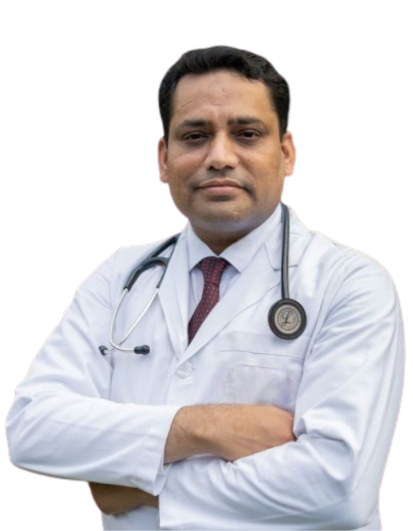
That is now changing. At Jigyasa Hospital, Moradabad, Dr. Faran Naim, a dedicated specialist in hematology and bone marrow transplant, provides subspecialty-level leukemia diagnosis, treatment planning, and ongoing care right here in Moradabad. For blood cancer patients across the Rohilkhand region, this means access to modern expert care much closer to home.
Leukemia in India — Understanding the Scale of the Problem
Blood cancers are a major healthcare challenge in India, and leukemia remains one of the most important among them. The burden of leukemia, lymphoma, and multiple myeloma continues to affect a very large number of patients each year, making early diagnosis and specialist-led treatment increasingly important.
Leukemia is one of the most common types of blood cancer and includes several distinct diseases with different patterns of progression, treatment needs, and outcomes. Modern research has shown that incidence and mortality trends vary significantly by subtype, age, and access to timely treatment.
This is why specialist care matters. Leukemia treatment is no longer limited to broad chemotherapy alone. Accurate classification, molecular diagnosis, targeted therapy, and bone marrow transplant planning now shape modern leukemia care.
What Is Leukemia?
Leukemia is a cancer of the blood and bone marrow. It begins when blood stem cells inside the bone marrow develop genetic changes that cause them to grow and divide uncontrollably. These abnormal leukemic cells gradually crowd out healthy red blood cells, white blood cells, and platelets.
As a result, the blood system can no longer function normally. Falling red blood cells cause anemia and severe fatigue. Failing white blood cells leave the body unable to fight infections. Decreasing platelets lead to bruising, bleeding, and poor blood clotting.
Leukemia is not a single disease. It is a group of blood cancers that differ in speed, cell type, prognosis, and treatment. Correct subtype identification is the foundation of proper treatment and requires specialist hematology evaluation.
Types of Leukemia Treated by Dr. Faran Naim at Jigyasa Hospital
Acute Myeloid Leukemia (AML)
AML is a fast-growing cancer of the myeloid blood cells, which normally develop into red blood cells, platelets, and several types of white blood cells. It is one of the most aggressive forms of leukemia and requires urgent treatment. Patients often present with sudden fatigue, infections, easy bruising, bleeding, and rapidly worsening blood counts.
Acute Lymphoblastic Leukemia (ALL)
ALL is a cancer of lymphoid cells, the white blood cells involved in immune defence. It is the most common cancer in children but also affects adults. Treatment usually involves induction, consolidation, and maintenance therapy, with central nervous system prophylaxis playing an essential role in many cases.
Chronic Myeloid Leukemia (CML)
CML is a slower-growing leukemia driven by the BCR-ABL translocation, also called the Philadelphia chromosome. The disease has been transformed by targeted oral drugs known as tyrosine kinase inhibitors, such as imatinib, dasatinib, and nilotinib. Many patients can live near-normal lives with daily oral therapy and careful molecular monitoring.
Chronic Lymphocytic Leukemia (CLL)
CLL is a slow-growing cancer of B lymphocytes and is increasingly recognized in India. Some patients are initially observed without immediate treatment, while others require therapy when the disease becomes active or symptomatic. Modern targeted drugs such as BTK inhibitors and BCL-2 inhibitors have significantly improved treatment outcomes.
Hairy Cell Leukemia and Other Rare Subtypes
Hairy cell leukemia is a rare chronic leukemia subtype that often responds well to treatment and may achieve durable remission. Dr. Faran Naim also evaluates and manages rarer leukemia subtypes, including T-cell leukemias, prolymphocytic leukemia, and leukemic transformation from other blood disorders.
Recognising Leukemia — Symptoms That Should Not Be Ignored
One of the biggest challenges in leukemia care is delayed diagnosis. Early symptoms such as fatigue, pallor, recurrent infections, or bruising are often mistaken for nutritional deficiency or general weakness. In acute leukemia, even a delay of a few weeks can be dangerous.
Seek immediate hematology evaluation if you notice:
- • Persistent fatigue and weakness that does not improve with rest or routine treatment
- • Unexplained fever lasting more than a week or repeated infections
- • Easy bruising, bleeding gums, nosebleeds, or tiny red spots on the skin
- • Swollen lymph nodes in the neck, armpit, or groin that persist
- • Bone or joint pain, especially in children
- • Pallor, breathlessness, or worsening blood counts on routine testing
These symptoms do not always mean leukemia, but they should never be ignored. A timely hematology consultation can make the difference between delayed diagnosis and early, effective treatment.
How Is Leukemia Diagnosed?
Effective leukemia treatment begins with precise subtype diagnosis. Treating leukemia without accurate classification can lead to the wrong therapy being chosen. Dr. Faran Naim uses a structured diagnostic approach at Jigyasa Hospital to define the disease fully before treatment begins.
Complete Blood Count (CBC) with Peripheral Smear
This is often the first step. The CBC reveals abnormal blood counts, and the peripheral smear allows direct examination of abnormal cells, including blast cells.
Bone Marrow Aspiration and Biopsy
This is the definitive diagnostic test for leukemia. A bone marrow sample, usually taken from the back of the hip bone, is examined under the microscope to confirm diagnosis and determine the burden of leukemic cells.
Immunophenotyping / Flow Cytometry
Flow cytometry identifies protein markers on leukemia cells and helps distinguish between AML, ALL, and their subtypes, which is essential because treatment differs significantly between them.
Cytogenetics and Molecular Testing
Karyotyping, PCR, FISH, and other molecular tests identify abnormalities such as BCR-ABL, FLT3, NPM1, IDH1/2, TP53, and other markers that influence prognosis, targeted therapy eligibility, and treatment intensity.
HLA Typing
For patients who may need bone marrow transplant, HLA typing of the patient and family members can be started early so donor identification is not delayed if transplant becomes necessary.
Specialist Leukemia Diagnosis
Comprehensive blood cancer evaluation with CBC, peripheral smear, bone marrow studies, flow cytometry, cytogenetics, and molecular testing.
Personalized Treatment Planning
Evidence-based leukemia treatment protocols tailored to the exact subtype, molecular risk, age, and organ function of the patient.
Targeted Therapy and Advanced Care
Modern management including tyrosine kinase inhibitors, monoclonal antibodies, immunotherapy, and bone marrow transplant assessment.
Long-Term Monitoring
Structured follow-up to monitor remission, detect relapse early, manage treatment side effects, and support continuity of care.
Care Close to Home
Serving patients from Moradabad, Rampur, Bareilly, Bijnor, Amroha, and across the Rohilkhand and western Uttar Pradesh region.
Leukemia Treatment — What Does It Involve?
Leukemia treatment is complex and must be individualized according to the exact leukemia subtype, molecular risk, patient age, and organ function. Dr. Faran Naim provides evidence-based treatment planning and long-term leukemia care at Jigyasa Hospital.
1. Chemotherapy
Chemotherapy remains the mainstay of treatment for acute leukemias such as AML and ALL. Intensive induction therapy aims to achieve remission, and consolidation therapy helps eliminate remaining disease. Side effects such as nausea, hair loss, mucositis, and immunosuppression are actively managed with supportive care.
2. Targeted Therapy
Targeted treatment has transformed leukemia care. In CML, tyrosine kinase inhibitors directly block the abnormal BCR-ABL protein. In CLL, modern targeted agents such as BTK inhibitors and BCL-2 inhibitors have improved outcomes and reduced the need for traditional chemotherapy in many cases.
3. Immunotherapy and Monoclonal Antibodies
Monoclonal antibodies and newer immune-based treatments are increasingly part of leukemia care. Drugs targeting specific proteins on leukemia cells can improve outcomes when used in the right clinical setting.
4. Intrathecal Chemotherapy and CNS Protection
In some leukemias, especially ALL, treatment must also protect the brain and spinal cord. Chemotherapy may be given directly into the spinal fluid as part of standard CNS prophylaxis.
5. Bone Marrow Transplant
For high-risk or relapsed leukemia, and for selected patients with treatment-resistant disease, allogeneic bone marrow transplant offers the strongest chance of long-term disease control or cure. Dr. Faran Naim’s expertise in both hematology and bone marrow transplant helps patients plan the full treatment pathway under one roof.
6. Supportive Care, Transfusions, and Infection Management
Leukemia treatment often requires blood and platelet transfusions, strict infection monitoring, antimicrobial support, and careful inpatient care when blood counts are very low. These supportive measures are critical to safe and successful treatment.
Leukemia in Children — A Special Priority
Leukemia is the most common cancer in children, and ALL accounts for the majority of childhood leukemia cases. The encouraging fact is that childhood ALL can often be cured with the correct protocol and timely treatment under specialist supervision.
Families should seek urgent evaluation if a child develops unexplained tiredness, recurrent fever, unusual bruising, bone pains, or swollen glands. These symptoms are often overlooked or attributed to minor illness, but early diagnosis matters enormously.
Dr. Faran Naim evaluates paediatric leukemia patients and coordinates with paediatric oncology teams where required so children receive timely multidisciplinary care.
Why Choose Dr. Faran Naim and Jigyasa Hospital for Leukemia Treatment in Moradabad?
Jigyasa Hospital brings specialist leukemia care closer to home for patients across Moradabad and western Uttar Pradesh. Dr. Faran Naim’s combined training in clinical hematology and bone marrow transplant allows him to manage the complete treatment journey from diagnosis to advanced therapy planning.
Leukemia treatment at Jigyasa Hospital is guided by internationally recognized principles and supported by advanced diagnostics, transfusion medicine, inpatient care, and coordinated follow-up. This improves continuity of care and reduces the burden of repeated travel to distant metro cities.
Just as importantly, patients and families receive transparent, compassionate communication throughout care. A leukemia diagnosis creates fear and uncertainty, and clear explanations at every stage are an essential part of good treatment.
Book Your Leukemia Consultation Today
Whether you are dealing with a new abnormal blood test, a recent diagnosis, a relapse, or you need a second opinion, Dr. Faran Naim at Jigyasa Hospital is here to help. Do not wait on a blood cancer. Early specialist care can make a decisive difference.
Near Miglani Cinema, Rampur Road, Moradabad 244001
Call Now
7900903333Frequently Asked Questions (FAQs) About Leukemia
Is leukemia curable?
Several types of leukemia are curable, and most are highly treatable even when cure is not achievable. Childhood ALL has cure rates exceeding 80 percent in well-resourced settings. CML can often be controlled long-term with daily oral targeted therapy. AML and adult ALL can be cured in many patients with intensive chemotherapy and, in high-risk cases, bone marrow transplant. The key determinants of outcome are accurate diagnosis, timely treatment, and specialist-led management.
Can leukemia be treated in Moradabad?
Yes. With Dr. Faran Naim at Jigyasa Hospital, patients across Moradabad and western Uttar Pradesh can now access specialist-level leukemia evaluation, treatment planning, chemotherapy, targeted therapy, and bone marrow transplant assessment locally, without needing to travel to Delhi or Lucknow for initial care.
What is the difference between acute and chronic leukemia?
Acute leukemia, such as AML and ALL, progresses rapidly and patients can become seriously ill within weeks, requiring urgent treatment. Chronic leukemia, such as CML and CLL, usually progresses more slowly. Patients may have abnormal blood counts for months before symptoms develop, and some chronic leukemias may initially be managed with careful observation. Both types require specialist hematology assessment.
Does a high white blood cell count always mean leukemia?
Not necessarily. White blood cell counts can be elevated because of infection, inflammation, or other conditions. However, a significantly elevated white blood count, especially when accompanied by other blood count abnormalities or symptoms, should be evaluated by a hematologist urgently. Dr. Faran Naim can investigate abnormal CBC results and determine whether further testing is needed.
How long does leukemia treatment take?
Treatment duration depends on the type of leukemia. Induction chemotherapy for AML may take approximately 4 to 6 weeks. ALL maintenance therapy usually continues for 2 to 3 years. CML treatment with tyrosine kinase inhibitors may be long-term, though some patients who achieve deep molecular remission may eventually stop therapy under close supervision. Dr. Faran Naim explains the expected timeline based on each patient’s diagnosis and treatment plan.
Why Patients Choose Us
- 24/7 Emergency & Trauma Care
- Top Specialist Doctors
- Modern ICU & Operation Theatres
- Transparent & Affordable Pricing
- Ayushman Bharat Empanelled
- Cashless Insurance Support
- Multispeciality Under One Roof
Our Location
Near Miglani Cinema,
Rampur Road,
Moradabad 244001