
Hand Reconstruction Surgery in Moradabad: Expert Care by Dr. Anil Rajput at Jigyasa Hospital
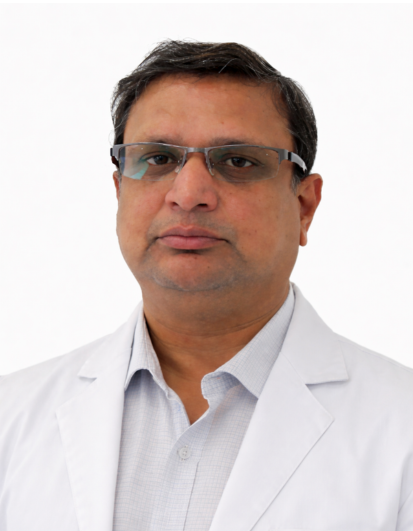
Dr. Anil Rajput is a plastic surgeon at Jigyasa Hospital, Moradabad, who evaluates patients with traumatic hand injuries, tendon and nerve damage, burn contractures, congenital hand differences, and other reconstructive concerns.
His approach focuses on understanding the injury or condition, examining movement and sensation, assessing tissue damage, and developing an individualised plan aimed at restoring the best achievable hand function.
Patients from Moradabad and nearby towns can discuss hand reconstruction, urgent injury management, tendon repair, nerve repair, skin grafting, and contracture release with Dr. Anil Rajput at Jigyasa Hospital.
Restoring Hand Movement, Sensation, and Independence
Few parts of the body are as important to daily independence as the hands. Writing, eating, working, dressing, and many other everyday activities depend on coordinated hand function.
Even an injury that appears minor on the surface may involve a tendon, nerve, blood vessel, bone, or joint. Hand reconstruction surgery addresses these structural problems with the aim of restoring as much movement, sensation, and practical function as possible.
For residents of Moradabad, Rampur, Sambhal, Amroha, and Bijnor, hand reconstruction surgery is available locally at Jigyasa Hospital on Rampur Road near Miglani Cinema under the care of Dr. Anil Rajput.
What Is Hand Reconstruction Surgery?
Hand reconstruction surgery includes a broad range of surgical procedures used to repair or restore the structure and function of the hand after injury, disease, scarring, or congenital differences present from birth.
The hand contains a dense concentration of bones, joints, tendons, nerves, blood vessels, and soft tissue within a small area. Because these structures work together closely, hand reconstruction requires careful assessment and precise technique.
- • Traumatic injuries, including cuts, crush injuries, machinery injuries, and road-traffic accidents.
- • Tendon injuries affecting the ability to bend or straighten the fingers.
- • Nerve injuries affecting sensation or hand movement.
- • Burn-related contractures restricting finger or hand movement.
- • Congenital differences such as webbed fingers or extra digits.
- • Post-infection or post-surgical scarring affecting hand function.
- • Dupuytren's contracture and other progressive finger-bending conditions.
- • Fingertip and nail-bed injuries requiring reconstruction.
Types of Hand Reconstruction Offered
- 1. Tendon repair and reconstruction addresses injuries to the tendons that allow the fingers to bend and straighten. Complex or delayed injuries may require tendon grafting or transfer techniques.
- 2. Nerve repair surgery treats injured nerves affecting sensation or fine motor control, using precise techniques to reconnect the damaged structures.
- 3. Skin and soft-tissue reconstruction may involve skin grafting or flap coverage when an injury causes tissue loss.
- 4. Congenital hand surgery may correct webbed fingers or extra digits, with planning based on function, appearance, growth, and development.
- 5. Burn contracture release loosens tight scar bands that restrict finger movement or create webbing between the fingers.
- 6. Dupuytren's contracture treatment releases or removes thickened tissue in the palm to improve finger extension.
- 7. Fingertip and nail-bed reconstruction aims to restore protection, hand function, and appearance in this frequently injured area.
- 8. Combined reconstruction may be planned when injuries involve multiple structures, such as bone, tendon, nerve, skin, or soft tissue.
The appropriate approach depends on the type, location, timing, and extent of the injury or condition. Orthopaedic evaluation may also be coordinated when bone or joint involvement is present.
Who May Be a Good Candidate?
Hand reconstruction may be considered for patients whose hand structure, movement, sensation, or appearance has been affected by injury, scarring, disease, or a congenital difference.
- • Traumatic hand injury affecting movement, sensation, or appearance.
- • Difficulty bending or straightening one or more fingers.
- • Burn scar restricting finger or hand movement.
- • Congenital hand differences such as webbed or extra fingers.
- • Numbness, tingling, or weakness following an injury.
- • General health and realistic expectations about achievable functional recovery.
Timing is particularly important after traumatic hand injuries. Tendon and nerve injuries may have better outcomes when evaluated and treated promptly, which is why urgent specialist assessment is recommended for acute injuries.
Consultation and Pre-Surgical Evaluation
Every hand reconstruction case at Jigyasa Hospital begins with a detailed evaluation by Dr. Anil Rajput. The assessment may include:
- • Detailed assessment of how and when the injury or condition occurred.
- • Examination of hand movement, sensation, strength, circulation, and visible deformity.
- • Evaluation of tendon, nerve, skin, soft tissue, and joint involvement.
- • Relevant imaging when bone or joint involvement is suspected.
- • Discussion of the surgical approach best suited to the specific injury or condition.
- • Photographic documentation to support planning and track functional progress.
- • Pre-operative investigations through the hospital's NABL-accredited laboratory.
- • Explanation of anaesthesia, recovery, physiotherapy, and realistic functional outcomes.
Because hand function is central to daily life, consultation places particular emphasis on explaining the likely degree of recovery for the specific injury, procedure, and timing of treatment.
Hand Reconstruction Procedure
Hand reconstruction surgery at Jigyasa Hospital is performed under the care of the surgical and anaesthesia team. Local, regional, or general anaesthesia may be used depending on the procedure's extent and complexity.
Tendon and nerve repairs require precise handling of small structures and may be performed under magnification. The specific technique depends on whether the injury is recent, delayed, partial, complete, or associated with tissue loss.
For congenital differences such as webbed fingers, the connection between digits is carefully separated. Skin grafting or another coverage technique may be used to cover the newly created surfaces.
For burn contractures, tight scar tissue is released to improve finger movement, with the resulting defect covered by a graft or flap when needed. Dupuytren's contracture is treated by releasing or removing the thickened tissue that bends the fingers inward.
Procedure time varies significantly, from shorter procedures to longer microsurgical reconstructions. Many hand procedures are performed as day-care surgeries, while complex reconstructions may require a short hospital stay.
Function-Focused Hand Reconstruction
Dr. Anil Rajput evaluates movement, sensation, strength, tissue damage, and the patient's daily functional needs before planning reconstruction.
Tendon, Nerve, and Soft-Tissue Care
Treatment planning may include tendon repair, nerve repair, skin grafting, flap coverage, contracture release, or other reconstructive techniques.
Urgent Injury Evaluation
On-site hospital infrastructure and emergency care support timely assessment of traumatic hand injuries involving cuts, crush injuries, burns, or loss of movement.
Surgery with Rehabilitation Support
Recovery planning includes structured hand physiotherapy and follow-up monitoring to protect repairs and gradually restore movement and function.
Hand Reconstruction in Moradabad
Patients from Moradabad, Rampur, Sambhal, Amroha, and Bijnor can access reconstructive hand surgery consultation at Jigyasa Hospital.
Recovery: What to Expect
Recovery depends heavily on the specific procedure, the severity of the injury, the tissues involved, and the rehabilitation plan. A general recovery timeline may include:
First One to Two Weeks
The hand is often splinted or immobilised to protect the repair. Swelling and discomfort are managed with prescribed medication, elevation, wound care, and follow-up instructions.
Weeks Two to Six
Structured hand physiotherapy generally begins or progresses during this period. Exercises are introduced carefully to restore movement while protecting the healing tendon, nerve, graft, flap, or other repair.
Months Two to Four
Continued physiotherapy and gradual return to normal hand use help improve strength, flexibility, coordination, and practical function.
Months Four to Twelve
Nerve-related sensation and fine-motor recovery may continue improving gradually because nerve regeneration is a slow biological process.
Ongoing Monitoring
Children treated for congenital hand differences may need growth-related monitoring over time to ensure the hand develops appropriately.
Consistent hand physiotherapy is essential after many tendon and nerve procedures. Patients should follow the rehabilitation plan carefully and attend all scheduled follow-up visits.
Risks and Realistic Expectations
Like any surgical procedure, hand reconstruction carries potential risks. These are discussed openly during consultation and included in the informed-consent process.
- • Incomplete recovery of movement or sensation.
- • Stiffness or reduced flexibility.
- • Scarring that may itself limit hand movement.
- • Infection, bleeding, or wound-healing concerns.
- • Continued weakness, numbness, or altered sensation.
- • Need for additional therapy or reconstructive surgery.
- • Inability to regain complete pre-injury function in some cases.
- • Anaesthesia-related risks, although uncommon.
Because the hand's structures work together in a highly coordinated way, reconstruction aims to achieve the best possible function for the specific injury rather than guarantee a complete return to pre-injury capability in every case.
Dr. Anil Rajput's approach at Jigyasa Hospital combines precise surgical planning, honest expectation-setting, and close coordination with hand physiotherapy.
Why Choose Dr. Anil Rajput at Jigyasa Hospital?
Hand reconstruction requires careful evaluation of movement, sensation, tissue damage, circulation, scarring, and the patient's functional requirements. Timely treatment is particularly important after acute tendon or nerve injuries.
- • Local access to specialist reconstructive plastic surgery care in Moradabad.
- • Prompt assessment of traumatic cuts, crush injuries, burns, and other hand injuries.
- • Function-focused planning for tendon, nerve, skin, soft-tissue, and contracture problems.
- • Relevant investigations through the hospital's NABL-accredited laboratory.
- • Round-the-clock hospital infrastructure and emergency support.
- • Coordination with orthopaedic evaluation when bone or joint involvement is present.
- • Structured follow-up and hand physiotherapy support.
- • Convenient access for patients from Rampur, Sambhal, Amroha, and Bijnor.
Ayushman Bharat PM-JAY coverage may apply to eligible reconstructive hand surgery cases depending on scheme classification and hospital assessment.
Common Myths About Hand Reconstruction Surgery
Myth: Minor-looking hand cuts do not need specialist evaluation.
Reality: Even a small cut may involve a tendon or nerve injury that is not obvious from the surface. Prompt specialist evaluation is important.
Myth: Hand surgery results are immediate.
Reality: Functional recovery, especially after tendon or nerve repair, develops gradually over weeks and months. Physiotherapy is an important part of the recovery process.
Myth: Congenital hand differences should always be left until adulthood.
Reality: Some congenital conditions, including webbed fingers, may be treated during childhood according to the child's growth and functional needs.
Myth: Nerve injuries in the hand cannot be treated.
Reality: Nerve repair surgery may support meaningful recovery of sensation and function in selected cases, although the degree of recovery varies and may take many months.
Myth: Physiotherapy is optional after hand surgery.
Reality: Consistent physiotherapy is essential after many hand reconstruction procedures, particularly tendon and nerve repairs, to achieve the best possible functional outcome.
Book a Hand Reconstruction Consultation with Dr. Anil Rajput
Jigyasa Hospital offers consultation and reconstructive care for traumatic hand injuries, tendon and nerve injuries, burn contractures, congenital hand differences, fingertip injuries, Dupuytren's contracture, and other hand-related concerns under the guidance of Dr. Anil Rajput.
Near Miglani Cinema, Rampur Road, Moradabad 244001
Call Now
7900903333Frequently Asked Questions
Is hand reconstruction surgery painful?
Pain is managed with appropriate anaesthesia during surgery and prescribed medication afterward. Some discomfort during physiotherapy is normal as movement is gradually restored.
How urgently should a hand injury be evaluated?
Traumatic hand injuries, particularly cuts, crush injuries, or injuries involving loss of movement or sensation, should be evaluated promptly because timing can affect tendon and nerve repair outcomes.
Will I regain full use of my hand after surgery?
Recovery depends on the type and severity of the original injury. Some patients recover close to full function, while others achieve significant but partial improvement. The expected outcome is discussed individually during consultation.
How long does physiotherapy continue after hand surgery?
The duration varies by procedure. Structured hand physiotherapy may continue for several weeks to months, while nerve-related sensation and fine-motor recovery can continue gradually for a year or longer.
Can congenital hand differences in children be corrected?
Yes. Conditions such as webbed fingers and extra fingers can often be corrected surgically. Treatment is generally planned according to the child's growth, development, and functional needs.
Is hand surgery covered under government health schemes?
Many reconstructive hand surgery cases, particularly those following trauma, may be eligible under PM-JAY empanelment depending on scheme classification. Eligibility is assessed individually.
What is Dupuytren's contracture, and can it be treated surgically?
Dupuytren's contracture is a condition in which tissue in the palm gradually thickens and tightens, causing the fingers to bend inward. Surgical release of the affected tissue may help restore finger extension.
Can hand function be restored years after the original injury?
Meaningful improvement may still be possible in some delayed cases, particularly with contracture release or reconstructive procedures. Suitability depends on the original injury, current condition, and time elapsed.
Why Patients Choose Us
- 24/7 Emergency & Trauma Care
- Top Specialist Doctors
- Modern ICU & Operation Theatres
- Transparent & Affordable Pricing
- Ayushman Bharat Empanelled
- Cashless Insurance Support
- Multispeciality Under One Roof
Our Location
Near Miglani Cinema,
Rampur Road,
Moradabad 244001