
NICU Hospital in Moradabad: Newborn Intensive Care at Jigyasa Hospital
Few moments are as frightening for parents as hearing that their newborn needs to go to the NICU. Even a few hours of separation can feel endless, and the unfamiliar machines, alarms, and medical words can add to the worry.
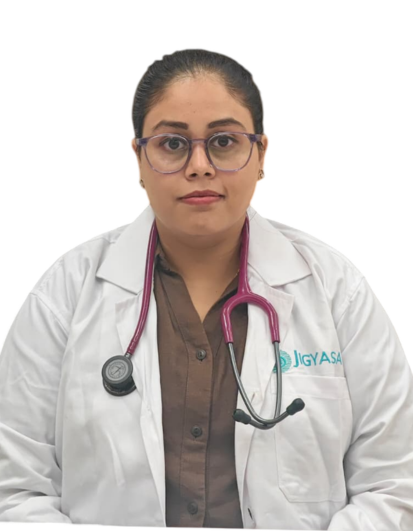
This guide explains what a NICU is, which babies need it, what care happens inside, how parents can take part, and what to ask when choosing a NICU hospital in Moradabad. It also introduces Dr. Sana Ibad Khan, specialist in Pediatrics and Neonatology at Jigyasa Hospital, for families seeking newborn care under a trained specialist.
What Is a NICU?
NICU stands for Neonatal Intensive Care Unit. It is a specialised area of a hospital designed to care for newborn babies who are premature, very small, or seriously ill. The word "neonatal" refers to the first 28 days of life.
A NICU brings together:
• Doctors trained in newborn care, including neonatologists and pediatricians
• Specially trained nurses
• Equipment designed for tiny patients, such as warmers, incubators, monitors, and breathing support
• Constant observation, day and night
Newborns are not simply small adults. Their lungs, heart, liver, brain, and immune system are still maturing, and small changes in temperature, blood sugar, or oxygen can matter a lot. The NICU creates a controlled, closely watched environment where such changes can be caught and treated early.
Which Babies May Need NICU Care?
Not every baby who is born unwell needs intensive care, and being in the NICU does not always mean a long stay. The doctor decides based on the baby's condition. Common reasons include:
Premature birth: Babies born before 37 weeks often need help with breathing, feeding, warmth, and infection protection.
Low birth weight: Small babies lose body heat quickly and may need special feeding plans.
Breathing difficulty: Fast breathing, grunting, chest retractions, or low oxygen levels after birth.
Birth asphyxia or difficult delivery: Babies who did not cry or breathe well at birth need close monitoring.
Severe jaundice: High bilirubin levels may need treatment such as phototherapy, and sometimes more intensive care.
Infection or suspected sepsis: Newborns can become seriously ill quickly, and prompt treatment matters.
Low blood sugar: Particularly in small babies or babies of mothers with diabetes.
Feeding problems: Babies who cannot suck or swallow safely may need tube feeding or intravenous fluids.
Congenital conditions: Some babies are born with conditions that need early evaluation and support.
Seizures or unusual neurological signs.
Multiple births: Twins and triplets are more likely to be premature or small.
Neonatal Care: What Happens Inside a NICU?
While every unit is different, the following kinds of care are commonly part of newborn intensive care.
Temperature Support: Small and premature babies cannot keep themselves warm. They may be placed in an incubator or under a radiant warmer to maintain a safe body temperature.
Breathing Support: Depending on need, babies may receive extra oxygen, gentle pressure support to keep the lungs open, or other forms of breathing support. The doctor selects the least invasive option that works.
Monitoring: Heart rate, breathing, oxygen level, temperature, and sometimes blood pressure are monitored continuously. Alarms are designed to alert staff to even small changes, which is why you may hear frequent beeping. Many alarms are routine and do not signal an emergency.
Feeding and Nutrition: Some babies feed directly from the breast or bottle. Others need feeding through a small tube, or nutrition through a vein for a short time. Mother's milk is encouraged and often given through a tube or cup when the baby cannot yet latch.
Jaundice Treatment: Phototherapy uses special light to help the baby's body clear bilirubin. In more serious cases, other treatments may be needed.
Infection Management: When infection is suspected, doctors may order blood tests and start treatment promptly. Strict hygiene in the NICU helps protect all babies.
Medicines and Fluids: Medicines are calculated carefully by weight, sometimes in very small amounts.
Tests and Scans: Blood tests, X-rays, ultrasounds, and other investigations may be used to guide treatment.
Which of these services are available at a given hospital depends on its facilities. Please call Jigyasa Hospital on 7900903333 to confirm current NICU services before you travel.
Understanding NICU Terms Parents Often Hear
Medical language can feel overwhelming. Here are a few common terms, in plain words.
• Incubator: A clear, enclosed, warm bed that protects the baby from cold and infection.
• Radiant warmer: An open bed with a heater above, allowing doctors easy access to the baby.
• Phototherapy: Light treatment for jaundice.
• Kangaroo mother care: Holding the baby skin-to-skin on the parent's chest.
• Gavage or tube feeding: Feeding through a thin tube when the baby cannot suck properly.
• Monitors: Devices that show heart rate, breathing, and oxygen level.
• Apnoea: Short pauses in breathing, more common in premature babies.
• Sepsis: A serious infection spreading in the body.
If you hear a term you do not understand, ask. Doctors and nurses expect parents to have questions.
How Parents Can Take Part in NICU Care
Even in a high-tech unit, parents remain the most important people in a baby's life. Depending on the baby's condition and hospital policy, you may be able to:
• Touch and talk to your baby. Your voice and gentle touch are comforting.
• Practise kangaroo mother care when the doctor says it is safe.
• Express breast milk. Even if your baby cannot feed directly, your milk is valuable. Ask the team how to express and store it correctly.
• Learn care tasks such as diapering, feeding, and holding.
• Ask questions and take notes at daily updates.
• Wash your hands carefully before every contact.
• Rest and eat well. Your health matters too, and you will need energy for the days ahead.
Taking Care of Yourself as a NICU Parent
A NICU stay can be emotionally draining. Many parents feel guilt, fear, or helplessness. These feelings are common and not a sign of weakness.
• Share your feelings with your partner, family, or a trusted friend.
• Accept help with household work and other children.
• Take short breaks to eat, rest, and sleep.
• Keep a small notebook of questions and updates.
• If you feel persistently low, anxious, or unable to cope, talk to your doctor. Support is available, and asking for it is a strength.
What to Look for When Choosing a NICU Hospital
If you can plan ahead, for example during a high-risk pregnancy, consider these points.
1. Specialist Doctors: Look for neonatology-trained doctors who can manage newborn emergencies. Dr. Sana Ibad Khan is a specialist in Pediatrics and Neonatology at Jigyasa Hospital.
2. Availability Around the Clock: Newborn emergencies can happen at any hour. Ask how the team is available at night and on holidays.
3. Hospital Support Services: Because mother and baby are connected, check that obstetric care, laboratory services, and other departments are available. A multispeciality hospital can offer this coordination.
4. Infection Control and Hygiene: Ask about hand hygiene practices, visitor rules, and how the unit protects fragile babies from infection.
5. Communication: A good unit gives regular, honest updates, explains the plan, and welcomes parents' questions.
6. Parent Involvement: Ask whether kangaroo care, expressed milk feeding, and parent participation are supported.
7. Follow-Up After Discharge: A baby who has been in the NICU often needs regular follow-up for growth, feeding, vaccines, and development. Continuity with the same doctor helps.
8. Location: When your baby is unwell, distance matters. Choose a hospital you can reach quickly.
A Note on Cost and Planning
Parents often worry about the cost of NICU care. It is reasonable to ask the hospital about charges, insurance and cashless options, and estimated stay before or at the time of admission, where possible. Clear information helps you plan and reduces stress at an already difficult time.
Planning Ahead for a High-Risk Delivery
If your pregnancy is considered high-risk, consider the following.
• Discuss the delivery plan with your gynecologist and ask whether a neonatologist should be present.
• Choose a hospital where both obstetric and newborn care are available, so mother and baby are not separated.
• Keep the hospital's phone number (7900903333) and address saved.
• Pack hospital bags for both mother and baby early.
• Ask about family support rules, visiting hours, and parent facilities.
• Arrange for someone to help at home.
After the NICU: Going Home and Follow-Up
Leaving the NICU is a major milestone, and also a moment when parents may feel nervous. Before discharge:
• Ask for a clear discharge summary and keep it safe.
• Make sure you understand feeding instructions, medicines, and doses.
• Confirm the vaccination schedule and the next due date.
• Learn the warning signs that need urgent care.
• Book follow-up appointments for weight checks and development reviews.
• Ask whether any additional checks, such as vision or hearing screening, are needed for your baby's situation.
Premature and NICU-treated babies often need closer follow-up in the first months and years. With good care, many of them grow up healthy and strong.
Warning Signs After Going Home
Seek medical help right away if your baby:
• Has a fever, or feels unusually cold
• Is breathing fast or with effort, or has bluish lips
• Refuses feeds or feeds very poorly
• Is unusually sleepy or difficult to wake
• Has worsening yellow colour of the skin or eyes
• Vomits repeatedly, especially green fluid
• Has a seizure or jerky movements
• Has fewer wet diapers than usual
Call 7900903333 or go to the hospital without delay.
Why Families Consider Jigyasa Hospital for Newborn Care
Specialist training: Dr. Sana Ibad Khan is a specialist in Pediatrics and Neonatology, covering both newborn and childhood care.
Multispeciality hospital: If mother or baby needs another department's support, coordination is easier within one hospital.
Continuity of care: Your baby's records, vaccinations, and follow-up can be managed together as your child grows.
Convenient location: Jigyasa Hospital is on Rampur Road, near Miglani Cinema, Moradabad 244001, which is reachable from the city and from nearby areas such as Rampur, Sambhal, Amroha, Bijnor, and Chandausi.
Clear communication: Parents' questions are welcome, and explanations are given in simple Hindi or English.
For confirmed NICU details, such as number of beds, level of care, equipment available, 24-hour coverage, and visiting rules, please call Jigyasa Hospital on 7900903333 before travelling.
Specialist Newborn Care
Dr. Sana Ibad Khan is a specialist in Pediatrics and Neonatology, covering both newborn and childhood care.
Multispeciality Hospital Support
If mother or baby needs another department's support, coordination is easier within one hospital.
Continuity of Care
Your baby's records, vaccinations, and follow-up can be managed together as your child grows.
Care for Premature and Unwell Newborns
Babies who need extra monitoring, feeding support, warmth, jaundice care, or breathing support can receive focused newborn care.
Follow-Up After NICU Care
Babies who have received NICU care often need closer follow-up for growth, feeding, vaccination, and development.
Convenient Moradabad Location
Jigyasa Hospital is on Rampur Road, near Miglani Cinema, and is reachable from the city and nearby areas.
Speak to Jigyasa Hospital About Newborn Care
If your baby is premature, unwell, has jaundice, feeding difficulty, breathing concerns, or needs specialised newborn monitoring, contact the hospital for guidance.
Dr. Sana Ibad Khan at Jigyasa Hospital provides Pediatrics and Neonatology care with clear communication and family-friendly support.
Address
Near Miglani Cinema, Rampur Road, Moradabad 244001
Phone
7900903333Frequently Asked Questions About NICU Care
What does NICU stand for?
NICU stands for Neonatal Intensive Care Unit, a hospital unit that provides specialised care for newborn babies who are premature or seriously ill.
Which hospital has a NICU in Moradabad?
Jigyasa Hospital, on Rampur Road, near Miglani Cinema, offers newborn and child care under Dr. Sana Ibad Khan, specialist in Pediatrics and Neonatology. Please call 7900903333 to confirm current NICU services and availability.
Does my baby need the NICU if born early?
Not every premature baby needs intensive care, but many do need extra support. The doctor will decide based on the baby's weight, breathing, feeding, and overall condition.
How long will my baby stay in the NICU?
It depends on the baby's condition. Some babies stay only a few days, while very premature or seriously ill babies may need weeks. The doctor will give regular updates.
Can I touch or hold my baby in the NICU?
Often yes, when the baby's condition allows. Ask the team how and when you can safely touch, hold, or practise kangaroo mother care.
Can I breastfeed a baby in the NICU?
Mother's milk is very valuable. If your baby cannot feed directly, you may be guided to express milk, which can be given through a tube or cup. Ask the team for support.
Why are there so many alarms and wires?
Monitors track the baby's heartbeat, breathing, and oxygen level, and alarms are set to be sensitive. Many alarms are routine, and the staff are trained to respond.
Why Patients Choose Us
- 24/7 Emergency & Trauma Care
- Top Specialist Doctors
- Modern ICU & Operation Theatres
- Transparent & Affordable Pricing
- Ayushman Bharat Empanelled
- Cashless Insurance Support
- Multispeciality Under One Roof
Our Location
Near Miglani Cinema,
Rampur Road,
Moradabad 244001