
Orthopedic Clinic Near Me in Moradabad: Bone, Joint and Injury Care at Jigyasa Hospital
When a knee will not bend, a back pain will not go away, or a child falls and cannot use an arm, you do not want a long list of options. You want a good orthopedic doctor who is close by, easy to reach, and able to explain what is wrong in plain words. That is why "orthopedic clinic near me" is one of the most common health searches people make.
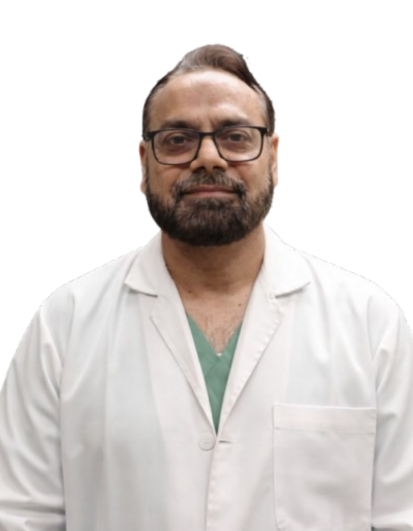
If you live in or around Moradabad, Dr. Shariq Arshad, Orthopedics, at Jigyasa Hospital on Rampur Road is available for bone, joint, and injury care. This guide explains what an orthopedic clinic does, which problems to bring there, how to choose the right one, how to reach us, and how to prepare for your visit.
Why "Near Me" Matters in Orthopedic Care
Distance matters more in orthopedics than people expect.
• Injuries cannot wait. A suspected fracture, a dislocated joint, or a limb that has gone cold or numb needs care quickly, and every minute spent travelling counts.
• Pain makes travel harder. Someone with a swollen knee, a painful back, or a plaster cast finds long journeys difficult.
• Treatment is rarely one visit. Fractures, joint problems, and post-surgery recovery involve follow-ups, X-rays, and physiotherapy, so a clinic you can reach easily makes it far more likely that you finish the treatment.
• Older family members need convenience. Elderly patients with arthritis or weak bones often travel with relatives, and a nearby, accessible clinic reduces the strain on everyone.
But "near" is only useful if the care is also right. The best choice is a qualified orthopedic doctor in a place where the support services you may need are close at hand.
Where Is Jigyasa Hospital?
Jigyasa Hospital – Multispeciality Hospital
The hospital is on Rampur Road, and Miglani Cinema is a well-known landmark that makes it easy to find. Families from different parts of Moradabad city, and from nearby areas such as Rampur, Sambhal, Amroha, Bijnor, and Chandausi, can reach the hospital by road.
Tip for finding us: Search "Jigyasa Hospital Moradabad" in your maps app, or call 7900903333 and the reception team will guide you.
What Does an Orthopedic Doctor Treat?
Orthopedics is the branch of medicine that deals with the musculoskeletal system: bones, joints, ligaments, tendons, muscles, and the spine. An orthopedic doctor sees patients of every age, from children with injuries to older adults with worn joints. Common reasons to visit include:
Injuries and trauma
• Fractures and suspected broken bones
• Sprains, strains, and ligament injuries
• Dislocated shoulders, kneecaps, or fingers
• Sports and workplace injuries
• Road accident and fall injuries
Joint problems
• Knee, hip, shoulder, elbow, wrist, and ankle pain
• Osteoarthritis and other arthritis
• Cartilage and meniscus injuries
• Frozen shoulder, tennis elbow, and heel pain
Spine problems
• Back pain and neck pain
• Slip disc and sciatica
• Spinal stiffness and posture problems
Bone health
• Osteoporosis and weak bones
• Fractures after minor falls
Other concerns
• Muscle and tendon problems
• Pain and stiffness after surgery or a long illness
• Bone and joint problems in children, such as limping or growth-related concerns
• Rehabilitation planning with physiotherapy
If you are not sure whether your problem is "orthopedic," the safest approach is to ask. A short consultation can tell you whether you are in the right place or need another specialist.
Signs You Should Visit an Orthopedic Clinic
Many people delay, hoping the pain will pass. See an orthopedic doctor if you have:
• Pain in a bone, joint, or the back that lasts more than two weeks or keeps returning
• Swelling, warmth, or stiffness in a joint
• Difficulty walking, climbing stairs, or getting up from a chair
• Pain that wakes you at night
• A joint that locks, catches, clicks painfully, or gives way
• Numbness, tingling, or weakness in the arms or legs
• Pain that spreads from the back down the leg, or from the neck into the arm
• An injury that is not healing
• Reduced movement, such as being unable to raise your arm or bend your knee fully
• A change in the shape of a joint or limb
• A fracture after a minor fall, which can be a sign of weak bones
Emergency Signs: Do Not Wait for an Appointment
Go to the hospital immediately, or call 7900903333, if there is:
• A suspected fracture with severe pain, visible deformity, or bone showing through the skin
• Inability to move a limb or bear weight after an injury
• A hand or foot that turns cold, pale, blue, or numb after an injury
• Heavy bleeding that does not stop with firm pressure
• A hot, red, swollen joint with fever, which may suggest joint infection
• Back pain with loss of control of urine or stool, numbness around the groin, or sudden leg weakness
• A head, neck, or spine injury. Do not move the person unnecessarily
• A severe hip or thigh pain after a fall, especially in an older person
• Chest pain, breathlessness, or sweating with shoulder or arm pain, which may be a heart problem
While waiting for help: Keep the injured part still, support it in the position found, press a clean cloth on any bleeding, and do not try to straighten a deformed limb. Do not apply oil, ghee, or tight bandages, and avoid giving food or drink if surgery might be needed.
What to Look for in an Orthopedic Clinic
Whether you choose Jigyasa Hospital or compare several options, these points help you decide.
A qualified orthopedic doctor. Check the doctor's training, speciality, and experience with your type of problem.
A proper examination before treatment. A good doctor listens to your story, examines the affected area, and explains the likely diagnosis before ordering tests or recommending any procedure.
Diagnostic support close by. X-rays, and where needed ultrasound, CT, or MRI, should be easy to get without long detours.
An honest approach to surgery. Most orthopedic problems begin with non-surgical treatment. A good doctor explains your options, including the option of waiting, and does not rush you towards an operation.
Hospital backing for emergencies. Injuries and complications can be sudden. A clinic attached to a multispeciality hospital can call on other departments, anaesthesia, and emergency care when needed.
Rehabilitation support. Recovery often depends on physiotherapy, so access to rehabilitation matters.
Clear communication. You should leave knowing your diagnosis, the plan, what to expect, and when to return.
Easy access. Location, parking, timings, and a reliable way to book matter, especially for older patients and those with limited mobility.
Why Consider Jigyasa Hospital and Dr. Shariq Arshad?
An orthopedic doctor within a multispeciality hospital. Dr. Shariq Arshad, Orthopedics, is available at Jigyasa Hospital for bone, joint, and injury problems. Orthopedic conditions often overlap with other health needs. A patient with a hip fracture may also have diabetes or heart disease, someone with weak bones may need hormone or vitamin assessment, and any surgery needs anaesthesia and pre-operative checks. Being inside a multispeciality hospital makes it easier to coordinate all of this in one place.
Continuity of care. Your records, scans, and follow-up stay together, so you do not have to carry reports between different places or repeat your history each time.
Convenient location. The hospital is on Rampur Road, near Miglani Cinema, Moradabad – 244001, which is easy to reach from many parts of the city and from nearby towns.
Patient-friendly communication. Questions are welcome, and explanations are given in simple Hindi or English so that you understand your diagnosis and options.
Which orthopedic services, tests, and procedures are available depends on the hospital's facilities. Please call Jigyasa Hospital on 7900903333 to confirm before you travel.
What Happens at Your First Visit?
Knowing what to expect makes the visit less stressful.
Registration. At reception, you will share basic details and the reason for the visit.
Your story. The doctor will ask when the problem started, what you were doing when it began, what makes it better or worse, whether there was an injury, and how it affects your work, sleep, and daily activities. They will also ask about other health conditions, medicines, and allergies.
Examination. The doctor will look at the affected area, check swelling, tenderness, movement, strength, stability, and nerve function, and may watch you walk or move. Often the examination alone gives a strong idea of the problem.
Tests, if needed. An X-ray is the most common first test. Depending on what is found, the doctor may advise an ultrasound, MRI, CT scan, bone density scan, or blood tests. A careful doctor orders only the tests that will change the treatment.
Diagnosis and plan. You will be told what the problem is likely to be and what the options are. Many problems are treated with medicines, physiotherapy, supports, injections, or lifestyle changes. Surgery is recommended only when it is likely to help, and the reasons, risks, and alternatives should be explained.
Follow-up. You will be told what to watch for at home and when to return.
Common Conditions and What They Usually Involve
Knee pain. Often from osteoarthritis, a meniscus or cartilage problem, or a ligament injury. Treatment ranges from exercises and weight management to injections or surgery, depending on the cause and severity.
Back and neck pain. Most improve with staying gently active, physiotherapy, and posture changes. Warning signs such as leg weakness or loss of bladder or bowel control need urgent assessment.
Shoulder pain. Rotator cuff problems, frozen shoulder, and impingement are common, and many respond to physiotherapy.
Fractures. Treated with a cast or splint when the bone is stable, or with surgery when it is displaced, unstable, or involves a joint.
Arthritis. Osteoarthritis is managed with exercise, weight control, medicines, and sometimes joint replacement. Inflammatory arthritis such as rheumatoid arthritis often needs a rheumatologist alongside the orthopedic team.
Osteoporosis. Weak bones need assessment, nutrition, exercise, fall prevention, and, where needed, prescription medicines.
Sports and ligament injuries. Need careful diagnosis, staged rehabilitation, and, in selected cases, surgery.
Children's bone and joint problems. A child who limps, has pain near a joint after a fall, or is slow to walk should be examined. A pediatrician can also be a useful first contact for general health and growth questions.
How to Prepare for Your Appointment
• Call ahead on 7900903333 to confirm timings, unless it is an emergency
• Carry previous records: X-rays, MRI or CT films, reports, and prescriptions
• Note your symptoms: when they started, what triggers or relieves them, and what you have tried
• List your medicines and supplements, including painkillers, and any allergies
• Mention other conditions such as diabetes, high blood pressure, heart disease, or thyroid problems, and any previous surgeries
• Wear loose, comfortable clothing so the area can be examined easily, such as shorts for the knee or a sleeveless top for the shoulder
• Bring a family member if you have difficulty moving or want help remembering the discussion
• Write down your questions so you do not forget them
Questions Worth Asking Your Orthopedic Doctor
• What is my diagnosis, and how sure are you?
• Do I need any tests, and how will they change the treatment?
• What are my options without surgery?
• If surgery is advised, why now, and what are the risks and alternatives?
• What will recovery and physiotherapy involve?
• When can I return to work, driving, and sport?
• What should I avoid, and what warning signs should make me return?
• What is the expected cost, and what does it include?
• Would a second opinion be reasonable?
A good doctor welcomes these questions.
Tips for Patients Travelling From Outside Moradabad City
• Call ahead to confirm timings and avoid a wasted journey
• Leave early, especially if you are in pain or travelling with an older family member
• Bring all previous records, in one folder
• Carry water, snacks, and any regular medicines
• Ask the doctor how to manage at home, and what signs mean you should seek help locally
• Keep the hospital's number saved: 7900903333
Orthopedic Consultation at Jigyasa Hospital
Dr. Shariq Arshad, Orthopedics, assesses bone, joint, muscle, tendon, ligament, and spine problems for patients of all ages.
Cause-Focused Diagnosis
Care begins with your history, examination, and only the tests that are likely to change the treatment plan.
Non-Surgical Options First
Where appropriate, treatment begins with medicines, physiotherapy, supports, activity changes, and lifestyle guidance.
Rehabilitation-Focused Recovery
Guidance on physiotherapy, exercises, safe activity, and return to work, driving, or sport helps support recovery.
Care for Common Orthopedic Problems
Consultation is available for fractures, back and neck pain, arthritis, sports injuries, joint pain, and children’s bone and joint concerns.
Easy-to-Find Location
Jigyasa Hospital is on Rampur Road, near Miglani Cinema, Moradabad, and is reachable from the city and nearby areas.
Book an Orthopedic Consultation with Dr. Shariq Arshad
If you have joint pain, back pain, a fracture, a sports injury, difficulty walking, or a child with a bone or joint concern, early assessment can help identify the cause and plan suitable care.
Dr. Shariq Arshad at Jigyasa Hospital assesses bone, joint, and injury problems and discusses non-surgical and surgical options based on your condition and needs.
Address
Near Miglani Cinema, Rampur Road, Moradabad 244001
Phone
7900903333Frequently Asked Questions About Orthopedic Care
Where can I find an orthopedic clinic near me in Moradabad?
Jigyasa Hospital, on Rampur Road, near Miglani Cinema, Moradabad – 244001, offers orthopedic consultation with Dr. Shariq Arshad, Orthopedics.
How do I book an appointment?
Call 7900903333 or visit the hospital. More information is available at jigyasahospital.com.
What problems does an orthopedic doctor treat?
Bone, joint, ligament, tendon, muscle, and spine problems, including fractures, arthritis, back pain, sports injuries, and osteoporosis.
Do I need surgery if I see an orthopedic doctor?
No. Most problems are treated first without surgery, with medicines, physiotherapy, supports, or lifestyle changes. Surgery is advised only when it is likely to help.
When should I go straight to the hospital instead of waiting for an appointment?
For a suspected fracture, a deformed limb, a cold or numb hand or foot after injury, heavy bleeding, a hot swollen joint with fever, or back pain with loss of bladder or bowel control.
What should I bring to my first visit?
Previous X-rays and reports, a list of medicines and allergies, and notes about your symptoms and questions.
Do I need an X-ray before I see the doctor?
Not necessarily. The doctor will examine you first and advise which tests, if any, are needed. Bring any existing scans.
Can children see an orthopedic doctor?
Yes. Children with injuries, limping, or bone and joint concerns can be assessed. A pediatrician can also help with general health and growth questions.
Can I see the same doctor for follow-up visits?
Follow-up with the same doctor is generally advised so that your treatment stays consistent. Ask about this when you book.
Why Patients Choose Us
- 24/7 Emergency & Trauma Care
- Top Specialist Doctors
- Modern ICU & Operation Theatres
- Transparent & Affordable Pricing
- Ayushman Bharat Empanelled
- Cashless Insurance Support
- Multispeciality Under One Roof
Our Location
Near Miglani Cinema,
Rampur Road,
Moradabad 244001