
Pacemaker Implant in Moradabad – Dr. Amit Kumar Singh, Cardiologist at Jigyasa Hospital
The human heart beats thousands of times every day through a natural electrical system that keeps rhythm steady and coordinated. When that system fails and the heart beats too slowly, too irregularly, or pauses altogether, patients may develop dizziness, fainting, fatigue, or more serious complications.
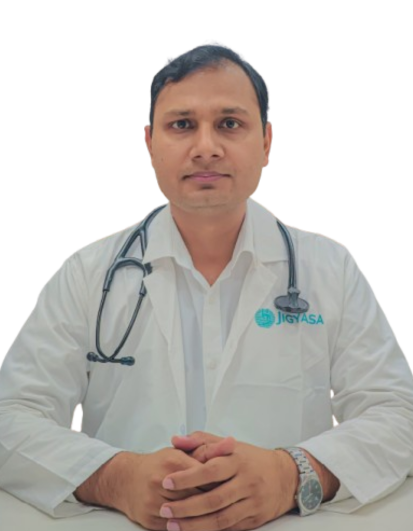
At Jigyasa Hospital, Dr. Amit Kumar Singh provides expert evaluation and pacemaker implantation for patients across Moradabad and western Uttar Pradesh. This allows many patients to receive essential treatment locally instead of travelling to Delhi or other metro cities for care.
Why Choose Jigyasa Hospital for Pacemaker Implantation
Jigyasa Hospital offers local access to cardiac rhythm care for patients who may otherwise struggle to reach a specialist centre. This is especially important for elderly patients and families who need clear guidance, timely testing, and a safe treatment pathway without unnecessary travel stress.
Dr. Amit Kumar Singh follows a structured diagnostic process before recommending a pacemaker, making sure the device is actually needed and that the type chosen fits the patient's heart condition. This careful approach helps avoid unnecessary procedures while ensuring that those who truly need pacing get it without delay.
The hospital also provides structured follow-up after the implant, including device checks, battery monitoring, and ongoing symptom review. That continuity is important for patients who want long-term care in one trusted place.
About Dr. Amit Kumar Singh
Dr. Amit Kumar Singh is a senior cardiologist at Jigyasa Hospital with experience in diagnosing and treating a wide range of rhythm disorders. He evaluates patients with bradycardia, heart block, sick sinus syndrome, and other conduction problems that may require pacemaker support.
His care style is practical and patient-focused. He begins with detailed history taking, ECG review, and additional testing when needed, then discusses whether a pacemaker is necessary, which type is appropriate, and what recovery will involve.
Patients value his clear communication because pacemaker decisions often feel intimidating, and having the condition explained simply makes the process easier for both patients and families.
What Is a Pacemaker?
A pacemaker is a small battery-powered device implanted under the skin, usually near the collarbone, to help regulate the heart's rhythm. It monitors electrical activity and sends tiny impulses whenever the heartbeat becomes too slow, irregular, or pauses unexpectedly.
The device has two main parts: the pulse generator, which contains the battery and circuitry, and the leads, which carry signals to the heart chambers. Modern pacemakers are compact and designed to work for many years with regular follow-up checks.
In many patients, a pacemaker improves energy, reduces fainting, and makes day-to-day life safer by keeping the heart rate within a healthy range.
Why Are Pacemakers Needed?
Pacemakers are recommended when the heart's natural electrical system is not working properly. Common reasons include slow heart rate, heart block, sick sinus syndrome, and certain rhythm problems that occur after a heart attack or due to other conduction disturbances.
Bradycardia: A slow heart rate can cause fatigue, dizziness, breathlessness, and fainting because the body is not receiving enough effective circulation.
Heart Block: When the electrical signal between the upper and lower chambers is delayed or blocked, the heart may beat too slowly or irregularly, sometimes requiring pacing support.
Sick Sinus Syndrome: This condition affects the heart's natural pacemaker and can cause the rate to alternate between too slow and too fast, or pause without warning.
Post-Heart Attack Complications: Some patients develop conduction problems after a heart attack, especially if the damaged area affects the electrical pathway.
Atrial Fibrillation with Slow Heart Rate: In some cases, medicines used to control rhythm can slow the heart too much, making pacing necessary to maintain a safe minimum rate.
Symptoms That May Indicate Pacemaker Evaluation
Symptoms of rhythm problems are often subtle and may be mistaken for normal ageing or weakness. That is why a proper cardiology evaluation is important if fainting, dizziness, or fatigue keeps happening without a clear explanation.
You should seek evaluation if you have recurrent dizziness, fainting spells, unexplained fatigue, breathlessness during routine activity, a feeling that the heart is pausing or skipping, reduced exercise tolerance, or confusion in elderly patients.
Even when symptoms seem mild, they can still point to an important rhythm disorder that becomes more serious over time if it is not checked properly.
How Is the Need for a Pacemaker Diagnosed?
Dr. Amit Kumar Singh follows a structured diagnostic process to confirm whether a pacemaker is needed. The evaluation begins with symptom history and physical examination, then moves through rhythm tests and heart imaging to understand the full picture.
Clinical History and Examination: The consultation begins with a detailed discussion of fainting episodes, dizziness, fatigue, and pulse assessment.
ECG: This test records the heart's electrical activity at rest and can reveal heart block, rhythm abnormalities, or conduction delays.
Holter Monitoring: A portable ECG device can record rhythm continuously over 24 to 48 hours or longer, helping detect intermittent problems that a standard ECG may miss.
Echocardiography (2D Echo): An ultrasound of the heart assesses structure and pumping function, helping rule out other cardiac conditions.
Blood Investigations: Blood tests help rule out reversible causes such as thyroid dysfunction or electrolyte imbalance and assess fitness for the procedure.
Tilt Table Test: In select cases, this test is used when fainting may be related to posture-related heart rate or blood pressure changes.
Types of Pacemakers
Not every patient needs the same pacemaker. The choice depends on the underlying condition, which chamber needs support, and the patient's overall health and activity level.
Single-chamber pacemakers use one lead, dual-chamber devices use two leads for better coordination, biventricular pacemakers may help select heart failure patients, and rate-responsive models adjust pacing based on activity.
Dr. Amit Kumar Singh recommends the most suitable type after reviewing all test results and discussing the treatment plan with the patient and family.
The Pacemaker Implantation Procedure
Pacemaker implantation is a well-established minimally invasive procedure, usually performed under local anaesthesia with sedation. The goal is to place the device safely and confirm that it is working properly before discharge.
Before the Procedure: Patients undergo blood tests, medication review, fasting instructions, and a full discussion of risks and recovery.
During the Procedure: A small incision is made below the collarbone, leads are guided into the heart under X-ray control, the device is connected, and the incision is closed.
After the Procedure: Most patients are observed overnight, the pacemaker is checked and programmed, and mild soreness at the implant site is expected.
Recovery: Many patients return to light daily activity within a few days, though arm movement restrictions may be advised for a few weeks to support healing.
Life After a Pacemaker
Living with a pacemaker is generally straightforward, and most patients return to normal routines with fewer symptoms and better energy. Regular checkups are important to monitor device function and battery life.
Patients are usually advised about electromagnetic precautions, physical activity, the pacemaker ID card, and driving or travel after recovery. Battery replacement is a simpler procedure than the original implant when it becomes necessary.
With good follow-up and sensible precautions, a pacemaker can provide long-term support and a much safer daily life for patients with rhythm disorders.
Who Should Consider Pacemaker Evaluation?
Pacemaker assessment is especially important for elderly patients with repeated dizziness or fainting, patients already known to have heart block or sick sinus syndrome, and anyone with a slow pulse and unexplained fatigue or reduced stamina.
People who have had a fainting episode without a clear reason, or those advised by another physician to get a rhythm evaluation, should not delay specialist review. Early diagnosis often makes treatment simpler and safer.
Many patients live with these symptoms for months, assuming they are just tired or getting older, when a treatable rhythm problem is the real cause.
Pacemaker Evaluation
Comprehensive assessment for bradycardia, heart block, sick sinus syndrome, and other rhythm problems that may need pacing support.
Specialist Cardiologist
Care led by Dr. Amit Kumar Singh, a senior cardiologist experienced in evaluating and managing rhythm disorders.
Safe Implant Procedure
Careful pacemaker implantation with attention to lead placement, device selection, and accurate programming.
Advanced Diagnostics
ECG, Holter monitoring, echocardiography, blood investigations, and tilt table testing support accurate diagnosis.
Post-Implant Follow-Up
Regular checks help monitor battery life, device function, symptom improvement, and long-term recovery.
Accessible Care in Moradabad
Pacemaker evaluation and implantation are available locally at Jigyasa Hospital, near Miglani Cinema, Rampur Road, Moradabad.
Book a Consultation with Dr. Amit Kumar Singh
If you have fainting spells, recurrent dizziness, or have been advised to consider pacemaker implantation, Jigyasa Hospital in Moradabad offers specialist cardiac evaluation and treatment planning close to home.
Patients from Moradabad and nearby areas can receive diagnosis, implantation support, and long-term follow-up in one trusted place with clear guidance at every step.
Address
Near Miglani Cinema, Rampur Road, Moradabad 244001
Phone
7900903333Frequently Asked Questions About Pacemaker Implantation
Is pacemaker implantation a major surgery?
No, it is a minimally invasive procedure, usually performed under local anaesthesia with sedation, taking about 45 minutes to 1.5 hours, with most patients discharged within a day or two.
How long does a pacemaker battery last?
Most modern pacemakers last between 8 and 15 years, depending on the type of device and how frequently it is used. Regular follow-up visits monitor battery status closely.
Will I feel the pacemaker working?
Most patients do not feel the pacemaker's electrical impulses. Many report feeling significantly better overall, as their heart rate is now properly regulated.
Can I use a mobile phone or microwave with a pacemaker?
Yes, with reasonable precautions, such as not keeping a mobile phone directly over the device for extended periods. Most household electronics pose minimal risk to modern pacemakers.
Is pacemaker surgery available in Moradabad, or do I need to travel to Delhi?
Pacemaker evaluation and implantation are available locally at Jigyasa Hospital under Dr. Amit Kumar Singh, reducing travel burden, particularly for elderly patients and their families.
Can I drive or travel after getting a pacemaker?
Most patients can resume driving and travel after a short recovery period, typically a few weeks, based on their doctor's specific guidance.
Does Ayushman Bharat PM-JAY cover pacemaker implantation?
Jigyasa Hospital is empanelled under Ayushman Bharat PM-JAY. Coverage depends on individual eligibility and scheme guidelines, which our team can help verify during consultation.
What happens if I ignore symptoms like fainting or dizziness?
Ignoring these symptoms can be risky, as they may indicate an underlying rhythm problem that could worsen over time or lead to sudden fainting episodes, falls, or other complications. Timely evaluation allows for appropriate and often straightforward treatment.
Why Patients Choose Us
- 24/7 Emergency & Trauma Care
- Top Specialist Doctors
- Modern ICU & Operation Theatres
- Transparent & Affordable Pricing
- Ayushman Bharat Empanelled
- Cashless Insurance Support
- Multispeciality Under One Roof
Our Location
Near Miglani Cinema,
Rampur Road,
Moradabad 244001