
Pediatric Orthopedic in Moradabad: Expert Bone and Joint Care for Children at Jigyasa Hospital
A child who limps after a fall, a toddler whose legs look curved, a teenager with a slightly uneven back, or a baby born with a foot that turns inward: these situations worry every parent. Children are always running, jumping, climbing, and growing, so bone and joint problems are common. At the same time, a child's skeleton is not simply a smaller version of an adult's. It is still growing, and the way a problem is diagnosed and treated can affect how that child grows.
If you are looking for a pediatric orthopedic in Moradabad, Jigyasa Hospital offers orthopedic consultation with Dr. Shariq Arshad, who can evaluate your child's bones, joints, and walking pattern, explain what is normal and what is not, and guide you to the right treatment. This guide explains how children's bones differ, the common problems seen in children, the signs parents should watch for, and how these conditions are diagnosed and treated.
Why Children's Bones Are Different
Children's bones are softer, more flexible, and still growing. They heal faster than adult bones and can often correct mild deformities as the child grows. But they also have special features that need expert attention.
Key differences:
• Children have growth plates, also called physes, which are areas of growing tissue near the ends of long bones
• An injury to a growth plate, if missed, can affect how the limb grows
• Children's bones are more flexible, so they can bend and crack instead of breaking completely
• Many children have normal variations, such as flat feet or bow legs in toddlers, that settle on their own
• Treatment must consider the child's age, remaining growth, and the need to avoid unnecessary surgery
Because of these differences, parents should avoid assuming that a problem will always correct itself, and also avoid panicking over normal variations. A proper examination gives clarity and peace of mind.
Common Orthopedic Problems in Children
Pediatric orthopedic problems fall into a few groups: injuries, conditions present from birth, growth-related variations, and conditions affecting the spine, hips, and joints. Some need urgent attention, while others only need observation and reassurance.
Injuries
• Fractures: Including greenstick, buckle or torus, and growth plate fractures
• Elbow fractures: Such as supracondylar fractures after a fall on an outstretched hand
• Wrist and forearm fractures: Very common after falls while playing
• Sprains and soft tissue injuries: From sports and play
• Dislocations: Such as pulled elbow, also called nursemaid's elbow, in toddlers
Conditions present from birth
• Clubfoot: A foot that turns inward and downward
• Developmental dysplasia of the hip (DDH): A hip joint that has not formed properly
• Congenital limb differences: Differences in the shape or size of limbs
• Torticollis: A tilted neck due to tight neck muscles
Growth-related and structural concerns
• Flat feet: Common in young children, often harmless
• Bow legs and knock knees: Often normal at certain ages
• In-toeing and out-toeing: Feet that turn inward or outward while walking
• Leg length differences: Which may need monitoring
• Scoliosis: Sideways curvature of the spine, often noticed in adolescence
Pain and other conditions
• Growing pains: Aching in the legs, usually at night, without a clear injury
• Limping in children: Which can have many causes and should not be ignored
• Perthes disease and slipped capital femoral epiphysis: Hip conditions that cause limping and pain
• Bone and joint infections: Which are urgent
• Rickets and vitamin D deficiency: Which can affect bone strength and shape
• Juvenile arthritis: Joint swelling and stiffness in children
Warning Signs Parents Should Watch For
Young children cannot always explain what hurts, so parents often have to notice changes in behaviour, movement, and appearance. Any sudden change in how a child uses a limb deserves attention.
Consult a doctor if your child:
• Limps or refuses to walk or use an arm or leg
• Cries when a limb is touched or moved
• Has swelling, bruising, or a visible bend after a fall
• Has a leg or arm that looks crooked, short, or different from the other side
• Has a foot that turns severely inward or outward, or an uneven walking pattern
• Has persistent pain that wakes them at night
• Has an uneven shoulder, a visible curve of the back, or a rib hump
• Had a baby with a foot deformity, limited hip movement, or a tilted neck
• Is much slower than other children in walking or motor development
Seek urgent care if:
• Your child cannot bear weight after an injury
• A limb looks deformed or a bone has pierced the skin
• Fingers or toes become pale, blue, or cold
• There is fever with severe pain, swelling, or refusal to move a limb, which may suggest infection
• There is a head, neck, or back injury, or the child is unusually drowsy after a fall
How Children's Fractures Are Treated
Many children's fractures heal well without surgery, thanks to the child's natural healing power and ability to remodel. The treatment depends on the bone, the type of fracture, the child's age, and whether the growth plate is involved.
Common approaches:
Cast or splint: Holds the bone in position while it heals.
Closed reduction: The doctor realigns the bone without cutting the skin, usually with pain relief or anaesthesia.
Surgical fixation: Wires, screws, or plates for displaced or unstable fractures, and certain growth plate or elbow fractures. Please confirm with Jigyasa Hospital which procedures are available.
Follow-up X-rays: To make sure the bone stays in the correct position while it heals.
Healing in children is usually faster than in adults, often in a matter of weeks. Even so, follow-up matters, because some fractures, especially around growth plates, can cause growth problems later.
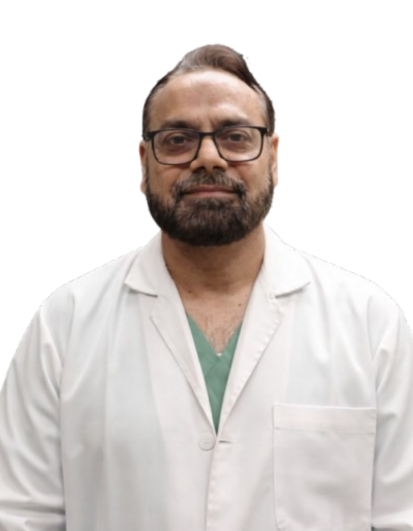
Meet Dr. Shariq Arshad, Orthopedics Specialist at Jigyasa Hospital
Dr. Shariq Arshad is an Orthopedics specialist at Jigyasa Hospital, Moradabad, who sees patients with conditions of the bones, joints, muscles, and spine, including bone and joint problems in children. He takes time to talk to parents and, where possible, to the child, examines gently, and explains in simple language what is normal, what needs observation, and what needs treatment.
His approach includes:
• Listening to parents' concerns and the child's history
• A gentle, child-friendly examination
• Separating normal variations from conditions that need treatment
• Preferring non-surgical treatment where it is effective
• Explaining the plan, expected course, and follow-up clearly
• Guiding parents on exercises, footwear, nutrition, and safe activity
For confirmed details about Dr. Shariq Arshad's qualifications, experience, areas of interest, and OPD timings, please call Jigyasa Hospital on 7900903333.
How Pediatric Orthopedic Problems Are Diagnosed
Diagnosis is based on listening, observing, and examining, with imaging used carefully. For children, the team tries to keep the process quick, gentle, and as stress-free as possible, and parents are encouraged to stay with the child.
Steps in diagnosis:
History: When the problem began, any injury, family history, birth history, and developmental milestones.
Physical examination: Posture, walking pattern, joint movement, limb length, spine, and muscle strength.
Observation of gait: Watching the child walk and run.
X-ray: To confirm fractures, hip problems, deformities, and growth-related conditions.
Ultrasound: Often useful for babies' hips and soft tissues, and avoids radiation. Please confirm availability at or through Jigyasa Hospital.
MRI or other tests: In selected cases.
Blood tests: For suspected infection, vitamin D deficiency, or inflammatory conditions.
Imaging is advised only when it is truly needed, keeping radiation exposure as low as reasonably possible.
Common Conditions Explained for Parents
Clubfoot
Clubfoot is a birth condition in which the foot turns inward and downward. It is treatable, and the best results come when treatment starts in the first weeks of life, usually with gentle serial casting and, in some cases, a small procedure, followed by bracing to prevent relapse. Many children go on to walk and play normally.
Developmental Dysplasia of the Hip (DDH)
In this condition, the hip joint does not form properly. Early detection, often in the first months, allows simple treatment such as a special harness. Late detection may need more complex treatment, so any concern about a baby's hip movement or uneven leg folds should be checked.
Flat Feet
Most babies and toddlers have flat feet, and the arch develops over the years. Flexible flat feet without pain usually need no treatment. A doctor should examine the child if the feet are painful, stiff, or very rigid.
Bow Legs and Knock Knees
Mild bowing is normal in toddlers, and mild knock knees are normal in preschool-aged children. Both usually correct on their own. Severe, one-sided, worsening, or late-onset deformities should be evaluated for causes such as vitamin D deficiency or other bone conditions.
Scoliosis
Scoliosis is a sideways curve of the spine, often noticed in adolescence. Mild curves are watched with regular checkups, moderate curves may need bracing, and severe curves may need surgery. Early detection gives more options.
Limping in Children
A limping child needs an examination, because causes range from a minor injury to hip conditions or infection. Sudden limping with fever or severe pain should be seen urgently.
Treatment Options in Pediatric Orthopedics
Non-Surgical Treatment
Most pediatric orthopedic problems are managed without surgery. The aim is to use the child's own growth and healing wherever it is safe to do so.
• Observation and regular follow-up for normal variations
• Casts and splints for fractures and some birth conditions
• Braces and harnesses for hip problems, spine curves, or clubfoot relapse prevention
• Physiotherapy and exercises for muscle tightness, posture, and strength
• Footwear advice and insoles when needed
• Nutritional correction, including vitamin D and calcium when advised by a doctor
• Safe pain relief with age-appropriate medicines
Surgical Treatment
Surgery in children is considered only when it offers a clear benefit and when non-surgical options are unlikely to work. Your doctor will explain the reason, the type of procedure, the risks and benefits, the alternatives, and the expected recovery, so that you can make an informed decision.
Surgery may be considered for:
• Displaced or unstable fractures, including some growth plate and elbow fractures
• Hip conditions that cannot be treated with a harness or other measures
• Persistent clubfoot or other birth deformities
• Severe or progressive spinal curves
• Bone or joint infections that need drainage
• Selected deformities or leg length differences
Please confirm with Jigyasa Hospital which procedures are available.
Nutrition and Lifestyle for Healthy Bones in Children
Strong bones begin in childhood, and what a child eats, how they play, and how much sunlight they get all matter. Good habits at this stage protect bone health for life.
• Give a balanced diet with milk, curd, paneer, eggs, pulses, green leafy vegetables, and fruits
• Ensure safe morning sunlight for vitamin D
• Give supplements only when a doctor advises
• Encourage outdoor play and physical activity every day
• Limit long hours of screen time and sitting
• Make sure school bags are not too heavy and are carried on both shoulders
• Choose comfortable, well-fitting footwear
Preventing Injuries in Children
Many childhood fractures and injuries can be prevented with simple safety measures. Supervision, safe play areas, and protective gear make a big difference.
• Use safety gates at stairs and guards on windows and balconies
• Supervise young children on beds, swings, and playgrounds
• Use helmets, knee pads, and wrist guards for cycling, skating, and sports
• Use child seats and seat belts in vehicles
• Keep floors dry and free from clutter
• Teach children safe ways to play and climb
• Avoid pulling a toddler by the arm, which can cause a pulled elbow
Common Myths About Children's Bones
Myth: A child's fracture will always heal perfectly on its own. Many heal well, but some, especially around growth plates, need careful treatment and follow-up.
Myth: Flat feet always need treatment. Most flexible flat feet are normal and painless, and do not need treatment.
Myth: Growing pains are always harmless. Typical growing pains are benign, but pain with limping, swelling, fever, or in one leg only should be examined.
Myth: Massage or local bone-setting can fix a child's fracture. Untrained manipulation can damage growth plates and worsen the injury.
Myth: If the child can move the arm or leg, it cannot be broken. Some fractures allow movement, so an X-ray is the only way to be sure.
Myth: Surgery is always needed for bone problems in children. Most children's orthopedic problems are managed without surgery.
Why Choose Jigyasa Hospital for Pediatric Orthopedic Care in Moradabad?
Parents choose Jigyasa Hospital for a caring, gentle, and clear approach to their child's bone and joint health. You receive honest guidance about what needs treatment and what simply needs time, along with a plan that is explained in simple language and care that is available close to home in Moradabad.
• Specialist orthopedic consultation with Dr. Shariq Arshad
• Child-friendly examination with parents involved at every step
• Careful, accurate diagnosis with only necessary tests
• Non-surgical options preferred where they are effective
• Clear explanation of the problem, treatment, and follow-up
• Guidance on nutrition, footwear, exercise, and injury prevention
For confirmed facilities such as X-ray, ultrasound, physiotherapy, operation theatre, emergency services, child-friendly facilities, insurance or cashless support, and consultation timings, please call Jigyasa Hospital on 7900903333.
Child-Friendly Orthopedic Consultation
Dr. Shariq Arshad assesses children's bones, joints, walking pattern, fractures, and growth-related concerns with a gentle, parent-involved approach.
Accurate Cause-Focused Diagnosis
Evaluation includes injury history, birth history, developmental milestones, posture, gait, joint movement, limb length, and necessary imaging.
Non-Surgical Options First
Where safe and effective, care begins with observation, casts, splints, braces, physiotherapy, footwear advice, and nutrition guidance.
Growth-Aware Treatment
Children's bones and growth plates require careful assessment, so treatment plans consider age, remaining growth, and long-term function.
Care for Common Childhood Problems
Consultation is available for fractures, clubfoot, hip dysplasia, flat feet, bow legs, knock knees, scoliosis, limping, and joint pain.
Accessible Location in Moradabad
Jigyasa Hospital is on Rampur Road, near Miglani Cinema, making pediatric orthopedic care convenient for families in and around Moradabad.
Book a Pediatric Orthopedic Consultation with Dr. Shariq Arshad
If your child has a limp, fracture, foot deformity, hip concern, uneven legs, back curve, joint pain, or difficulty walking after an injury, early orthopedic assessment can help protect growth and mobility.
Dr. Shariq Arshad at Jigyasa Hospital assesses children's bone and joint problems and explains observation, non-surgical treatment, and surgical options clearly to parents.
Address
Near Miglani Cinema, Rampur Road, Moradabad 244001
Phone
7900903333Frequently Asked Questions About Pediatric Orthopedic Care
Which doctor should I see for my child's bone and joint problems in Moradabad?
An orthopedic doctor is the right specialist. At Jigyasa Hospital, you can consult Dr. Shariq Arshad, Orthopedics.
How do I know if my child has a fracture?
Pain, swelling, bruising, a visible bend, or refusal to use the limb after a fall are warning signs. An X-ray is needed to confirm, so always get it checked.
Will my child need surgery for a fracture?
Not always. Many children's fractures heal with a cast or splint, and surgery is advised only for fractures that are displaced, unstable, or involve certain growth areas.
How long does a child's fracture take to heal?
Many heal in about three to six weeks, though it depends on the bone, the fracture type, and the child's age.
Is it normal for my toddler to have flat feet or bow legs?
Often yes. Flat feet in young children and mild bow legs in toddlers are commonly normal and settle with growth. A doctor can confirm whether yours is a normal variation.
My child limps. Should I worry?
A limp should always be evaluated, since causes range from minor injuries to hip problems or infection. Seek urgent care if there is fever, severe pain, or inability to walk.
What is clubfoot and can it be treated?
Clubfoot is a birth condition where the foot turns inward and downward. It is treatable, and early treatment, often with gentle casting, gives the best results.
Why Patients Choose Us
- 24/7 Emergency & Trauma Care
- Top Specialist Doctors
- Modern ICU & Operation Theatres
- Transparent & Affordable Pricing
- Ayushman Bharat Empanelled
- Cashless Insurance Support
- Multispeciality Under One Roof
Our Location
Near Miglani Cinema,
Rampur Road,
Moradabad 244001