
Portal Hypertension Treatment in Moradabad – Dr. Pabitra Sahu (Gastroenterology & Hepatology) at Jigyasa Hospital
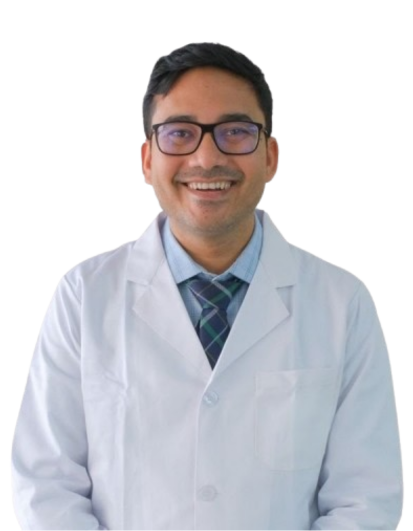
Who Is Dr. Pabitra Sahu?
Dr. Pabitra Sahu is a specialist in Gastroenterology and Hepatology at Jigyasa Hospital, Moradabad, providing comprehensive evaluation and management of portal hypertension and its complications. He coordinates endoscopic banding, medical therapy, and, when needed, TIPS procedures to reduce portal pressure and prevent life-threatening bleeding.
His approach combines detailed clinical assessment, Doppler ultrasound, upper GI endoscopy for variceal screening and treatment, and structured follow-up. Patients from Moradabad, Rampur, Sambhal, Amroha, and Bijnor access specialist liver care, in-house endoscopy and interventional radiology, and 24/7 emergency support for acute variceal bleeding.
What Is Portal Hypertension?
Portal hypertension refers to increased blood pressure within the portal venous system — the network of veins that carries blood from the digestive organs (stomach, intestines, spleen, and pancreas) to the liver. When the liver becomes scarred, most commonly due to cirrhosis, blood flow through it becomes obstructed, causing pressure to build up in the veins leading into the liver.
This increased pressure has significant downstream effects, since the body attempts to reroute blood through alternative pathways, leading to the development of enlarged, fragile veins in locations like the esophagus and stomach, along with other complications discussed below.
Causes of Portal Hypertension
While cirrhosis is by far the most common cause of portal hypertension in adults, other, less common causes include blood clots affecting the portal vein, conditions causing blockage of blood flow out of the liver, rare conditions causing increased blood flow into the portal system, and schistosomiasis in some regions.
Regardless of the underlying cause, the downstream effects and general management principles of portal hypertension share significant overlap, though addressing the underlying cause remains an important part of comprehensive treatment.
Major Complications of Portal Hypertension
Increased portal pressure leads to several serious complications that drive much of the morbidity in advanced liver disease.
1. Esophageal and Gastric Varices
As pressure builds in the portal system, blood is rerouted through smaller veins not designed to handle this increased flow, causing them to become enlarged and fragile — particularly in the esophagus and, less commonly, the stomach. These varices carry a significant risk of rupture, leading to potentially life-threatening bleeding.
2. Variceal Bleeding
When varices rupture, patients typically present with vomiting blood or passing black, tarry stools, representing a medical emergency requiring immediate treatment. This is among the most serious and urgent complications of portal hypertension.
3. Ascites
Increased pressure in the portal system, combined with reduced protein production from the underlying liver disease, contributes to fluid accumulation in the abdominal cavity.
4. Splenomegaly (Enlarged Spleen)
Increased pressure in the portal system can cause the spleen to enlarge, sometimes leading to a reduction in blood cell counts (particularly platelets), which can be identified incidentally through blood tests or imaging.
5. Hepatic Encephalopathy
Blood that bypasses the liver through alternative pathways carries toxins that would normally be filtered by the liver directly to general circulation, contributing to confusion and altered mental status.
6. Portal Hypertensive Gastropathy
Changes in the stomach lining related to portal hypertension can cause a distinct pattern of bleeding, sometimes more subtle and chronic compared to variceal bleeding, but still clinically significant.
Symptoms Suggesting Portal Hypertension
- • Vomiting blood or passing black, tarry stools (indicating variceal bleeding — a medical emergency).
- • Abdominal swelling due to fluid accumulation.
- • Easy bruising, related to low platelet counts from spleen enlargement.
- • Fatigue.
- • Confusion or altered mental status, particularly in more advanced cases.
- • Symptoms of underlying liver disease.
Specialist Hepatology & Endoscopy Care
Dr. Pabitra Sahu provides comprehensive evaluation and staged management of portal hypertension and its complications, including varices, ascites, and splenomegaly.
In-House TIPS / Interventional Radiology
Advanced TIPS procedure available on-site to reduce portal pressure in selected patients with recurrent bleeding or refractory ascites, avoiding delays from external referral.
Endoscopic Variceal Banding & Surveillance
Diagnostic and therapeutic endoscopy for variceal screening, banding to prevent first bleed, and urgent endoscopy for acute variceal bleeding, with structured follow-up.
24/7 Emergency Support for Variceal Bleeding
Time-sensitive management of acute variceal bleeding with resuscitation, medications, urgent endoscopy, antibiotics, and coordination for TIPS when required.
Trusted Portal Hypertension Care in Moradabad
Patients from Moradabad, Rampur, Sambhal, Amroha, Bijnor, and nearby districts choose Jigyasa Hospital for specialist care, NABL lab, in-house endoscopy and TIPS, and Ayushman Bharat empanelment.
Diagnosis of Portal Hypertension at Jigyasa Hospital
Accurate diagnosis involves clinical assessment, blood tests, imaging, and endoscopy to evaluate both the underlying liver disease and the specific complications of portal hypertension.
1. Clinical Assessment
Including evaluation for signs of underlying liver disease and specific portal hypertension complications.
2. Complete Blood Count
Often showing reduced platelet counts related to spleen enlargement.
3. Abdominal Ultrasound with Doppler
Assessing portal vein blood flow and detecting spleen enlargement.
4. Upper GI Endoscopy
To directly visualize and assess the presence and severity of esophageal or gastric varices, an essential part of risk assessment and monitoring.
5. Additional Imaging
Such as CT or MRI, in select cases to further characterize the underlying cause or extent of portal hypertension.
Treatment Approach for Portal Hypertension
Management focuses on treating the underlying liver disease, preventing and controlling variceal bleeding, managing ascites and other complications, and, in selected cases, reducing portal pressure with TIPS.
1. Managing the Underlying Liver Disease
Since cirrhosis is the most common underlying cause, treating the primary liver condition forms an important foundation of overall management, alongside specific portal hypertension treatments.
2. Preventing First Variceal Bleeding (Primary Prophylaxis)
For patients found to have varices on screening endoscopy who have not yet experienced bleeding, preventive measures include:
- Medications (Beta-Blockers): Certain medications reduce portal pressure, lowering the risk of a first bleeding episode.
- Endoscopic Variceal Banding: In select cases, particularly for larger varices, banding may be performed during endoscopy to reduce bleeding risk.
3. Managing Acute Variceal Bleeding
This represents a medical emergency requiring immediate hospitalization and treatment, including:
- Fluid and blood product resuscitation as needed.
- Medications to reduce portal pressure acutely.
- Urgent endoscopy to identify and directly treat the bleeding source, typically through banding.
- Antibiotics, since patients with variceal bleeding are at increased risk of infection.
- In select, more severe or refractory cases, TIPS may be considered.
4. TIPS (Transjugular Intrahepatic Portosystemic Shunt)
TIPS is a specialized interventional radiology procedure that creates a new pathway within the liver to reduce portal pressure directly, effectively bypassing the obstruction caused by cirrhosis. This procedure, available in-house at Jigyasa Hospital, is considered in specific situations, including:
- Recurrent variceal bleeding despite standard treatment.
- Refractory ascites not adequately controlled with medical management.
- Select cases of acute, severe variceal bleeding not controlled with initial endoscopic treatment.
TIPS involves placing a stent between the portal and hepatic venous systems within the liver, performed under imaging guidance by an interventional radiologist, in coordination with the hepatology team managing the patient's overall care.
5. Managing Ascites
This includes salt restriction, diuretic medications, and, when needed, therapeutic drainage (paracentesis), with TIPS considered for cases of refractory ascites not responding to standard measures.
6. Ongoing Endoscopic Surveillance
Patients with known varices typically require periodic follow-up endoscopy to monitor for changes in variceal size and reassess bleeding risk over time, allowing timely adjustment of preventive measures.
7. Managing Splenomegaly-Related Complications
For patients with significantly reduced blood counts related to spleen enlargement, monitoring and, in select cases, specific management strategies are considered based on individual clinical circumstances.
Why In-House TIPS Capability Matters
For patients with advanced portal hypertension complications, having access to TIPS without needing referral to a distant tertiary center can meaningfully reduce delays in critical care, particularly relevant for the urgent management of recurrent or severe variceal bleeding and refractory ascites. This capability, combined with Dr. Sahu's ongoing hepatology management, allows for more coordinated, continuous care.
Why Choose Jigyasa Hospital for Portal Hypertension Care?
Portal hypertension requires specialist evaluation, endoscopic therapy, and, in selected cases, advanced procedures like TIPS. Jigyasa Hospital, located on Rampur Road near Miglani Cinema, Moradabad, offers comprehensive care under Dr. Pabitra Sahu with in-house endoscopy, interventional radiology, and 24/7 emergency support.
- • Specialist Expertise: Dr. Pabitra Sahu's training in Gastroenterology and Hepatology enables comprehensive evaluation and staged management of portal hypertension and its complications.
- • In-House TIPS / Interventional Radiology: Avoiding the need for referral to distant centers for this advanced procedure when clinically indicated.
- • In-House Endoscopy: Supporting both diagnostic assessment and therapeutic banding for variceal management.
- • 24/7 Emergency Care: Critical for the time-sensitive management of acute variceal bleeding.
- • NABL-Accredited Laboratory: Supporting comprehensive blood testing and monitoring.
- • Ayushman Bharat PM-JAY Empanelled: Supporting eligible patients with treatment and procedure costs.
- • Regional Reach: Serving Moradabad, Rampur, Sambhal, Amroha, and Bijnor.
Book an Appointment with Dr. Pabitra Sahu
Jigyasa Hospital offers specialist gastroenterology and hepatology care for portal hypertension under the guidance of Dr. Pabitra Sahu. Expert evaluation, endoscopic therapy, and in-house TIPS capability help prevent and manage life-threatening complications like variceal bleeding and refractory ascites.
Near Miglani Cinema, Rampur Road, Moradabad 244001
Call Now
7900903333Frequently Asked Questions
Is portal hypertension the same as high blood pressure (hypertension)?
No, they are different conditions. Regular hypertension refers to elevated pressure in the general arterial circulation, while portal hypertension specifically refers to elevated pressure in the portal venous system connecting digestive organs to the liver, most commonly due to cirrhosis.
Are esophageal varices always dangerous?
Not all varices bleed, but they do carry a risk of rupture, which increases with larger variceal size. This is why endoscopic screening and, when appropriate, preventive treatment are recommended for patients with known or suspected portal hypertension.
What is TIPS, and when is it needed?
TIPS is a specialized procedure that creates a new pathway within the liver to reduce portal pressure. It is typically considered for recurrent variceal bleeding despite standard treatment, or for ascites that does not respond adequately to medical management.
Can portal hypertension be reversed?
This depends on the underlying cause. In some cases, particularly when the underlying liver disease can be treated or improved, portal hypertension may partially improve, though in established cirrhosis, the focus is generally on managing complications rather than complete reversal.
How often do I need endoscopy if I have known varices?
This depends on the size and characteristics of the varices found on initial evaluation, with your specialist providing a personalized surveillance schedule based on your specific risk profile.
Is variceal bleeding always fatal?
While variceal bleeding is a serious medical emergency, prompt treatment — including endoscopic intervention and, when needed, TIPS — significantly improves outcomes for most patients, though it does require immediate medical attention.
Can portal hypertension occur without cirrhosis?
Yes, though less common, certain conditions like blood clots in the portal vein or specific vascular abnormalities can cause portal hypertension even without underlying cirrhosis, requiring their own specific evaluation and management approach.
Does Jigyasa Hospital perform TIPS on-site?
Yes, Jigyasa Hospital has in-house interventional radiology capability, allowing TIPS to be performed locally when clinically indicated, coordinated closely with Dr. Sahu's ongoing hepatology management.
Why Patients Choose Us
- 24/7 Emergency & Trauma Care
- Top Specialist Doctors
- Modern ICU & Operation Theatres
- Transparent & Affordable Pricing
- Ayushman Bharat Empanelled
- Cashless Insurance Support
- Multispeciality Under One Roof
Our Location
Near Miglani Cinema,
Rampur Road,
Moradabad 244001