
Post Heart Attack Care in Moradabad: What Comes After Survival
Surviving a heart attack is a life-changing event for both patients and families. The emergency treatment may restore blood flow through angioplasty, stenting, or medicines, but recovery does not end when the patient leaves the hospital. The weeks, months, and years afterward are important for protecting heart function and preventing another cardiac event.
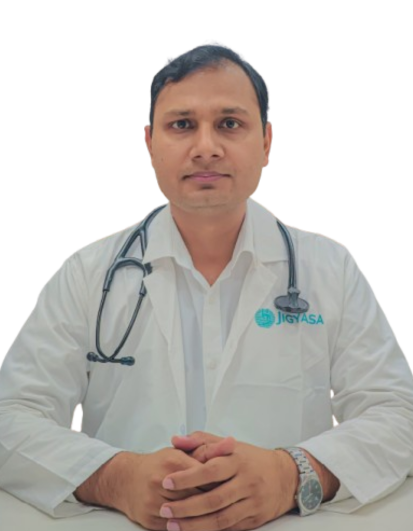
Dr. Amit Kumar Singh, interventional cardiologist at Jigyasa Hospital, provides structured post heart attack care for patients across Moradabad and the surrounding Rohilkhand region. Care includes medicine review, cardiac testing, rehabilitation guidance, lifestyle planning, warning-sign education, and long-term cardiovascular risk management.
Why Care After a Heart Attack Matters
A heart attack usually occurs when blood flow to part of the heart muscle becomes blocked, commonly because a blood clot forms inside a narrowed coronary artery. Even when emergency treatment successfully restores blood flow, the heart muscle may have sustained some damage and the underlying coronary artery disease usually remains.
Post heart attack care is therefore not simply about recovering from the immediate event. It involves protecting remaining heart function, preventing another blockage, controlling risk factors, taking medicines consistently, identifying warning signs, and supporting emotional recovery.
Immediate Recovery After a Heart Attack
The first few weeks after a heart attack require attention to physical healing, medicines, activity, wound care, and emotional adjustment. Patients should follow the discharge instructions carefully and contact the cardiac team if new symptoms, medicine concerns, or unusual changes develop.
Rest while gradually resuming light activity according to the cardiac team's instructions.
Monitor the angioplasty puncture site in the wrist or groin for unusual swelling, bleeding, redness, or increasing discomfort.
Take all prescribed medicines at the correct time and do not stop antiplatelet medicines without medical advice.
Attend scheduled follow-up appointments and complete recommended tests.
Discuss anxiety, fear, low mood, sleep problems, or repeated worry about symptoms with the cardiac team.
Prolonged inactivity is not always helpful. Once the cardiac team confirms that the patient is stable, light activity can be increased gradually. The correct pace depends on the heart attack, treatment received, heart function, age, and other medical conditions.
Essential Medicines After a Heart Attack
Most patients receive a combination of medicines after a heart attack. Each medicine has a specific role in protecting the heart, preventing clot formation, controlling blood pressure, lowering cholesterol, and supporting recovery. Feeling better is usually a sign that the treatment is working, not that medicines are no longer required.
Antiplatelet Medicines
These medicines help prevent blood clots from forming around a stent or inside narrowed coronary arteries. They are especially important after angioplasty and stenting. Patients should never stop them without consulting Dr. Amit Kumar Singh.
Statins
Statins lower harmful LDL cholesterol and help stabilise plaque inside the arteries. Their protective effect may reduce the risk of future blockages even when a patient did not have very high cholesterol before the heart attack.
Beta-Blockers
Beta-blockers reduce the heart's workload, control heart rate, and may help lower blood pressure. They can reduce strain on the heart while it recovers after a significant cardiac event.
ACE Inhibitors or ARBs
These medicines help protect heart function, particularly when the heart muscle has been damaged. They may also help control blood pressure and reduce the risk of further weakening of the heart.
Other Supporting Medicines
Depending on the patient's condition, additional medicines for diabetes, blood pressure, rhythm problems, heart failure, or other risk factors may be added or adjusted as part of the complete treatment plan.
Patients should never stop, skip, or change heart medicines without consulting Dr. Amit Kumar Singh. This is particularly important for antiplatelet medicines after stenting because stopping them early can increase the risk of clot formation and another cardiac event.
Cardiac Rehabilitation: Rebuilding Strength and Confidence
Cardiac rehabilitation combines supervised exercise, education, lifestyle support, and emotional care. It helps patients rebuild cardiovascular fitness in a safe manner and reduces the fear that physical activity may harm the heart. It also helps convert hospital advice into practical habits that can be maintained at home.
Supervised Exercise
Gradually increasing physical activity helps rebuild cardiovascular fitness in a safe and monitored environment. It also helps patients regain confidence after fearing that exercise may damage the heart.
Heart-Healthy Education
Patients learn about diet, weight management, medicines, blood pressure, cholesterol, diabetes, smoking, and other risk factors that influence the possibility of another cardiac event.
Psychological Support
Anxiety and depression are common after a heart attack. Emotional support and open communication help patients manage fear and return to daily activities with greater confidence.
Risk-Factor Management
Cardiac rehabilitation helps convert hospital advice into practical daily habits that support consistent control of blood pressure, cholesterol, diabetes, weight, and tobacco use.
Patients who follow a structured recovery programme often develop better confidence, improved fitness, stronger understanding of risk factors, and greater consistency with medicines and lifestyle changes. The programme should always be adapted to the patient's heart function and overall health.
Lifestyle Changes That Protect the Heart
Medicines and monitoring are essential, but long-term recovery also depends on sustainable lifestyle changes. Patients should avoid making sudden or extreme changes without guidance. A gradual and realistic plan is more likely to become part of daily life and protect the heart over time.
Follow a heart-healthy diet low in saturated fat, excess salt, processed food, and trans fats, while including vegetables, fruits, pulses, and whole grains.
Gradually increase physical activity according to cardiac rehabilitation or cardiologist guidance.
Stop smoking and tobacco completely because even continued low-level use increases the risk of another heart attack.
Maintain a healthy weight and manage related conditions such as diabetes, high blood pressure, and high cholesterol.
Use practical stress-management methods such as adequate sleep, relaxation techniques, pacing daily activities, and emotional support.
Limit or avoid alcohol depending on individual health, medicines, blood pressure, and advice from the treating cardiologist.
The appropriate diet, exercise level, work routine, travel plan, and alcohol advice may differ between patients. Dr. Amit Kumar Singh can help create a practical plan based on the patient's heart function, treatment, age, occupation, diabetes, blood pressure, and other health factors.
Long-Term Follow-Up and Monitoring
Post heart attack care does not end when the patient feels physically recovered. Long-term follow-up is important for monitoring heart function, reviewing medicines, controlling risk factors, and identifying new symptoms or complications early.
Regular cardiology visits to review symptoms, medicines, blood pressure, cholesterol, diabetes, and heart function.
Periodic ECG, echocardiography, stress testing, or other investigations when clinically indicated.
Awareness of new or worsening chest discomfort, breathlessness, palpitations, fainting, or unusual fatigue.
Ongoing control of diabetes, high blood pressure, high cholesterol, obesity, smoking, and other contributing factors.
Discussion of return to work, driving, travel, exercise, diet, sleep, anxiety, and other recovery-related concerns.
Follow-up testing may include ECG, echocardiography, TMT, blood investigations, or coronary imaging depending on symptoms and individual risk. Patients should contact the cardiac team promptly if they develop new or worsening chest discomfort, breathlessness, palpitations, fainting, or unusual fatigue.
Why Local, Long-Term Care Matters
Post heart attack care is a long-term relationship between the patient and the cardiologist. Local access in Moradabad makes it easier to attend appointments, review medicines, investigate symptoms quickly, involve family members, and maintain consistent risk-factor control without the additional burden of repeated long-distance travel.
Regular follow-up is easier when a cardiologist is available locally in Moradabad.
New or subtle symptoms can be investigated promptly instead of being delayed because of travel.
Local emergency cardiac access can be important when a recurrent heart attack presents unexpectedly.
Family members can remain involved in medicines, lifestyle changes, appointments, and emotional support.
Continuity with the same cardiologist helps ensure treatment decisions are based on the complete cardiac history.
Reduced travel and financial stress makes long-term adherence more realistic for patients and families.
Continuity with the same cardiologist also means that treatment decisions are made with knowledge of the original heart attack, angioplasty or stenting, previous reports, medicine response, family history, and recovery progress.
What to Expect During Follow-Up Consultations
Follow-up visits usually begin with a review of how the patient has been feeling since the previous appointment. Dr. Amit Kumar Singh discusses new symptoms, medicine side effects, blood pressure, physical activity, diet, sleep, anxiety, and any difficulty following the recovery plan.
Recent ECG, echocardiography, stress test, blood test, or other reports are reviewed when available. Medicines may be adjusted, further testing may be arranged, and guidance may be provided regarding work, driving, travel, exercise, and daily activities.
Patients are encouraged to ask questions openly. Understanding what symptoms mean and knowing when to seek urgent care can reduce anxiety and support safer long-term recovery.
Why Choose Dr. Amit Kumar Singh at Jigyasa Hospital?
Recovery after a heart attack requires more than a single procedure. At Jigyasa Hospital, Dr. Amit Kumar Singh provides structured post heart attack care that combines interventional cardiology expertise, medicine management, cardiac testing, rehabilitation guidance, emergency preparedness, and long-term prevention.
Interventional cardiology expertise for treatment and long-term follow-up.
Structured and evidence-based medicine and risk-factor management.
Access to ECG, 2D Echo, TMT, coronary angiography, and relevant follow-up testing.
Emergency cardiac care readiness for recurrent or new cardiac symptoms.
Clear and compassionate communication throughout recovery.
Local accessibility for patients from Moradabad, Rampur, Amroha, Sambhal, Bijnor, and Chandausi.
Continuity of care from the initial cardiac event through long-term follow-up.
Structured Post Heart Attack Care
A personalised recovery plan covering medicines, heart function, lifestyle, emotional health, warning signs, and long-term prevention.
Complete Cardiac Monitoring
Access to ECG, 2D Echo, TMT, coronary angiography, blood tests, and other investigations when clinically required.
Medicine and Risk Management
Regular review of antiplatelets, statins, beta-blockers, blood pressure medicines, diabetes treatment, and other cardiac medicines.
Cardiac Rehabilitation Guidance
Practical advice regarding safe physical activity, diet, weight, stress management, tobacco cessation, and return to daily life.
Long-Term Follow-Up
Continued monitoring to identify recurrent symptoms, medicine concerns, new blockages, or changes in heart function early.
Accessible Care in Moradabad
Post heart attack consultation, testing, emergency guidance, and long-term cardiac care are available locally at Jigyasa Hospital.
Consult Dr. Amit Kumar Singh for Post Heart Attack Care
If you or a family member has recently experienced a heart attack, undergone angioplasty or stenting, or is experiencing new chest discomfort, breathlessness, fatigue, palpitations, or anxiety during recovery, structured cardiac follow-up is important.
Contact Jigyasa Hospital, Moradabad, to discuss your discharge reports, medicines, heart function, recovery progress, lifestyle concerns, and long-term prevention plan with Dr. Amit Kumar Singh. The cardiac team can guide you through medicine management, cardiac rehabilitation, testing, warning signs, and follow-up.
Address
Near Miglani Cinema, Rampur Road, Moradabad 244001
Phone
7900903333Frequently Asked Questions About Post Heart Attack Care
How long does recovery take after a heart attack?
Physical recovery varies by individual, but many patients gradually return to normal activities over several weeks to a few months. Complete recovery, including rebuilding fitness and confidence, often continues for several months and should be guided by the cardiac team.
Can I stop my heart medicines once I feel better?
No. Medicines prescribed after a heart attack, particularly antiplatelet medicines, must be continued exactly as directed even after symptoms resolve. Stopping them without medical guidance can significantly increase the risk of another heart attack or other cardiac event.
Is it safe to exercise after a heart attack?
In most cases, gradual and supervised physical activity is safe and beneficial. Cardiac rehabilitation provides a structured way to rebuild fitness while monitoring the patient's response to exercise. The timing and intensity should be decided by the cardiologist.
How soon can I return to work after a heart attack?
The timing depends on the severity of the heart attack, treatment received, heart function, recovery progress, and the physical or emotional demands of the job. Dr. Amit Kumar Singh provides individualised guidance regarding work, travel, driving, and physical activity.
Will I need another procedure in the future?
Not necessarily. Many patients avoid further procedures when they take medicines consistently, stop smoking, control blood pressure and cholesterol, follow a heart-healthy lifestyle, and attend regular follow-up appointments. Ongoing monitoring helps identify new problems early if they develop.
Is depression or anxiety common after a heart attack?
Yes. Anxiety, fear, low mood, and increased awareness of every chest sensation are common after a heart attack. These feelings should not be dismissed. Discussing emotional health with the cardiac team is an important part of complete recovery.
What symptoms need immediate medical attention after a heart attack?
New or worsening chest discomfort, breathlessness, palpitations, sudden severe fatigue, fainting, or unusual sweating should be treated as urgent symptoms. Patients should seek immediate medical attention rather than waiting for a scheduled follow-up appointment.
Can I have a normal life after a heart attack?
Yes. Many patients live full, active, and productive lives after a heart attack. Consistent medicines, gradual physical activity, healthy lifestyle changes, emotional support, and regular cardiology follow-up help protect long-term heart health.
Does Jigyasa Hospital provide cardiac rehabilitation guidance?
Yes. Dr. Amit Kumar Singh provides structured guidance regarding safe physical activity, lifestyle modification, risk-factor management, medicine adherence, and long-term monitoring as part of post heart attack recovery care.
Does Ayushman Bharat PM-JAY cover follow-up cardiac care?
Jigyasa Hospital is empanelled under Ayushman Bharat Pradhan Mantri Jan Arogya Yojana. Coverage for specific follow-up treatments depends on individual eligibility and the applicable scheme guidelines. The hospital team can assist with verification during consultation.
Why Patients Choose Us
- 24/7 Emergency & Trauma Care
- Top Specialist Doctors
- Modern ICU & Operation Theatres
- Transparent & Affordable Pricing
- Ayushman Bharat Empanelled
- Cashless Insurance Support
- Multispeciality Under One Roof
Our Location
Near Miglani Cinema,
Rampur Road,
Moradabad 244001