
Primary Angioplasty in Moradabad: Emergency Treatment for a Heart Attack
When a heart attack strikes, the most important question is not "what is happening?" but "how fast can the blocked artery be opened?" The treatment that does this most effectively in many heart attacks is primary angioplasty, an emergency procedure to reopen the blocked artery and restore blood flow to the heart muscle.
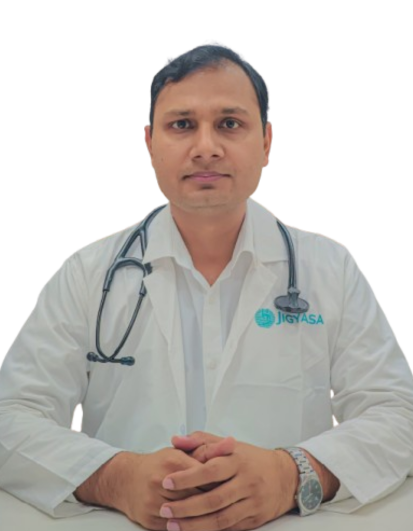
This guide explains what primary angioplasty is, when it is used, what happens step by step, what the risks and recovery look like, and how to prepare. It is written for patients and families in Moradabad and nearby areas, and introduces Dr. Amit Kumar Singh, Interventional Cardiologist, at Jigyasa Hospital on Rampur Road, near Miglani Cinema.
What Is a Heart Attack?
The heart is a muscle that needs a constant supply of oxygen-rich blood, delivered by the coronary arteries. Over the years, fatty deposits, called plaque, can build up inside these arteries. If a plaque cracks, a blood clot forms on it and can suddenly block the artery. The part of the heart muscle supplied by that artery is starved of oxygen and begins to die. This is a heart attack, or myocardial infarction.
Doctors often use the phrase "time is muscle." The longer the artery stays blocked, the more heart muscle is lost, and the weaker the heart may be afterwards. Opening the artery quickly protects heart muscle, reduces the risk of heart failure and dangerous rhythm problems, and improves the chance of survival.
What Is Primary Angioplasty?
Angioplasty is a catheter-based procedure that opens a narrowed or blocked artery. Primary angioplasty, also called primary PCI or percutaneous coronary intervention, is angioplasty done as the first and immediate treatment during a heart attack, rather than as a planned procedure later.
It is most commonly used in a type of heart attack called STEMI, or ST-elevation myocardial infarction, in which an artery is completely blocked and the ECG shows a characteristic change. In such cases, opening the artery as quickly as possible is usually the preferred treatment where facilities and timing allow.
In primary angioplasty, an interventional cardiologist:
1. Passes a thin tube, or catheter, through an artery, usually at the wrist or groin, up to the heart
2. Injects contrast dye so the arteries can be seen on an X-ray screen, called angiography
3. Identifies the blocked artery
4. Guides a fine wire across the blockage and, where needed, removes or treats the clot
5. Inflates a tiny balloon to open the artery
6. Places a stent, a small metal mesh tube, to hold the artery open
The procedure is done under local anaesthesia at the puncture site, with the patient awake. It is performed in a catheterisation lab, a specially equipped room with X-ray imaging and a trained team.
Primary Angioplasty vs Other Heart Attack Treatments
Treatment depends on the type of heart attack, how long since symptoms began, how stable the patient is, and what facilities are available.
Primary angioplasty. Generally preferred in STEMI when it can be done quickly at a capable centre, because it directly opens the artery and shows exactly what is blocked.
Clot-dissolving medicines. In some situations, particularly when angioplasty cannot be done in time, medicines that dissolve the clot may be given first, and the patient may then be transferred or monitored for further treatment. Your cardiologist decides based on the situation.
Medicines and monitoring. Some types of heart attack, such as NSTEMI, and unstable angina are managed first with medicines, followed by angiography and angioplasty within a suitable time if needed.
Bypass surgery (CABG). For some patients, such as those with very extensive or complex blockages, bypass surgery may be advised. Bypass surgery is not performed at Jigyasa Hospital, and patients who need it are advised and guided on referral.
The right choice is made quickly in the emergency room by assessing the ECG, symptoms, blood tests, and your overall condition.
Warning Signs of a Heart Attack: Act Immediately
Call 7900903333, or go to the nearest emergency facility, if you or someone near you has:
• Chest pain, pressure, tightness, squeezing, or heaviness, lasting more than a few minutes or coming and going
• Pain spreading to the left arm, shoulder, neck, jaw, or back
• Sweating, nausea, vomiting, or a feeling of impending doom
• Sudden breathlessness
• Light-headedness or fainting
Symptoms may be different in women, older adults, and people with diabetes, who may have extreme tiredness, breathlessness, nausea, upper back or jaw pain, or discomfort that feels like indigestion, without classic chest pain.
What to do while waiting for help:
• Stop all activity and sit or lie down in a comfortable, semi-upright position
• Loosen tight clothing
• Do not drive yourself. Ask someone else to take you, or call for an ambulance
• Do not eat or drink, and do not wait to see if the pain passes
• If a doctor has previously advised you to chew aspirin in a suspected heart attack, and you have no allergy or bleeding problem, follow that advice. If you are unsure, tell the emergency team immediately and follow their instructions
• Tell the team about your medicines, especially blood thinners, and any allergies
Do not delay because it is night, because you are embarrassed, or because you think it is "just gas." Early treatment saves heart muscle and lives.
What Happens When You Arrive at the Hospital
Every heart attack is different, but a typical emergency pathway looks like this.
1. Quick assessment. The team asks about your symptoms and checks your pulse, blood pressure, and oxygen level.
2. ECG within minutes. This painless recording of the heart's electrical activity shows whether a heart attack is under way and what type it is.
3. Blood tests. Markers such as troponin help confirm heart muscle injury, and other tests check blood sugar, kidney function, and clotting.
4. First treatment. Medicines may be started to ease the heart's workload, relieve pain, and prevent further clotting. Oxygen is given if needed.
5. Decision on the procedure. If primary angioplasty is appropriate, the cardiologist explains the plan, and the family is asked for consent. In an emergency, this conversation is brief and focused. It is reasonable to ask: what is the diagnosis, why is this procedure needed, what are the main risks, and what are the alternatives?
6. The procedure. You are taken to the cath lab, and the procedure is performed while you are awake under local anaesthesia, with monitoring throughout.
7. Intensive monitoring afterwards. You are watched closely in an ICU or cardiac care unit for rhythm problems, blood pressure changes, and bleeding.
Which facilities and services are available, and at what hours, depends on the hospital. Please call Jigyasa Hospital on 7900903333 to confirm current emergency cardiac services before you need them.
Inside the Procedure: Step by Step
Many patients and families are anxious about what happens in the cath lab. Here is what to expect.
• Preparation. The wrist or groin is cleaned and numbed with local anaesthetic. You may feel a small pinch, and you will be awake throughout
• Access. The cardiologist places a small tube, or sheath, in the artery, and a thin catheter is guided to the heart under X-ray imaging. You may not feel the catheter moving through the artery
• Dye and imaging. When contrast dye is injected, some people feel a warm flush. The cardiologist watches the screen to find the blockage
• Opening the artery. A fine wire crosses the blockage, and a balloon is inflated at that spot. You may feel chest discomfort during the inflation, which passes when the balloon is deflated. Tell the team if you feel pain
• Stenting. A stent, often coated with medicine to reduce re-narrowing, is placed to hold the artery open. Once flow is restored, the dye shows the artery opened
• Finishing. The catheter is removed, and the wrist site is closed with a pressure band, or the groin site is closed with pressure or a closure device
• Duration. It commonly takes under an hour, though this varies with the complexity of the blockage
Most patients feel relief of chest pain once blood flow is restored, though some discomfort may continue for a while.
Risks and Complications: An Honest Discussion
Primary angioplasty is a well-established, life-saving procedure, but it is performed on patients who are critically ill, and like any procedure, it carries risks. Your cardiologist should discuss them. They include:
• Bleeding or bruising at the puncture site, and rarely a more significant bleed
• Allergic reaction or kidney strain from contrast dye, particularly in people with existing kidney problems
• Rhythm problems, which can occur during a heart attack and the procedure, and are monitored and treated
• Re-blockage or clot in the stent, particularly if blood-thinning medicines are stopped early
• Damage to the artery during the procedure, which is uncommon
• Stroke, which is rare
• The artery may not be fully opened, or part of the heart muscle may already be permanently damaged by the time of treatment
• Heart failure or shock, particularly in large heart attacks, where the heart is severely weakened
• Death, which is a risk in any serious heart attack, and is higher in large heart attacks, older patients, and those who arrive late
Because heart attack patients are very ill, the outcome depends heavily on how quickly treatment starts and how much heart muscle is already damaged, which is why early arrival matters so much.
After the Procedure: Recovery
In the hospital. Most patients stay in the ICU or cardiac care unit for monitoring, and then move to a ward. Many go home within a few days, depending on the size of the heart attack and how well the heart is working. An echocardiogram is often done to check the heart's pumping strength.
Medicines are essential. After a heart attack and stent, you will usually be prescribed several medicines, which may include blood thinners to keep the stent open, cholesterol-lowering medicines, medicines to protect the heart and control blood pressure, and diabetes medicines if needed. Stopping the blood thinners early can cause a dangerous clot in the stent. Never stop or change any medicine without your cardiologist's advice.
Returning to normal life. Most people gradually resume activities over weeks, as the cardiologist advises. Common questions about driving, work, travel, and intimacy have individual answers, so ask your doctor.
Lifestyle changes are as important as the procedure:
• Stop smoking and tobacco completely
• Eat a heart-healthy diet, with less salt, sugar, refined flour, and deep-fried foods, and more vegetables, fruit, pulses, and whole grains
• Walk daily, increasing gradually as advised
• Control blood pressure, blood sugar, and cholesterol
• Maintain a healthy weight
• Limit alcohol, manage stress, and sleep well
Follow-up. Attend all appointments, and repeat tests as advised. Ask about cardiac rehabilitation, a structured programme of supervised exercise, education, and support that improves recovery and lowers the risk of another event.
Emotional recovery. Anxiety, fear, and low mood are common after a heart attack. Talk to your family and your doctor, because support helps.
Warning Signs After Going Home
Contact your cardiologist, or go to the hospital, if you have:
• Chest pain or pressure that returns, particularly with exertion or at rest
• Sudden breathlessness, or breathlessness lying flat
• Fainting, palpitations, or a very fast or irregular heartbeat
• Swelling, pain, bleeding, or a lump at the puncture site, or a cold, numb, or pale hand or leg
• Black stools, vomiting blood, or heavy bleeding while on blood thinners
• Sudden weakness, face drooping, or slurred speech, which may suggest stroke
• Fever or signs of infection
In an emergency, call 7900903333 or go to the hospital immediately.
Who Is at Higher Risk of a Heart Attack?
• Smokers and tobacco users
• People with diabetes, high blood pressure, or high cholesterol
• Those with a family history of early heart disease, heart attack, or sudden death
• People who are overweight, or inactive
• Older adults, and women after menopause
• People with kidney disease
• Those under chronic stress, with poor sleep or heavy alcohol use
Knowing your numbers, including blood pressure, blood sugar, and cholesterol, taking prescribed medicines regularly, and having regular check-ups lower your risk considerably.
Myths About Heart Attacks and Angioplasty
"A heart attack always starts with sharp chest pain." Not always. It can feel like pressure, heaviness, or indigestion, and may be mild or unusual, particularly in women, older adults, and people with diabetes.
"I'll wait to see whether the pain goes away." Waiting costs heart muscle. Chest pain lasting more than a few minutes needs emergency care.
"Angioplasty is open-heart surgery." No. It is done through a small puncture, usually at the wrist, without opening the chest.
"Once I have a stent, I am cured." A stent opens one blockage, but the underlying disease continues. Medicines, lifestyle changes, and follow-up remain essential.
"I can stop my blood thinners when I feel fine." Stopping them early can lead to a clot in the stent. Always ask your cardiologist first.
"Angioplasty is only for the very sick." It is a common procedure, used both in emergencies and for planned treatment of blockages that cause symptoms.
"If I'm young, I can't have a heart attack." Heart attacks do occur in younger people, especially with smoking, diabetes, high blood pressure, high cholesterol, or a family history.
Why Consider Jigyasa Hospital and Dr. Amit Kumar Singh?
An interventional cardiologist who performs angioplasty. Dr. Amit Kumar Singh performs coronary angiography and angioplasty with stenting, so patients with blocked heart arteries can be assessed and treated in one place.
Honesty about what is and isn't done. Bypass surgery and heart valve replacement are not performed at Jigyasa Hospital. Patients who need them are advised clearly and guided on referral.
A multispeciality hospital. Heart attack patients often have diabetes, kidney disease, or high blood pressure, and need support from internal medicine, endocrinology, and other departments, all under one roof.
Easy-to-find location. On Rampur Road, near Miglani Cinema, Moradabad – 244001, reachable from Moradabad city and nearby areas such as Rampur, Sambhal, Amroha, Bijnor, and Chandausi.
Clear communication. Questions are welcome, and explanations are given in simple Hindi or English.
For confirmed details about Dr. Amit Kumar Singh's qualifications, experience, OPD timings, cath lab, ICU or CCU, emergency availability for primary angioplasty, ECG and cardiac marker testing, ambulance, insurance or cashless support, and cardiac rehabilitation, please call Jigyasa Hospital on 7900903333.
Planning Ahead: What Families Should Do Now
• Save the hospital number, 7900903333, and a map pin on every family member's phone
• Keep your medical records together: ECGs, echo reports, angiograms, discharge summaries, and prescriptions
• Keep a current medicine list, including doses and any allergies
• Know the warning signs, and teach them to your family
• Ask the hospital in advance about its emergency cardiac pathway and timings
• Ask about insurance, cashless options, and government schemes, so paperwork does not slow decisions
• Have a plan for who will accompany the patient and how you will travel quickly
Questions Worth Asking Your Cardiologist
• What type of heart attack is this, and how serious is it?
• Is primary angioplasty the right treatment, and why?
• What are the risks in my situation, and what are the alternatives?
• What medicines will I take, for how long, and which should I never stop?
• When can I return to work, driving, and exercise?
• What lifestyle changes matter most for me?
• Which symptoms should make me call or return urgently?
• When is my next check-up?
• What is the expected cost, and what does it include?
Emergency Heart Attack Assessment
Dr. Amit Kumar Singh assesses suspected heart attack symptoms with urgent evaluation, ECG, blood tests, and appropriate treatment planning.
Primary Angioplasty Expertise
Where appropriate, a blocked coronary artery can be opened urgently with angioplasty and stenting to restore blood flow to the heart muscle.
Interventional Cardiac Procedures
Coronary angiography, angioplasty, stenting, and pacemaker-related assessment are available through interventional cardiology care.
Recovery and Prevention Support
Guidance covers medicines, cardiac rehabilitation, diet, activity, tobacco cessation, blood pressure, diabetes, and cholesterol control.
Emergency-Focused Care
Jigyasa Hospital provides 24/7 emergency and OPD services. Suspected heart attack symptoms require immediate emergency assessment.
Easy-to-Find Location
Jigyasa Hospital is on Rampur Road, near Miglani Cinema, Moradabad, and is reachable from the city and nearby districts.
Suspected Heart Attack? Seek Emergency Care Immediately
If you have chest pain, pressure, breathlessness, sweating, or pain spreading to the arm, jaw, neck, or back, do not wait for an appointment. Call 7900903333 or go to the nearest emergency facility immediately.
Dr. Amit Kumar Singh at Jigyasa Hospital, Moradabad, assesses heart attack symptoms and performs coronary angiography and angioplasty with stenting where appropriate.
Address
Near Miglani Cinema, Rampur Road, Moradabad 244001
Phone
7900903333Frequently Asked Questions About Primary Angioplasty
What is primary angioplasty?
An emergency catheter-based procedure that opens a blocked heart artery during a heart attack, usually by inflating a balloon and placing a stent.
Is primary angioplasty done at Jigyasa Hospital?
Dr. Amit Kumar Singh performs coronary angiography and angioplasty with stenting. Please call 7900903333 to confirm current emergency availability and hours.
How is primary angioplasty different from planned angioplasty?
Primary angioplasty is done urgently during a heart attack to restore blood flow. Planned angioplasty treats blockages that cause symptoms such as angina, usually after tests, in a stable patient.
How long does the procedure take?
Commonly under an hour, though this varies with the complexity of the blockage.
Is angioplasty painful?
It is done under local anaesthesia at the puncture site. You may feel a pinch, warmth from the dye, or brief chest discomfort when the balloon inflates, and you can tell the team how you feel.
How long will I stay in the hospital?
Many patients go home within a few days, depending on the size of the heart attack, how well the heart is working, and any complications.
Do I need medicines after a stent?
Yes. Blood thinners, cholesterol medicines, and others are usually needed, some for a set period and some long-term. Never stop them without your cardiologist's advice.
Why Patients Choose Us
- 24/7 Emergency & Trauma Care
- Top Specialist Doctors
- Modern ICU & Operation Theatres
- Transparent & Affordable Pricing
- Ayushman Bharat Empanelled
- Cashless Insurance Support
- Multispeciality Under One Roof
Our Location
Near Miglani Cinema,
Rampur Road,
Moradabad 244001