
PRP Hair Treatment in Moradabad — Dr. Abida, Dermatologist, Jigyasa Hospital
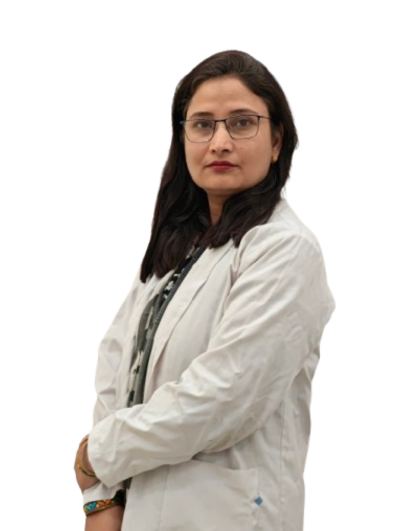
Dr. Abida is a dermatology specialist at Jigyasa Hospital, Moradabad, who evaluates and manages patients with hair thinning and pattern hair loss. She offers PRP hair treatment as part of a comprehensive approach, always beginning with a proper diagnosis to confirm PRP is genuinely suited to the specific type and stage of hair loss present.
Her approach combines detailed hair loss evaluation, including scalp examination and relevant blood tests, with professionally administered PRP therapy and realistic guidance on what to expect. She explains the treatment process, schedule, and aftercare clearly so patients understand what PRP can reasonably achieve in their particular case.
A Regenerative Approach to Hair Thinning
Platelet-Rich Plasma (PRP) therapy has emerged as a widely used, minimally invasive treatment option for individuals experiencing hair thinning, particularly in the early to moderate stages of pattern hair loss. By using components already present in a patient's own blood, PRP therapy aims to stimulate hair follicle activity and support healthier, thicker hair growth — offering a regenerative approach that appeals to many patients seeking an alternative or complement to conventional hair loss treatments.
At Jigyasa Hospital, Moradabad, Dr. Abida, Dermatologist, offers PRP hair treatment as part of a comprehensive approach to managing hair loss, always beginning with a proper diagnosis to confirm that PRP is genuinely suited to the specific type and stage of hair loss present. Patients from Moradabad, Rampur, Sambhal, Amroha, and Bijnor choose Jigyasa Hospital for PRP therapy performed under proper medical supervision with realistic guidance on what to expect.
What Is PRP Therapy?
PRP (Platelet-Rich Plasma) therapy involves drawing a small sample of the patient's own blood, processing it in a specialized centrifuge to concentrate the platelets — which contain growth factors that play a role in tissue repair and regeneration — and then injecting this platelet-rich concentrate into the scalp at the level of the hair follicles. The growth factors within the platelets are believed to help stimulate dormant or weakened hair follicles, potentially improving hair density, thickness, and the overall health of the hair growth cycle.
Because PRP uses the patient's own blood components, it's generally considered to carry a low risk of allergic reaction or rejection, which is one of the appealing aspects of this treatment approach for many patients.
Who Is a Good Candidate for PRP Hair Treatment?
PRP therapy tends to work best for certain types and stages of hair loss, making proper patient selection an important part of achieving meaningful results:
- • Early to Moderate Androgenetic Alopecia (Pattern Hair Loss) – PRP is most commonly used and generally shows better results in patients with early to moderate thinning, where hair follicles are still present and functional, even if weakened
- • Diffuse Thinning – Patients experiencing overall thinning rather than complete baldness in a given area tend to respond more favorably
- • Adjunct to Other Treatments – PRP is often used alongside other hair loss treatments, such as topical or oral medications, as part of a combined approach
PRP is generally less effective in areas of long-standing, complete baldness where hair follicles are no longer present or functional, which is why a thorough scalp assessment before starting treatment is essential to set realistic expectations.
Why Proper Diagnosis Comes Before PRP Treatment
PRP has gained popularity, sometimes leading patients to seek it out directly without first confirming the type and cause of their hair loss. However, Dr. Abida emphasizes that PRP is not a universal solution for all types of hair loss, and proceeding without proper diagnosis can lead to:
- • Undergoing treatment that isn't well-suited to the actual underlying cause of hair loss (for example, PRP alone may not adequately address hair loss driven by an unaddressed thyroid condition or significant nutritional deficiency)
- • Missing an opportunity to identify and treat an underlying, more easily correctable cause of hair thinning
- • Unrealistic expectations about the degree of improvement possible for the specific type and stage of hair loss present
- • Proceeding with a treatment plan that doesn't include necessary complementary measures for optimal results
This is why every PRP consultation at Jigyasa Hospital begins with a comprehensive hair loss evaluation, ensuring the treatment plan is appropriately matched to the individual's specific situation.
Specialist Dermatology Evaluation for Hair Loss
Every PRP consultation begins with a comprehensive hair loss evaluation by Dr. Abida to confirm that PRP is genuinely suited to the specific type and stage of hair loss present.
Comprehensive Diagnostic Approach
Evaluation includes a detailed clinical history, scalp and hair examination, and relevant blood tests through the NABL-accredited laboratory to identify underlying contributing factors.
Professionally Administered PRP Therapy
PRP is drawn, processed, and injected under proper medical supervision, with realistic guidance on the treatment schedule, expectations, and aftercare.
Realistic Expectation-Setting
Dr. Abida emphasizes honest guidance on what PRP can and cannot achieve, ensuring patients understand the degree of improvement reasonably possible for their case.
Trusted PRP Hair Treatment in Moradabad
Patients from Moradabad, Rampur, Sambhal, Amroha, Bijnor, and nearby districts choose Jigyasa Hospital for PRP therapy under proper medical supervision.
Diagnostic Approach at Jigyasa Hospital
Confirming that PRP is genuinely suited to a patient's hair loss relies on a careful evaluation. At Jigyasa Hospital, the diagnostic process typically includes:
1. Detailed Clinical History
Dr. Abida reviews the pattern, duration, and progression of hair loss, family history of pattern baldness, any recent illnesses or significant stressors, dietary habits, and relevant medication use.
2. Scalp and Hair Examination
A thorough examination assesses hair density, the pattern of thinning, and the condition of existing hair follicles, which helps determine whether PRP is likely to be beneficial.
3. Blood Tests
Where appropriate, blood tests through the hospital's NABL-accredited laboratory help rule out or identify underlying contributing factors such as thyroid dysfunction or iron deficiency, which may need separate management alongside or instead of PRP.
4. Discussion of Treatment Goals
Dr. Abida discusses realistic expectations for PRP therapy based on the specific diagnosis, ensuring patients understand what degree of improvement is reasonably achievable in their particular case.
The PRP Treatment Process
Step 1: Blood Draw
A small amount of blood is drawn from the patient's arm, similar to a routine blood test.
Step 2: Processing
The blood sample is placed in a centrifuge, which spins at a specific speed to separate and concentrate the platelet-rich plasma from the other blood components.
Step 3: Scalp Preparation
The scalp is cleansed, and a topical numbing agent may be applied to minimize discomfort during the injection process.
Step 4: Injection
The concentrated platelet-rich plasma is injected into the scalp at multiple points across the areas of thinning, using fine needles designed to minimize discomfort.
Step 5: Post-Procedure Care
Patients typically receive guidance on caring for the scalp in the initial hours and days following treatment.
The entire procedure is usually completed within about 30 to 60 minutes and is performed as an outpatient treatment, allowing patients to resume normal activities relatively quickly, with some mild scalp tenderness possible for a day or so afterward.
Treatment Schedule and What to Expect
PRP therapy is not a one-time treatment; it typically follows a structured schedule for optimal results:
- • An initial series of sessions, often spaced around four to six weeks apart, is generally recommended to build a foundation of improvement
- • Following the initial series, periodic maintenance sessions are often recommended to sustain results, since the effects of PRP on hair growth are not necessarily permanent without ongoing treatment
- • Visible improvement in hair thickness and reduced shedding is often noticed gradually over the course of several months, rather than immediately after a single session
- • Results can vary between individuals based on the underlying cause and stage of hair loss, as well as individual biological response to treatment
Setting Realistic Expectations
Dr. Abida places strong emphasis on honest expectation-setting before beginning PRP therapy:
- • PRP can help improve hair density and slow further thinning in appropriate candidates, but it does not regrow hair in areas of complete, long-standing baldness where follicles are no longer present
- • Results vary between individuals, and not everyone experiences the same degree of improvement
- • Consistency with the recommended treatment schedule, including maintenance sessions, is important for sustaining any benefits achieved
- • PRP is often most effective when combined with other appropriate treatments for pattern hair loss, rather than being used as a standalone solution in every case
Aftercare Following PRP Treatment
- • Avoid washing hair vigorously or using harsh hair products for the initial period following treatment, as advised
- • Avoid strenuous exercise or excessive sweating on the day of treatment
- • Mild scalp tenderness or slight redness at injection sites is common and typically resolves within a day or two
- • Avoid direct sun exposure to the treated scalp area in the initial days following the procedure
- • Attend all scheduled follow-up sessions as part of the recommended treatment course for optimal results
Who Should Exercise Caution with PRP Therapy
Certain individuals may require additional evaluation before proceeding with PRP therapy, including those with:
- • Certain blood disorders or conditions affecting platelet function
- • Active scalp infections or skin conditions in the treatment area
- • Current use of certain blood-thinning medications, which may need to be discussed with the treating physician beforehand
Dr. Abida screens for these factors during the initial consultation to ensure PRP therapy is both safe and appropriate for each individual patient.
Why Choose Jigyasa Hospital for PRP Hair Treatment in Moradabad
PRP therapy works best when it's recommended following a proper diagnosis and administered as part of a well-structured treatment plan, rather than as an isolated procedure. Jigyasa Hospital, located on Rampur Road near Miglani Cinema, Moradabad, offers:
- • Comprehensive hair loss evaluation with Dr. Abida before recommending PRP therapy
- • Professionally administered PRP treatment following proper diagnostic assessment
- • NABL-accredited diagnostic laboratory for relevant blood testing and screening
- • Empanelment under Ayushman Bharat PM-JAY, extending eligible treatment benefits to qualifying families
- • 24/7 emergency care support for any associated concerns
- • Wide service catchment covering Moradabad, Rampur, Sambhal, Amroha, and Bijnor, bringing specialized dermatological care closer to home
If you're experiencing hair thinning and are considering PRP therapy, a proper consultation ensures you understand whether it's genuinely suited to your specific type of hair loss, along with realistic expectations for what it can achieve.
Book an Appointment with Dr. Abida
Jigyasa Hospital offers specialist dermatology care for hair loss and PRP hair treatment under the guidance of Dr. Abida. A proper consultation ensures you understand whether PRP is genuinely suited to your specific type of hair loss, along with realistic expectations for what it can achieve.
Near Miglani Cinema, Rampur Road, Moradabad 244001
Call Now
7900903333Frequently Asked Questions
Is PRP hair treatment safe?
Yes. Since PRP uses the patient's own blood components, it generally carries a low risk of allergic reaction; however, as with any medical procedure, a proper evaluation is important to confirm suitability for each individual.
How many PRP sessions are typically needed?
Most treatment plans involve an initial series of sessions spaced several weeks apart, followed by periodic maintenance sessions to sustain results, with the exact schedule tailored to individual response and needs.
Does PRP hurt?
Patients may experience mild discomfort during the scalp injections, though a topical numbing agent is often used to help minimize this; most patients tolerate the procedure well.
Is PRP effective for completely bald areas?
PRP is generally less effective in areas of long-standing, complete baldness where hair follicles are no longer present, and tends to work better for early to moderate thinning where follicles remain functional.
How soon will I see results from PRP therapy?
Most patients notice gradual improvement over the course of several months following the initial treatment series, rather than immediate results after a single session.
Can PRP be combined with other hair loss treatments?
Yes. PRP is often used alongside other appropriate treatments for pattern hair loss as part of a combined approach, which your dermatologist can discuss based on your specific diagnosis.
Is PRP a permanent solution for hair loss?
No. PRP's effects on hair growth typically require periodic maintenance sessions to sustain, as the underlying process driving pattern hair loss generally continues over time without ongoing management.
Who should not undergo PRP hair treatment?
Individuals with certain blood disorders, active scalp infections, or those on specific blood-thinning medications may need additional evaluation before proceeding, which is assessed during the initial consultation.
Why Patients Choose Us
- 24/7 Emergency & Trauma Care
- Top Specialist Doctors
- Modern ICU & Operation Theatres
- Transparent & Affordable Pricing
- Ayushman Bharat Empanelled
- Cashless Insurance Support
- Multispeciality Under One Roof
Our Location
Near Miglani Cinema,
Rampur Road,
Moradabad 244001