
Skin Grafting Surgery in Moradabad — Expert Care by Dr. Anil Rajput at Jigyasa Hospital
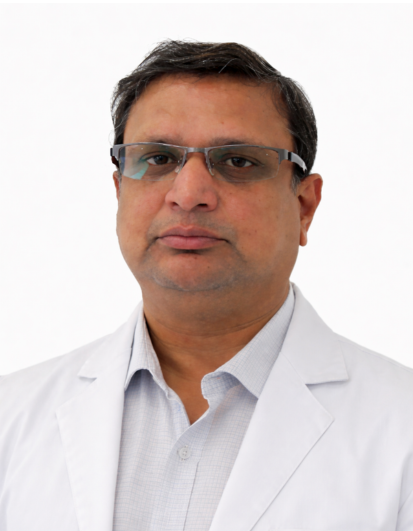
Severe burns, large wounds, chronic non-healing ulcers, and significant skin loss from trauma or infection often cannot heal on their own — the defect is simply too large or too deep for the body's natural healing process to close. Skin grafting is a reconstructive surgical technique that transplants healthy skin to cover these defects, restoring skin coverage, function, and, where possible, a more natural appearance.
For residents of Moradabad, Rampur, Sambhal, Amroha, and Bijnor, skin grafting surgery is available locally at Jigyasa Hospital, located on Rampur Road near Miglani Cinema, Moradabad, under the care of Dr. Anil Rajput, Plastic Surgeon, supported by NABL-accredited diagnostics and round-the-clock hospital infrastructure — an important consideration given how urgently some wound cases need treatment.
What Is Skin Grafting?
Skin grafting is a surgical technique in which healthy skin is taken from one area of the body (the donor site) and transplanted to cover a wound or defect elsewhere (the recipient site). It's a foundational technique in reconstructive plastic surgery, used when a wound is too large, too deep, or otherwise unlikely to heal adequately on its own.
Skin grafting is commonly used to treat:
- • Severe burns, where significant skin loss has occurred.
- • Large traumatic wounds from accidents or injuries.
- • Chronic, non-healing wounds, including diabetic foot ulcers and pressure sores.
- • Skin loss following infection or the surgical removal of skin lesions, including certain skin cancers.
- • Defects remaining after burn scar release surgery, where tight scar tissue restricting movement has been surgically released.
Types of Skin Grafts and Techniques Offered
1. Split-Thickness Skin Graft (STSG)
Uses a thin layer of skin, including the epidermis and part of the dermis, harvested from a donor site such as the thigh. This is one of the most commonly used graft types, suitable for covering larger wound areas, and the donor site typically heals on its own.
2. Full-Thickness Skin Graft (FTSG)
Uses the entire thickness of skin, including both the epidermis and full dermis, often taken from areas like behind the ear or the groin. This type is generally reserved for smaller defects, particularly on visible areas like the face, since it tends to provide a better color and texture match with surrounding skin.
3. Skin Grafting for Burn Wounds
Applied to areas of significant burn injury once the wound bed is ready, often performed in stages for extensive burns, sometimes in coordination with a burns care team.
4. Skin Grafting for Chronic Wounds
Used for non-healing wounds such as diabetic ulcers or pressure sores, once the underlying cause has been addressed and the wound bed is prepared for grafting.
5. Skin Grafting Combined with Scar Release
When tight burn scars restrict movement near a joint, the scar is surgically released, and the resulting defect is covered with a skin graft to restore both flexibility and skin coverage.
6. Local or Flap Reconstruction (in select cases)
For certain defects, particularly where a graft alone may not provide adequate coverage or durability, a flap — which brings its own blood supply along with the tissue — may be a more suitable reconstructive option, assessed individually.
The right technique depends on the size, depth, and location of the wound, as well as the underlying cause — all carefully assessed during consultation with Dr. Anil Rajput.
Who Is a Good Candidate?
Skin grafting may be recommended if you have:
- • A significant burn injury with substantial skin loss.
- • A large traumatic wound unlikely to close through natural healing alone.
- • A chronic wound, such as a diabetic ulcer or pressure sore, that hasn't healed with standard wound care.
- • A defect remaining after the surgical removal of a skin lesion or scar release.
- • Adequate donor site skin and overall health to support graft healing, including well-managed blood sugar for diabetic patients.
Successful skin grafting also depends on the wound bed being adequately prepared — clean, with a healthy blood supply — which is why wound assessment and preparation are a core part of the treatment process, sometimes requiring staged procedures before grafting itself takes place.
Reconstructive Plastic Surgery Expertise
Dr. Anil Rajput provides specialist care for burns, trauma, chronic wounds, and defects requiring skin grafting or flap reconstruction.
Individualised Graft Planning
Graft type and donor site are selected based on wound size, depth, location, and the patient's overall health and healing capacity.
NABL-Accredited Diagnostics
Pre-surgical testing and investigations are processed through the hospital's NABL-accredited laboratory for accuracy and reliability.
Comprehensive Wound Care
From wound bed preparation to graft placement and long-term monitoring, every step is managed to maximise graft 'taking' and healing.
Trusted Care in Moradabad
Patients from Moradabad, Rampur, Sambhal, Amroha, Bijnor, and nearby districts visit Jigyasa Hospital for advanced reconstructive surgery close to home.
Consultation and Pre-Surgical Evaluation at Jigyasa Hospital
Every skin grafting case at Jigyasa Hospital begins with a thorough evaluation by Dr. Anil Rajput, covering:
1. Wound Assessment
A detailed assessment of the wound — size, depth, cause, and current healing status.
2. Medical History Review
A review of medical history, including diabetes, circulation issues, or other conditions affecting wound healing.
3. Graft Type and Donor Site Discussion
A discussion of the most appropriate graft type and donor site for your specific wound.
4. Wound Bed Preparation Planning
Wound bed preparation planning, including any staged procedures needed before grafting.
5. Photographic Documentation
Photographic documentation to support planning and monitor progress.
6. Pre-Operative Investigations
Pre-operative investigations processed through the hospital's NABL-accredited laboratory to confirm surgical fitness.
7. Recovery and Risks Walkthrough
A clear walkthrough of anesthesia type, expected recovery, and possible risks.
Because wound healing capacity varies significantly between patients, particularly those with diabetes or circulation issues, this evaluation plays a critical role in planning a successful outcome.
The Procedure
Skin grafting at Jigyasa Hospital is performed under the care of the anesthesia and surgical team, using local, regional, or general anesthesia depending on wound size, location, and patient factors.
The wound bed is first carefully prepared to ensure it's clean and has adequate blood supply to support the graft. Healthy skin is then harvested from the selected donor site — often the thigh for larger split-thickness grafts, or areas like behind the ear or groin for smaller full-thickness grafts — and carefully placed over the wound, then secured with sutures, staples, or specialized dressings. The donor site itself is dressed and monitored, and for split-thickness grafts, this area typically heals on its own over one to two weeks.
Procedure time varies significantly based on wound size and complexity, and extensive burn cases may require multiple staged procedures rather than a single surgery. Hospital stay duration depends heavily on wound severity, with more extensive cases requiring a longer inpatient stay for close monitoring.
Recovery Timeline
Recovery from skin grafting depends heavily on wound size and graft type, but generally follows this pattern:
- • First few days: The grafted area is kept immobilized and protected with specialized dressings; close monitoring ensures the graft is 'taking' — establishing its new blood supply — successfully.
- • Week 1–2: Dressings are changed as needed under medical supervision; the donor site, particularly for split-thickness grafts, begins healing on its own.
- • Weeks 2–4: The graft continues to stabilize and integrate with surrounding tissue; gentle mobilization may begin, depending on graft location and surgeon guidance.
- • Weeks 4–8: Continued healing and, where applicable, physiotherapy to restore movement, particularly for grafts placed near joints following scar release.
- • 3–12 months: The graft matures further, with gradual improvement in texture, color blending, and flexibility over this period.
Patients are advised to strictly follow wound care and dressing instructions, protect the grafted area from friction or pressure during initial healing, and attend all scheduled follow-up visits so the surgical team can closely monitor graft healing.
Risks and Realistic Expectations
As with any surgical procedure, skin grafting carries risks, discussed openly during consultation — these can include partial or complete graft failure (where the graft doesn't establish adequate blood supply), infection, changes in skin sensation, and differences in color or texture compared to surrounding skin. Anesthesia-related risks, though uncommon, are also part of informed consent, and are considered carefully given that many skin grafting patients have other underlying health conditions requiring careful management.
Patients should understand that grafted skin often looks and feels somewhat different from the surrounding area, particularly in color and texture — the primary goal of skin grafting is to achieve durable wound closure and restore function, with aesthetic refinement as an important but secondary consideration. Dr. Anil Rajput's approach at Jigyasa Hospital emphasizes careful wound preparation and graft selection to give each wound the best possible chance of successful, lasting closure.
Why Choose Jigyasa Hospital for Skin Grafting in Moradabad
- • Local access to reconstructive plastic surgery care for burns, trauma, and chronic wounds — no need to travel to Delhi, Lucknow, or other metro cities, which matters given how time-sensitive many wound cases are.
- • NABL-accredited diagnostic lab for accurate, reliable pre-surgical testing.
- • 24/7 emergency care on-site, critical for burns and acute traumatic wounds.
- • Ayushman Bharat PM-JAY empanelment, applicable to eligible reconstructive cases depending on scheme classification.
- • Wide regional catchment, serving patients from Moradabad, Rampur, Sambhal, Amroha, and Bijnor.
- • Individualized wound management and graft planning, particularly important for patients with diabetes or other conditions affecting healing.
Common Myths About Skin Grafting
Myth: Skin grafting is only for severe burn patients. Reality: While burns are a common reason for skin grafting, the technique is also used for chronic wounds, traumatic injuries, and defects following the removal of skin lesions.
Myth: The graft will look exactly like the surrounding skin. Reality: Grafted skin often differs somewhat in color and texture from surrounding skin, particularly initially — the primary goal is durable wound closure and restored function.
Myth: Once a graft is placed, healing is complete. Reality: Grafts require careful aftercare and monitoring over weeks to ensure they successfully establish blood supply and integrate with surrounding tissue — early failure is a real risk without proper care.
Myth: Diabetic wounds can't be treated with skin grafting. Reality: With proper wound preparation and blood sugar management, many diabetic wounds can be successfully treated with skin grafting, though healing may take longer and requires closer monitoring.
Myth: The donor site is as significant a wound as the original injury. Reality: For split-thickness grafts, the donor site is typically a shallow wound that heals on its own within one to two weeks, unlike the original defect being treated.
Book an Appointment with Dr. Anil Rajput
Jigyasa Hospital offers specialist reconstructive plastic surgery and skin grafting under the guidance of Dr. Anil Rajput. Whether you need treatment for burns, trauma, chronic wounds, or post-surgical defects, a personalised evaluation can help determine the most suitable grafting technique for durable wound closure and functional recovery.
Near Miglani Cinema, Rampur Road, Moradabad 244001
Call Now
7900903333Frequently Asked Questions
Is skin grafting a painful procedure?
Pain is managed with appropriate anesthesia during surgery and prescribed medication afterward; the donor site can be tender during initial healing, similar to a mild abrasion.
How long do I need to stay in the hospital?
This depends heavily on wound size and severity — larger burns or extensive wounds typically require a longer inpatient stay for close monitoring compared to smaller, localized grafts.
How do I know if the graft has been successful?
Graft success, referred to as the graft 'taking,' is assessed by the surgical team through regular monitoring in the days following surgery, checking for healthy blood supply and integration with the wound bed.
Will the donor site leave a visible scar?
The donor site for split-thickness grafts typically heals with mild discoloration or a faint scar rather than a significant one, and this is discussed as part of surgical planning.
Can skin grafting help diabetic foot ulcers that haven't healed with standard treatment?
Yes, skin grafting is a recognized option for chronic diabetic wounds once the wound bed is adequately prepared and blood sugar is well managed, assessed individually.
How long does it take for a skin graft to fully heal?
Initial healing and graft stabilization typically take a few weeks, while full maturation in terms of color, texture, and flexibility can continue over several months to a year.
Is skin grafting covered under government health schemes?
Many reconstructive skin grafting cases, particularly for burns and trauma, may be eligible under PM-JAY empanelment depending on scheme classification — this is assessed individually for each case.
What happens if a skin graft doesn't take successfully?
In cases of partial or complete graft failure, the wound is reassessed and a further procedure, which may include repeat grafting, is planned based on the wound's condition at that time.
Why Patients Choose Us
- 24/7 Emergency & Trauma Care
- Top Specialist Doctors
- Modern ICU & Operation Theatres
- Transparent & Affordable Pricing
- Ayushman Bharat Empanelled
- Cashless Insurance Support
- Multispeciality Under One Roof
Our Location
Near Miglani Cinema,
Rampur Road,
Moradabad 244001