
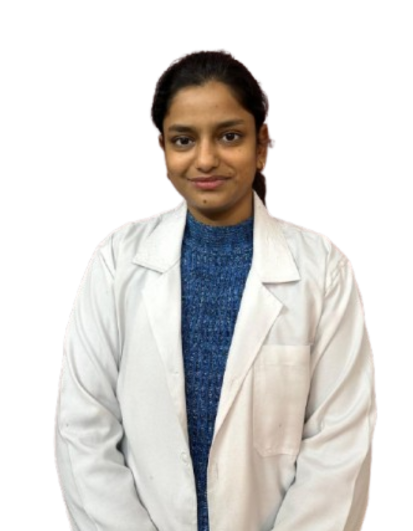
Squint Eye Treatment in Moradabad — Expert Care with Dr. Deeksha Singh at Jigyasa Hospital
About Squint Treatment at Jigyasa Hospital
Squint, medically known as strabismus, is one of the most common yet frequently misunderstood eye conditions affecting both children and adults. It occurs when the two eyes fail to align properly and point in different directions instead of working together as a single, coordinated pair. For families in Moradabad and the wider Rohilkhand region searching for reliable, affordable, and medically sound squint treatment, Jigyasa Hospital offers dedicated ophthalmology care under the guidance of Dr. Deeksha Singh, focused on accurate diagnosis and individualised treatment plans for every patient.
This article explains what squint is, why early treatment matters, the range of treatment options available today, and why patients across Moradabad, Rampur, Amroha, Sambhal, and nearby districts are choosing Jigyasa Hospital for their eye care needs.
What Is Squint (Strabismus)?
Squint is a condition in which both eyes do not point in the same direction at the same time. While one eye may focus correctly on an object, the other eye may turn inward (esotropia), outward (exotropia), upward (hypertropia), or downward (hypotropia). This misalignment can be constant or may appear only occasionally, such as when a person is tired, unwell, or concentrating on close work.
Squint is not simply a cosmetic issue. When the eyes are misaligned, the brain often receives two different images from each eye. In young children, the brain may respond to this by suppressing the image from the weaker or misaligned eye altogether. Over time, this can lead to a condition called amblyopia, or "lazy eye," where the suppressed eye's vision fails to develop normally — even though the eye itself may be structurally healthy. This is why timely evaluation and treatment are so important, particularly in children whose visual systems are still developing.
Common Causes of Squint
Strabismus can arise from a variety of causes, and identifying the underlying reason is a key part of planning effective treatment. Some of the most common causes include:
Key Causes of Squint
- • Refractive errors: Significant uncorrected long-sightedness (hyperopia) is one of the most frequent causes of squint in children, as the extra focusing effort required can pull the eyes out of alignment.
- • Muscle imbalance: The six muscles that control eye movement need to work in coordinated pairs. Weakness or imbalance in these muscles can cause misalignment.
- • Nerve-related issues: Problems with the cranial nerves that control eye movement can result in paralytic or restrictive squint.
- • Family history: Strabismus often runs in families, suggesting a genetic component.
- • Developmental and neurological conditions: Premature birth, cerebral palsy, Down syndrome, and other developmental conditions are associated with a higher likelihood of squint.
- • Trauma or illness: Head injury, thyroid eye disease, stroke, or certain infections can cause squint to develop later in life.
- • Pseudo-squint: In infants, a broad nasal bridge or extra folds of skin near the inner corner of the eye (epicanthal folds) can create the appearance of a squint even when the eyes are perfectly aligned. Only a proper eye examination can distinguish true squint from this harmless optical illusion.
Recognising the Signs of Squint
Parents are often the first to notice something unusual about their child's eyes, but squint can be subtle, especially in its early or intermittent stages. Common signs to watch for include:
Signs to Watch For
- • One eye visibly turning inward, outward, up, or down, either constantly or intermittently
- • Eyes that do not seem to move together when following an object
- • Frequent squinting, blinking, or closing one eye, especially in bright sunlight
- • Tilting or turning the head to one side to see better
- • Complaints of double vision or blurred vision
- • Difficulty judging distances, clumsiness, or trouble catching a ball
- • Poor performance in school linked to difficulty reading or focusing
- • Adults who develop squint later in life often experience double vision as the primary symptom, along with headaches, eye strain, and difficulty with depth perception
Why Early Diagnosis Matters
The visual system in children develops rapidly during the first several years of life, and this period is often referred to as the "critical window" for treating conditions like squint and amblyopia. If squint is identified and treated early — ideally before the age of six or seven — the chances of restoring normal alignment and preventing permanent vision loss in the weaker eye are significantly higher. Left untreated, amblyopia can become permanent, meaning that even later surgical correction of the squint will not restore full vision in the affected eye.
This is why routine eye check-ups for children are so important, even in the absence of obvious symptoms. Many parents assume that if a child does not complain of vision problems, their eyes must be fine — but young children often do not realise their vision is abnormal, since they have nothing to compare it to. A comprehensive eye examination can catch subtle misalignments and refractive errors long before they become apparent to a parent or teacher.
In adults, new-onset squint or double vision should never be ignored, as it can occasionally be a sign of an underlying medical issue affecting the nerves or muscles controlling eye movement.
How Squint Is Diagnosed
At Jigyasa Hospital, the evaluation of squint follows a thorough, step-by-step process designed to identify not just the presence of misalignment, but its type, severity, and underlying cause. A typical assessment includes:
Diagnostic Process
1. Detailed history-taking — understanding when the squint was first noticed, whether it is constant or intermittent, family history, and any related symptoms such as headaches or double vision.
Visual Acuity Testing
2. Measuring how well each eye sees independently, using age-appropriate charts for children.
Refraction Testing
3. Checking for short-sightedness, long-sightedness, or astigmatism that may be contributing to the squint.
Cover Test and Alternate Cover Test
4. A simple, painless test where each eye is covered in turn to observe how the eyes move and realign, helping to determine the type and degree of squint.
Ocular Motility Examination
5. Assessing how well the eyes move in all directions to identify any specific muscle weakness or restriction.
Binocular Vision Assessment
6. Evaluating how well the two eyes work together to produce depth perception.
Detailed Eye Examination
7. Checking the retina, optic nerve, and other internal structures to rule out any additional causes.
This comprehensive approach ensures that treatment is tailored to the specific type of squint rather than applying a one-size-fits-all solution.
Treatment Options for Squint at Jigyasa Hospital
Squint treatment is not always surgical, and in many cases, non-surgical methods are the first line of approach, particularly in children. Under the care of Dr. Deeksha Singh, treatment plans at Jigyasa Hospital are built around the individual patient's age, type of squint, and overall eye health.
Available Treatment Options
- • Spectacle Correction: For many children, especially those with squint related to uncorrected refractive errors, properly prescribed glasses can significantly improve or even fully correct the misalignment. This is often the first and simplest step in treatment.
- • Patching (Occlusion) Therapy: When amblyopia is present, patching the stronger eye forces the brain to rely on and strengthen the weaker eye. This is a well-established and effective treatment, particularly when started early, and the duration of patching is adjusted based on the child's response.
- • Vision Therapy and Eye Exercises: Certain types of squint, particularly those related to convergence problems, can improve with structured eye exercises designed to strengthen coordination between the two eyes and improve focusing ability.
- • Medical Management: In some cases, prescription eye drops or specially designed prism glasses may be used to manage double vision or reduce the degree of misalignment, particularly while other treatments take effect or as an alternative for patients who are not surgical candidates.
- • Squint Surgery: When glasses, patching, and exercises are not sufficient to correct the misalignment, surgery may be recommended. Squint surgery involves adjusting the length or position of one or more of the eye muscles to bring the eyes into better alignment.
Comprehensive Eye Evaluation
Every squint case is assessed with a full diagnostic work-up rather than a quick, surface-level check, ensuring the treatment plan addresses the actual cause of the misalignment.
Personalised Treatment Planning
Whether the right approach is glasses, patching, vision therapy, or surgery, the treatment plan is built around the individual patient — particularly important for children, whose needs change as they grow.
Clear Communication with Families
Parents are guided through every step of the diagnosis and treatment process in simple, understandable language, so they can make informed decisions about their child's care.
Integrated Hospital Support
As part of a multispeciality hospital, patients have access to diagnostics, pathology, and — where needed — coordinated care with other specialists, all under one roof.
Accessible Location and Emergency Backup
Located on Rampur Road near Miglani Cinema, Jigyasa Hospital is easily reachable from across the city, with round-the-clock hospital support available for urgent concerns.
Squint Surgery: What to Expect
Squint surgery involves adjusting the length or position of one or more of the eye muscles to bring the eyes into better alignment. This may involve recession (repositioning a muscle further back to weaken its pulling effect) or resection (shortening a muscle to strengthen its action).
Squint surgery is a well-established ophthalmic procedure performed under general or local anaesthesia depending on the patient's age and condition. It is typically a day-care procedure with a relatively short recovery period, and most patients are able to resume normal activities within a few days, following the specific post-operative guidance provided by the treating doctor.
It's important to understand that surgery corrects the physical alignment of the eyes; in cases where amblyopia is also present, additional therapy such as patching may still be required afterward to improve vision in the weaker eye.
Squint in Adults: It's Never "Too Late"
A common misconception is that squint can only be treated in childhood. While early treatment offers the best chance of preventing amblyopia, adults with long-standing squint — even those who have lived with a noticeable eye turn since childhood — can still benefit from treatment. Adult squint surgery can improve eye alignment, reduce or eliminate double vision, and restore a more natural appearance, which often has a meaningful impact on confidence and quality of life. Each adult case is evaluated individually, as the goals of treatment may focus more on symptom relief and cosmetic alignment than on visual development.
Why Choose Jigyasa Hospital for Squint Treatment in Moradabad
Families across Moradabad, Rampur, Amroha, and Sambhal look for eye care providers who combine accurate diagnosis with a genuinely patient-focused approach — and this is central to how ophthalmology care is delivered at Jigyasa Hospital.
What Sets Jigyasa Hospital Apart
- • Comprehensive eye evaluation: Every squint case is assessed with a full diagnostic work-up rather than a quick, surface-level check, ensuring the treatment plan addresses the actual cause of the misalignment.
- • Personalised treatment planning: Whether the right approach is glasses, patching, vision therapy, or surgery, the treatment plan is built around the individual patient — particularly important for children, whose needs change as they grow.
- • Clear communication with families: Parents are guided through every step of the diagnosis and treatment process in simple, understandable language, so they can make informed decisions about their child's care.
- • Integrated hospital support: As part of a multispeciality hospital, patients have access to diagnostics, pathology, and — where needed — coordinated care with other specialists, all under one roof.
- • Accessible location and emergency backup: Located on Rampur Road near Miglani Cinema, Jigyasa Hospital is easily reachable from across the city, with round-the-clock hospital support available for urgent concerns.
Serving Moradabad and the Surrounding Region
Jigyasa Hospital's accessible location on Rampur Road, near Miglani Cinema, brings quality ophthalmological care within reach for patients across Moradabad and the wider region, including Rampur, Sambhal, Amroha, and nearby districts. This accessibility means patients don't need to travel long distances to access thorough, comprehensive squint treatment.
Book an Appointment with Dr. Deeksha Singh
Jigyasa Hospital offers comprehensive squint (strabismus) treatment under the guidance of Dr. Deeksha Singh. Thorough evaluation and diagnosis-driven treatment can help restore proper eye alignment and address vision concerns effectively.
Near Miglani Cinema, Rampur Road, Moradabad 244001
Call Now
7900903333Frequently Asked Questions
At what age should a child's eyes first be checked for squint?
Any noticeable misalignment should be evaluated as soon as it is observed, regardless of the child's age. Even in the absence of obvious symptoms, a baseline eye check-up between ages 3 and 4 is generally recommended, as this is often when subtle squints or refractive errors are first detected.
Will my child outgrow their squint?
True squint does not resolve on its own and needs proper evaluation. What sometimes looks like an improving squint over time may actually be pseudo-squint, which is why a professional assessment is important rather than assuming the eyes will 'straighten out' naturally.
Is squint surgery painful or risky?
Squint surgery is a routine and well-established ophthalmic procedure. As with any surgery, it carries some risks, which will be explained clearly during consultation, but serious complications are uncommon, and most patients recover within a short period.
Can squint come back after surgery?
In some cases, particularly with certain types of squint, further adjustment may be needed over time. Regular follow-up after surgery helps track alignment and address any changes early.
Does squint treatment fix lazy eye (amblyopia) automatically?
Not necessarily. Amblyopia often needs to be treated separately, usually through patching or vision therapy, alongside correction of the physical misalignment.
Can adults benefit from squint treatment?
Yes, adults with long-standing squint can still benefit from treatment. Adult squint surgery can improve eye alignment, reduce or eliminate double vision, and restore a more natural appearance, which often has a meaningful impact on confidence and quality of life.
What are the signs of squint in children?
Common signs include one eye visibly turning inward, outward, up, or down; eyes that do not move together when following an object; frequent squinting, blinking, or closing one eye; tilting or turning the head to see better; and complaints of double vision or blurred vision.
How can I book an appointment with Dr. Deeksha Singh at Jigyasa Hospital?
You can reach Jigyasa Hospital at 7900903333 or visit the hospital directly at Rampur Road, Near Miglani Cinema, Moradabad, to schedule an eye consultation.
Why Patients Choose Us
- 24/7 Emergency & Trauma Care
- Top Specialist Doctors
- Modern ICU & Operation Theatres
- Transparent & Affordable Pricing
- Ayushman Bharat Empanelled
- Cashless Insurance Support
- Multispeciality Under One Roof
Our Location
Near Miglani Cinema,
Rampur Road,
Moradabad 244001