
Squint Surgery in Moradabad — Advanced Strabismus Correction with Dr. Deeksha Singh at Jigyasa Hospital
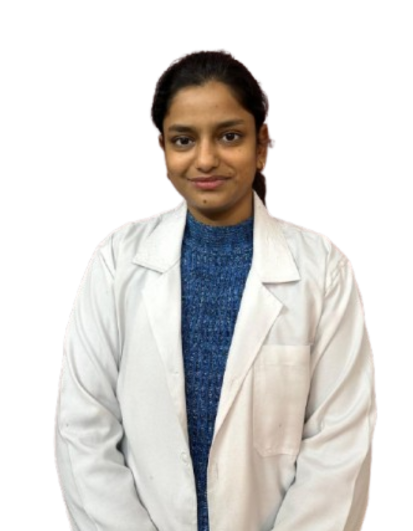
For many patients with squint, or strabismus, glasses, patching, and eye exercises are enough to correct the misalignment. But when non-surgical methods fall short — or when the degree of misalignment is significant — squint surgery becomes the most effective way to restore proper eye alignment, improve binocular vision, and give patients a more natural, confident appearance. At Jigyasa Hospital, Moradabad, squint surgery is performed under the ophthalmic care of Dr. Deeksha Singh, with a strong focus on accurate pre-surgical evaluation, safe surgical technique, and structured post-operative follow-up.
This article walks through what squint surgery involves, who needs it, how it is performed, what recovery looks like, and why patients from Moradabad and the surrounding Rohilkhand region trust Jigyasa Hospital for this procedure.
Understanding Squint Before Surgery
Squint occurs when the eyes fail to align and point in different directions instead of moving together as a coordinated pair. This misalignment happens because of an imbalance in the six muscles that control eye movement — some may be too strong, too weak, or improperly positioned relative to the others. The result can be an eye that turns inward (esotropia), outward (exotropia), upward (hypertropia), or downward (hypotropia), either constantly or intermittently.
While glasses and vision therapy can correct squint caused primarily by refractive errors or convergence problems, many cases — particularly those involving significant muscle imbalance, nerve-related issues, or long-standing childhood squint — require surgical correction to achieve proper alignment. Squint surgery does not change how well an eye sees on its own; rather, it repositions the eye so that both eyes work together, which is why it is often combined with other treatments such as patching when amblyopia (lazy eye) is also present.
Who Needs Squint Surgery?
Not every patient with squint requires surgery, and the decision is always based on a detailed evaluation. Squint surgery is generally recommended when:
Indications for Squint Surgery
- • The degree of misalignment is too large to be corrected with glasses or prisms alone
- • The squint has not responded adequately to non-surgical treatment such as patching or vision therapy
- • There is a constant, noticeable eye turn affecting appearance, depth perception, or self-confidence
- • Double vision persists despite other treatment approaches
- • The squint is caused by nerve palsy, restrictive muscle conditions, or thyroid eye disease affecting the eye muscles
- • An adult has lived with untreated squint since childhood and wishes to correct both function and appearance
Both children and adults can be candidates for squint surgery. In children, timely surgery — often combined with amblyopia treatment — plays an important role in supporting normal visual development. In adults, surgery can still meaningfully improve eye alignment, reduce double vision, and enhance quality of life, even in cases where the squint has been present for many years.
Pre-Surgical Evaluation at Jigyasa Hospital
Before recommending surgery, a thorough diagnostic work-up is carried out to determine exactly which muscles are involved, the type and degree of misalignment, and the safest surgical plan. This evaluation typically includes:
Detailed History
1. Including how long the squint has been present, whether it is constant or variable, and any associated symptoms like double vision or headaches.
Visual Acuity and Refraction Testing
2. To check how well each eye sees and to rule out or correct any underlying refractive error first.
Cover Test and Prism Cover Test
3. Precise measurement of the angle of deviation in different directions of gaze, which helps determine exactly how much surgical correction is needed.
Ocular Motility Assessment
4. Evaluating movement of the eyes in all directions to identify muscle weakness, restriction, or overaction.
Binocular Vision and Stereopsis Testing
5. Assessing how well the two eyes work together and the potential for depth perception after correction.
General Eye Health Examination
6. Checking the retina, optic nerve, and overall ocular health to rule out other contributing conditions.
Fitness for Anaesthesia
7. Particularly for children, a paediatric or anaesthesia assessment is carried out to ensure the procedure can be performed safely.
This careful planning stage is what allows the surgical team to calculate precisely how much each eye muscle needs to be adjusted, which directly affects how successful and predictable the outcome will be.
How Squint Surgery Works
Squint surgery is performed on the muscles attached to the outer surface of the eye — never on the eyeball itself in a way that affects internal structures. The surgery works by adjusting the strength or position of one or more of the six eye muscles to bring the eyes into better alignment. The two most common techniques used are:
Recession
In this technique, the muscle is detached from its original point of insertion on the eye and reattached slightly further back. This weakens the pulling effect of that muscle, allowing the eye to rotate away from the direction the muscle was pulling it.
Resection
Here, a small portion of the muscle is removed, and the shortened muscle is reattached at its original insertion point. This strengthens the muscle's pulling action, helping to rotate the eye more strongly in that muscle's direction.
Depending on the type and degree of squint, surgery may involve one eye or both eyes, and one or more muscles per eye. In more complex cases — such as those involving vertical misalignment, nerve palsies, or previous squint surgery — additional or adjustable suture techniques may be used to fine-tune the final alignment.
Anaesthesia and Procedure Details
Squint surgery is typically performed under general anaesthesia in children and can be done under local or general anaesthesia in adults, depending on the patient's preference, the complexity of the case, and the anaesthesia team's assessment. The procedure is usually completed within 30 minutes to an hour, depending on how many muscles are being adjusted, and is commonly performed as a day-care procedure, meaning most patients do not need to stay overnight in the hospital.
The eye is not bandaged shut after surgery in most cases; some redness, mild swelling, and a "bloodshot" appearance are normal and expected as the eye heals, and these effects typically settle over the following days to weeks.
Thorough Pre-Surgical Assessment
Surgical planning is based on precise measurement of the deviation and the specific muscles involved, rather than a generalised approach, ensuring accurate and predictable outcomes.
Individualised Surgical Technique
The choice of recession, resection, or a combination approach is tailored to each patient's specific type and degree of squint for optimal alignment correction.
Comprehensive Care for Children and Adults
Whether the patient is a young child with early-onset squint or an adult seeking correction of long-standing misalignment, treatment plans are adapted accordingly.
Structured Follow-Up Care
Post-operative visits are scheduled to track healing and alignment, with clear guidance provided on eye drops, activity, and any additional therapy needed.
Hospital-Backed Safety and Accessibility
As part of a multispeciality hospital with anaesthesia, diagnostic, and emergency support available on-site, squint surgery is performed within a well-equipped clinical environment on Rampur Road near Miglani Cinema.
Recovery After Squint Surgery
Recovery from squint surgery is generally quick compared to many other surgical procedures, but proper post-operative care is important for a smooth healing process and the best possible outcome.
In the First Few Days
- • Mild discomfort, a gritty or scratchy sensation, and redness in the operated eye are common and usually manageable with prescribed eye drops and, if needed, mild pain relief.
- • Some swelling of the eyelids may occur, particularly in children, and generally reduces within a few days.
- • Vision may be slightly blurred or the eye may feel sensitive to light initially.
- • Redness typically fades progressively over two to four weeks, though some patients may notice it linger a little longer in certain parts of the eye.
- • Patients are usually advised to avoid swimming, dusty environments, and vigorous rubbing of the eye during the initial healing period.
- • Follow-up visits are scheduled to monitor healing, check alignment, and assess whether any additional treatment — such as continued patching for amblyopia — is needed.
- • Most patients, including children, are able to return to school or work within a few days to a week, depending on individual healing and the doctor's advice.
Patients are given specific post-operative instructions tailored to their case, including how to use prescribed eye drops, activity restrictions, and warning signs that should prompt an earlier follow-up visit.
Is Squint Surgery Safe?
Squint surgery is one of the most commonly performed and well-established procedures in ophthalmology, with a long track record of safety and effectiveness worldwide. As with any surgical procedure, it does carry some risks, which are discussed in detail during consultation — these can include infection, over- or under-correction of the alignment, temporary double vision, or, rarely, the need for a second surgery to fine-tune results. Serious complications are uncommon, and the surgical team at Jigyasa Hospital follows established safety protocols at every stage, from pre-operative assessment to post-operative monitoring, to minimise risk and support a smooth recovery.
It's also worth noting that squint surgery corrects the alignment of the eyes. If amblyopia (lazy eye) is present, vision in the weaker eye may still need additional treatment — most commonly patching — even after successful alignment surgery. This is explained clearly during the treatment planning process so that patients and parents know what to expect at each stage.
Squint Surgery for Adults: Correcting Long-Standing Misalignment
A common misconception is that squint surgery is only for children. In reality, adults who have lived with a noticeable eye turn since childhood — or who develop squint later in life due to nerve issues, thyroid eye disease, or trauma — can also benefit significantly from surgery. For adults, the goals often include:
Goals of Adult Squint Surgery
- • Reducing or eliminating double vision
- • Restoring more natural, symmetrical eye alignment
- • Improving depth perception and binocular function where possible
- • Enhancing self-confidence and social comfort, since long-standing squint can affect how people feel in social and professional settings
Each adult case is assessed individually, since the surgical approach may differ depending on how long the squint has been present and whether the brain has already adapted to suppressing input from one eye.
Why Choose Jigyasa Hospital for Squint Surgery in Moradabad
Patients across Moradabad, Rampur, Amroha, and Sambhal choose Jigyasa Hospital for squint surgery because of the combination of careful diagnosis, individualised surgical planning, and dependable post-operative support.
What Sets Jigyasa Hospital Apart
- • Thorough pre-surgical assessment: Surgical planning is based on precise measurement of the deviation and the specific muscles involved, rather than a generalised approach.
- • Individualised surgical technique: The choice of recession, resection, or a combination approach is tailored to each patient's specific type and degree of squint.
- • Comprehensive care for children and adults: Whether the patient is a young child with early-onset squint or an adult seeking correction of long-standing misalignment, treatment plans are adapted accordingly.
- • Structured follow-up: Post-operative visits are scheduled to track healing and alignment, with clear guidance provided on eye drops, activity, and any additional therapy needed.
- • Hospital-backed safety: As part of a multispeciality hospital with anaesthesia, diagnostic, and emergency support available on-site, squint surgery is performed within a well-equipped clinical environment.
- • Accessible location: Located on Rampur Road near Miglani Cinema, the hospital is centrally reachable for patients across Moradabad and neighbouring districts.
Serving Moradabad and the Surrounding Region
Jigyasa Hospital's accessible location on Rampur Road, near Miglani Cinema, brings quality ophthalmological care within reach for patients across Moradabad and the wider region, including Rampur, Sambhal, Amroha, and nearby districts. This accessibility means patients don't need to travel long distances to access thorough, comprehensive squint surgery.
Book an Appointment with Dr. Deeksha Singh
Jigyasa Hospital offers advanced squint (strabismus) surgery under the guidance of Dr. Deeksha Singh. Thorough pre-surgical evaluation and individualised surgical techniques can help restore proper eye alignment and improve quality of life.
Near Miglani Cinema, Rampur Road, Moradabad 244001
Call Now
7900903333Frequently Asked Questions
How do I know if my squint needs surgery or if glasses will be enough?
This can only be determined after a full eye evaluation, including refraction and measurement of the angle of deviation. Some squints improve fully with glasses, while others require surgical correction — the treating doctor will explain which category applies to your case.
Is squint surgery painful?
Most patients experience only mild discomfort, redness, or a gritty sensation afterward, which is manageable with prescribed drops and settles within a few days to weeks.
How long does recovery take?
Most patients resume normal activities, including school or work, within a few days to a week, though full settling of redness can take two to four weeks.
Will my vision improve after squint surgery?
Squint surgery corrects eye alignment, not necessarily vision itself. If amblyopia is present, additional treatment such as patching may be needed to improve vision in the weaker eye.
Can adults get squint surgery even if they've had the condition since childhood?
Yes. Adult squint surgery is a well-established procedure and can improve alignment, reduce double vision, and improve appearance, regardless of how long the squint has been present.
Is there a chance the squint could come back after surgery?
In some cases, particularly complex or long-standing squints, some degree of drift can occur over time, and a second procedure may occasionally be needed. Regular follow-up helps catch and address this early.
Is squint surgery safe?
Squint surgery is one of the most commonly performed and well-established procedures in ophthalmology, with a long track record of safety and effectiveness worldwide. Serious complications are uncommon, and the surgical team follows established safety protocols at every stage.
How can I book an appointment with Dr. Deeksha Singh at Jigyasa Hospital?
You can reach Jigyasa Hospital at 7900903333 or visit the hospital directly at Rampur Road, Near Miglani Cinema, Moradabad, to schedule an eye consultation.
Why Patients Choose Us
- 24/7 Emergency & Trauma Care
- Top Specialist Doctors
- Modern ICU & Operation Theatres
- Transparent & Affordable Pricing
- Ayushman Bharat Empanelled
- Cashless Insurance Support
- Multispeciality Under One Roof
Our Location
Near Miglani Cinema,
Rampur Road,
Moradabad 244001