
Cardiac Stress Test in Moradabad - Complete Guide by Dr. Amit Kumar Singh at Jigyasa Hospital
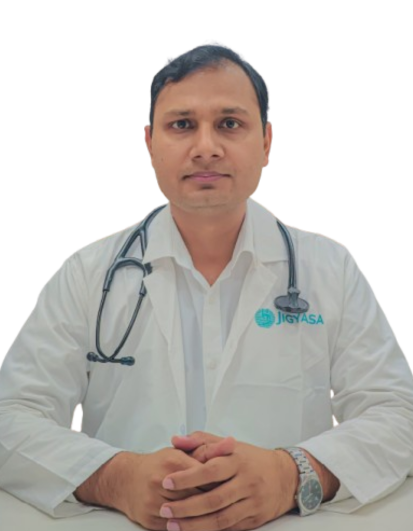
Heart disease is no longer a problem limited to big metro cities, and Moradabad along with the surrounding belt of western Uttar Pradesh is seeing a steady rise in cases of coronary artery disease, hypertension, and diabetes-linked heart complications. Changing diets, rising work stress, sedentary lifestyles, and a strong family history of heart disease in North Indian households have made early cardiac screening more important than ever for residents here. One of the most reliable, non-invasive tools for detecting hidden heart problems before they become emergencies is the cardiac stress test, commonly known as the TMT or Treadmill Test. At Jigyasa Hospital in Moradabad, this test is performed under the direct supervision of cardiologist Dr. Amit Kumar Singh, with modern monitoring equipment and same-day reporting, sparing patients the need to travel to Delhi, Meerut, or Lucknow for a proper cardiac workup and diagnosis.
What Is a Cardiac Stress Test?
A cardiac stress test is a diagnostic procedure that evaluates how well your heart performs under physical exertion, and at rest many blockages or rhythm problems in the heart do not show up on a basic ECG, which is why stress testing is so valuable for early detection. When the heart is pushed to work harder through walking or running on a treadmill at increasing speed and incline, hidden problems in blood flow, oxygen supply, and electrical activity often become visible on the monitoring screen as specific ECG changes, symptoms, or abnormal blood pressure responses. The test works on a simple principle that exercise increases the heart's demand for oxygen-rich blood, and if one or more coronary arteries are narrowed due to plaque buildup, the heart muscle supplied by that artery may not get enough blood during exertion, causing detectable abnormalities. In medical terms, this is called a Treadmill Test or Exercise Tolerance Test, and it remains one of the most widely used first-line tests for suspected coronary artery disease because it is quick, relatively inexpensive, does not require injections or radiation, and gives immediate results that guide further management and treatment planning.
Who Should Get a Stress Test?
Not every person needs a stress test, but certain groups benefit significantly from this screening tool, especially in a region like Moradabad where heart disease risk factors are common and often underdiagnosed until a major cardiac event occurs. Dr. Amit Kumar Singh commonly recommends a cardiac stress test for patients presenting with chest pain or discomfort, especially during physical activity, unexplained breathlessness on exertion, palpitations, excessive fatigue during normal daily activity, or dizziness and fainting spells with unclear cause that need cardiac evaluation. Patients with a family history of heart attack, especially at a young age, or those with diabetes, hypertension, obesity, or smoking history who need preventive cardiac screening are also strong candidates for stress testing as part of their routine health checkups.
Patients with chest pain or discomfort, especially during physical activity, climbing stairs, or walking briskly, which may indicate reduced blood flow to the heart muscle.
Patients with unexplained breathlessness on exertion, palpitations, excessive fatigue during normal daily activity, or dizziness and fainting spells with unclear cause.
Patients with a family history of heart attack, especially at a young age, or those with diabetes, hypertension, obesity, or smoking history who need preventive cardiac screening.
Patients above forty years of age, or younger patients with multiple risk factors, who are starting a new exercise program and need cardiac clearance before vigorous physical activity.
Patients undergoing pre-surgical cardiac clearance for non-cardiac surgery, or those being evaluated for chest pain that does not clearly match typical anginal patterns.
Patients with follow-up needs after angioplasty, bypass surgery, or a previous heart attack, to assess recovery, exercise capacity, and graft or stent function over time.
Patients with baseline ECG abnormalities or inconclusive prior tests who need functional assessment to guide further investigation like echocardiography or coronary angiography.
It is important to note that a stress test is a screening and evaluation tool that helps the cardiologist decide whether further investigation like an echocardiogram, angiography, or CT coronary angiogram is needed based on your individual risk profile and test findings. A normal stress test does not rule out heart disease with one hundred percent certainty, especially in patients with strong risk factors who may need additional testing for comprehensive assessment and long-term management planning. Dr. Amit Kumar Singh reviews the complete cardiac profile and explains why a stress test is being recommended, what the results mean in your specific context, and what next steps are appropriate based on the findings and your overall health status.
How the Stress Test Is Performed at Jigyasa Hospital
The procedure at Jigyasa Hospital follows a standardized protocol under Dr. Amit Kumar Singh's supervision, using the internationally recognized Bruce Protocol or a modified version for elderly or high-risk patients who may not tolerate the full standard stages. Here is what patients can expect before, during, and after the test, including preparation instructions, monitoring procedures, and post-test reporting and consultation processes for a smooth and safe experience. Patients are advised to wear comfortable clothing and walking shoes, take a light meal two to three hours before the test, and inform the doctor about all current medications, especially heart or blood pressure medicines that may need adjustment beforehand.
Clinical Assessment
Dr. Amit Kumar Singh reviews symptoms such as chest pain, breathlessness, fatigue, palpitations, and reduced exercise tolerance, along with detailed medical history, diabetes, hypertension, previous heart attacks, and earlier cardiac procedures or tests.
Resting ECG
A baseline electrocardiogram provides information about heart rhythm, previous heart attacks, electrical conduction problems, or strain on the heart muscle, and helps confirm whether the patient is fit to undergo exertion safely during the stress test.
Echocardiography
A 2D Echo measures the heart's pumping function, known as the ejection fraction, and evaluates heart valves, chambers, wall movement, and other structural findings that influence treatment planning and stress test interpretation.
TMT or Stress Testing
A treadmill test using the Bruce Protocol assesses how the heart responds to graded physical exertion, detecting exercise-induced ECG changes, symptoms, or abnormal blood pressure responses that suggest coronary artery disease.
Further Investigations
If the stress test is positive or inconclusive, additional tests like 2D echocardiogram, CT coronary angiography, or invasive coronary angiography may be recommended to precisely locate and assess the severity of any coronary blockages.
Pre-Test Preparation
Patients receive clear instructions on medications to continue or pause, clothing and footwear to wear, meal timing, and other precautions to ensure accurate results and maximum safety during the stress testing procedure.
Electrodes are attached to your chest to continuously record the ECG, and a blood pressure cuff is placed on your arm to monitor BP at regular intervals throughout the test for safety.
You begin walking on the treadmill at a slow, comfortable pace, and every three minutes the speed and incline are gradually increased according to the standardized Bruce Protocol stages.
The cardiologist and technician continuously watch the ECG pattern, heart rate, blood pressure response, and your symptoms, asking you to report any chest pain, breathlessness, or dizziness immediately.
The test continues until you reach a target heart rate based on your age, develop concerning symptoms or ECG changes, or request to stop due to fatigue or discomfort during the exertion.
After the test, you continue to be monitored for several minutes in the recovery phase, as heart rate and BP are tracked as they return to baseline to ensure safe stabilization before discharge.
A detailed report is generated, typically within the same visit, and Dr. Amit Kumar Singh reviews the tracing and discusses the findings directly with you, explaining whether the result is normal, borderline, or suggestive of further evaluation.
The entire process, including preparation and recovery, usually takes thirty to forty-five minutes, and the report is reviewed personally by Dr. Amit Kumar Singh on the same day with immediate discussion of findings, next steps, and treatment options if needed. This integrated approach saves time, reduces travel burden, and ensures continuity of care under one roof for patients across Moradabad, Sambhal, Amroha, Rampur, Bijnor, Chandausi, and other nearby areas in western Uttar Pradesh who would otherwise need to travel to Delhi or Lucknow for reliable, cardiologist-supervised cardiac stress testing and evaluation.
Understanding Your Stress Test Results
A negative or normal stress test means no significant ECG changes, chest pain, or abnormal blood pressure response were observed during exercise, which suggests a lower likelihood of significant coronary artery blockage, though it does not eliminate risk entirely, especially in high-risk patients with multiple risk factors. A positive or abnormal test shows specific ECG changes such as ST-segment depression, chest pain reproducing the patient's usual symptoms, or an abnormal blood pressure or heart rate response during exercise, and usually prompts further evaluation like a 2D echocardiogram, CT coronary angiography, or invasive coronary angiography to precisely locate and assess the severity of any blockage. An inconclusive or equivocal test sometimes does not give a clear-cut answer, particularly in patients with baseline ECG abnormalities, certain medications on board, or inability to reach target heart rate, and in such cases Dr. Amit Kumar Singh may recommend an alternative test such as a stress echocardiogram or nuclear stress test for more definitive assessment.
It is worth stressing that stress test results are interpreted in context, alongside the patient's symptoms, risk factors, family history, and other test findings, which is why having an experienced cardiologist personally supervise and interpret the test makes a meaningful difference to diagnostic accuracy and appropriate clinical decision-making for each patient's individual situation. Automated printouts alone cannot replace expert clinical judgment, and this is why Jigyasa Hospital ensures that every stress test is reviewed personally by Dr. Amit Kumar Singh, who then discusses the findings directly with the patient, explains whether the result is normal, borderline, or suggestive of further evaluation, and outlines the next steps in management clearly and compassionately.
Is the Stress Test Safe?
Cardiac stress testing has an excellent safety record when performed under proper medical supervision, which is why it is always conducted with a cardiologist and trained staff present, along with resuscitation equipment on standby for maximum patient safety during exertion and monitoring. Serious complications are rare, and the test is well-tolerated by most patients, who describe it as similar to a brisk uphill walk that gradually becomes more challenging as the treadmill speed and incline increase every three minutes during the standardized Bruce Protocol stages. That said, the test is not performed on patients with certain conditions such as unstable angina, recent heart attack, severe uncontrolled hypertension, certain heart valve conditions, or acute heart failure until they are first stabilized and deemed fit for exertion by the cardiac team.
Dr. Amit Kumar Singh evaluates each patient's history before proceeding, ensuring the test is both appropriate and safe for that individual, and may modify the protocol or postpone the test if there are concerns about safety based on clinical assessment and baseline investigations. Patients are instructed to report any chest pain, breathlessness, dizziness, or unusual symptoms immediately during the test so it can be paused or stopped if needed, and continuous ECG and blood pressure monitoring throughout the procedure ensures prompt detection and management of any abnormalities that arise during exertion or recovery phases.
Stress Test Cost in Moradabad
One of the most common questions patients ask is about cost, and cardiac stress tests in metro cities like Delhi or Lucknow can be considerably more expensive once you factor in cardiologist consultation fees, travel, and accommodation for patients coming from Moradabad, Sambhal, Amroha, Rampur, or nearby rural areas. At Jigyasa Hospital, the TMT or stress test is priced affordably for the local population, with the added benefit of a same-day consultation and report review directly with Dr. Amit Kumar Singh, eliminating the need to travel out of the city for a reliable, cardiologist-supervised test and follow-up.
Exact pricing can be confirmed by calling the hospital directly, as it may vary based on any additional evaluation required, and the hospital team can also assist eligible patients with information about insurance coverage or government schemes like Ayushman Bharat PM-JAY if applicable for their cardiac care needs. This transparent and affordable pricing model, combined with expert supervision and same-day reporting, makes Jigyasa Hospital a preferred choice for cardiac stress testing across Moradabad and the surrounding western Uttar Pradesh region.
Why Choose Jigyasa Hospital for Your Stress Test in Moradabad
A cardiac stress test journey includes much more than just the treadmill procedure itself, and patients need accurate diagnosis, clear explanation of results, appropriate follow-up testing if needed, and long-term cardiac care planning under expert supervision. At Jigyasa Hospital, Dr. Amit Kumar Singh provides structured cardiac guidance at each stage, from pre-test assessment to post-test consultation and management, ensuring that patients and families understand their condition and treatment options clearly. Patients from Moradabad and nearby areas can receive essential cardiac evaluation and follow-up locally, reducing the burden of repeated travel while ensuring that treatment decisions are explained carefully and compassionately to patients and families throughout the process.
This integrated approach saves time, reduces travel burden, and ensures continuity of care under one roof for patients across western Uttar Pradesh, and the hospital's empanelment under Ayushman Bharat PM-JAY further supports eligible families in accessing affordable cardiac care without financial hardship. The following features highlight why Jigyasa Hospital is a trusted choice for cardiac stress testing in Moradabad and the surrounding region.
Direct cardiologist supervision by Dr. Amit Kumar Singh, not left to a technician alone, ensuring expert interpretation and appropriate clinical decision-making for each patient's individual situation.
Modern monitoring equipment for accurate ECG and blood pressure tracking throughout the test, with resuscitation equipment on standby for maximum patient safety during exertion and recovery.
Same-day reporting and consultation, so patients do not have to make multiple hospital visits, and can discuss findings, next steps, and treatment options immediately with the cardiologist.
Local accessibility for patients across Moradabad city and surrounding areas like Kanth, Thakurdwara, Bilari, Sambhal, and Amroha, who would otherwise need to travel to Delhi or Lucknow for reliable cardiac stress testing.
Integrated cardiac care, meaning if the stress test flags a concern, the same team can guide further evaluation like ECG, echocardiography, or referral for advanced imaging without the patient having to start over at another facility.
Affordable, transparent pricing suited to the local Moradabad market, with assistance for eligible patients under Ayushman Bharat PM-JAY and other government or insurance schemes as applicable.
Ayushman Bharat PM-JAY at Jigyasa Hospital
Jigyasa Hospital is empanelled under the Ayushman Bharat Pradhan Mantri Jan Arogya Yojana, also known as PM-JAY, and eligible patients may be able to receive benefits for covered cardiac procedures and related treatment according to the applicable scheme guidelines and package rates. Coverage depends on individual eligibility and the specific treatment package, and the hospital team can assist patients and families with eligibility verification and provide guidance about the process during consultation for cardiac stress testing and other services.
This empanelment helps reduce financial burden for eligible families in Moradabad and surrounding areas, ensuring that essential cardiac evaluation and follow-up care are accessible without hardship, and the hospital staff are trained to support patients through the documentation and verification process smoothly. Patients are encouraged to carry their Ayushman Bharat card and relevant identification documents during their visit for seamless assistance and guidance from the hospital team.
Complete Cardiac Evaluation
Detailed assessment using ECG, 2D Echo, TMT, and required blood tests to understand your heart's functional capacity and detect hidden coronary artery disease before it becomes symptomatic or dangerous.
Personalised Risk Assessment
Evidence-based guidance to determine whether you need a stress test based on your age, symptoms, risk factors, family history, and existing medical conditions like diabetes, hypertension, or obesity.
Safe and Monitored Testing
The stress test is performed under direct cardiologist supervision with continuous ECG and blood pressure monitoring, along with emergency equipment on standby for maximum patient safety during exertion.
Bruce Protocol Standardisation
Internationally recognized Bruce Protocol or modified versions are used to ensure accurate, reproducible results that can be compared over time and across different healthcare settings reliably.
Same-Day Reporting and Consultation
Test results are reviewed personally by Dr. Amit Kumar Singh on the same day, with immediate discussion of findings, next steps, and treatment options, eliminating the need for multiple hospital visits.
Accessible Care in Moradabad
Cardiac stress testing, evaluation, and long-term follow-up are available locally at Jigyasa Hospital, Near Miglani Cinema, Rampur Road, reducing travel burden for patients across western Uttar Pradesh.
Consult Dr. Amit Kumar Singh for Cardiac Stress Test Guidance
If you have been experiencing chest pain, breathlessness on exertion, palpitations, excessive fatigue, dizziness, or have risk factors like diabetes, hypertension, obesity, smoking history, or family history of heart disease, a detailed cardiac evaluation including stress testing may be important for your long-term heart health. Contact Jigyasa Hospital, Moradabad, to discuss your condition with Dr. Amit Kumar Singh and schedule a cardiac stress test under expert supervision with same-day reporting and consultation.
The cardiac team can help you understand your reports, explain whether a stress test is appropriate for you, assess treatment risks, and coordinate further evaluation like echocardiography or coronary angiography if needed, all under one roof in Moradabad without the need to travel to larger cities for cardiac care and follow-up.
Address
Near Miglani Cinema, Rampur Road, Moradabad 244001
Phone
7900903333Frequently Asked Questions About Cardiac Stress Test
What is the difference between an ECG and a stress test (TMT)?
A resting ECG records the heart's electrical activity while you are lying still and at rest, which can often miss blockages that only cause problems during physical exertion or stress on the body. A stress test, also known as a Treadmill Test or TMT, records the ECG while your heart is under controlled physical stress, making it far more effective at revealing exercise-induced blood flow problems that a resting ECG might not show at all. This is why doctors often recommend both tests together for a complete picture of heart health, especially in patients with risk factors like diabetes, hypertension, or a family history of heart disease. The stress test adds valuable functional information about how your heart copes when it has to work harder, which is critical for early detection of coronary artery disease before it becomes symptomatic or dangerous.
How long does a stress test take?
The complete procedure, including preparation, the treadmill walk itself, and the recovery monitoring period, generally takes thirty to forty-five minutes in total for most patients undergoing the test at Jigyasa Hospital in Moradabad under expert supervision. The actual walking time on the treadmill is usually around ten to fifteen minutes, depending on your fitness level, age, and how your heart responds to the increasing speed and incline during the standardized Bruce Protocol stages. Before the test begins, there is a brief period for attaching electrodes, recording baseline vitals, and explaining the procedure, while after the test, you are monitored for several minutes to ensure your heart rate and blood pressure return safely to normal levels. This entire streamlined process allows for same-day reporting and consultation, so patients from Moradabad and nearby areas do not need multiple hospital visits or travel to other cities for cardiac evaluation.
Is the stress test painful?
No, the test itself is not painful at all, and most patients describe it as similar to a brisk uphill walk that gradually becomes more challenging as the treadmill speed and incline increase every three minutes during the standardized Bruce Protocol stages. You may feel normal exercise-related fatigue, breathlessness, or muscle tiredness in your legs as the test progresses, which is expected and monitored closely by the cardiologist and technical staff throughout the procedure to ensure safety. If you experience any chest pain, dizziness, or unusual symptoms during the test, you are instructed to report them immediately so the test can be paused or stopped if needed for your protection. The entire procedure is conducted under continuous ECG and blood pressure monitoring with resuscitation equipment on standby, making it a very safe and well-tolerated diagnostic test for most patients.
Do I need to stop my medications before the test?
Some medications, particularly beta-blockers and certain heart rate–lowering drugs, may need to be adjusted or temporarily paused before the test since they can affect your heart rate response and potentially mask important findings during the stress test. Always inform Dr. Amit Kumar Singh about your current medications, including doses and timing, beforehand so he can advise you individually on which medicines to continue and which to hold on the day of the test. In some cases, especially for patients with diabetes or hypertension, medications may be continued as usual, but this decision is made after reviewing your medical history and current health status carefully. Never stop or change your medications on your own without medical advice, as this could be unsafe, and the hospital team will provide clear written instructions during appointment confirmation.
Can diabetic or hypertensive patients undergo a stress test?
Yes, in fact these patients are often the ones who benefit most from stress testing, since diabetes and hypertension significantly raise the risk of silent coronary artery disease that may not show obvious symptoms until it becomes advanced or severe. The cardiologist will assess whether your blood sugar and blood pressure are well-controlled enough on the day of the test to proceed safely, and may postpone the test if readings are dangerously high or unstable. Many patients with well-managed diabetes and hypertension undergo stress tests routinely as part of their preventive cardiac screening, especially if they are above forty years of age or have additional risk factors like obesity, smoking, or family history. The test helps detect early signs of reduced blood flow to the heart muscle, allowing timely intervention with medications, lifestyle changes, or further investigations like angiography if needed.
What if my stress test comes back positive or abnormal?
An abnormal result does not necessarily mean you are having a heart attack, but it does indicate that further evaluation is needed to understand the nature and severity of the underlying heart condition more clearly. Dr. Amit Kumar Singh will discuss the next steps with you, which may include a 2D echocardiogram, CT coronary angiography, or referral for invasive coronary angiography, depending on the specific ECG changes, symptoms, and risk profile observed during the test. Many patients with positive stress tests go on to have treatable blockages that can be managed with medications, angioplasty, or in some cases bypass surgery, depending on the extent and location of coronary artery disease. Early detection through stress testing allows for timely treatment planning, which can prevent heart attacks, improve quality of life, and reduce long-term cardiac risk significantly.
At what age should I get my first stress test done?
There is no single fixed age for everyone, but cardiologists generally recommend screening from age forty onward, or earlier if you have diabetes, high blood pressure, obesity, a smoking history, or a family history of premature heart disease in close relatives. For patients with multiple risk factors, stress testing may be advised even in the mid-thirties, especially if there are symptoms like chest discomfort, breathlessness on exertion, or unexplained fatigue during daily activities. The decision is individualized based on your overall risk profile, symptoms, and clinical examination findings, and Dr. Amit Kumar Singh will guide you on the appropriate timing after reviewing your medical history thoroughly. Regular screening helps detect silent coronary artery disease early, when it is most treatable, and can prevent serious cardiac events in high-risk individuals.
Is the stress test available on the same day as my consultation at Jigyasa Hospital?
In most cases, yes, Jigyasa Hospital is equipped to perform the stress test and provide same-day reporting, so patients from Moradabad and nearby areas do not need multiple visits or travel to other cities for cardiac evaluation and diagnosis. After your consultation with Dr. Amit Kumar Singh, if a stress test is recommended, it can often be scheduled within a few hours or on the same day, depending on hospital workflow and your clinical stability. The report is reviewed personally by the cardiologist, who then explains the findings, answers your questions, and outlines the next steps in management, all in one visit. This integrated approach saves time, reduces travel burden, and ensures continuity of care under one roof for patients across western Uttar Pradesh.
Why Patients Choose Us
- 24/7 Emergency & Trauma Care
- Top Specialist Doctors
- Modern ICU & Operation Theatres
- Transparent & Affordable Pricing
- Ayushman Bharat Empanelled
- Cashless Insurance Support
- Multispeciality Under One Roof
Our Location
Near Miglani Cinema,
Rampur Road,
Moradabad 244001