
Thalassemia Specialist in Moradabad — Expert Diagnosis, Management & Bone Marrow Transplant Care at Jigyasa Hospital
For parents of a child diagnosed with thalassemia, the moment of diagnosis changes everything. Suddenly there are questions about blood transfusions, iron overload, bone marrow donors, and what kind of future their child may have. For families in Moradabad, Rampur, Bareilly, Bijnor, Sambhal, and across western Uttar Pradesh, finding this kind of specialist care locally has historically been difficult.
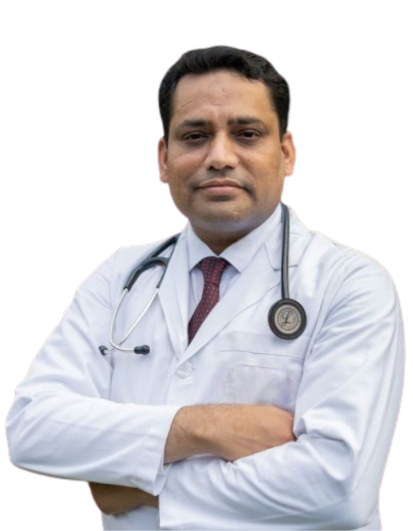
Jigyasa Hospital, Moradabad is changing that. Dr. Faran Naim brings dedicated subspecialty care in Hematology and Bone Marrow Transplant to families dealing with thalassemia, making advanced guidance available much closer to home.
From first diagnosis and carrier screening to transfusion planning, iron chelation, organ monitoring, transplant evaluation, and curative counselling, families across the Rohilkhand region can now access expert thalassemia care at Jigyasa Hospital.
Accurate Thalassemia Diagnosis
Comprehensive evaluation with CBC, HPLC, ferritin, family screening, and specialist interpretation to identify the exact type and severity.
Regular Transfusion Management
Structured transfusion planning with safe, cross-matched packed red cells and long-term monitoring for children with thalassemia major.
Iron Chelation Monitoring
Personalized chelation therapy with regular kidney, liver, ferritin, and organ-function surveillance to prevent iron overload complications.
Bone Marrow Transplant Evaluation
Early BMT planning, HLA typing guidance, donor evaluation, and curative pathway counselling by a hematology and transplant specialist.
Genetic Counselling
Carrier detection, parental screening, prenatal counselling, and risk assessment for couples and families affected by thalassemia.
Care Close to Home
Serving Moradabad, Rampur, Bareilly, Bijnor, Sambhal, and the wider Rohilkhand region with specialist thalassemia care.
What Is Thalassemia?
Thalassemia is an inherited blood disorder caused by mutations in the genes responsible for producing haemoglobin, the protein inside red blood cells that carries oxygen throughout the body. When haemoglobin production is defective, red blood cells become fragile, abnormally shaped, and short-lived, leading to chronic and often severe anaemia.
The disorder is passed from parents to children through genes. If both parents carry the thalassemia trait, each pregnancy carries a 25% chance of resulting in a child with thalassemia major. If only one parent is a carrier, children may inherit the trait but usually do not develop thalassemia major.
This is why carrier screening before marriage or pregnancy, and proper genetic counselling by a specialist, are among the most powerful ways to reduce the burden of thalassemia major in communities where the trait is common.
Types of Thalassemia
Beta-thalassemia major, also known as Cooley's anaemia, is the most severe and clinically significant form. Children often appear normal at birth but develop severe anaemia within the first few months of life as the body switches from foetal to adult haemoglobin. Without treatment, it is life-threatening, while long-term survival depends on regular transfusions and proper iron chelation.
Beta-thalassemia intermedia is less severe than major but more significant than the trait. Some patients do not need regular transfusions early in life but may later become transfusion dependent. Beta-thalassemia trait, or minor, usually causes no serious illness but is extremely important from a family planning and genetic risk perspective.
Alpha-thalassemia results from mutations in the alpha-globin genes and ranges from mild carrier states to severe fetal disease. Another important form is HbE/beta-thalassemia, where a beta-thalassemia gene and an HbE gene are inherited together, producing a condition that may behave like thalassemia intermedia or thalassemia major.
Because each type behaves differently, accurate classification is essential before deciding on transfusions, chelation, genetic counselling, or bone marrow transplant planning.
Diagnosis of Thalassemia at Jigyasa Hospital
Accurate diagnosis is the foundation of thalassemia management. Dr. Faran Naim follows a structured diagnostic approach starting with Complete Blood Count and red cell indices, which often show low haemoglobin, low MCV, and low MCH. This pattern can look similar to iron deficiency, which is why expert interpretation matters before iron is prescribed.
High-Performance Liquid Chromatography, or HPLC, is the key test used to identify and quantify different haemoglobin fractions such as HbA, HbA2, HbF, HbS, and HbE. It helps classify the specific thalassemia type and often confirms carrier state or major disease with much greater accuracy than routine blood tests alone.
Molecular genetic testing may be used to identify the exact gene mutation, especially when planning family counselling or bone marrow transplant evaluation. Parental screening and wider family screening are also important whenever a child is diagnosed.
In patients who need long-term transfusions, ferritin and iron studies are monitored regularly. Organ-function assessment of the heart, liver, and endocrine system is also essential to detect complications of iron overload early and manage them in a timely way.
Management of Thalassemia at Jigyasa Hospital
Dr. Faran Naim provides comprehensive thalassemia management tailored to each patient's age, severity, transfusion needs, organ status, and family circumstances. For thalassemia major, regular blood transfusions every 2 to 4 weeks are the cornerstone of supportive care and help maintain haemoglobin at levels that support growth, development, and daily function.
Because each transfusion adds iron to the body, iron chelation is a critical part of long-term care. Depending on age, ferritin, cardiac risk, kidney and liver function, and treatment tolerance, Dr. Naim may use deferoxamine, deferasirox, deferiprone, or combination strategies with regular monitoring.
In selected cases, splenectomy may reduce transfusion burden when hypersplenism develops, but this decision requires careful evaluation because removal of the spleen also increases lifetime infection risk. Endocrine, cardiac, liver, and bone complications are monitored and managed continuously in patients on long-term transfusion support.
The goal is not only to keep haemoglobin adequate, but also to protect the heart, liver, pancreas, hormone systems, growth, and long-term quality of life through systematic specialist care.
Bone Marrow Transplant — The Only Cure for Thalassemia Major
Allogeneic stem cell transplantation, also called bone marrow transplant, is currently the only curative treatment for thalassemia major. It replaces the patient's defective marrow with healthy donor stem cells that can produce normal haemoglobin, freeing the patient from lifelong transfusions and preventing ongoing iron accumulation.
The best candidates are usually children with transfusion-dependent thalassemia major who are younger, have good heart and liver function, and ideally have a matched sibling donor. Outcomes are most favorable when transplant planning begins early, before years of iron overload and organ damage complicate the process.
When a matched sibling donor is not available, matched unrelated donor or haploidentical transplant pathways may still be considered in selected situations. These decisions depend on donor availability, disease burden, organ status, and the overall transplant strategy.
Dr. Faran Naim helps families begin this evaluation early, including HLA typing, risk assessment, counselling, and planning for the most appropriate curative pathway.
Why Choose Dr. Faran Naim and Jigyasa Hospital?
Thalassemia needs a hematologist, not just general supportive treatment. Dr. Faran Naim's specialist expertise in Hematology and Bone Marrow Transplant allows him to guide the full thalassemia journey, from first diagnosis and family counselling to transfusion protocols, iron chelation, organ monitoring, and curative transplant evaluation.
Jigyasa Hospital provides coordinated care under one roof, including diagnostic workup, transfusion support, ferritin and organ monitoring, splenectomy decision support, and BMT-related assessment. This continuity is especially valuable for families who otherwise would need repeated travel to metro cities.
Dr. Naim's work also extends beyond treatment to prevention. Carrier screening, parental testing, and genetic counselling help families understand risk clearly and reduce the future burden of thalassemia major in western Uttar Pradesh.
For children who need lifelong monthly transfusions and regular specialist review, having expert care in Moradabad means fewer delays, less disruption, and more consistent long-term outcomes.
Patient Experiences
“After my child's diagnosis, we felt lost and overwhelmed. Dr. Faran Naim explained the disease, transfusion schedule, and long-term care in a way our family could truly understand. Having this expertise in Moradabad has made a huge difference.”
Nazia F.
Moradabad - Thalassemia Major Management
“We had been treating low haemoglobin without clarity for months. Dr. Naim guided us through the proper tests and helped identify thalassemia trait in our family. His counselling was calm, clear, and extremely helpful.”
Rohit A.
Rampur - Family Screening and HPLC Testing
“We wanted to know whether our daughter could be cured. Dr. Faran Naim explained bone marrow transplant timing, donor testing, and outcomes honestly and thoroughly. We finally felt we had the right direction for the future.”
Shabnam K.
Bijnor - BMT Evaluation
Book Your Thalassemia Consultation Today
Whether your child has just been diagnosed, whether you are struggling with an inconsistent transfusion programme, whether you want to know if your child may be eligible for curative bone marrow transplant, or whether you are a couple wanting to understand your genetic risk before having children, Dr. Faran Naim at Jigyasa Hospital is here to help.
The sooner a thalassemia specialist is involved, the better the outcomes for your child. Families across Moradabad and western Uttar Pradesh can now access dedicated thalassemia care much closer to home.
Address
Near Miglani Cinema, Rampur Road, Moradabad 244001
Thalassemia Appointments and Enquiries
+91-7900903333Frequently Asked Questions — Thalassemia Specialist in Moradabad
Is thalassemia curable?
Thalassemia major can be cured with a successful allogeneic bone marrow transplant. The best outcomes, with cure rates exceeding 90%, are achieved in young children, ideally under 7 years, who receive a transplant from a matched sibling donor before significant iron-related organ damage develops. Without transplant, thalassemia major is managed lifelong with blood transfusions and iron chelation.
Can thalassemia trait (minor) cause serious problems?
People with thalassemia trait are generally healthy and do not require treatment. However, they are genetic carriers, and if both partners carry the trait, each pregnancy has a 25% chance of producing a child with thalassemia major. Carrier identification and genetic counselling are therefore essential for families in Moradabad and surrounding regions.
How often do thalassemia major patients need blood transfusions?
Most patients with thalassemia major require blood transfusions every 2 to 4 weeks throughout their lives unless they receive a curative bone marrow transplant. The exact transfusion schedule is determined by haemoglobin levels, growth, symptoms, and the treating specialist's plan.
What is iron chelation and why is it necessary?
Each blood transfusion adds iron to the body. Since the body cannot naturally excrete excess iron, it accumulates in the heart, liver, pancreas, and endocrine glands over time. Iron chelation therapy, using oral or injectable medicines, removes this excess iron and is an essential part of thalassemia major management.
My child has thalassemia. When should I consider bone marrow transplant?
As early as possible. The best bone marrow transplant outcomes are seen in children under 5 to 7 years of age who have minimal iron overload and good heart and liver function. Families should consult Dr. Faran Naim at Jigyasa Hospital as soon as a thalassemia major diagnosis is confirmed so that sibling HLA typing and transplant evaluation can begin without delay.
Do all children with low haemoglobin have iron deficiency?
No. Thalassemia can mimic iron deficiency anaemia on routine blood tests, especially because both may show small red blood cells. That is why specialist testing such as CBC with red cell indices, HPLC, and sometimes genetic testing is essential before giving iron to a child with chronic anaemia.
Why Patients Choose Us
- 24/7 Emergency & Trauma Care
- Top Specialist Doctors
- Modern ICU & Operation Theatres
- Transparent & Affordable Pricing
- Ayushman Bharat Empanelled
- Cashless Insurance Support
- Multispeciality Under One Roof
Our Location
Near Miglani Cinema,
Rampur Road,
Moradabad 244001