

Total Knee Replacement in Moradabad: Expert Orthopedic Care at Jigyasa Hospital
Knee pain can quietly change a person life. Climbing stairs becomes a struggle, a short walk feels like a long journey, sitting on the floor for prayer or family functions turns difficult, and nights are disturbed by an aching joint.
Many people live with knee pain for years, hoping it will settle, relying on painkillers, or being told that nothing more can be done. In reality, when the knee joint is badly worn out, total knee replacement can relieve pain and help many people return to comfortable daily activity.
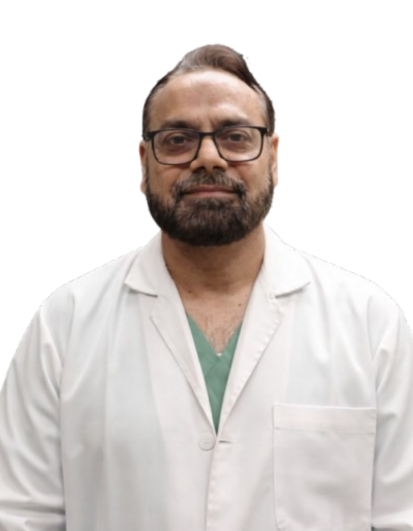
If you are looking for total knee replacement in Moradabad, Jigyasa Hospital offers orthopedic consultation with Dr. Shariq Arshad, who can examine your knee, explain whether surgery is truly needed, and discuss every option with you, including non-surgical care.
Understanding the Knee Joint
The knee is the largest joint in the body and carries the weight of the whole body with every step. It is formed where the thigh bone, the shin bone, and the kneecap meet. A smooth, slippery layer of cartilage covers the ends of these bones, allowing them to glide against each other without friction.
• The knee works like a hinge but also allows slight rotation
• Cartilage acts as a cushion and allows pain-free movement
• Ligaments and muscles keep the joint stable
• When cartilage wears away, bone rubs on bone, causing pain, swelling, and stiffness
What Causes Severe Knee Damage?
The most common cause of a worn-out knee is osteoarthritis, a gradual wear and tear of the cartilage that usually appears after the age of 50, though it can start earlier. Other conditions can also damage the joint and may eventually lead to the need for replacement.
• Osteoarthritis: Age-related wear and tear, the most frequent cause
• Rheumatoid arthritis: An autoimmune condition that inflames the joint lining
• Post-traumatic arthritis: Arthritis after a fracture, ligament injury, or other injury to the knee
• Avascular necrosis: Loss of blood supply to the bone, causing it to collapse
• Severe deformity: Such as marked bow legs or knock knees over many years
• Other conditions: Including infections and certain inflammatory diseases
Risk Factors for Knee Arthritis
Anyone can develop knee arthritis, but some factors raise the risk or speed up the damage. Understanding them helps protect the knees of people who are still at an early stage.
• Are above 50 years of age
• Are overweight, which increases the load on the knees
• Have had a previous knee injury, ligament tear, or fracture
• Have a family history of arthritis
• Do heavy physical work, repeated squatting, or kneeling
• Have rheumatoid arthritis or other inflammatory conditions
• Are a woman, especially after menopause
• Have a sedentary lifestyle with weak thigh muscles
Symptoms of Advanced Knee Arthritis
Knee arthritis usually develops slowly. In the beginning, pain may appear only after activity. Over time, it may be present even at rest and at night.
• Pain while walking, climbing stairs, or getting up from a chair or the floor
• Pain at rest or at night that disturbs sleep
• Stiffness, especially in the morning or after sitting
• Swelling around the knee
• A grating or cracking sensation in the joint
• A knee that feels weak or gives way
• Bowing of the legs or a change in the shape of the knee
• Reduced walking distance and loss of independence
Seek urgent care if the knee suddenly becomes hot, red, swollen, and very painful, especially with fever; if you cannot put any weight on the leg after an injury; or if the knee looks deformed after a fall or accident.
When Is Total Knee Replacement Considered?
Total knee replacement is not the first treatment for knee pain, and it is not meant for every person with knee arthritis. It is usually considered when the joint is severely damaged and other treatments no longer give adequate relief.
Doctors may discuss replacement when:
• Knee pain is severe and limits daily activities such as walking, stairs, or sleep
• X-rays show advanced arthritis with loss of joint space
• Medicines, physiotherapy, weight management, and injections no longer help enough
• There is a significant deformity of the knee
• The pain reduces your quality of life and independence
• You are healthy enough to undergo surgery and take part in rehabilitation
Meet Dr. Shariq Arshad, Orthopedics Specialist
Dr. Shariq Arshad is an Orthopedics specialist at Jigyasa Hospital, Moradabad, who sees patients with problems of the bones, joints, muscles, and ligaments, including knee pain and arthritis. He takes time to understand how the problem affects each patient daily life, explains the condition and the options in simple language, and recommends surgery only when it offers a clear benefit.
His approach includes:
• Listening carefully to your symptoms, lifestyle, and expectations
• A thorough examination of the knee, legs, and walking pattern
• Starting with non-surgical options where they are likely to help
• Explaining honestly whether replacement is needed and when
• Planning surgery and rehabilitation carefully, so you know what to expect
• Following your progress after treatment
Add verified details: qualifications, registration number, years of experience, training or experience in joint replacement, and OPD days and timings. Do not publish unverified claims such as number of surgeries or success rates.
How Knee Problems Are Evaluated
Before any decision about surgery, the doctor needs a complete picture of your knee and your overall health. Evaluation is a step-by-step process, and not every patient needs every test.
• History: When the pain began, what makes it better or worse, previous injuries, treatments tried, and medical conditions such as diabetes, high blood pressure, or heart disease
• Physical examination: Swelling, tenderness, range of movement, alignment, stability, and the way you walk
• X-rays: Often taken while standing, to show cartilage loss, bone changes, and deformity
• MRI: In selected cases, to assess ligaments, cartilage, or other causes of pain. Please confirm availability at or through Jigyasa Hospital
• Blood tests: To check overall health, and for conditions such as rheumatoid arthritis, infection, or anaemia
• Fitness assessment before surgery: Including heart, lung, kidney, and sugar control checks as needed
Treatment Options Before Surgery
Many people with knee arthritis feel better with non-surgical treatment, and replacement is considered only if these measures fail. Starting early can slow progression and delay or even avoid surgery in some patients.
• Weight loss: Even a modest reduction lowers the load on the knees
• Exercise and physiotherapy: Strengthening the thigh muscles and improving flexibility
• Pain relievers and anti-inflammatory medicines: As prescribed, with care in people who have stomach, kidney, or heart conditions
• Hot and cold therapy: To ease pain and stiffness
• Walking aids and knee supports: Such as a cane or brace, if advised
• Footwear changes: Supportive, cushioned shoes
• Injections: Such as steroid or other joint injections for selected patients. Mention only if offered at Jigyasa Hospital
• Lifestyle changes: Avoiding repeated deep squatting or heavy kneeling when advised
What Is Total Knee Replacement?
Total knee replacement, also called total knee arthroplasty, is a surgery in which the damaged surfaces of the knee joint are removed and replaced with artificial parts, called an implant or prosthesis. The aim is to reduce pain, correct deformity, and restore movement and function.
How it works:
• The surgeon removes the damaged cartilage and a small amount of bone from the ends of the thigh bone and shin bone
• These surfaces are replaced with metal components shaped to fit the bone
• A smooth medical-grade plastic spacer is placed between them so the joint glides easily
• The underside of the kneecap may also be resurfaced, depending on the case
• The implant is fixed in place and the knee is checked for movement and stability
The operation is usually performed under spinal or general anaesthesia, and your anaesthesiologist will discuss the best option for you. The surgery generally takes about one to two hours, though this varies from patient to patient. Please confirm details with the operating surgeon before publishing.
Types of Knee Replacement
Not every knee needs the same operation. The type of surgery depends on how much of the joint is damaged and on the patient overall condition.
• Total knee replacement: The whole joint surface is replaced; the most common type for advanced arthritis
• Partial knee replacement: Only one damaged part of the knee is replaced, suitable for selected patients with limited damage
• Revision knee replacement: A repeat operation to replace or repair a worn or failed implant
• Bilateral knee replacement: Both knees are replaced, sometimes in the same session or in two stages, depending on the patient health. Mention only if offered and appropriate
List only procedures and technologies actually available at Jigyasa Hospital.
Preparing for Knee Replacement Surgery
Good preparation helps surgery and recovery go more smoothly. Your doctor and the hospital team will give you personalised instructions, and it helps to start early.
• Complete all advised tests and fitness checks
• Keep conditions such as diabetes and blood pressure well controlled
• Inform your doctor about all medicines you take, including blood thinners
• Stop smoking, as it slows healing
• Follow instructions about fasting before surgery
• Practise the exercises that your physiotherapist advises, and learn to use a walker or crutches
• Arrange your home: remove loose rugs, add a raised toilet seat or support bars, and set up a comfortable chair and bed
• Plan for family support during the first weeks after surgery
What to Expect During Hospital Stay
The length of the hospital stay varies with the patient and the surgical plan. Most patients stay for a few days, and the team begins gentle movement early.
• Pain control through medicines and, where used, nerve blocks or other methods
• Early walking with support, usually within a day or so of surgery, as advised by the surgeon
• Physiotherapy begins in the hospital
• Measures to reduce the risk of blood clots, such as medicines, stockings, and early movement
• Wound care and monitoring for any complications
• Instructions for home care before discharge
Recovery and Rehabilitation After Knee Replacement
Recovery is a process that takes weeks to months. The surgery replaces the joint, but your effort in rehabilitation decides how well the knee moves and how strong it becomes. Regular exercise, following your surgeon advice, and attending follow-up visits are essential.
• First few weeks: Walking with support, controlling pain and swelling, and gentle bending and straightening exercises
• Around six weeks onwards: Gradually reducing support, improving strength, and returning to light daily activities
• Three months and beyond: Continued strengthening and improving stamina, with further gains over several months
• Long term: Many patients enjoy less pain and better mobility, and follow-up visits monitor the implant
Rehabilitation tips:
• Do your exercises regularly as taught by the physiotherapist
• Walk daily and increase the distance gradually
• Keep the leg elevated and use cold packs as advised to reduce swelling
• Follow wound care instructions and keep the dressing clean and dry
• Avoid sitting or lying in one position for too long
• Use support such as a walker or cane until your surgeon allows you to stop
• Do not skip follow-up appointments
Risks and Possible Complications
Every surgery has risks, and it is important to know them before deciding. Most patients do well, but problems can occasionally occur, and your surgeon will discuss your personal risk.
• Infection of the wound or joint
• Blood clots in the leg veins, which can travel to the lungs
• Stiffness of the knee
• Persistent pain or swelling
• Implant loosening or wear over time
• Injury to nerves or blood vessels, which is rare
• Anaesthesia-related risks
• Need for further surgery in some cases
Contact your doctor immediately if you notice fever or chills; increasing redness, warmth, swelling, or drainage from the wound; sudden calf pain or swelling; chest pain or difficulty breathing, which is an emergency; or severe pain not controlled by prescribed medicines.
Life After Knee Replacement
Many patients find that pain is reduced and that they can walk, climb stairs, and carry out daily tasks more comfortably. Implants can last many years, and with proper care many people use them for 15 to 20 years or longer, though this depends on age, activity, weight, and other factors.
• Stay active with low-impact exercise such as walking, swimming, and cycling
• Avoid high-impact activities and heavy lifting unless your surgeon says otherwise
• Maintain a healthy weight to protect the implant
• Attend regular follow-ups
• Inform your doctor or dentist about your implant before certain procedures, if advised
• Discuss with your surgeon about sitting on the floor, squatting, or cross-legged positions, since advice depends on the patient and implant
Common Myths About Knee Replacement
Myth: Knee replacement is only for very old people. Fact: Age alone is not the deciding factor; the condition of the joint, symptoms, and overall health are what matter.
Myth: Once you have knee pain, you need surgery. Fact: Many patients are managed well with exercise, weight loss, medicines, and other non-surgical treatment.
Myth: You will not be able to walk after the surgery. Fact: Most patients are encouraged to walk with support very soon after surgery.
Myth: The artificial knee will wear out quickly. Fact: Modern implants often last many years, though lifespan varies.
Myth: Surgery is the end of all pain and restriction. Fact: Surgery can greatly reduce pain, but results depend on rehabilitation and individual factors.
Myth: Waiting as long as possible is always better. Fact: Delay beyond a point can lead to severe deformity, muscle weakness, and loss of function, so timely advice matters.
Why Choose Jigyasa Hospital for Knee Replacement?
Specialist consultation: Orthopedic consultation with Dr. Shariq Arshad for knee pain, arthritis, and joint problems.
Honest guidance: A clear explanation of whether surgery is needed or non-surgical care is enough.
Planned treatment: Thorough pre-surgery evaluation, clear explanation of the procedure, risks, benefits, and recovery, with rehabilitation guidance and follow-up care.
Convenient location: Care close to home in Moradabad, so family can be near during treatment.
Publisher to add before going live:
Add only verified facilities, such as modular operation theatre, ICU, X-ray or MRI, physiotherapy and rehabilitation, anaesthesia team, cashless and insurance support, packages, and timings.
Specialist Orthopedic Consultation
Dr. Shariq Arshad, Orthopedics, assesses knee pain and arthritis, explains all options, and recommends surgery only when it offers a clear benefit.
Non-Surgical Options First
Before considering replacement, doctors may advise weight management, physiotherapy, medicines, walking aids, footwear changes, and selected injections.
Clear Communication
Patients and families are guided in simple Hindi or English, with explanations of X-ray findings, surgery, risks, recovery, and follow-up.
Knee Arthritis and Joint Care
Care is available for osteoarthritis, rheumatoid arthritis, post-traumatic arthritis, knee deformity, and advanced knee joint damage.
Rehabilitation-Focused Recovery
Early movement, physiotherapy, pain control, wound care, and regular follow-up are important parts of recovery after knee replacement.
Easy Location in Moradabad
Jigyasa Hospital is on Rampur Road, near Miglani Cinema, and is reachable from Moradabad and nearby areas.
Get Your Knee Pain Assessed by Dr. Shariq Arshad
If knee pain is affecting your walking, stairs, sleep, or daily independence, timely assessment can help you understand whether non-surgical treatment or knee replacement is appropriate.
Dr. Shariq Arshad at Jigyasa Hospital provides orthopedic care with clear communication and a focus on recovery and rehabilitation.
Address
Near Miglani Cinema, Rampur Road, Moradabad 244001
Phone
7900903333Frequently Asked Questions About Knee Replacement
Which doctor should I see for knee replacement in Moradabad?
An orthopedic doctor experienced in joint problems is the right specialist. At Jigyasa Hospital, you can consult Dr. Shariq Arshad, Orthopedics.
At what stage of knee pain is replacement needed?
It is considered when arthritis is advanced, pain affects daily life and sleep, and other treatments no longer help enough. Your doctor decides after examination and X-rays.
Is knee replacement surgery painful?
Some pain after surgery is expected, but the medical team uses medicines and other methods to control it, and many patients report that their arthritis pain improves once they recover.
How long does the surgery take?
It usually takes around one to two hours, though the time depends on the patient and the plan. Your surgeon will give you a more specific idea.
How soon can I walk after surgery?
Most patients are encouraged to stand and walk with support within a day or so, as advised by the surgeon and physiotherapist.
How long is the recovery?
Basic recovery takes several weeks, while full strength and comfort may take a few months. It differs from patient to patient.
How long does a knee implant last?
Many implants last 15 to 20 years or longer, but this depends on factors such as age, weight, activity, and the implant. Your surgeon can give you a personal estimate.
Why Patients Choose Us
- 24/7 Emergency & Trauma Care
- Top Specialist Doctors
- Modern ICU & Operation Theatres
- Transparent & Affordable Pricing
- Ayushman Bharat Empanelled
- Cashless Insurance Support
- Multispeciality Under One Roof
Our Location
Near Miglani Cinema,
Rampur Road,
Moradabad 244001