

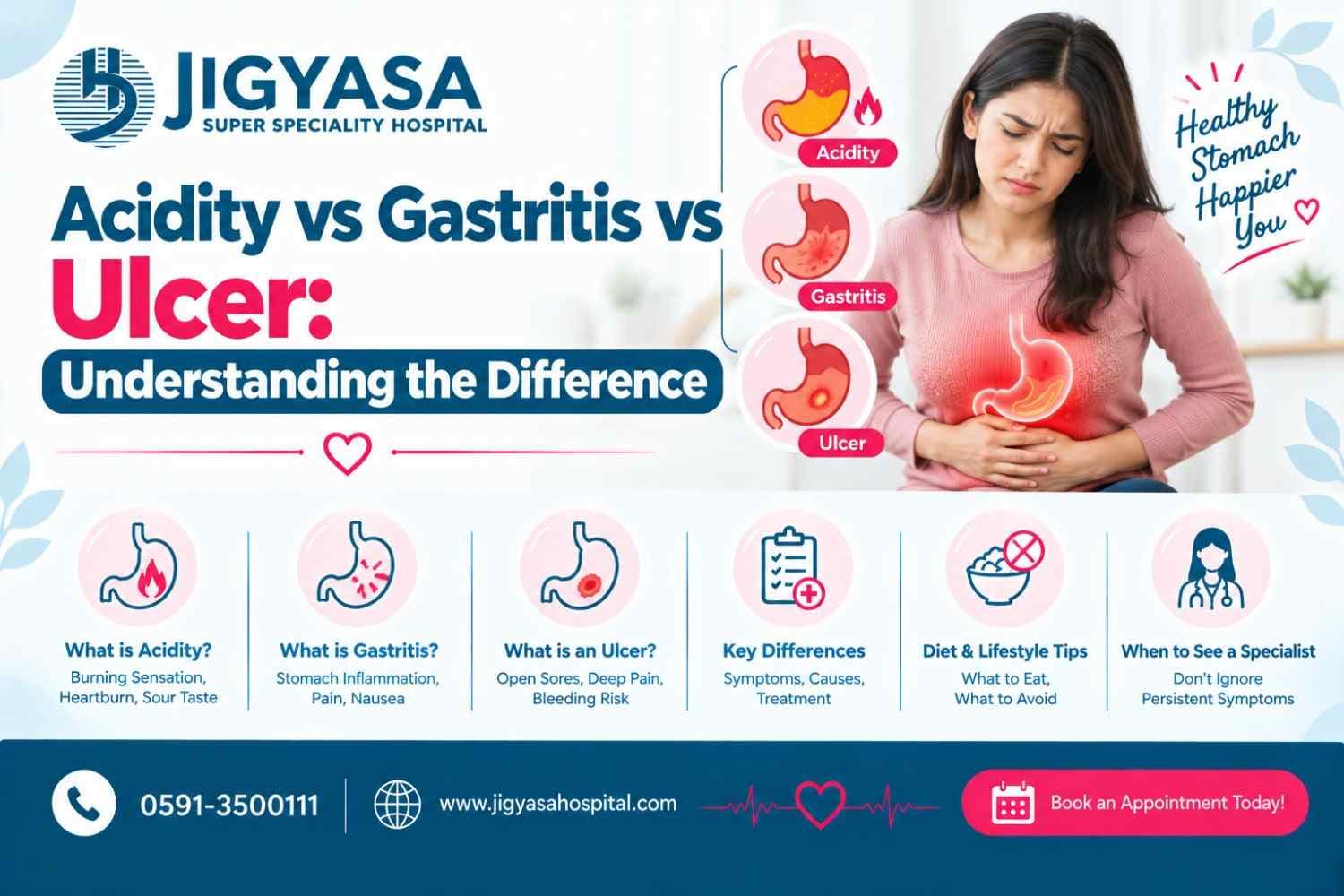
Acidity vs Gastritis vs Ulcer: Know the Difference
Burning in the stomach — is it acidity, gastritis, or an ulcer? Learn the key differences in symptoms, causes, and treatment, guidance from Dr. Pabitra Sahu, Jigyasa Hospital, Moradabad.
Burning sensation in the stomach, discomfort after eating, or a nagging pain in the upper abdomen — these overlapping symptoms are often lumped together under the general term "acidity" by most patients, when in reality, they can represent three distinct conditions: simple acidity, gastritis, or a peptic ulcer. Each has a different underlying process, different severity, and different treatment needs, which is why understanding the difference matters far more than just picking an antacid off the shelf. At Jigyasa Hospital, Moradabad, Dr. Pabitra Sahu, our specialist in Gastroenterology and Hepatology, regularly helps patients understand exactly where their symptoms fall on this spectrum, since treating a stomach ulcer the same way as occasional acidity can allow a more serious condition to progress unchecked.
Understanding the Three Conditions
Acidity (Acid Reflux)
Acidity, often used interchangeably with acid reflux or GERD in everyday language, occurs when stomach acid flows backward into the esophagus (the tube connecting the mouth to the stomach). This happens when the valve between the esophagus and stomach doesn't close properly, allowing acid to escape upward.
Gastritis
Gastritis refers to inflammation of the stomach lining itself. Rather than acid escaping into the wrong place, gastritis involves the stomach's own protective lining becoming irritated and inflamed, which can be caused by several different triggers.
Peptic Ulcer
A peptic ulcer is a more advanced condition where the stomach lining (or the upper part of the small intestine, called the duodenum) doesn't just become inflamed — it actually breaks down, forming an open sore that penetrates into the deeper layers of the digestive tract lining.
In essence, these three conditions often represent a spectrum of increasing severity, though they can also occur somewhat independently of one another, and it's entirely possible to have simple acidity without ever developing gastritis or an ulcer.
Key Differences: Symptoms
Acidity
- •Burning sensation in the chest, often rising toward the throat (heartburn)
- •A sour or bitter taste in the mouth, particularly when lying down or bending over
- •Symptoms often triggered by specific foods, spicy or fatty meals, or lying down soon after eating
- •Occasional regurgitation of stomach contents into the throat or mouth
- •Generally improves relatively quickly with antacids
Gastritis
- •Burning or gnawing pain in the upper abdomen, rather than primarily in the chest
- •Nausea and, in some cases, vomiting
- •A feeling of fullness or bloating after eating even small amounts
- •Loss of appetite
- •Symptoms can be more persistent and less immediately responsive to simple antacids compared to typical acidity
Peptic Ulcer
- •Burning or gnawing abdominal pain, often more intense and localized than gastritis
- •Pain pattern can be distinctive — some ulcers cause pain that worsens with an empty stomach and improves temporarily with eating, while others (particularly stomach ulcers) may worsen with eating
- •Pain that may wake a person up at night
- •Unintentional weight loss in some cases
- •Nausea and vomiting, which can sometimes contain blood or look like coffee grounds in more advanced cases
- •Dark, tarry stools, which can indicate bleeding from the ulcer — this is a warning sign requiring urgent attention
Key Differences: Underlying Causes
Common Causes of Acidity
- •Weakening of the valve between the esophagus and stomach
- •Obesity, which increases pressure on the abdomen
- •Certain foods and beverages — spicy food, caffeine, alcohol, chocolate, and fatty meals
- •Eating large meals or lying down soon after eating
- •Pregnancy, due to hormonal changes and physical pressure from the growing uterus
- •Smoking
Common Causes of Gastritis
- •Helicobacter pylori (H. pylori) infection, a bacterial infection that's one of the most common causes of chronic gastritis
- •Frequent or long-term use of certain pain relief medications (NSAIDs)
- •Excessive alcohol consumption
- •Chronic stress, particularly in the context of severe illness or major physical trauma
- •Autoimmune conditions, in less common cases, where the body's immune system attacks the stomach lining
Common Causes of Peptic Ulcers
- •H. pylori infection, responsible for a significant proportion of ulcer cases
- •Long-term or frequent use of NSAIDs, particularly at higher doses or in combination with other risk factors
- •Excessive alcohol use and smoking, both of which impair the stomach lining's protective mechanisms and healing ability
- •Severe physical stress, such as major illness or surgery, in less common situations
Notably, the old belief that ulcers are primarily caused by stress or spicy food has been significantly revised with the understanding that H. pylori infection and NSAID use are the dominant underlying causes in most cases.
Comparison Table: Acidity vs Gastritis vs Ulcer
| Feature | Acidity (Acid Reflux) | Gastritis | Peptic Ulcer |
|---|---|---|---|
| Location of pain | Chest, rising to throat (heartburn) | Upper abdomen | Upper abdomen, more intense/localized |
| Main symptom | Burning in chest, sour taste | Burning/gnawing pain, nausea, bloating | Intense gnawing pain, may wake at night |
| Trigger | Spicy/fatty foods, lying down after eating | H. pylori, NSAIDs, alcohol | H. pylori, NSAIDs, alcohol, smoking |
| Response to antacids | Quick improvement | Less responsive | May provide temporary relief |
| Warning signs | Occasional regurgitation | Persistent symptoms | Vomiting blood, black tarry stools, weight loss |
| Severity | Mild, occasional | Moderate, persistent inflammation | Severe, open sore in lining |
Warning Signs That Suggest More Than Simple Acidity
Certain symptoms suggest the condition may be gastritis or an ulcer rather than simple acid reflux, and warrant proper evaluation:
- •Pain that persists despite using over-the-counter antacids
- •Vomiting blood or material resembling coffee grounds
- •Black, tarry stools
- •Unintentional weight loss
- •Difficulty swallowing or pain with swallowing
- •Persistent nausea and vomiting
- •Pain that wakes you up at night
- •Symptoms that have been present for several weeks without improvement despite basic self-care measures
These red flags should prompt a proper gastroenterology evaluation rather than continued self-treatment with over-the-counter remedies.
How These Conditions Are Diagnosed at Jigyasa Hospital
At Jigyasa Hospital, Dr. Pabitra Sahu's evaluation for persistent or concerning upper abdominal symptoms typically includes:
1. Detailed Clinical History
Understanding the exact nature, timing, and pattern of symptoms, along with medication use (particularly NSAIDs), alcohol consumption, and other relevant risk factors.
2. H. pylori Testing
Given its significant role in both gastritis and peptic ulcers, testing for H. pylori infection — through breath, stool, or blood tests, or during endoscopy — is often an important part of the evaluation.
3. Upper Endoscopy
When symptoms are persistent, severe, or accompanied by warning signs, an upper endoscopy allows direct visualization of the esophagus, stomach, and duodenum, clearly distinguishing between simple inflammation (gastritis) and an actual ulcer, and allowing tissue sampling if needed.
4. Blood Tests
Checking for anemia, which can indicate bleeding from an ulcer that might not be immediately obvious through symptoms alone.
Treatment Approaches
For Acidity
- •Lifestyle modifications — avoiding trigger foods, not lying down immediately after eating, weight management, and reducing caffeine and alcohol intake
- •Antacids for occasional symptom relief
- •Acid-reducing medications for more frequent or persistent symptoms
For Gastritis
- •Treatment of underlying H. pylori infection, when present, typically involving a combination of medications
- •Discontinuation or reduction of NSAID use where possible, in coordination with the prescribing doctor
- •Acid-reducing medications to allow the stomach lining to heal
- •Reducing alcohol consumption and addressing other contributing lifestyle factors
For Peptic Ulcers
- •H. pylori eradication treatment when the infection is present, following a specific medication protocol
- •Discontinuation of NSAIDs where medically feasible
- •A more extended course of acid-suppressing medication to allow adequate ulcer healing
- •Follow-up endoscopy in some cases to confirm healing, particularly for stomach ulcers
- •Urgent treatment, including hospitalization in some cases, if there are signs of bleeding or other complications
Gastroenterology Care at Jigyasa Hospital, Moradabad
- •Expert diagnosis and treatment of acidity, gastritis, and peptic ulcers
- •Advanced endoscopy services for accurate diagnosis and monitoring
- •H. pylori testing and eradication therapy
- •Personalized treatment plans by Dr. Pabitra Sahu, Gastroenterologist & Hepatologist
Book an Appointment: 7900903333
Address: Near Miglani Cinema, Rampur Road, Moradabad – 244001
Online Appointments: jigyasahospital.com
Gastroenterology | Endoscopy | H. pylori Treatment | Ulcer Care | Acid Reflux | Ayushman Bharat Accepted
Key Takeaways
- •Acidity = acid reflux into esophagus (heartburn, chest burning); Gastritis = stomach lining inflammation; Ulcer = open sore in stomach/duodenum lining.
- •Acidity: chest burning, sour taste, triggered by foods. Gastritis: upper abdominal pain, nausea, bloating. Ulcer: intense pain, may wake at night, black stools, vomiting blood.
- •Main causes: H. pylori infection and NSAID use (not stress/spicy food as commonly believed).
- •Warning signs needing urgent care: vomiting blood, black tarry stools, unintentional weight loss, persistent pain despite antacids.
- •Diagnosis: H. pylori testing, upper endoscopy, blood tests. Treatment ranges from lifestyle changes to antibiotics and acid-suppressing medications.
Frequently Asked Questions
Can gastritis turn into an ulcer if left untreated?
Yes, ongoing untreated inflammation from gastritis, particularly when caused by persistent H. pylori infection or continued NSAID use, can progress to an actual ulcer over time, which is why addressing gastritis properly rather than just masking symptoms is important.
Is spicy food actually a major cause of ulcers?
Contrary to older beliefs, spicy food itself isn't a primary cause of peptic ulcers — H. pylori infection and NSAID use are the dominant causes. However, spicy food can certainly aggravate symptoms in someone who already has gastritis, an ulcer, or acid reflux.
How is H. pylori infection actually diagnosed?
H. pylori can be diagnosed through a breath test, a stool test, a blood test, or during an upper endoscopy with a tissue sample, with the specific test chosen based on the clinical situation.
Can I just keep taking over-the-counter antacids if they seem to help?
If symptoms are mild and infrequent, occasional antacid use may be reasonable, but persistent or recurring symptoms, or any warning signs like weight loss or black stools, should prompt proper evaluation rather than relying indefinitely on over-the-counter treatment, since this could mask a more serious underlying condition.
Do peptic ulcers always cause obvious symptoms?
Not always — some ulcers, particularly those related to NSAID use, can be relatively silent until a complication like bleeding occurs, which is one reason why patients on long-term NSAID therapy are sometimes monitored more closely by their doctor.
Related Articles

Heart Attack Warning Signs You Must Never Ignore
Recognizing heart attack symptoms early can save your life. Learn the critical warning signs from Dr. Amit Kumar Singh, Senior Interventional Cardiologist at Jigyasa Hospital, Moradabad. Call 7900903333.

5 Early Morning Habits That Prevent Diabetes Naturally
Discover 5 powerful morning habits that naturally prevent diabetes. Expert advice from Dr. C.P. Singh, Senior Consultant Physician at Jigyasa Hospital, Moradabad. Call 7900903333.
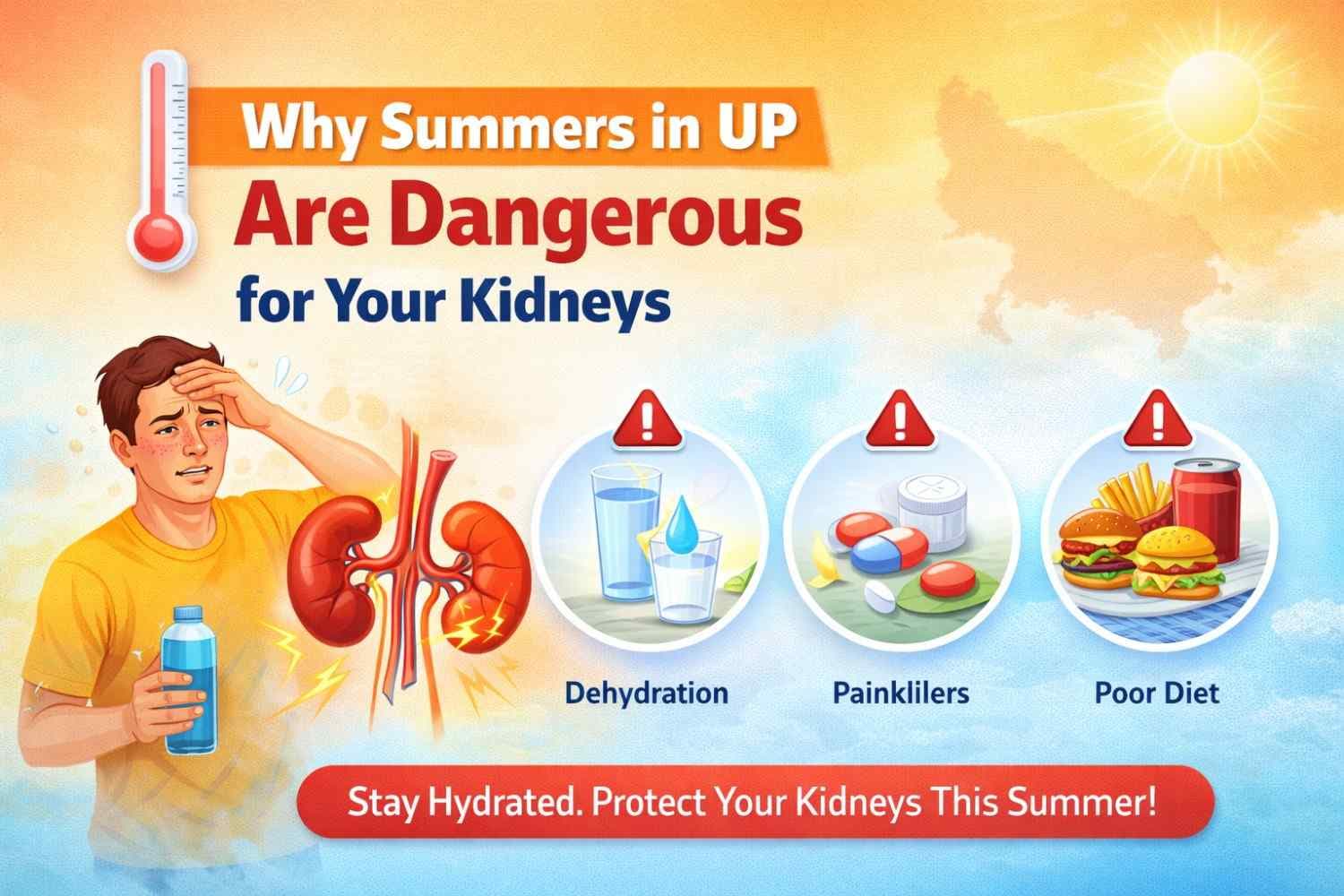
Why Summers in UP Are Dangerous for Your Kidneys
UP summers can silently damage your kidneys. Jigyasa Hospital Moradabad explains the hidden risks, warning signs, and how to protect your kidneys this season. Call 7900903333.