
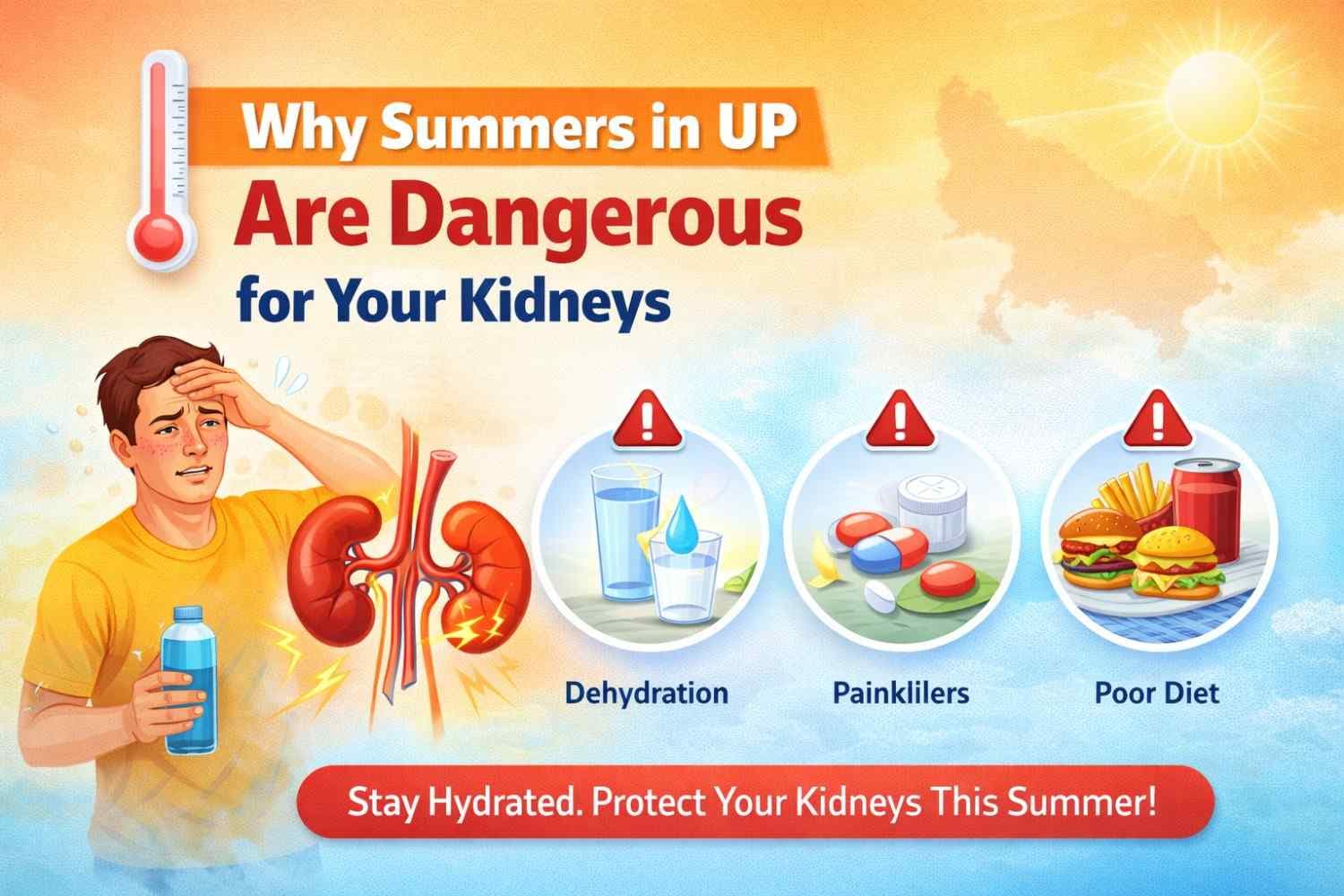
Why Summers in UP Are Dangerous for Your Kidneys
UP summers can silently damage your kidneys. Jigyasa Hospital Moradabad explains the hidden risks, warning signs, and how to protect your kidneys this season.
Every year, as temperatures in Uttar Pradesh climb past 42°C to 47°C, hospitals across the state report a sharp spike in kidney-related emergencies — kidney stones, acute kidney injury, urinary tract infections, and chronic kidney disease flare-ups. Most of these cases are entirely preventable. Uttar Pradesh summers are not just uncomfortable. For your kidneys, they can be genuinely dangerous. At Jigyasa Hospital, Moradabad, our medical team has observed a consistent seasonal pattern: as the mercury rises, so do kidney-related complaints in our wards and OPD. And the most alarming part? The majority of patients arrive late — when the damage is already significant. This article is a warning and a guide. We explain exactly why summers in UP put your kidneys at risk, what symptoms you must never ignore, and the practical steps you can take right now to protect one of your body's most vital organs.
Understanding the Kidney: Why It Is So Vulnerable to Heat
Your kidneys are two fist-sized organs located on either side of your spine, just below the ribcage. Every single minute, they filter approximately 1.2 litres of blood, removing waste, balancing minerals, regulating blood pressure, and controlling fluid levels.
For all of this to work correctly, your kidneys need one thing above all else: adequate water. In the brutal UP summer heat — particularly in cities like Moradabad, Meerut, Bareilly, Lucknow, Agra, and Kanpur — the body loses water at an alarming rate through sweat, evaporation, and respiration. When fluid intake does not keep pace with this loss, the kidneys are forced to work under intense stress, concentrating urine, conserving water, and managing a progressively toxic internal environment. Sustained over days or weeks, this stress causes measurable, sometimes irreversible kidney damage.
6 Ways UP Summers Specifically Harm Your Kidneys
1. Dehydration — The Most Widespread and Underestimated Threat
In peak UP summer, an average adult can lose 2 to 4 litres of water per day through sweat alone — more if they work outdoors, travel, or exercise. Most people replace only a fraction of this loss. When the body is dehydrated, blood volume drops, blood pressure falls, and blood flow to the kidneys is significantly reduced. The kidneys respond by restricting urine output to conserve water. This concentrated urine is highly acidic, packed with minerals, waste products, and toxins — creating ideal conditions for kidney stone formation and bacterial infection.
Chronic, low-grade dehydration — the kind most people experience without realising throughout a UP summer — slowly degrades kidney function. Over years, this contributes to chronic kidney disease (CKD), a condition that is now alarmingly prevalent across Uttar Pradesh. The danger: Most people do not feel thirsty until they are already significantly dehydrated. By the time you feel thirsty in 45°C heat, you may have already lost over 1 litre of fluid.
2. Kidney Stones — Summer Is Peak Season
If there is one kidney condition that surges dramatically every summer in UP, it is kidney stones (renal calculi). Kidney stones form when minerals — primarily calcium, oxalate, and uric acid — become so concentrated in the urine that they crystallise and solidify. In summer, when urine is chronically concentrated due to dehydration and high temperatures, this process accelerates dramatically.
UP's water quality also plays a role. Hard water — common in many districts of Uttar Pradesh — contains high levels of calcium and magnesium. When consumed without adequate fluid intake, it adds to the mineral load in already-concentrated urine. Kidney stone pain is often described as one of the worst pains a human being can experience — a sudden, severe, cramping agony in the back, side, or lower abdomen that comes in waves, accompanied by blood in the urine, nausea, vomiting, and difficulty urinating. Summer in UP is kidney stone season. Do not wait for the pain to visit you first.
3. Urinary Tract Infections (UTIs) — Thriving in the Heat
The hot, humid conditions of a UP summer create an ideal environment for bacterial growth — both outside and inside your urinary tract. Dehydration reduces urine output, meaning bacteria that enter the urinary system are flushed out less frequently. Combined with sweating in the groin region, poor hygiene habits in extreme heat, and the tendency to hold urine for longer periods due to reduced water intake, summer becomes a perfect storm for UTIs.
Left untreated, a lower urinary tract infection (bladder infection) can travel upward to the kidneys, causing pyelonephritis — a serious kidney infection that can lead to permanent kidney damage, blood poisoning (sepsis), and hospitalisation. Women are significantly more susceptible to UTIs, but men — particularly older men with prostate issues — are also at elevated risk during summer.
4. Acute Kidney Injury (AKI) from Heat Stroke
Heat stroke — a medical emergency that occurs when the body's core temperature rises above 40°C — causes catastrophic damage to multiple organs, with the kidneys among the most severely affected. In severe cases of heat stroke, a condition called rhabdomyolysis occurs: heat-stressed muscles break down rapidly, releasing a protein called myoglobin into the bloodstream. Myoglobin is deeply toxic to kidney tissue and can cause acute kidney injury (AKI) within hours — a sudden, dramatic loss of kidney function that can be life-threatening.
In UP, heat stroke disproportionately affects outdoor workers (construction labourers, farmers, rickshaw pullers), the elderly, young children, and people with pre-existing conditions. The danger is very real, very local, and peaks between April and July.
5. Overuse of NSAIDs (Painkillers) for Summer Ailments
Summer brings headaches, body aches, joint pain, and fever — conditions that lead millions of Indians to self-medicate with over-the-counter painkillers like ibuprofen, diclofenac, and naproxen (NSAIDs). What most people do not know is that NSAIDs are directly nephrotoxic — they reduce blood flow to the kidneys by blocking the prostaglandins that keep renal blood vessels dilated. In a dehydrated patient — which most summer patients already are — even a few doses of ibuprofen can trigger acute kidney injury.
This is one of the most preventable causes of summer kidney damage, and it is devastatingly common across Uttar Pradesh. The rule is simple: Never take painkillers without medical supervision, especially in summer. Always consult a doctor first.
6. Contaminated Water and Waterborne Illnesses
UP summers also bring gastrointestinal infections — diarrhoea, vomiting, gastroenteritis — from contaminated water and food. These illnesses cause rapid, severe dehydration and electrolyte imbalance that, in vulnerable populations, can directly trigger acute kidney injury. Children, the elderly, and those with pre-existing kidney disease are most at risk. A child who has three days of diarrhoea and vomiting in peak June heat can develop serious renal complications in a very short window if not treated promptly.
Warning Signs Your Kidneys Are in Trouble This Summer
Do not ignore these symptoms. If you or a family member experience any of the following, seek immediate medical attention at Jigyasa Hospital, Moradabad:
- •Dark yellow or brown urine — a clear sign of severe dehydration or kidney stress
- •Very low urine output or not urinating for several hours despite drinking water
- •Severe pain in the back, side, or lower abdomen — possible kidney stone
- •Blood in urine (pink, red, or cola-coloured urine)
- •Burning or pain during urination — possible UTI
- •Swelling in the face, hands, feet, or ankles — possible kidney dysfunction
- •Persistent nausea, vomiting, or loss of appetite
- •Extreme fatigue, confusion, or difficulty concentrating
- •Fever with chills and back pain — possible kidney infection
- •High blood pressure that is difficult to control
These are not symptoms to monitor at home with a glass of water and a rest. These require prompt clinical evaluation.
How to Protect Your Kidneys This Summer — Jigyasa Hospital's Expert Recommendations
Drink Enough Water — More Than You Think You Need
The general recommendation of 8 glasses a day is a starting point, not a ceiling. In UP summer heat, most adults should be drinking 3 to 4 litres of water per day — more if they work outdoors or exercise.
- •Carry a water bottle everywhere, even for short outings
- •Drink water before you feel thirsty
- •Eat water-rich foods: watermelon, cucumber, oranges, curd, lassi (unsweetened)
- •Limit diuretics: reduce tea, coffee, and alcohol, which increase urine output and worsen dehydration
- •Set phone reminders to drink water every hour if you tend to forget
Check your hydration: Your urine should be pale yellow. Dark yellow or amber urine is a dehydration warning.
Avoid Outdoor Exposure During Peak Heat Hours
Between 11 AM and 4 PM, temperatures in UP peak. The risk of heat stroke and severe dehydration is highest in this window. If you must go outdoors:
- •Wear light, breathable, full-sleeved cotton clothing
- •Use an umbrella or hat
- •Drink water before, during, and after exposure
- •Never leave children or elderly family members in parked vehicles — even for a few minutes
Never Self-Medicate with Painkillers
This cannot be emphasised enough. If you have a headache, fever, or body ache in summer, first hydrate, rest, and use a cool compress. If symptoms persist, visit a doctor at Jigyasa Hospital before taking any medication. NSAID-induced kidney damage is preventable, but the damage, once done, may be permanent.
Get Your Kidney Function Tested
If you are above 40 years of age, have diabetes, hypertension, or a family history of kidney disease, or have had a kidney stone before — get a kidney function test (KFT) and urine routine examination done at the start of summer. Early detection of kidney stress allows timely intervention before the damage becomes serious. Jigyasa Hospital offers affordable pathology services and health check-up packages that include kidney function screening.
Manage Existing Conditions Carefully
If you already have diabetes, high blood pressure, or a history of kidney disease, summer is your highest-risk season. Consult your physician at Jigyasa Hospital before summer begins to:
- •Review and adjust your medications (some blood pressure drugs and diabetes medications require dose adjustment in summer)
- •Get baseline kidney function tests
- •Receive personalised hydration and diet guidance for the season
Who Is Most at Risk in UP Summers?
| High-Risk Group | Why They Are Vulnerable |
|---|---|
| Outdoor labourers, farmers | Intense heat exposure, limited water access |
| Elderly patients | Reduced thirst sensation, multiple medications |
| Diabetic patients | Pre-existing kidney stress, poor circulation |
| Hypertensive patients | Kidney strain amplified by heat and dehydration |
| Children under 5 | High surface-to-body ratio; rapid fluid loss |
| Previous kidney stone patients | Recurrence risk is very high in summer heat |
| People on NSAIDs or diuretics | Direct nephrotoxic effect worsened by dehydration |
High-Risk Groups for Kidney Damage in UP Summer Heat
Your Kidneys Cannot Sweat It Out — You Must Act
Your kidneys work silently, filtering hundreds of litres of blood every day without complaint — until they cannot anymore. By the time kidney damage becomes symptomatic, a significant amount of function is often already lost.
UP summers are beautiful in their intensity, but they extract a real cost from your body — and your kidneys pay a disproportionate share of that bill. The heat, the dust, the hard water, the tendency to under-hydrate, the habit of self-medication — all of it converges to make summer the most dangerous season for kidney health in our region.
You do not need to become a statistic. You need to drink more water, avoid the midday sun, skip the self-prescribed painkillers, and visit a doctor when something feels wrong. At Jigyasa Hospital, Moradabad, our expert medical team is fully equipped to evaluate, diagnose, and treat kidney-related conditions — from kidney stones and UTIs to acute kidney injury and chronic kidney disease management.
Call us now: 7900903333
Address: Near Miglani Cinema, Rampur Road, Moradabad – 244001
This summer, protect what filters everything for you.
Frequently Asked Questions
Can dehydration in summer permanently damage the kidneys?
Yes. Chronic, repeated dehydration over multiple summers — especially without treatment — can cause progressive, permanent kidney damage and significantly accelerate the development of chronic kidney disease (CKD). Acute severe dehydration can also cause acute kidney injury (AKI), which requires hospitalisation and can be life-threatening.
How much water should I drink in UP summer to protect my kidneys?
Most adults in UP should drink 3 to 4 litres of water per day during peak summer. If you work outdoors, exercise, or have had kidney stones before, you may need even more. Your urine colour is the simplest guide — aim for pale yellow urine throughout the day.
Are kidney stones more common in summer? Why?
Yes. Kidney stones occur far more frequently in summer because dehydration concentrates urine, raising the levels of calcium, oxalate, and uric acid to the point where crystals form and solidify. UP's hard water further adds to the mineral load. The combination of heat, dehydration, and water quality makes summer the peak season for kidney stones in our region.
Is it safe to take ibuprofen or combiflam for fever and headaches in summer?
Not without medical advice. NSAIDs like ibuprofen and diclofenac reduce blood flow to the kidneys and can cause acute kidney injury, especially when you are already dehydrated. Always consult a doctor at Jigyasa Hospital before taking any painkiller during summer.
Where can I get a kidney function test in Moradabad?
Jigyasa Hospital, Moradabad, offers kidney function tests (KFT), urine routine examination, and comprehensive health check-up packages at affordable prices. Walk in or call 7900903333 to book your test or consultation.
Related Articles

Heart Attack Warning Signs You Must Never Ignore
Recognizing heart attack symptoms early can save your life. Learn the critical warning signs from Dr. Amit Kumar Singh, Senior Interventional Cardiologist at Jigyasa Hospital, Moradabad. Call 7900903333.

5 Early Morning Habits That Prevent Diabetes Naturally
Discover 5 powerful morning habits that naturally prevent diabetes. Expert advice from Dr. C.P. Singh, Senior Consultant Physician at Jigyasa Hospital, Moradabad. Call 7900903333.

Normal Delivery vs C-Section — What Every Pregnant Mother Should Know
Confused about normal delivery vs C-section? Expert gynecologist Dr. Karishma at Jigyasa Hospital Moradabad explains everything a pregnant mother needs to know. Call 7900903333.