
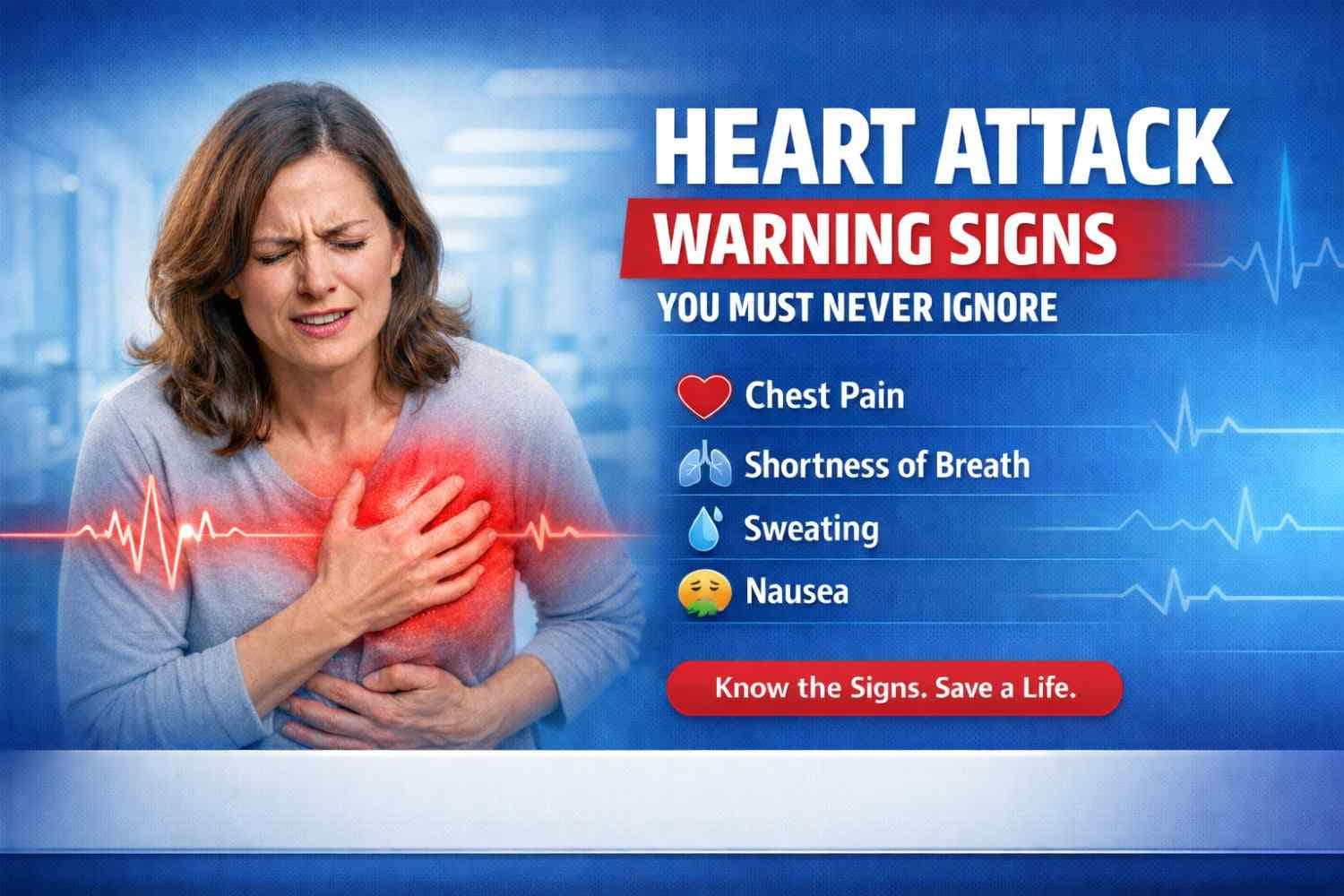
Heart Attack Warning Signs You Must Never Ignore
Recognizing heart attack symptoms early can save your life. Learn the critical warning signs from Dr. Amit Kumar Singh, Senior Interventional Cardiologist at Jigyasa Hospital, Moradabad.
Every year in India, lakhs of people lose their lives to heart attacks — many of them needlessly, simply because they did not recognise the warning signs in time. A heart attack (medically known as a myocardial infarction) occurs when blood flow to the heart muscle is blocked, causing permanent damage within minutes. The good news? Early recognition saves lives. The faster you act on the warning signs, the better your chances of survival and full recovery. At Jigyasa Hospital, Moradabad, our Senior Interventional Cardiologist, Dr. Amit Kumar Singh (MD, BHU | DM Cardiology, KGMU | FSCAI), has treated hundreds of cardiac emergencies. In this article, he walks you through the heart attack warning signs you must never ignore — and what you should do the moment they appear.
What Is a Heart Attack? A Quick Overview
Your heart is a powerful muscle that needs a constant supply of oxygen-rich blood through the coronary arteries. When one of these arteries becomes blocked — typically due to a plaque buildup or a blood clot — part of the heart muscle begins to die.
Time is muscle. For every minute without treatment, thousands of heart muscle cells are lost permanently. This is why recognising symptoms early and reaching a hospital like Jigyasa Hospital as quickly as possible is absolutely critical.
10 Heart Attack Warning Signs You Must Never Ignore
1. Chest Pain, Pressure, or Tightness
This is the most classic and well-known warning sign. Patients often describe it as a heavy weight pressing on the chest, a squeezing or tightening sensation, or a burning feeling in the centre of the chest. Important: The pain may come and go, or it may be constant. Do not dismiss it as acidity or indigestion — especially if it lasts more than a few minutes.
2. Pain Radiating to the Arm, Jaw, Neck, or Back
Heart attack pain rarely stays in one place. It commonly spreads to the left arm (most common) as a dull ache or numbness, the jaw or teeth (often mistaken for a dental problem), the neck and throat as a choking or tightening sensation, and the upper back or shoulder blades — especially in women. If you experience unexplained pain in any of these areas along with even mild chest discomfort, treat it as an emergency.
3. Shortness of Breath
Feeling breathless without exertion — or being unable to breathe normally while lying down — can be a sign that the heart is not pumping effectively. This symptom may appear alone or alongside chest pain, and it should never be dismissed.
4. Cold Sweat and Clamminess
Sudden, unexplained cold sweats — particularly when you are not exercising — are a red-flag symptom. The body triggers a stress response when the heart is in trouble, causing clammy, pale skin and profuse sweating.
5. Nausea, Vomiting, or Stomach Discomfort
Many heart attack patients — especially women — initially mistake their symptoms for food poisoning or stomach upset. Nausea, vomiting, and upper abdominal discomfort during a cardiac event are more common than most people realise.
6. Extreme Fatigue or Weakness
Feeling exhausted for no reason — particularly in the days or weeks before a heart attack — is a critical warning sign, especially among women. If you feel unusually drained even after adequate rest, consult a doctor immediately.
7. Dizziness or Lightheadedness
A sudden feeling of dizziness, loss of balance, or feeling faint — particularly when combined with chest discomfort or shortness of breath — can indicate that the heart is not supplying enough blood to the brain.
8. Heart Palpitations or Irregular Heartbeat
A racing heartbeat, skipping beats, or an irregular rhythm (arrhythmia) that feels unusual and accompanied by other symptoms should be evaluated as a cardiac emergency without delay.
9. Swelling in Legs, Ankles, or Feet
Persistent swelling in the lower extremities, especially accompanied by breathlessness when lying flat, can indicate that the heart is struggling. This is often a sign of worsening heart failure, which can lead to a cardiac event.
10. Sense of Impending Doom
Many heart attack survivors describe an unexplainable feeling of dread or doom moments before or during the attack. This is a neurological response to severe cardiac stress. If you or someone near you experiences this — paired with any other symptom — call for help immediately.
Warning Signs of Heart Attack in Women: What's Different?
Women are less likely to experience the 'classic' crushing chest pain. Instead, they more frequently report symptoms that are easier to overlook or misattribute to other causes.
- •Unusual fatigue lasting days
- •Nausea or vomiting
- •Jaw, neck, or back pain
- •Shortness of breath without chest pain
- •Anxiety or feeling of unease
This is why many women — and their doctors — miss or delay the diagnosis. If something feels wrong with your heart, trust your body and seek help immediately.
What to Do If You Suspect a Heart Attack
Act immediately — every second counts.
- •Call emergency services or rush to the nearest hospital. In Moradabad, contact Jigyasa Hospital immediately at 7900903333.
- •Do not drive yourself. Call someone or ask a bystander to drive you.
- •Chew an aspirin (325 mg) if you are not allergic and no doctor has advised otherwise — it helps reduce clotting.
- •Loosen tight clothing and sit or lie in a comfortable position.
- •Stay calm. Panic increases the heart's oxygen demand.
- •Do not eat or drink anything and avoid any strenuous activity.
Why Timely Treatment at Jigyasa Hospital Moradabad Matters
At Jigyasa Hospital, Moradabad, we offer advanced cardiac care led by Dr. Amit Kumar Singh, one of the region's most experienced Interventional Cardiologists with specialized training from Banaras Hindu University (BHU) and King George's Medical University (KGMU), Lucknow.
Our Cardiology Services Include:
- •Emergency cardiac evaluation and ECG
- •Echocardiography and advanced diagnostics
- •Interventional cardiology procedures (angiography, angioplasty)
- •Cardiac monitoring and ICU care
- •Preventive cardiology consultations
- •Lifestyle and rehabilitation counselling
We understand that in a cardiac emergency, every minute is precious. Our team is trained to act fast, with protocols designed to reduce the time from arrival to treatment — what cardiologists call 'door-to-balloon time.'
📍 Address: Near Miglani Cinema, Rampur Road, Moradabad – 244001
📞 Emergency & Appointments: 7900903333
🌐 Website: jigyasahospital.com
How to Reduce Your Risk of a Heart Attack
Prevention is always better than cure. Here are evidence-based lifestyle changes that reduce cardiac risk:
- •Quit smoking — tobacco is one of the leading causes of coronary artery disease
- •Control blood pressure — aim for below 120/80 mmHg
- •Manage blood sugar — uncontrolled diabetes significantly increases cardiac risk
- •Eat a heart-healthy diet — reduce saturated fats, salt, and processed foods; increase fruits, vegetables, and whole grains
- •Exercise regularly — at least 30 minutes of moderate activity, five days a week
- •Maintain a healthy weight — obesity puts enormous strain on the heart
- •Manage stress — chronic stress raises blood pressure and promotes inflammation
- •Get regular heart check-ups — especially if you have a family history of heart disease
Don't Wait — Act Now
"Many of my patients who come in for heart attacks had warning signs they dismissed for days or weeks. If you feel something is wrong with your heart, please do not wait. Come to us immediately — we are here for you." — Dr. Amit Kumar Singh, Senior Interventional Cardiologist, Jigyasa Hospital Moradabad
A heart attack does not always announce itself dramatically. Often, it begins subtly — with unusual fatigue, mild discomfort, or a nagging feeling that something is not right. The most important thing you can do is listen to your body and act immediately.
📞 Call us now: 7900903333
📍 Address: Near Miglani Cinema, Rampur Road, Moradabad – 244001
🔗 Book an appointment: jigyasahospital.com/contact
Your heart cannot wait. Neither should you.
Frequently Asked Questions
Can a heart attack happen without chest pain?
Yes. This is called a 'silent heart attack.' It is more common in diabetic patients and women. Symptoms may include unexplained fatigue, nausea, mild breathlessness, or simply not feeling well. All suspected cases should be evaluated with an ECG immediately.
How do I tell the difference between a heart attack and gas pain?
Gas pain is typically relieved by belching or passing gas and does not spread to the arm or jaw. Heart attack pain often feels like pressure or squeezing, lasts more than a few minutes, and may radiate. When in doubt, always seek medical evaluation — it is better to be safe.
Can young people get heart attacks?
Yes. With rising rates of obesity, diabetes, smoking, and stress in younger populations, heart attacks in people under 40 are increasingly common in India. Do not assume you are 'too young' for a heart attack.
What is the best hospital for heart treatment in Moradabad?
Jigyasa Hospital, Moradabad, offers comprehensive cardiac care with a dedicated interventional cardiology unit led by Dr. Amit Kumar Singh (DM Cardiology, KGMU). For appointments or emergencies, call 7900903333.
How quickly should I reach a hospital after a heart attack starts?
Ideally within 90 minutes of symptom onset — this is the internationally accepted 'golden window' for best outcomes. The earlier you reach the hospital, the more heart muscle can be saved.
Related Articles
5 Early Morning Habits That Prevent Diabetes Naturally
Discover 5 powerful morning habits that naturally prevent diabetes. Expert advice from Dr. C.P. Singh, Senior Consultant Physician at Jigyasa Hospital, Moradabad. Call 7900903333.
Why Summers in UP Are Dangerous for Your Kidneys
UP summers can silently damage your kidneys. Jigyasa Hospital Moradabad explains the hidden risks, warning signs, and how to protect your kidneys this season. Call 7900903333.
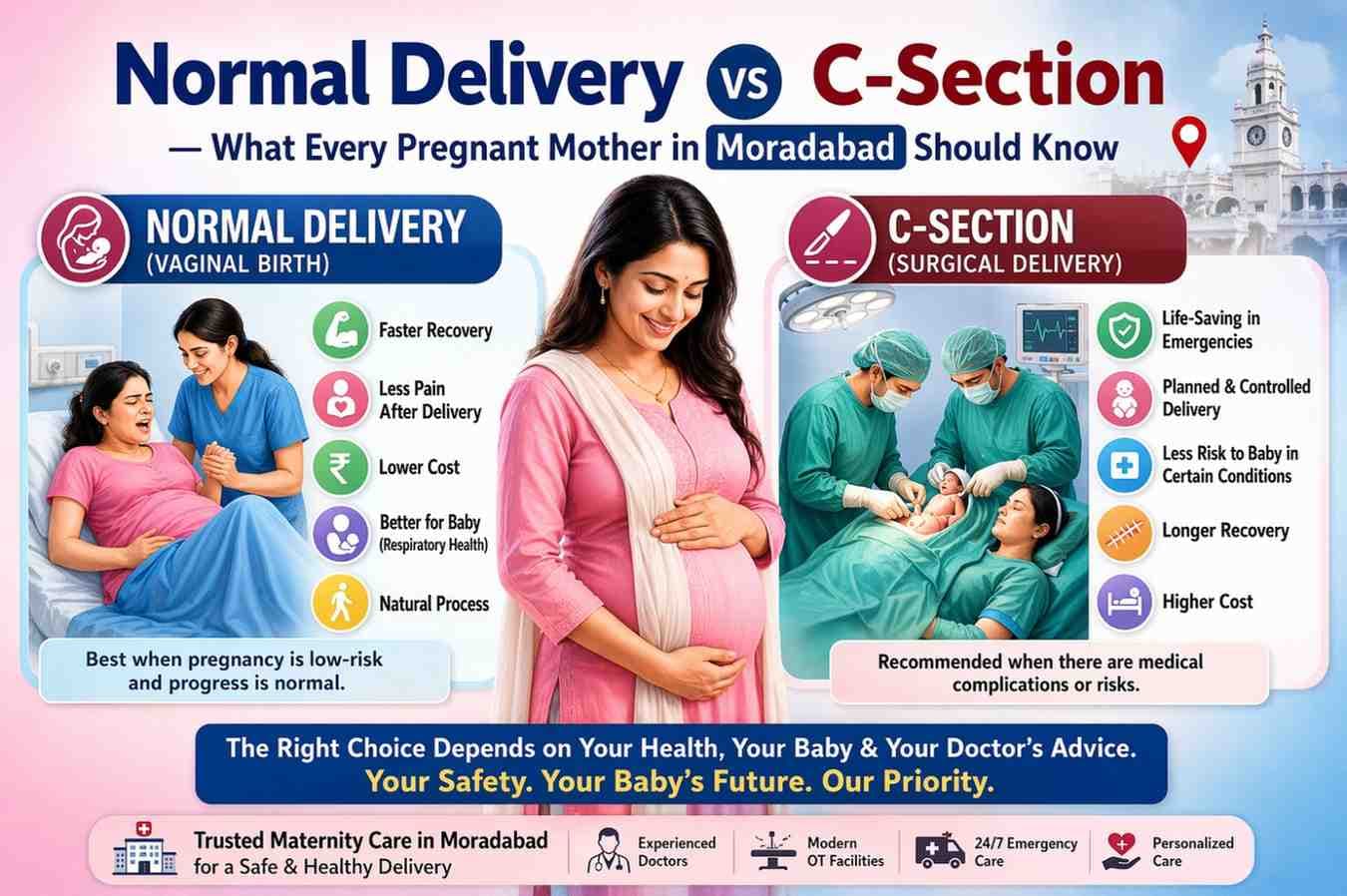
Normal Delivery vs C-Section — What Every Pregnant Mother Should Know
Confused about normal delivery vs C-section? Expert gynecologist Dr. Karishma at Jigyasa Hospital Moradabad explains everything a pregnant mother needs to know. Call 7900903333.