
5 Early Morning Habits That Prevent Diabetes Naturally
Discover 5 powerful morning habits that naturally prevent diabetes. Expert advice from Dr. C.P. Singh, Senior Consultant Physician at Jigyasa Hospital, Moradabad.
India is facing a silent epidemic. With over 101 million people living with diabetes and millions more in the pre-diabetic stage, India is now the diabetes capital of the world. What is more alarming is how early the disease is striking — affecting people in their 30s and even 20s, long before they expect it. But here is something your doctor wants you to know: Type 2 diabetes is largely preventable. And the most powerful window to act is not a medication, not a gym membership — it is the first 60 to 90 minutes of your morning. At Jigyasa Hospital, Moradabad, our Senior Consultant Physician Dr. C.P. Singh (MBBS, MD Medicine, KGMC Lucknow) sees dozens of diabetic and pre-diabetic patients every month. In this article, he shares 5 simple but scientifically backed morning habits that can dramatically reduce your risk of developing diabetes — naturally, and without any expensive supplements.
Why Your Morning Routine Matters More Than You Think
Your body's insulin sensitivity — that is, how effectively your cells respond to insulin and absorb blood sugar — is at its most flexible early in the day. The choices you make within the first hour of waking set the hormonal tone for the entire day, influencing your blood sugar, cortisol levels, and metabolic rate.
People who maintain consistent morning routines have been shown to have better fasting blood glucose, healthier body weight, and lower HbA1c levels compared to those with irregular or sedentary mornings. The habits below are not difficult. But followed consistently, they can be life-changing.
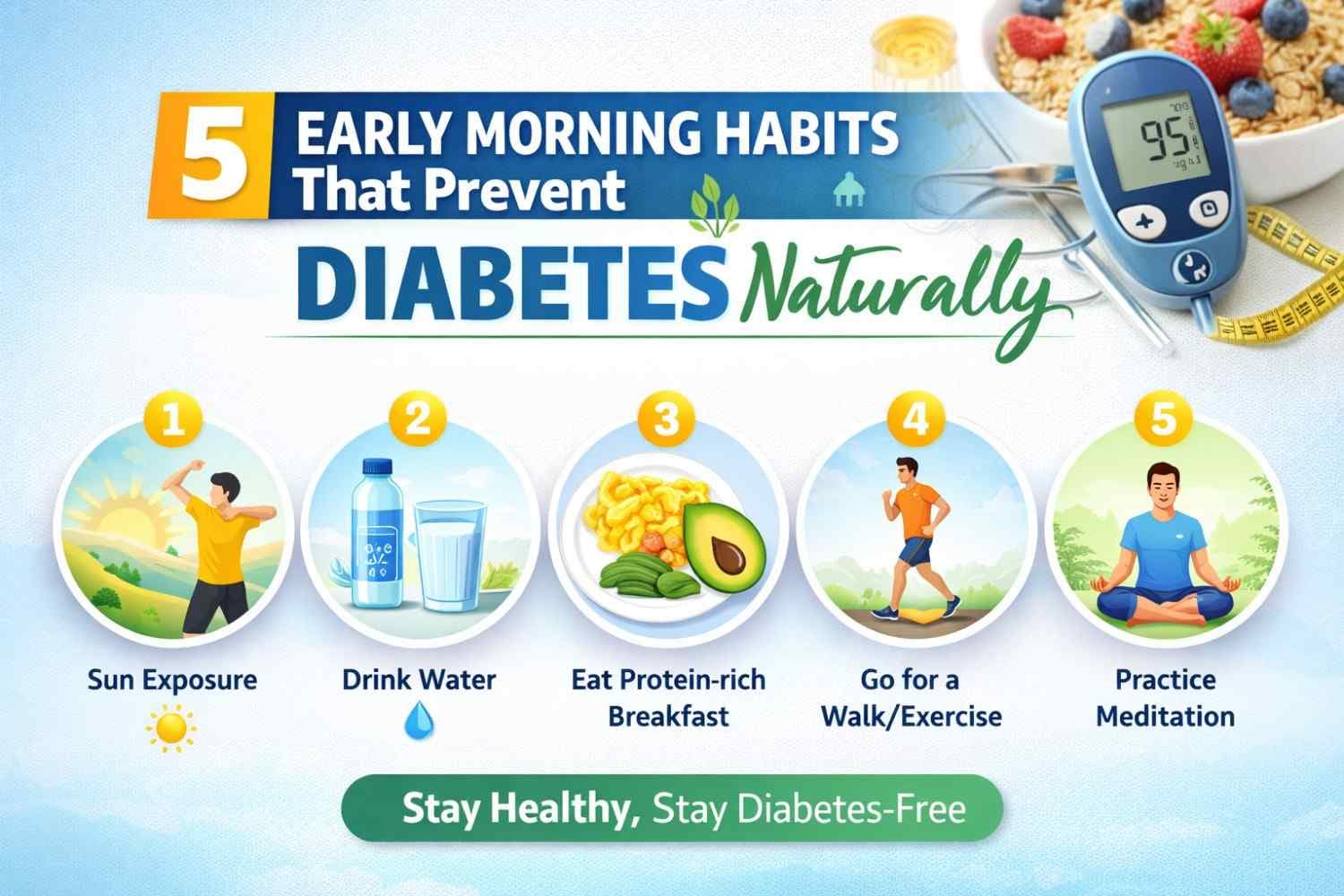
5 Early Morning Habits That Prevent Diabetes Naturally
Habit 1: Wake Up at a Fixed Time Every Day (Yes, Even on Weekends)
It sounds almost too simple — but waking up at a consistent time every morning is one of the most powerful metabolic regulators you have. Your body runs on a circadian rhythm — an internal 24-hour biological clock that controls hormone cycles, including insulin and cortisol secretion. When you sleep and wake erratically, this rhythm is disrupted. Research shows that irregular sleep patterns directly impair glucose metabolism and insulin sensitivity, significantly raising your Type 2 diabetes risk.
- •Set a fixed wake-up time between 5:30 AM and 7:00 AM
- •Avoid sleeping in on weekends by more than 30–45 minutes
- •Aim for 7–8 hours of quality sleep every night
Even if your job involves night shifts or irregular hours, maintaining a consistent sleep-wake cycle as much as possible is critical for blood sugar control.
Habit 2: Start Your Morning with Warm Water — Not Tea or Coffee
Most Indians begin the day with a hot cup of chai. While there is nothing inherently wrong with tea, the typical Indian morning tea — loaded with sugar and full-fat milk — spikes blood sugar almost immediately after waking. Before anything else enters your body in the morning, begin with one or two glasses of warm water.
- •It rehydrates your body after 7–8 hours without water
- •It stimulates the digestive system gently, improving gut motility
- •Warm water with a squeeze of lemon or a pinch of fenugreek (methi) seeds soaked overnight can help improve insulin sensitivity
- •It delays the urge to reach for sugary beverages
Upgrade your morning drink: Methi water (soak 1 tsp of fenugreek seeds overnight, strain and drink in the morning) is well-documented in Indian medical literature for its blood sugar-lowering properties. Cinnamon water (boil a small cinnamon stick in water) has been shown to improve insulin sensitivity. Plain warm water with lemon supports liver function and hydration without spiking glucose. If you enjoy chai, wait at least 30 minutes after waking — and reduce sugar to a minimum.
Habit 3: Move Your Body for at Least 20–30 Minutes Before Breakfast
Exercise is arguably the most powerful natural tool for diabetes prevention, and morning exercise in particular offers benefits that no medication can replicate. When you exercise — especially before eating — your muscles absorb glucose from the bloodstream without requiring insulin. This is called non-insulin-mediated glucose uptake, and it is one of the most effective mechanisms for improving insulin sensitivity and keeping blood sugar in check.
- •Brisk walking (20–30 minutes) — the most accessible and proven option for all age groups
- •Yoga — particularly poses like Surya Namaskar, Paschimottanasana, and Mandukasana, which have shown positive effects on glucose regulation
- •Light resistance training — bodyweight squats, lunges, and push-ups build muscle mass, which is the body's most active glucose-consuming tissue
- •Cycling — even a slow-paced morning cycle ride benefits metabolic health significantly
Important: Do not skip morning movement on the grounds of being 'not a morning person.' Even a 20-minute walk is enough to create measurable metabolic benefits. Start small and build consistency.
Habit 4: Eat a High-Protein, Low-Sugar Breakfast — Never Skip It
Skipping breakfast is extremely common among working adults and students in India. It feels like a time-saving shortcut, but from a metabolic standpoint, it is one of the worst habits for blood sugar control. When you skip breakfast, your body experiences prolonged fasting stress, triggering the release of cortisol and glucagon — hormones that instruct the liver to release stored glucose into the bloodstream.
- •High in protein: Eggs, paneer, Greek yoghurt, sprouts, dal chilla
- •Rich in fibre: Oats, whole wheat roti, vegetables, fruit with skin
- •Low glycaemic index foods: Avoid white bread, poha with sugar, sweet biscuits, fruit juices
- •Healthy fats: A small handful of nuts (almonds, walnuts), seeds (flax, chia)
Sample diabetes-preventing breakfast options: 2 boiled or scrambled eggs + 1 whole wheat roti + a small bowl of sabzi; or vegetable oats with a tablespoon of flaxseeds + a glass of plain buttermilk (chaas); or sprout salad + 1 banana + a small bowl of curd (no sugar). Avoid entirely in the morning: sugary cereals, white bread with jam, packaged fruit juices, and excessive chai with sugar.
Habit 5: Practice 10 Minutes of Stress-Reduction — Meditation, Deep Breathing, or Prayer
This habit is the most underestimated of all — and for many patients, it may be the most important. Chronic psychological stress is a direct driver of Type 2 diabetes. When you are stressed, your body releases cortisol, a hormone that raises blood sugar by instructing the liver to release glucose — even when you have not eaten. Chronically elevated cortisol also promotes abdominal fat accumulation, reduces insulin sensitivity, and disrupts sleep — all major risk factors for diabetes.
- •Anulom Vilom (Alternate Nostril Breathing): 5–10 minutes; proven to reduce cortisol and improve autonomic nervous system balance
- •Bhramari Pranayama (Humming Bee Breath): Calms the mind rapidly; reduces anxiety and stress hormones
- •Simple mindfulness: Sit quietly, focus on your breath, observe thoughts without reacting — just 10 minutes significantly lowers stress markers
- •Gratitude journaling: Writing 3 things you are grateful for each morning shifts mental focus and reduces stress hormones
- •Prayer or spiritual practice: Whatever your faith, morning spiritual practice has consistent positive effects on mental and metabolic health
Bonus Tip: Check Your Blood Sugar Levels Regularly
"In my practice, I have seen patients reverse pre-diabetes almost entirely through consistent lifestyle changes — especially controlling stress and improving their morning routine. Medication is sometimes necessary, but it should never be the first line of defence when lifestyle changes can do so much." — Dr. C.P. Singh, MBBS, MD (Medicine), Senior Consultant Physician, Jigyasa Hospital Moradabad
If you are above 30 years of age, have a family history of diabetes, carry excess weight around the abdomen, or live a sedentary lifestyle — get your fasting blood glucose and HbA1c tested regularly, even if you feel perfectly healthy. Pre-diabetes has virtually no symptoms. The only way to detect it is through a blood test — and catching it early gives you a very strong chance of reversing it completely through lifestyle changes alone.
At Jigyasa Hospital, Moradabad, we offer affordable health check-up packages that include blood sugar screening, HbA1c, lipid profile, and a comprehensive consultation with our expert physicians.
When Should You See a Doctor?
Consult a physician at Jigyasa Hospital if you notice any of the following symptoms:
- •Frequent urination, especially at night
- •Unusual thirst or dry mouth
- •Unexplained fatigue or weakness
- •Blurred vision
- •Slow healing of cuts or wounds
- •Tingling or numbness in hands and feet
- •Sudden weight loss without trying
These are the early symptoms of Type 2 diabetes and should never be ignored.
📞 Call us: 7900903333
📍 Address: Near Miglani Cinema, Rampur Road, Moradabad – 244001
🌐 Website: jigyasahospital.com
Summary: Your 5-Habit Morning Diabetes Prevention Routine
| # | Habit | Time Required |
|---|---|---|
| 1 | Wake up at a fixed time every day | 0 minutes extra |
| 2 | Drink warm water / methi water before tea | 5 minutes |
| 3 | Brisk walk, yoga, or light exercise | 20–30 minutes |
| 4 | Eat a high-protein, low-sugar breakfast | 15–20 minutes |
| 5 | Meditate, breathe, or practice mindfulness | 10 minutes |
5 Morning Habits for Diabetes Prevention — Time Required
Together, these five habits take less than an hour — and they could add years of healthy, diabetes-free life.
Your Morning Routine Is Your Medicine
Diabetes is not inevitable. It is not simply genetic destiny. For the vast majority of people, it is the cumulative result of daily choices — and that means it can be prevented, delayed, and in many pre-diabetic cases, fully reversed through the right daily choices.
The five morning habits in this article are not complicated. They do not require expensive equipment or supplements. They require only consistency and intention — beginning tomorrow morning. Start with one habit. Add another the following week. Within a month, these practices become automatic — and your body will show the results.
If you have concerns about your blood sugar levels, a family history of diabetes, or simply want a preventive health consultation, the expert team at Jigyasa Hospital, Moradabad is here for you.
📞 Book your appointment today: 7900903333
📍 Address: Near Miglani Cinema, Rampur Road, Moradabad – 244001
🔗 Book an appointment: jigyasahospital.com/contact
Prevention today means freedom tomorrow.
Frequently Asked Questions
Can diabetes be completely prevented through lifestyle changes?
Type 2 diabetes is largely preventable. Studies show that people with pre-diabetes who adopt healthy lifestyle changes — including regular exercise, improved diet, and stress management — can reduce their risk of progressing to full diabetes by over 58%. The morning habits outlined above are a strong foundation for this prevention.
Is Type 1 diabetes preventable?
No. Type 1 diabetes is an autoimmune condition and cannot be prevented through lifestyle changes. These habits are specifically targeted at preventing and reversing Type 2 diabetes and managing pre-diabetes.
What should I drink in the morning if I have high blood sugar?
Warm water with fenugreek seeds (methi water), plain warm water with lemon, or cinnamon water are excellent morning drinks for blood sugar control. Avoid sugary tea, packaged juices, and energy drinks in the morning.
How do I know if I am pre-diabetic?
Pre-diabetes is diagnosed through a blood test. A fasting blood glucose between 100–125 mg/dL or an HbA1c between 5.7%–6.4% indicates pre-diabetes. Most people with pre-diabetes have no symptoms, so regular testing is essential.
Where can I get a diabetes check-up in Moradabad?
Jigyasa Hospital, Moradabad, offers comprehensive health check-up packages that include blood sugar screening, HbA1c testing, and physician consultation. Call 7900903333 or visit us at Near Miglani Cinema, Rampur Road, Moradabad.
Related Articles

Heart Attack Warning Signs You Must Never Ignore
Recognizing heart attack symptoms early can save your life. Learn the critical warning signs from Dr. Amit Kumar Singh, Senior Interventional Cardiologist at Jigyasa Hospital, Moradabad. Call 7900903333.

Why Summers in UP Are Dangerous for Your Kidneys
UP summers can silently damage your kidneys. Jigyasa Hospital Moradabad explains the hidden risks, warning signs, and how to protect your kidneys this season. Call 7900903333.

Normal Delivery vs C-Section — What Every Pregnant Mother Should Know
Confused about normal delivery vs C-section? Expert gynecologist Dr. Karishma at Jigyasa Hospital Moradabad explains everything a pregnant mother needs to know. Call 7900903333.